2003 Peugeot Hoggar Concept
Explore the Hoggar Concept: history, verified identity, specification references, rarity evidence and real credited photos.
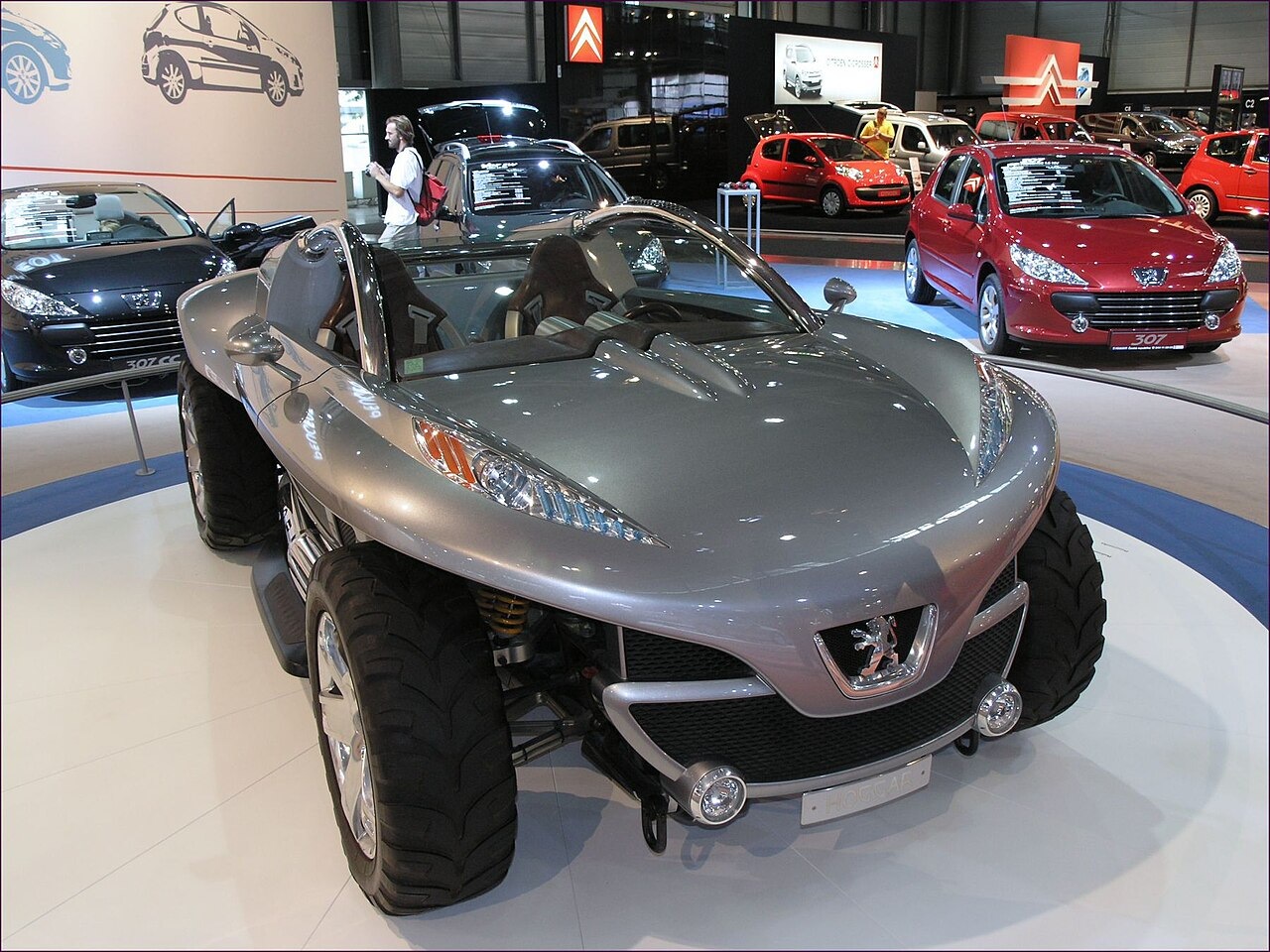
The 2003 Hoggar gave Peugeot's desert-rally imagination a spectacular experimental outlet: an open two-seat buggy with a diesel engine at each end. The factory's original Geneva material described approximately 360 PS and 800 Nm from the combined installation. This was a physical concept rather than a new Dakar entrant or the later South American Hoggar pickup. Its engineering interest lies in that unusual twin-powertrain arrangement and the packaging built around it.
A concept linked to desert experience
Peugeot used its rally-raid heritage as context for Hoggar's adventurous form, but the concept itself needs a separate identity from the works Dakar machines. Its open cabin, large tyres and exposed technical details express an exploration of extreme leisure driving. The connection is a design and engineering theme, not an inherited competition record. No historic Dakar win is assigned to this show vehicle merely because the manufacturer invoked its desert-racing experience.
Peugeot: original Geneva announcement and attached technical document
Two HDi engines, two distinct installations
The original Geneva press material describes two HDi diesel engines with particulate filtration, one at the front and one at the rear. It gives a combined approximately 360 PS and 800 Nm. That architecture is the crucial point: Hoggar did not simply use one ordinary production diesel beneath an adventurous body. The published combined references describe the concept programme, while detailed synchronisation, control and operating validation would need the original engineering dossier.
A wide, open two-seat package
Peugeot's contemporary material describes a vehicle close to four metres long, two metres wide and 1.48 metres high. These proportions explain its broad stance and exposed leisure character. The mechanical packaging is visibly part of the styling, with prominent exhaust and suspension-related elements. The physical exhibit lets readers understand those relationships, but a photograph alone does not verify suspension travel, structural strength or an independently measured off-road capability.
Peugeot: original Geneva announcement and attached technical document
A cabin balancing adventure and technology
The manufacturer described supportive seats, leather and aluminium finishes, separate engine information and navigation-related equipment. That combination made the interior part of the experiment rather than a purely stripped competition cockpit. The concept's proposed use and cabin presentation should remain distinct from production approval or contemporary connectivity. Historical navigation equipment and displays do not establish present function, and the current installation would need a condition record.
Peugeot: dedicated Hoggar concept retrospective
Keeping the later Hoggar pickup separate
The Hoggar name was subsequently used on a very different production pickup. Sharing the name does not establish that the pickup carried two engines, the concept's structure or its performance proposition. An archive profile therefore needs both the 2003 date and the concept qualifier. The selected manufacturer records establish the physical project but do not provide an independent census of every design model, test installation and retained object. No customer-road-production allocation is assigned here.
Specifications and identity reference
| Debut context | Geneva Motor Show, 2003 |
|---|---|
| Body proposition | Open two-seat buggy |
| Powertrain architecture | Two HDi diesel engines; front and rear |
| Original combined reference | Approximately 360 PS / 800 Nm |
| Approximate dimensions | 4.0 × 2.0 × 1.48 m |
| Interior theme | Adventure seating with electronic information/navigation |
| Distinct namesake | Later production Hoggar pickup |
| Completed physical-build census | Not assigned |
Rarity and production scope
Verified physical 2003 Hoggar concept. Combined technical references come from the original manufacturer show material, not an independent test. The later pickup and Dakar race-car programmes remain separate; no completed customer or exclusive exhibit total is assigned.
This is an Archive record. Concepts, restored heritage vehicles, works cars and competition programmes are not added to customer road-production totals. A programme profile does not establish how many physical chassis were made, and repeated exhibition appearances do not create additional vehicles.
What the photograph represents
Physical Peugeot Hoggar twin-engine concept photographed at a display. It is distinct from the later production pickup and from Dakar-winning works competition cars.
Related Peugeot heritage profiles
Frequently asked questions
Did the later Hoggar pickup have this twin-engine specification?
No. It is a different production vehicle sharing the name.
Was this concept itself a Dakar-winning car?
The selected records identify a separate concept, not an authenticated winning competition chassis.
What is the production-count boundary for this profile?
Verified physical 2003 Hoggar concept. Combined technical references come from the original manufacturer show material, not an independent test. The later pickup and Dakar race-car programmes remain separate; no completed customer or exclusive exhibit total is assigned.
Sources and further reading
- Peugeot: original Geneva announcement and attached technical document
- Peugeot: dedicated Hoggar concept retrospective
Research checked 16 October 2026. Linked factory, heritage and specialist-register records support the specifically attributed claims. Photographic descriptions identify the illustrated subject. Design analysis and suggested authentication steps are editorial interpretation.
Built in limited numbers
Verified physical 2003 Hoggar concept. Combined technical references come from the original manufacturer show material, not an independent test. The later pickup and Dakar race-car programmes remain separate; no completed customer or exclusive exhibit total is assigned.
Gallery
Specifications
Factory specifications may vary by model year, market and configuration.
Identity & production
- Official model
- Peugeot Hoggar Concept
Sources and verification
Source citations are being prepared for this profile.