1996 Toyota Classic
Explore the Toyota Classic: history, verified identity, specification references, rarity evidence and real credited photos.
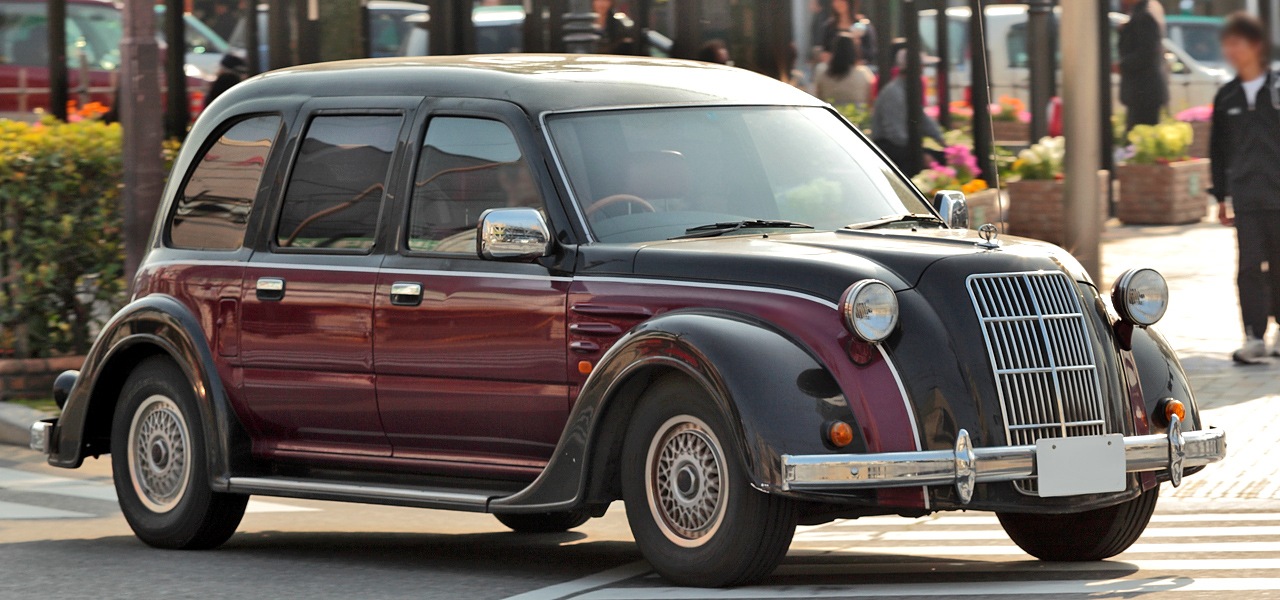
The Toyota Classic revived the visual memory of the Model AA in a complete 100-car programme introduced in 1996. Under the retro body sat a Hilux-based platform and a two-litre engine, making it a distinct Toyota Technocraft project rather than an original 1930s AA or a decorative accessory package.
A 1996 heritage project with a finite boundary
Toyota’s official vehicle history dates the Classic to 1996, correcting the workbook’s 1997 reference. It identifies a 100-car programme associated with Toyota’s heritage and the TECS special-vehicle activity. That complete-car scope is the reason for its inclusion. The profile does not carve an arbitrary year or colour from ordinary Hilux production, nor treat every private retro conversion as part of the manufacturer-supported Classic identity.
Toyota: official Classic programme history and specification
The AA influence is a design reference
The rounded roof, upright grille and sweeping wings deliberately recall Toyota’s early passenger-car history. The relationship is visual and commemorative; it does not make the Classic an original Model AA or a dimensionally exact historical reconstruction. Preserving that distinction helps readers appreciate the later project on its own terms. The Classic combines a recognisable heritage theme with a different platform, manufacturing context and set of practical requirements.
The Hilux-based engineering anchors the identity
Toyota’s specification identifies the Hilux YN86 basis and a 3Y-E two-litre four-cylinder engine. The published output reference is 97 PS at 4,800 rpm, paired with a four-speed automatic. These details connect the unusual body to a documented complete vehicle. They should not be replaced with a Model AA six-cylinder specification merely because the appearance is nostalgic. The powertrain history of an individual example still needs its own records.
Toyota: official Classic programme history and specification
Toyota Technocraft supplies a different production story
The official account connects the car with Toyota Technocraft and the TECS programme. That matters because a coachbuilt special can have a legitimate manufacturer-associated identity without following the mass-production route of an ordinary sedan. Authenticity should be established through the relevant complete-car documents and chassis history. A similar body treatment on another platform is not automatically a Classic, and later replacement trim does not establish or erase the original programme identity by itself.
Toyota: official Classic programme history and specification
The photograph shows the later production model
The included image is a credited photograph of a Toyota Classic, rather than an AA replica or a modern rendering. Its full exterior makes the heritage-inspired proportions easy to compare with the separate AA profile. The image is useful for visual identification but does not certify condition, originality or membership of the 100-car programme for a different vehicle. Those questions need documents tied to the individual chassis and any subsequent restoration work.
Specifications and identity reference
| Reference year | 1996; inventory originally 1997 |
|---|---|
| Programme reference | 100 cars |
| Complete-car context | TECS / Toyota Technocraft |
| Platform reference | Hilux YN86 |
| Engine | 3Y-E; 2.0-litre four-cylinder |
| Published output | 97 PS at 4,800 rpm |
| Transmission | Four-speed automatic |
Rarity and production scope
The 100-car figure is attributed to Toyota’s official Classic heritage record and covers the named complete-car programme. It is not a count of original AAs, all Hilux derivatives or private retro conversions. The public year is corrected to 1996. Exact completed-production and survivor fields remain blank; the manufacturer reference is retained separately from an audited chassis census.
What the photograph represents
Tennen-Gas’s exterior photograph of a Toyota Classic, showing its heritage-inspired body. It is a 1990s complete-car model reference, not an original 1930s Model AA or an AA replica. The image does not independently establish an individual chassis’s membership of the 100-car programme.
Related Toyota profiles
Frequently asked questions
Is the Classic an original Model AA?
No. It is a distinct 1996 heritage-inspired complete car based on a Hilux platform.
Why is it dated 1996 here?
Toyota’s official vehicle history places the programme in 1996; the workbook’s original 1997 reference is preserved in the audit.
What is the production-count boundary for this profile?
The 100-car figure is attributed to Toyota’s official Classic heritage record and covers the named complete-car programme. It is not a count of original AAs, all Hilux derivatives or private retro conversions. The public year is corrected to 1996. Exact completed-production and survivor fields remain blank; the manufacturer reference is retained separately from an audited chassis census.
Sources and further reading
Research checked 19 October 2026. Linked manufacturer heritage pages, factory announcements, official distributor publications and labelled contemporary coverage support the specifically identified claims. Photographic descriptions identify the illustrated subject. Design analysis and suggested authentication steps are editorial interpretation.
Built in limited numbers
The 100-car figure is attributed to Toyota’s official Classic heritage record and covers the named complete-car programme. It is not a count of original AAs, all Hilux derivatives or private retro conversions. The public year is corrected to 1996. Exact completed-production and survivor fields remain blank; the manufacturer reference is retained separately from an audited chassis census.
Gallery
Specifications
Factory specifications may vary by model year, market and configuration.
Identity & production
- Official model
- Toyota Classic
Sources and verification
Source citations are being prepared for this profile.