1967 Toyota 2000GT
Explore the Toyota 2000GT: history, verified identity, specification references, rarity evidence and real credited photos.
The Toyota 2000GT joined a low, in-house-designed coupe body with a Yamaha-supported engineering programme and a twin-cam straight-six. The production model arrived in May 1967, turning a striking motor-show proposal into one of Toyota’s defining low-volume road cars.
A prototype becomes a production grand tourer
Toyota’s official history traces development after the 1964 Japanese Grand Prix, followed by a prototype appearance at the 1965 Tokyo Motor Show and production release on 16 May 1967. The cooperation with Yamaha belongs within that sequence, rather than making the car an unrelated design carrying Toyota badges. A useful profile distinguishes the early prototypes from customer production and from the special racing and film conversions. They share a family story, but their individual purposes and documentary histories are different.
Toyota: official 2000GT history and MF10 specification
The low coupe body creates the visual identity
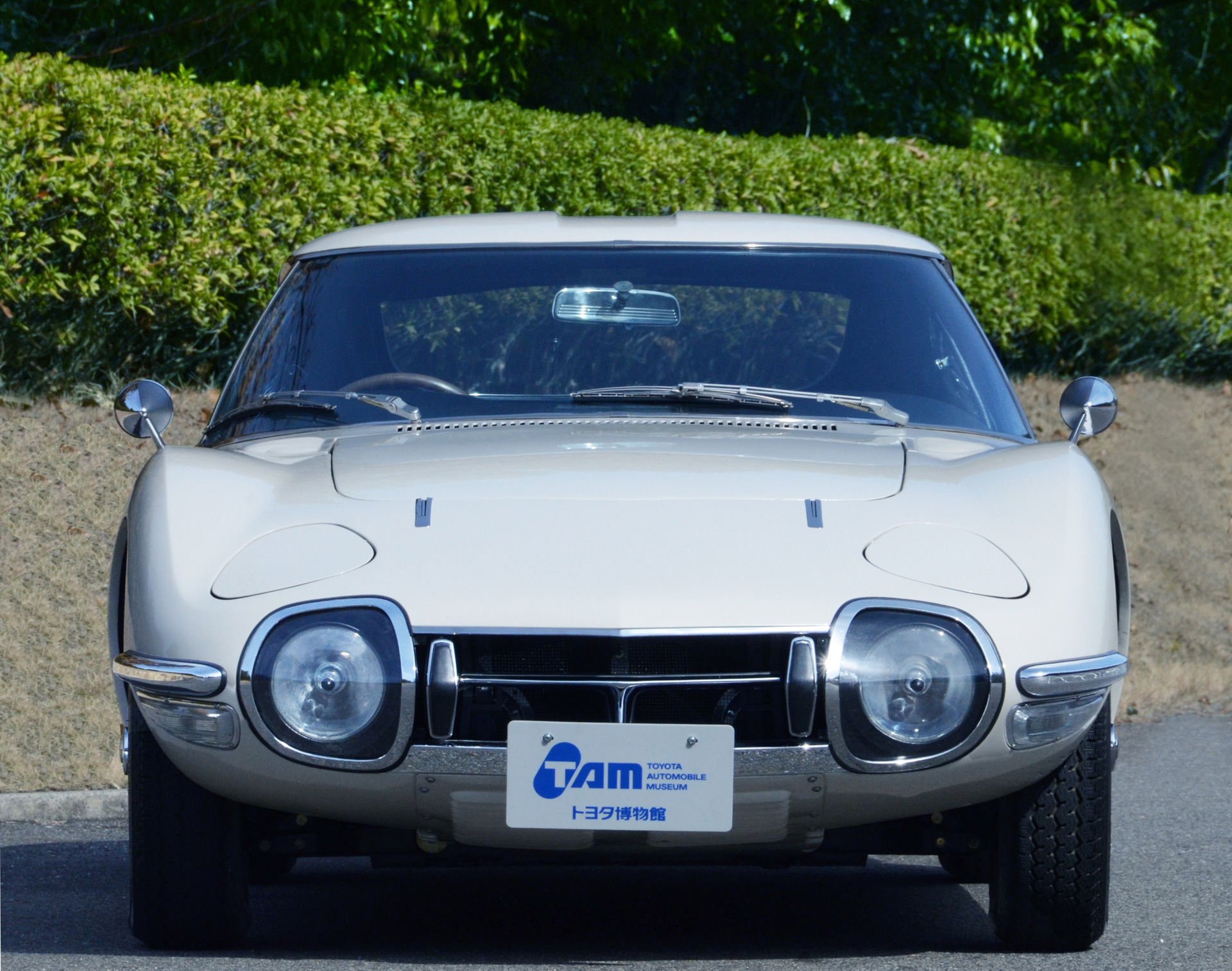
The long bonnet, tightly drawn cabin and very low roof give the 2000GT its recognisable grand-touring proportions. Toyota lists representative dimensions of 4,175 mm long, 1,600 mm wide and 1,160 mm high. The included factory museum photograph provides a complete exterior view rather than a substitute image of the open-top film car. As design interpretation, the contrast between the long front body and compact passenger space makes the mechanical layout legible before a reader studies the engine specification.
The 3M engine supplies a precise technical reference
The factory heritage specification lists the MF10 with a 1,988 cc 3M inline-six, double overhead camshafts and a 150 PS reference at 6,600 rpm. Those published units are retained. The specification is historical model evidence, not a guarantee that a modified or restored car still matches the reference output. An individual file should connect engine identity, component changes and restoration work with the chassis documents rather than treating a correct external badge as proof of the complete original powertrain.
Toyota: official 2000GT history and MF10 specification
The chassis is an important part of the complete-car story
Toyota describes an X-shaped backbone frame, independent double-wishbone suspension, four-wheel disc brakes and magnesium alloy wheels. This gives the engineering account more depth than the car’s appearance alone. The relationship between a compact cabin, low mass and purpose-designed chassis helps explain its significance in Toyota’s history. For a surviving example, the condition and repair history of structural members and suspension mountings matter alongside cosmetic presentation. The article does not infer those conditions from a museum publicity photograph.
Toyota UK: later restoration feature using the different 351-car reference
Published totals need their original counting context
Toyota’s heritage entry reports 337 cars before production ended in 1970. A later Toyota UK restoration feature uses a broader 351-car figure without supplying a reconciled chassis schedule. Both are manufacturer publications, so this profile keeps 337 as an attributed reference and leaves exact completed production unverified. It does not manufacture a reconciliation by adding film conversions or racing entries to one total. The 2000GT remains below the rarity threshold under either published figure, while the discrepancy stays visible for future research.
Specifications and identity reference
| Production launch | 16 May 1967 |
|---|---|
| Manufacturer heritage reference | 337; later Toyota UK publication also uses 351 |
| Representative model | MF10 |
| Engine | 3M; 1,988 cc DOHC inline-six |
| Published output reference | 150 PS at 6,600 rpm |
| Structure | X-shaped backbone frame |
| Suspension / brakes | Independent double wishbones / four-wheel discs |
Rarity and production scope
The profile covers the complete 2000GT production-model identity. Toyota’s heritage page reports 337, while a later Toyota UK publication uses 351; no reconciled completed-chassis register is supplied here. The manufacturer reference is attributed rather than promoted to an exact verified total. Film and race conversions remain within their documented provenance and are not mechanically added as fresh road production. Exact completed-production and survivor fields remain blank.
What the photograph represents
Toyota’s complete exterior museum photograph of the production 2000GT coupe. It shows the normal closed body, rather than a Bond open-top conversion or a competition-prepared car. The factory museum image provides a model reference and does not resolve the differing published production totals.
Related Toyota profiles
Frequently asked questions
Why do published 2000GT totals differ?
The linked Toyota publications use 337 and 351 without supplying a reconciled chassis schedule here. The discrepancy is retained, with exact completed production left unverified.
Is the open-top Bond car the normal production body?
No. The production car was a coupe; Toyota documents special prototype-based open-top conversions for the film.
What is the production-count boundary for this profile?
The profile covers the complete 2000GT production-model identity. Toyota’s heritage page reports 337, while a later Toyota UK publication uses 351; no reconciled completed-chassis register is supplied here. The manufacturer reference is attributed rather than promoted to an exact verified total. Film and race conversions remain within their documented provenance and are not mechanically added as fresh road production. Exact completed-production and survivor fields remain blank.
Sources and further reading
- Toyota: official 2000GT history and MF10 specification
- Toyota UK: later restoration feature using the different 351-car reference
Research checked 19 October 2026. Linked manufacturer heritage pages, factory announcements, official distributor publications and labelled contemporary coverage support the specifically identified claims. Photographic descriptions identify the illustrated subject. Design analysis and suggested authentication steps are editorial interpretation.
Built in limited numbers
The profile covers the complete 2000GT production-model identity. Toyota’s heritage page reports 337, while a later Toyota UK publication uses 351; no reconciled completed-chassis register is supplied here. The manufacturer reference is attributed rather than promoted to an exact verified total. Film and race conversions remain within their documented provenance and are not mechanically added as fresh road production. Exact completed-production and survivor fields remain blank.
Gallery
Specifications
Factory specifications may vary by model year, market and configuration.
Identity & production
- Official model
- Toyota 2000GT
Sources and verification
Source citations are being prepared for this profile.