1967 Toyota 2000GT Bond Open-Top
Explore the Toyota 2000GT Bond Open-Top: history, verified identity, specification references, rarity evidence and real credited photos.
The open-top 2000GT made Toyota’s sports car part of You Only Live Twice in 1967. Toyota documents two prototype-based cars converted for the production, creating a memorable film identity that is distinct from the normal coupe and from later enthusiast-built replicas.
The film car is a special conversion of the 2000GT
Toyota’s official heritage history records that two 2000GT prototypes were converted into open-top cars for You Only Live Twice. That is a more precise identity than an assumed customer convertible edition. The 1967 reference belongs to the film presentation, while the source vehicles sit within the model’s development story. This profile follows the factory-created film programme without claiming that an open 2000GT was offered as a regular catalogue choice alongside the production coupe.
Toyota: official 2000GT history identifying two open-top prototype conversions
Removing the roof changes more than the silhouette
The open body exposes the cabin and changes the relationship between the long bonnet, windscreen and rear deck. For film-making, that openness also gives the camera a different way to see the occupants. Those visible consequences can be explained without inventing an original body-engineering drawing or measured torsional-rigidity figure. A later recreation may reproduce the visual effect, but it requires a separate provenance description. Similar appearance does not make a later conversion one of the cars prepared for the original production.
The coupe specification remains background rather than automatic proof
The normal 2000GT’s six-cylinder engineering and low chassis explain the platform behind the film car. They do not, by themselves, prove every detail fitted to a particular filming vehicle. An accurate archive distinguishes the production-model specification, the prototype’s original configuration and the changes made for camera work. That approach avoids constructing a fictional specification from the most attractive details of several cars. Surviving components, later restoration and display condition all need their own vehicle-linked records.
Toyota: official 2000GT history identifying two open-top prototype conversions
Two film cars do not create two fresh production additions
The manufacturer’s wording is explicit that prototype vehicles were converted. A conversion count and a new-manufacture count answer different questions. Adding the film pair to every published production total would therefore create a risk of counting the same underlying vehicle twice. This Archive record explains the conversion programme and its two-car reference while leaving exact completed production fields blank. It also keeps the programme separate from any racing preparation and from later private roadster conversions.
Toyota UK: the Bond film connection and two-car preparation
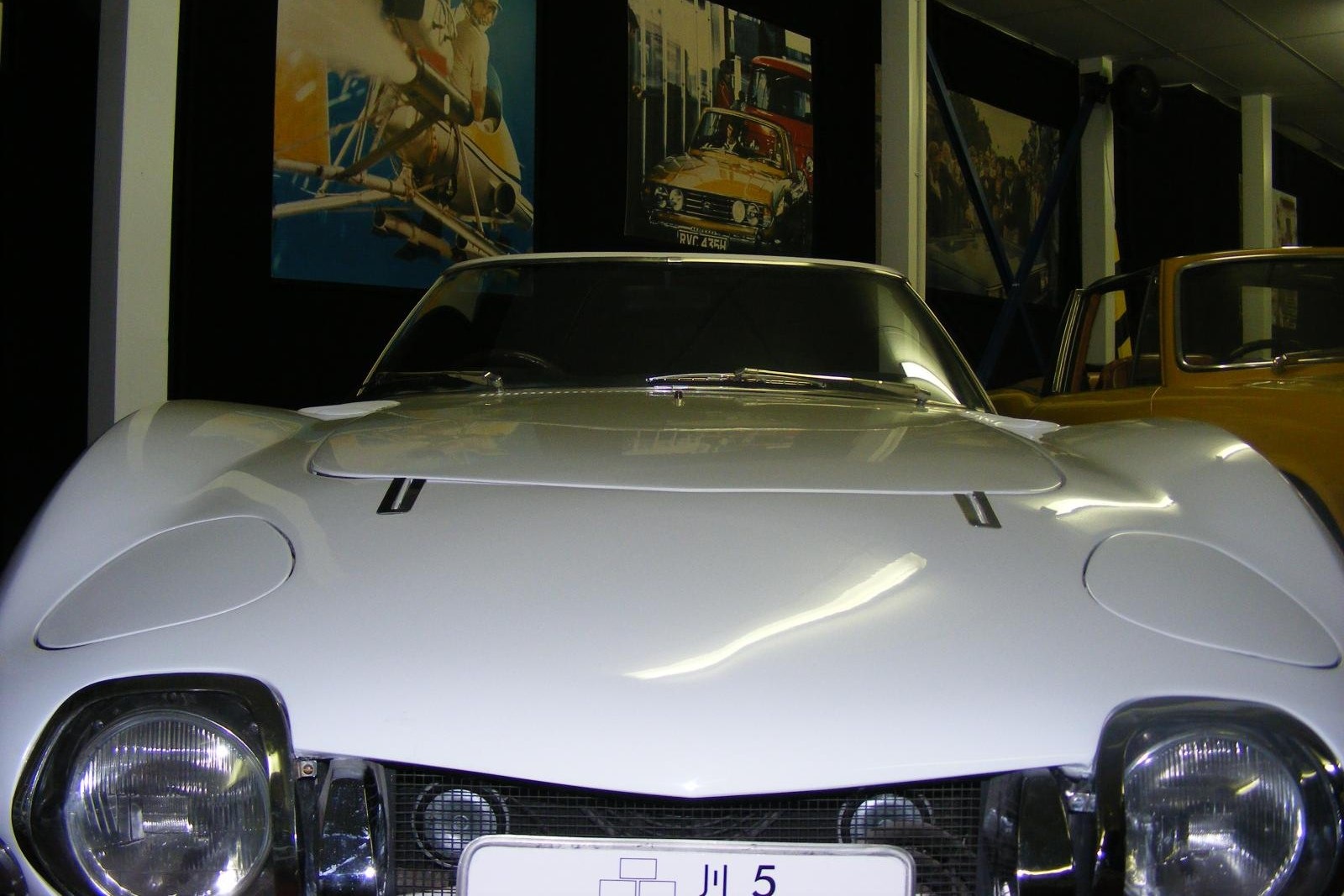
A credited film-car display image supports the visual reference
Dave McLear’s photograph identifies a 2000GT associated with You Only Live Twice and shows the open cabin behind the low windscreen. It is a later display photograph, not a frame taken during filming or a complete restoration dossier. The photographer’s attribution and licence travel with the image. For an individual car, continuity from the original film programme through later storage, repairs and exhibition would still need documentary work. A period name or replica number plate alone cannot establish that chain.
Specifications and identity reference
| Reference presentation | You Only Live Twice; 1967 |
|---|---|
| Factory account | Two prototype-based open-top conversions |
| Normal production body | Coupe; film body separately prepared |
| Identity scope | Original factory film-car programme |
| Included image | Later display photograph associated with the film car |
| Status | Archive; conversion count not added to road production |
Rarity and production scope
Toyota’s two-car reference describes prototype-based open-top conversions for the Bond film. It is not an independently audited total of newly manufactured convertibles, and the pair is not added on top of every published 2000GT production figure. The programme excludes later replicas and private roof conversions. The 1967 date is the film reference; exact build histories require individual documents. Structured completed-production fields remain blank and this Archive identity is excluded from road-production aggregation.
This is an Archive identity. The experimental or individually named car is not added as extra production on top of its underlying family. Repeated exhibition appearances do not establish additional chassis; the specific scope above governs the count.
What the photograph represents
Dave McLear’s later display photograph identifies a 2000GT associated with You Only Live Twice and shows its open cabin behind the windscreen. It is not a filming-period photograph or an individual chassis dossier. The film-programme account is supported separately by Toyota’s historical text.
Related Toyota profiles
Frequently asked questions
Could customers order a regular 2000GT convertible?
The cited record describes special prototype-based film conversions, not a normal convertible production grade.
Does the two-car reference include modern replicas?
No. It applies to the original factory film programme; later recreations require their own identification and provenance.
What is the production-count boundary for this profile?
Toyota’s two-car reference describes prototype-based open-top conversions for the Bond film. It is not an independently audited total of newly manufactured convertibles, and the pair is not added on top of every published 2000GT production figure. The programme excludes later replicas and private roof conversions. The 1967 date is the film reference; exact build histories require individual documents. Structured completed-production fields remain blank and this Archive identity is excluded from road-production aggregation.
Sources and further reading
- Toyota: official 2000GT history identifying two open-top prototype conversions
- Toyota UK: the Bond film connection and two-car preparation
Research checked 19 October 2026. Linked manufacturer heritage pages, factory announcements, official distributor publications and labelled contemporary coverage support the specifically identified claims. Photographic descriptions identify the illustrated subject. Design analysis and suggested authentication steps are editorial interpretation.
Built in limited numbers
Toyota’s two-car reference describes prototype-based open-top conversions for the Bond film. It is not an independently audited total of newly manufactured convertibles, and the pair is not added on top of every published 2000GT production figure. The programme excludes later replicas and private roof conversions. The 1967 date is the film reference; exact build histories require individual documents. Structured completed-production fields remain blank and this Archive identity is excluded from road-production aggregation.
Gallery
Specifications
Factory specifications may vary by model year, market and configuration.
Identity & production
- Official model
- Toyota 2000GT Bond Open-Top
Sources and verification
Source citations are being prepared for this profile.