1990 Citroën 2CV Charleston — Official Final Portuguese Car
Explore the 1990 Citroën 2CV Charleston — Official Final Portuguese Car: sourced history, design, specifications and rarity evidence, with credited documentary photos.
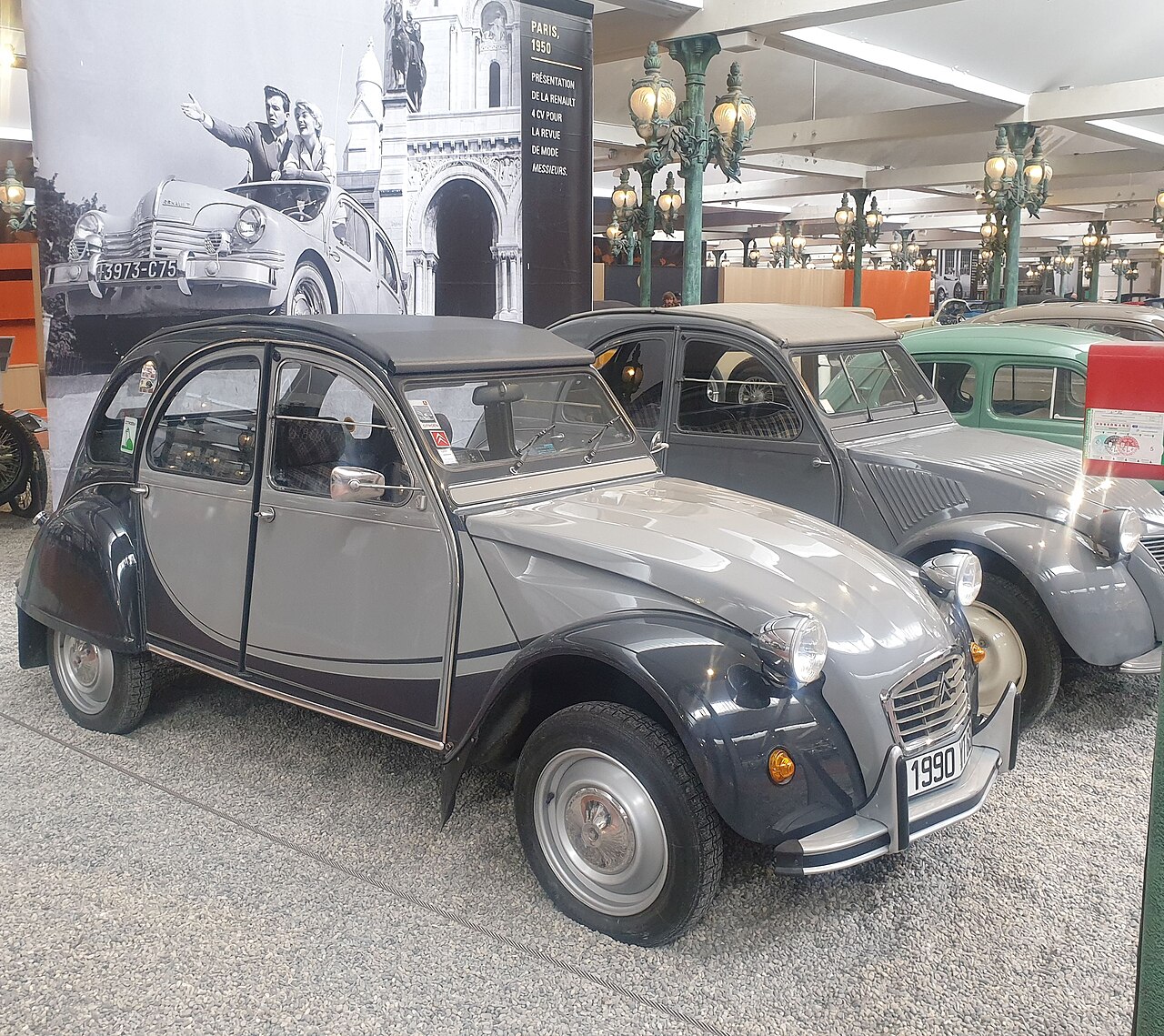
The grey Citroën 2CV Charleston commemorated as the official final Portuguese car is rare for a particular reason: its place in the production-ending ceremony. The familiar body becomes a historical marker whose importance depends on the individual car’s documented identity.
The official closing chapter
Citroën’s own history identifies 27 July 1990 at Mangualde as the official end of 2CV production and describes the final car as a Charleston. This profile follows that official historical designation. It is not a claim that no unfinished car or component was handled after the ceremony, and it is not a production limit for all Charleston models.
The distinction between a production-ending record and an edition count is essential. A very large model family can contain one individually significant vehicle. Its rarity comes from the documented event and provenance, rather than from the appearance of a common trim name on the body. That is why the precise title belongs with the car’s ownership and museum record.
From the factory story to the museum
Mulhouse Alsace Agglomération reports that the car was ordered by plant director Claude Hébert, later passed to Patrick Bourdeaux and entered the museum after Bourdeaux’s death. Its account records the public introduction on 11 January 2024 in the museum’s Aventure area. These named custodians and dates provide a chain of history beyond a general final-production anecdote.
The supplied photograph independently identifies the displayed Mulhouse vehicle as the very last 2CV. The visible grey Charleston finish, location and display context align with the acquisition account. No unpublished VIN is invented. The profile’s scope remains the officially commemorated final vehicle, which is the identity supported by the cited records.
A familiar shape carrying an unfamiliar biography
The front-quarter museum view shows the grey two-tone body, round lamps, upright windscreen and fabric-roof arrangement. The curved paint division on the side helps express the Charleston’s decorative character. Around it, other historic vehicles make clear that this is a later collection photograph rather than a picture taken at the Portuguese production ceremony.
Nothing in the silhouette alone can prove that the car closed a production line. That fact comes from the record attached to the object. The image is effective precisely because it places a highly recognizable everyday-car shape in a different historical role. Its visual familiarity helps the reader understand why the end-of-production moment carried such cultural weight.
How to preserve a final-car history
For an individually significant production car, keep factory correspondence, ceremonial photographs, registration papers and successive custody records together. A restoration or display file should explain changes in condition without interrupting that documentary chain. The car’s importance is strengthened by clear continuity, rather than by repeating an unsupported slogan about being the last.
This vehicle also offers a useful counterpart to the presidential DS. One was created for a special state commission; the other gained significance through its place at the end of an ordinary production story. Their different routes to rarity demonstrate why an archive should describe the exact historical scope before giving a number.
Specifications and verified rarity
| Reference year | 1990 |
|---|---|
| Model / project | 2CV Charleston — Official Final Portuguese Car |
| Body / role | Four-door saloon with fabric roof |
| Official production-end date | 27 July 1990 |
| Factory | Mangualde, Portugal |
| Heritage scope | Official final-car record |
| Later custodianship | Musée National de l’Automobile, Mulhouse; displayed from January 2024 |
| Rarity scope | Individual Charleston officially commemorated as the final 2CV at Mangualde on 27 July 1990; museum-displayed car identified by matching photograph and acquisition account. Scope is that historic vehicle, not the Charleston edition. |
| Exact manufacturing tally | One individually scoped historic car |
| Inventory reference | CIT-096 — Verified |
Frequently asked questions
Does this mean only one Charleston was built?
No. The scope is one individually significant final-car record.
What date does Citroën commemorate?
27 July 1990 at Mangualde, Portugal.
Where was the pictured car displayed?
At the Musée National de l’Automobile in Mulhouse.
Is an unpublished VIN assigned here?
No. The official historical and museum identity is documented without inventing a chassis number.
What rarity or archive scope is verified?
Individual Charleston officially commemorated as the final 2CV at Mangualde on 27 July 1990; museum-displayed car identified by matching photograph and acquisition account. Scope is that historic vehicle, not the Charleston edition.
Who took the supplied photograph?
Andy Dingley via Wikimedia Commons, under CC BY-SA 4.0. Keep the photographer, original-file link and licence credit with the image.
Related Citroën profiles
Sources and photo credits
- Citroën: the officially final 2CV, 27 July 1990
- Mulhouse Alsace Agglomération: acquisition and provenance of the final 2CV
Photograph: Andy Dingley via Wikimedia Commons original file, CC BY-SA 4.0. Source photograph supplied without local cropping, retouching or text removal. A source-provided thumbnail is used where available. Grey Charleston identified by the photographer as the very last 2CV, at the Musée National de l’Automobile, Mulhouse, in 2026. Museum location and subject match the acquisition history.
Built in limited numbers
Individual Charleston officially commemorated as the final 2CV at Mangualde on 27 July 1990; museum-displayed car identified by matching photograph and acquisition account. Scope is that historic vehicle, not the Charleston edition.
Gallery
Specifications
Factory specifications may vary by model year, market and configuration.
Identity & production
- Official model
- 2CV Charleston — Official Final Portuguese Car