1969 Lotus Seven Series 4
Explore the 1969 Lotus Seven Series 4: programme history, design, verified rarity scope, specifications and credited photography.
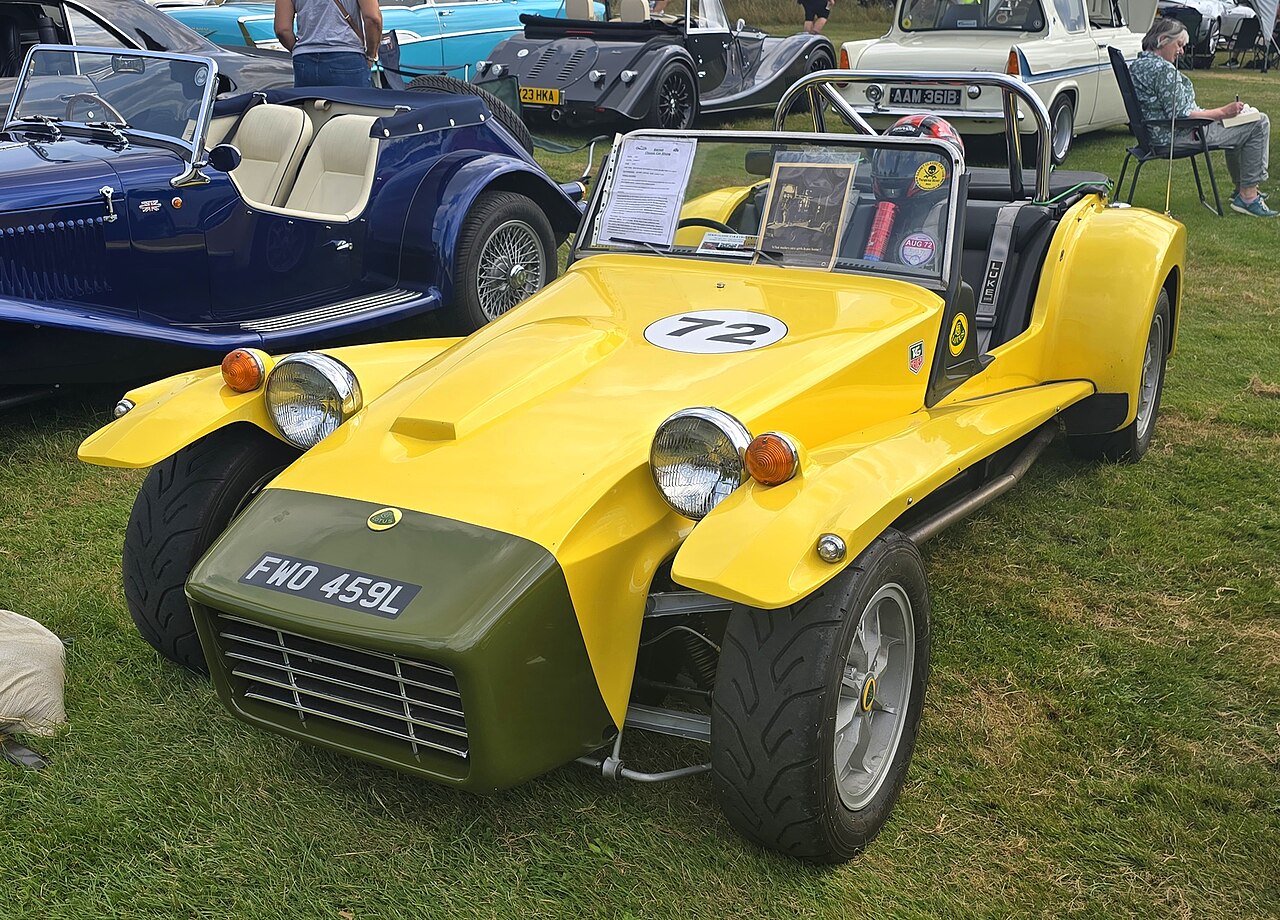
The Lotus Seven Series 4 reinterprets the exposed, compact Seven as a visibly different composite-bodied roadster. Its Type 60 designation and maker-reported 625-car reference give the Lotus-built programme a clear boundary before later derivatives.
History and verified programme identity
Lotus’s heritage record describes a fresh spaceframe and glass-reinforced composite body for the Seven S4, dated in its table to 1969–1972. This profile follows that manufacturer period while retaining the workbook’s 1970 label as an import alias. The 625 reference applies to the named Lotus series, not all cars resembling a Seven and not later Caterham production. The pictured example is creator-titled as a 1972 Seven Series 4. Its later photograph therefore illustrates a car within the supported series rather than a separate 1972 limited edition.
Engineering and design
The distinctive change is the way the body encloses the same basic roadster task. Where earlier Sevens expose a simple central tub and separate wings, the S4 presents a more continuous outer form around its spaceframe. In the photo, the broad nose, inset grille and raised headlamps establish that different visual identity. Composite bodywork and a spaceframe are separate structural concepts: the visible skin is not proof that the entire car is a glass-fibre monocoque. The heritage table supplies a four-speed transmission reference, but an individual car’s fitted engine and later modifications still need its own documentation.
The physical car in the supplied photograph
Calreyn88’s photograph shows a yellow 1972 Lotus Seven Series 4 at an outdoor gathering. Its broad composite nose, separate round headlamps and compact open cockpit are clearly visible. The car’s year is the source title’s example identification; the August 2024 image records its later appearance, with no claim that every visible component remains from first delivery.
A closer look at the design
The S4 is especially instructive when viewed from the front quarter. Its central opening and outer shoulders create a broader, more enclosed impression than a bare early Seven nose. The lamps stand above the body instead of becoming hidden within it. This is an observation about the photographed shape, not a claim about aerodynamic efficiency or measured performance. The original spaceframe description gives that visible form a technical context without confusing outer skin with load-bearing structure. For a collector catalogue, the combination of Type 60, the Lotus-built period and an exact-series image is more useful than a generic Seven label. It also provides a stable boundary for future additions: another later registration or a different engine installation should not become a duplicate profile of the original S4 programme.
Collecting and chassis evidence
A Seven S4 history should distinguish an original Lotus chassis from later manufacture, rebuilds and substantially modified cars. The manufacturer’s 625 reference provides a series-level rarity context, while registration and delivery evidence establish the individual example. Engine replacements and altered body panels can be important chapters in that history. They should be recorded as changes rather than used to create another factory sub-edition. The supplied illustration has not been replaced with a Rover V8 conversion or an earlier S3 simply because those subjects are easier to recognize.
Related Lotus designs and meaningful comparisons
The Elan Sprint offers another open Lotus road car, with a different body and chassis approach. The Elite Type 75 shows how composite outer bodywork also served a much larger passenger enclosure. These comparisons explain the Seven S4’s place among Lotus road designs while preserving the separate production reference for each named programme.
Reading the sources
The programme sources and the photograph answer different questions. Manufacturer and custodial records establish the original model, Type, category and published production scope. The creator’s file establishes the pictured subject, setting and image permission. An individual chassis history can then add ownership, competition entries and dated repairs without changing the scope of the original programme. Build references are not survivor counts, and a later specification does not automatically become an additional newly manufactured vehicle. Where primary evidence does not establish a complete fabrication census, that field remains unassigned.
Specifications and rarity evidence
| Programme reference year | 1969 |
|---|---|
| Model / Type | Seven Series 4 — Type 60 |
| Body / competition role | Two-seat spaceframe roadster with composite body |
| Manufacturer period | 1969–1972 |
| Structure | New spaceframe |
| Outer body | Glass-reinforced composite |
| Transmission reference | Four-speed |
| Photo example | 1972 Seven Series 4 |
| Published build / register reference | 625 |
| Independently audited completed tally | Not assigned |
| Count scope | Published reference: 625. The named programme scope is retained independently of audited completed output and current survivor counts. |
| Original inventory status | LOT-066 — Verified |
Frequently asked questions
Why does the profile use 1969 when the inventory says 1970?
The Lotus heritage table dates the Type 60 programme to 1969–1972. The original 1970 inventory wording remains in metadata and duplicate aliases, and the photo is a source-identified 1972 example.
How is Seven Series 4 classified?
This is a named original Lotus road-car programme. Its qualified source references fall below the 7,500 screening threshold. Completed production, announced allocations and survivor counts remain distinct, with any unresolved differences explained in the article.
Which technical details are established for the programme?
The primary record supports manufacturer period: 1969–1972; structure: New spaceframe; outer body: Glass-reinforced composite. These are programme or explicitly attributed photo references. A particular surviving car’s engine, chassis repairs and competition preparation require its own dated documentation.
Does the photographed appearance establish factory originality?
The caption records a real creator-identified Seven Series 4 subject and its later setting. It establishes the illustration’s scope, while original components, restoration work and individual race provenance require chassis-specific evidence. A competition number, current paint or museum display is not used as an originality certificate.
What rarity or archive scope is verified?
Published reference: 625. The named programme scope is retained independently of audited completed output and current survivor counts.
Who photographed the supplied image?
Calreyn88 via Wikimedia Commons, under CC BY-SA 4.0. The original file and licence are linked with the image. Retain the creator, source and licence when uploading, exporting or reusing it; local retouching and synthetic enlargement have not been performed.
Related Lotus profiles
Sources and photo credits
Photograph: Calreyn88 via Wikimedia Commons original source, CC BY-SA 4.0. Source-provided thumbnail supplied without local cropping, retouching or synthetic enlargement.
Built in limited numbers
Published reference: 625. The named programme scope is retained independently of audited completed output and current survivor counts.
Gallery
Specifications
Factory specifications may vary by model year, market and configuration.
Identity & production
- Official model
- Seven Series 4