1974 Lotus Elite Type 75
Explore the 1974 Lotus Elite Type 75: programme history, design, verified rarity scope, specifications and credited photography.
The 1974 Lotus Elite Type 75 takes Lotus into a larger four-seat body with its own engine programme. It revives the Elite name but remains a different physical design from the small Type 14 coupe already covered earlier.
History and verified programme identity
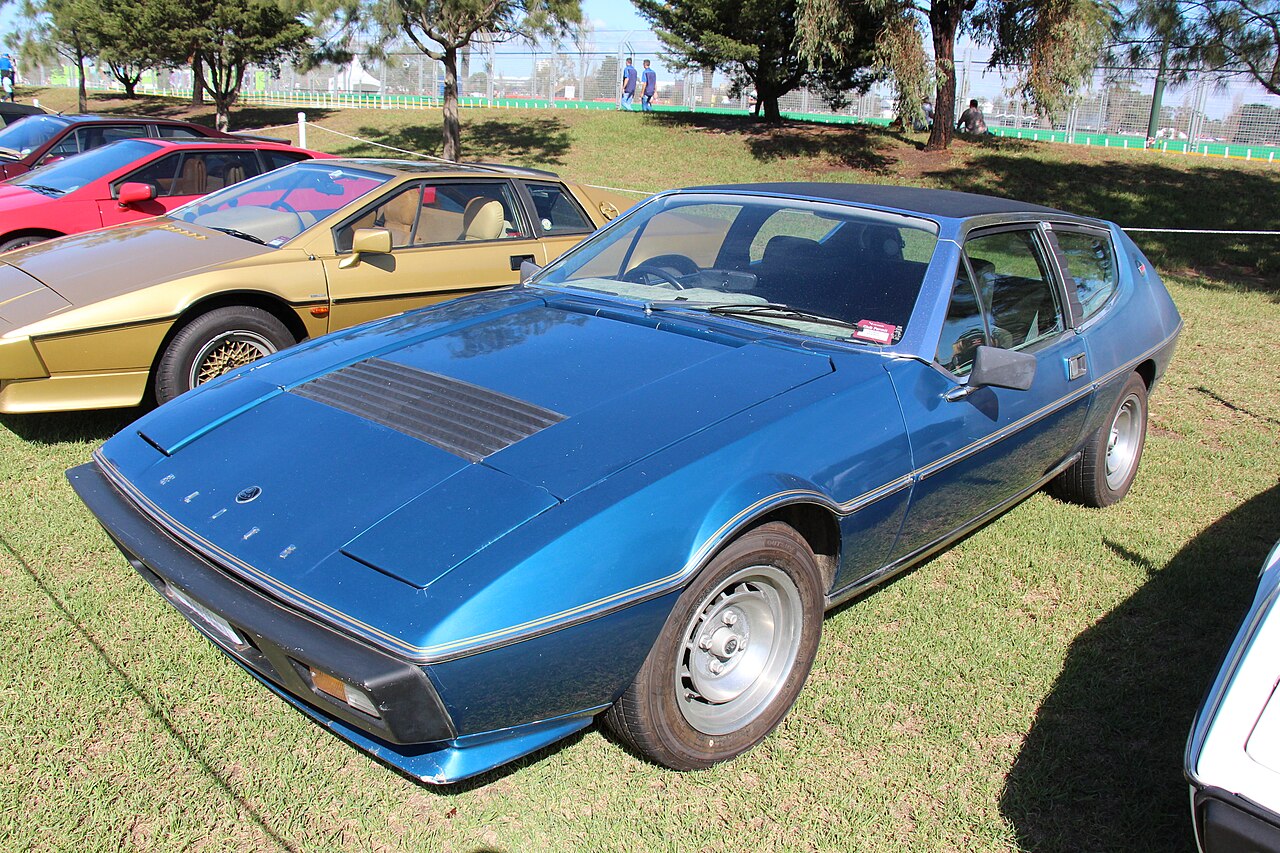
The current Lotus heritage table places the Type 75 Elite in 1974–1979 and gives an approximate volume of 2,398. It distinguishes the later Type 83 S2 and S2.2 rather than rolling those cars into this original-series profile. The maker identifies the 1,973 cc Lotus 907 engine, 160 bhp and five-speed transmission as programme references. The source’s approximation remains separate from an audited completion tally. The photograph is titled as a 1979 Elite II coupe, placing its example year within the original Type 75 period while distinguishing the revived model from the 1950s Elite.
Engineering and design
Lotus describes the new Elite’s use of its own 907 engine and the gearbox developed for the +2S 130/5. The manufacturer’s history also explains the moulded composite-body approach. In the photograph, the long roof and large rear-side glazing make the four-seat enclosure clear. A composite outer shell does not make this the Type 14’s earlier glass-fibre structural experiment. Its front-engined passenger role also differs from the Esprit’s mid-engined two-seat layout. The precise specification of an individual automatic or differently equipped example belongs to its own records, rather than the standard table being treated as universal.
The physical car in the supplied photograph
Sicnag’s photograph shows a blue, source-titled 1979 Lotus Elite II coupe at an outdoor car gathering in March 2016. The angular bonnet, long roof and large rear quarter windows are visible. The example-year title and original-series body context support the illustration; a later Type 83 is not silently substituted.
A closer look at the design
The front-quarter view shows how the Elite organizes an angular body around a substantial passenger cabin. The long side glass draws attention rearward, where the extra seating space changes the proportions compared with a compact Elan. The bonnet remains a separate visual mass ahead of the cabin, consistent with the front-engined programme. These observations explain the design without claiming a present road test or measured aerodynamic result. The maker’s original-series statistics attach a clear production scope to that shape. Future vehicle files can then add individual transmission, interior and repair histories without widening the model definition. It is especially helpful to keep the Type 75 label visible beside the revived name: Elite alone can otherwise lead a reader to an entirely different car and a different structural history.
Collecting and chassis evidence
An Elite file should begin with the Type and original build specification. Later 2.2-litre hardware or restored trim may alter a car’s current presentation, so those changes need dates. The approximate 2,398 manufacturer reference belongs to the original Type 75 scope. It does not establish current survivors and is not assigned to every Elite nameplate. Body and chassis repair documentation can help connect a surviving example with its delivery identity. A polished exterior photograph provides a useful model illustration but does not inspect hidden structural condition.
Related Lotus designs and meaningful comparisons
The +2S 130 shows the preceding four-seat Lotus direction, while the Turbo Esprit demonstrates a different use of the brand’s later road-car engine family and angular body language. Comparing the passenger volumes explains why the Elite deserves its own record. Shared period styling and components are context, not grounds to combine the production references.
Reading the sources
The programme sources and the photograph answer different questions. Manufacturer and custodial records establish the original model, Type, category and published production scope. The creator’s file establishes the pictured subject, setting and image permission. An individual chassis history can then add ownership, competition entries and dated repairs without changing the scope of the original programme. Build references are not survivor counts, and a later specification does not automatically become an additional newly manufactured vehicle. Where primary evidence does not establish a complete fabrication census, that field remains unassigned.
Specifications and rarity evidence
| Programme reference year | 1974 |
|---|---|
| Model / Type | Elite Type 75 — Type 75 |
| Body / competition role | Front-engined four-seat composite-bodied hatchback |
| Current manufacturer period | 1974–1979 |
| Engine reference | 1,973 cc Lotus 907 four-cylinder |
| Power reference | 160 bhp |
| Transmission reference | Five-speed |
| Passenger role | Four-seat road car |
| Photo example | 1979 Elite II coupe |
| Published build / register reference | Approximately 2,398 |
| Independently audited completed tally | Not assigned |
| Count scope | Published reference: Approximately 2,398. The named programme scope is retained independently of audited completed output and current survivor counts. |
| Original inventory status | LOT-076 — Verified |
Frequently asked questions
Is the Type 75 the same Elite as the earlier Type 14?
No. The revived 1974 four-seat model is a distinct programme. This profile follows original Type 75 scope and does not reimport the earlier small coupe or merge the later Type 83.
How is Elite Type 75 classified?
This is a named original Lotus road-car programme. Its qualified source references fall below the 7,500 screening threshold. Completed production, announced allocations and survivor counts remain distinct, with any unresolved differences explained in the article.
Which technical details are established for the programme?
The primary record supports current manufacturer period: 1974–1979; engine reference: 1,973 cc Lotus 907 four-cylinder; power reference: 160 bhp. These are programme or explicitly attributed photo references. A particular surviving car’s engine, chassis repairs and competition preparation require its own dated documentation.
Does the photographed appearance establish factory originality?
The caption records a real creator-identified Elite Type 75 subject and its later setting. It establishes the illustration’s scope, while original components, restoration work and individual race provenance require chassis-specific evidence. A competition number, current paint or museum display is not used as an originality certificate.
What rarity or archive scope is verified?
Published reference: Approximately 2,398. The named programme scope is retained independently of audited completed output and current survivor counts.
Who photographed the supplied image?
Sicnag via Wikimedia Commons, under CC BY 2.0. The original file and licence are linked with the image. Retain the creator, source and licence when uploading, exporting or reusing it; local retouching and synthetic enlargement have not been performed.
Related Lotus profiles
Sources and photo credits
Photograph: Sicnag via Wikimedia Commons original source, CC BY 2.0. Source-provided thumbnail supplied without local cropping, retouching or synthetic enlargement.
Built in limited numbers
Published reference: Approximately 2,398. The named programme scope is retained independently of audited completed output and current survivor counts.
Gallery
Specifications
Factory specifications may vary by model year, market and configuration.
Identity & production
- Official model
- Elite Type 75