1953 Ford X-100 Concept
Explore 1953 Ford X-100 Concept: sourced history, design, specifications, rarity evidence and a real photograph with creator credits.
The 1953 Ford X-100 is a full-size experimental car preserved in The Henry Ford’s collection.
History and purpose
The 1953 Ford X-100 is a full-size experimental car preserved in The Henry Ford’s collection. The museum’s object record supplies a firm physical identity and a useful engineering specification: a 317-cubic-inch overhead-valve V8 rated at 300 horsepower with a three-speed automatic transmission. Its place in a vehicle archive does not depend on pretending it was a retail special edition. The profile records a real experimental object, while the fabrication-total field remains unknown. That allows the car’s documented existence and design purpose to be presented clearly without translating a museum specimen into an unverified statement about the number of prototypes constructed.
Design and engineering
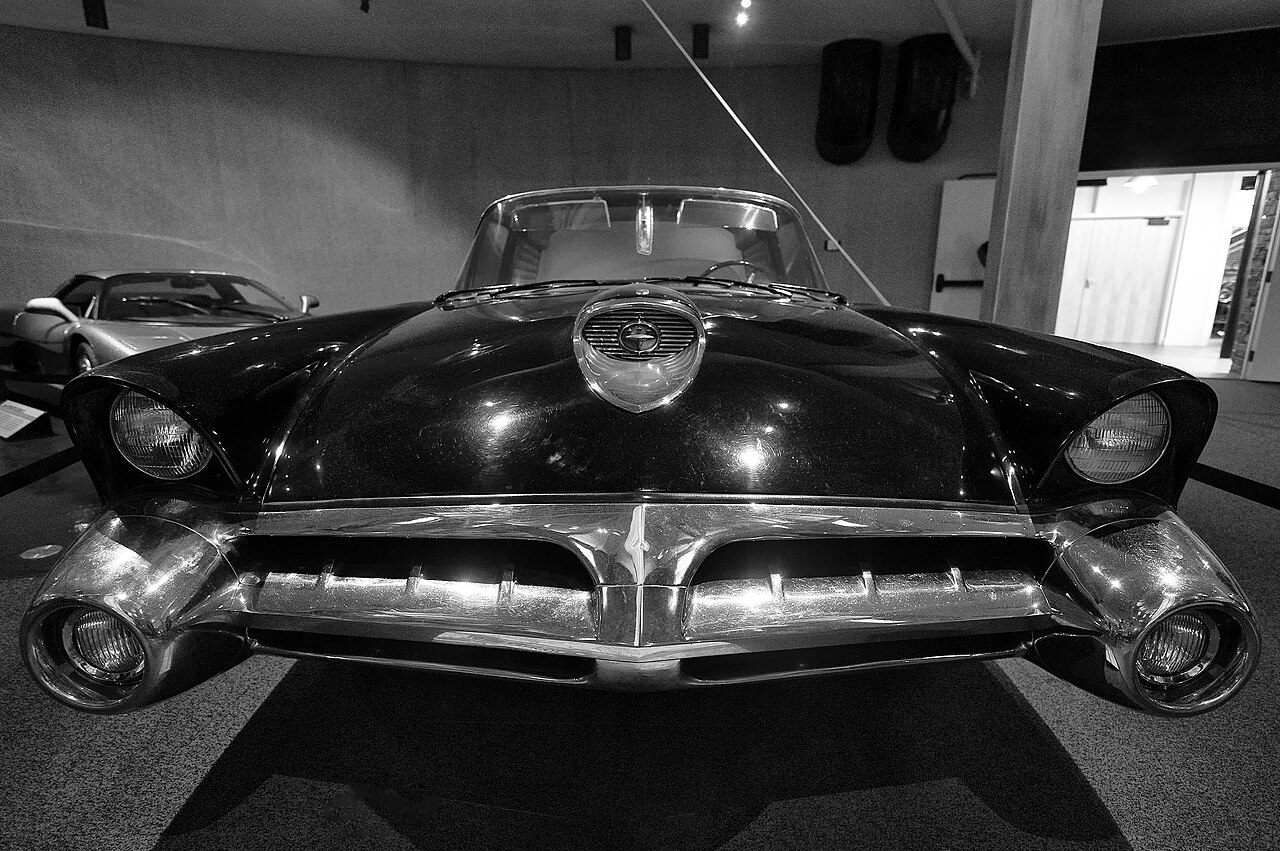
The frontal photograph shows a broad, dark body with rounded headlamp openings, a heavy horizontal brightwork element and a small passenger screen. The nose occupies much of the composition, making the car feel wide and substantial. Separate circular lamps and decorative openings create a face very different from the lean Mustang I shown elsewhere in this batch. The museum’s specification explains the large scale, but the photograph supplies the design argument: luxury is communicated through width, surfaces and generous ornament. The image should remain a documentary view of the preserved X-100, rather than a claim that every experimental feature is visible or demonstrably operational.
Identifying the original configuration
Use X-100 as the complete experimental identity. A title such as 1953 Ford convertible would lose the distinction between an ordinary production car and this particular preserved concept. The museum record anchors the year and engineering; the independently licensed photograph establishes the visual subject. The record does not need a guessed chassis number or a retail production count. When future archive material adds detail about development, equipment or construction, attach it to the same concept identity. That approach protects the profile from duplicate uploads under anniversary, show-car or experimental-car aliases while retaining the useful breadth of its history.
Collector context and preservation
A collection presentation can explain the X-100 through comparison rather than through a list of spectacular features. Put its broad frontal view beside the speedster’s long silhouette and the Mustang I’s compact open body. The three shapes show different answers to the question of what a special Ford could become. For preservation, record the concept’s controls and experimental equipment with dated photographs and operating notes when available. A feature can be important even when conserved as a display component. Keeping the physical museum object, its proposed functions and its documented mechanical specification together gives readers a more useful account than an unsupported production-style specification sheet.
Reading the evidence for this profile
The original source links below identify the programme and the historical statements used in this article. The photograph has its own creator and licence record, separate from the manufacturer’s vehicle history. Keep both when transferring this profile into a collection catalogue. A manufacturing tally describes how many cars belong to a defined original programme; it does not measure how many survive, how many are publicly visible, or how many retain all their original components. Those individual questions require dated chassis and restoration evidence. The reference year likewise describes the programme’s introduction or named historic configuration, while the supplied caption states the photographed setting and any established individual identity. This lets future research expand the car’s history without blurring the scope of the record already assembled here.
Specifications and verified rarity
| Reference year | 1953 |
|---|---|
| Model / programme | X-100 Concept |
| Body / role | Full-size experimental luxury concept |
| Documented engine | 317 cu in overhead-valve V8, rated 300 hp |
| Architecture / transmission | Three-speed automatic; experimental full-size concept architecture |
| Exact manufacturing tally | Not established |
| Eligibility bound | Physical concept archive scope; tally unknown |
| Rarity scope | Verified physical 1953 X-100 preserved by The Henry Ford. Concept archive record; no unsupported exact fabrication total or retail production claim. |
| Inventory reference | FRD-045 — Verified |
Frequently asked questions
What is the Ford X-100 Concept?
The Henry Ford’s preserved full-size 1953 experimental X-100, documented as a physical concept archive subject.
What engineering defines this Ford?
317 cu in overhead-valve V8, rated 300 hp. Three-speed automatic; experimental full-size concept architecture. These are the documented programme or preserved-concept specifications. Connect an individual vehicle’s installed components to its own dated records before assigning a factory configuration to that particular example.
Why is 1953 the reference year?
It identifies the introduction or original historical configuration described in this article. The photograph can show a later example or a later display of the original subject. The source inventory’s original heading remains an identity alias wherever the date or model name has been corrected.
How should an individual X-100 Concept be documented?
Start with the chassis identity and connect it to dated construction, registration or custodial records. Keep exterior, interior, engine and underbody photographs together. Record changes to finish, equipment and mechanical specification as separate events, so the physical car’s history can grow without changing the definition of the original programme.
What rarity or archive scope is verified?
Verified physical 1953 X-100 preserved by The Henry Ford. Concept archive record; no unsupported exact fabrication total or retail production claim.
Who took the supplied photograph?
Eric Kilby via Wikimedia Commons, under CC BY-SA 2.0. The original file and licence links accompany the image. Retain that credit when the photograph is uploaded, exported or reused.
Related Ford profiles
Sources and photo credits
Photograph: Eric Kilby via Wikimedia Commons original file, CC BY-SA 2.0. Source-provided photograph supplied without local cropping, retouching or text removal. A source thumbnail is used where available. Original 1953 Ford X-100 in The Henry Ford museum; a documentary frontal view of the preserved experimental car.
Built in limited numbers
Verified physical 1953 X-100 preserved by The Henry Ford. Concept archive record; no unsupported exact fabrication total or retail production claim.
Gallery
Specifications
Factory specifications may vary by model year, market and configuration.
Identity & production
- Official model
- X-100 Concept