1906 Ford Model K
Explore 1906 Ford Model K: sourced history, design, specifications, rarity evidence and a real photograph with creator credits.
The Ford Model K shows an early branch of the company’s engineering that differs sharply from the small mass-market Ford familiar to later generations.
History and purpose
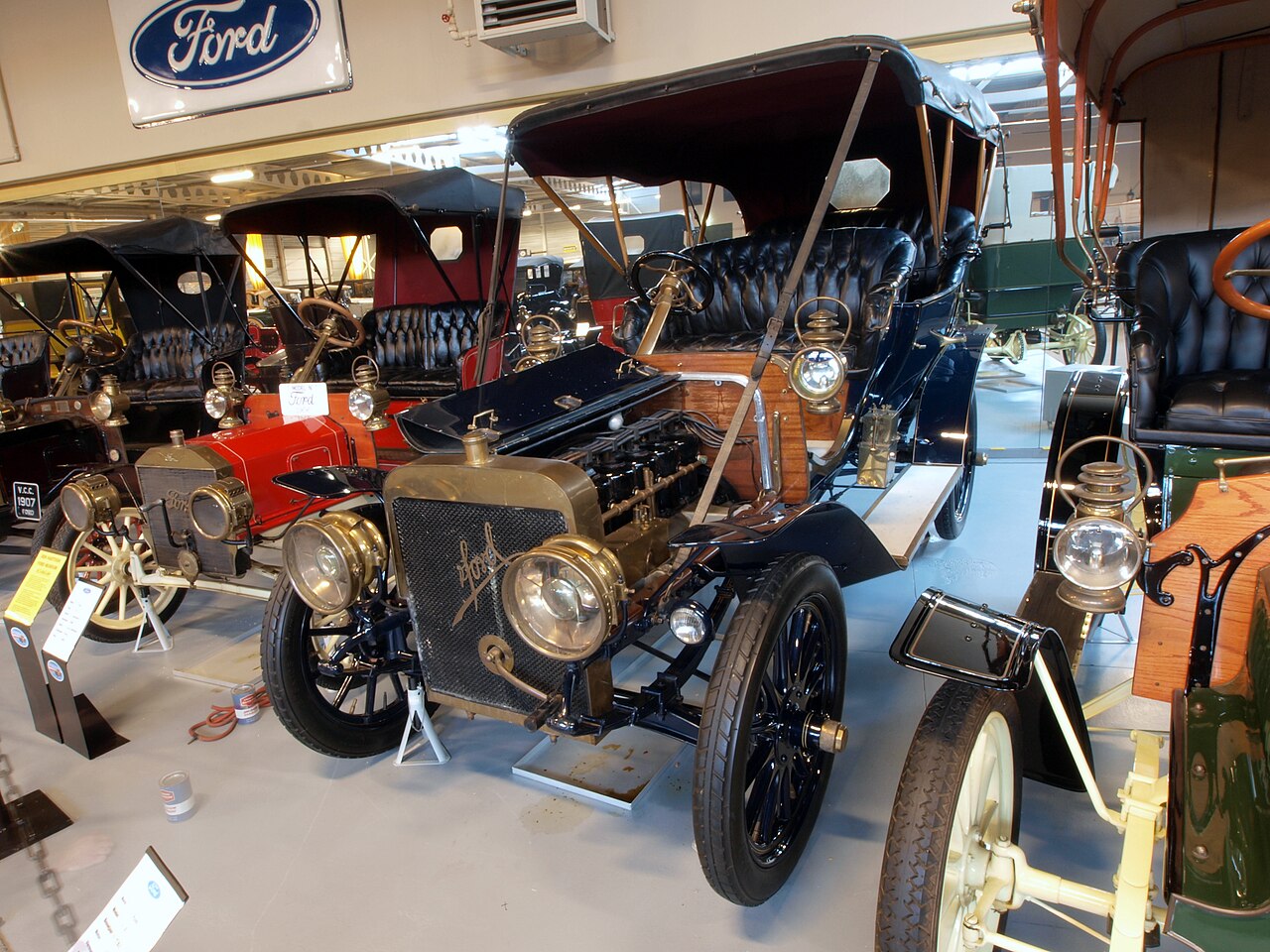
The Ford Model K shows an early branch of the company’s engineering that differs sharply from the small mass-market Ford familiar to later generations. Introduced in 1906, it used a large six-cylinder engine and offered substantial open-car proportions. The linked custodial research cites Ford records for nearly 1,000 Model Ks across the original programme. This profile covers that complete named series, including its touring and roadster configurations, rather than creating rarity through a single body-year slice. The museum photograph shows the touring form. The exact manufacturing tally is left unknown because the source’s wording is approximate rather than a complete numerical ledger.
Design and engineering
A long bonnet, exposed wheels and high open passenger body dominate the touring example. The cooling face is narrow in relation to the body’s length, while lamps and structural details sit visibly apart from the main bodywork. These features allow a viewer to follow the engine compartment, driver’s space and passenger accommodation as separate zones. The documented six-cylinder architecture gives a mechanical reason for the long front section. The photograph also makes a useful comparison with the Model B: the Model K feels extended and substantial, but remains rooted in the same early vocabulary of upright touring bodies, separate lighting and large spoked wheels.
Identifying the original configuration
A Model K record should state its body configuration without confusing that body with the whole programme. The auction source describes a roadster, while the supplied museum image shows a touring example; the article therefore uses only programme-level engineering from the custodial account. It does not assign the auction roadster’s serial number, survival history or accessories to the photographed car. The reference year is the introduction year of the Model K. A later surviving vehicle can still represent the programme, provided its own dating and body identity are retained. This treatment avoids creating two manufactured series from a pair of related body forms.
Collector context and preservation
Preserving an early Model K involves more than collecting a attractive frontal image. Side views can document wheelbase proportions, seating height and the shape of the bonnet; close-ups can connect controls and visible mechanical details to dated repair records. A collection file should explain which parts are period, restored or replaced when evidence exists. That makes the car’s historical engineering understandable without demanding an unsupported claim of untouched originality. The nearly 1,000-car figure belongs to the original programme. It should not become a statement about present survival, roadworthiness or the availability of any particular touring or roadster configuration.
Reading the evidence for this profile
The original source links below identify the programme and the historical statements used in this article. The photograph has its own creator and licence record, separate from the manufacturer’s vehicle history. Keep both when transferring this profile into a collection catalogue. A manufacturing tally describes how many cars belong to a defined original programme; it does not measure how many survive, how many are publicly visible, or how many retain all their original components. Those individual questions require dated chassis and restoration evidence. The reference year likewise describes the programme’s introduction or named historic configuration, while the supplied caption states the photographed setting and any established individual identity. This lets future research expand the car’s history without blurring the scope of the record already assembled here.
Specifications and verified rarity
| Reference year | 1906 |
|---|---|
| Model / programme | Model K |
| Body / role | Early six-cylinder touring programme |
| Documented engine | 405 cu in six-cylinder, rated 40 hp |
| Architecture / transmission | Front engine; two-speed planetary transmission |
| Exact manufacturing tally | Not established |
| Eligibility bound | 1000 for the documented scope or parent programme |
| Rarity scope | Complete original Ford Model K programme across its touring and roadster bodies. RM Sotheby’s cites Ford records indicating nearly 1,000 cars. Exact total and exact touring-body subset remain unset. |
| Inventory reference | FRD-004 — Verified |
Frequently asked questions
What is the Ford Model K?
Ford’s original large six-cylinder Model K programme, represented here by a touring-body museum example.
What engineering defines this Ford?
405 cu in six-cylinder, rated 40 hp. Front engine; two-speed planetary transmission. These are the documented programme or preserved-concept specifications. Connect an individual vehicle’s installed components to its own dated records before assigning a factory configuration to that particular example.
Why is 1906 the reference year?
It identifies the introduction or original historical configuration described in this article. The photograph can show a later example or a later display of the original subject. The source inventory’s original heading remains an identity alias wherever the date or model name has been corrected.
How should an individual Model K be documented?
Start with the chassis identity and connect it to dated construction, registration or custodial records. Keep exterior, interior, engine and underbody photographs together. Record changes to finish, equipment and mechanical specification as separate events, so the physical car’s history can grow without changing the definition of the original programme.
What rarity or archive scope is verified?
Complete original Ford Model K programme across its touring and roadster bodies. RM Sotheby’s cites Ford records indicating nearly 1,000 cars. Exact total and exact touring-body subset remain unset.
Who took the supplied photograph?
Alf van Beem via Wikimedia Commons, under CC0. The original file and licence links accompany the image. Retain that credit when the photograph is uploaded, exported or reused.
Related Ford profiles
Sources and photo credits
Photograph: Alf van Beem via Wikimedia Commons original file, CC0. Source-provided photograph supplied without local cropping, retouching or text removal. A source thumbnail is used where available. 1906-labelled Ford Model K touring car at the former Den Hartogh Ford Museum; complete-programme engineering, not the auction roadster’s individual identity.
Built in limited numbers
Complete original Ford Model K programme across its touring and roadster bodies. RM Sotheby’s cites Ford records indicating nearly 1,000 cars. Exact total and exact touring-body subset remain unset.
Gallery
Specifications
Factory specifications may vary by model year, market and configuration.
Identity & production
- Official model
- Model K