1904 Ford Model B
Explore 1904 Ford Model B: sourced history, design, specifications, rarity evidence and a real photograph with creator credits.
The Ford Model B represented a more substantial early automobile than the company’s under-seat-engine Model A.
History and purpose
The Ford Model B represented a more substantial early automobile than the company’s under-seat-engine Model A. Introduced late in 1904, it placed a four-cylinder engine at the front and used shaft drive. The side-entrance passenger body made it a touring proposition rather than a minimal runabout. RM Sotheby’s custodial history describes sales of around 500 before the Model K replaced it in 1906. This profile uses that approximate whole-programme figure as rarity evidence and leaves the exact manufacturing field empty. It does not turn a surviving example, a later auction date or a single registration year into a separate limited edition.
Design and engineering
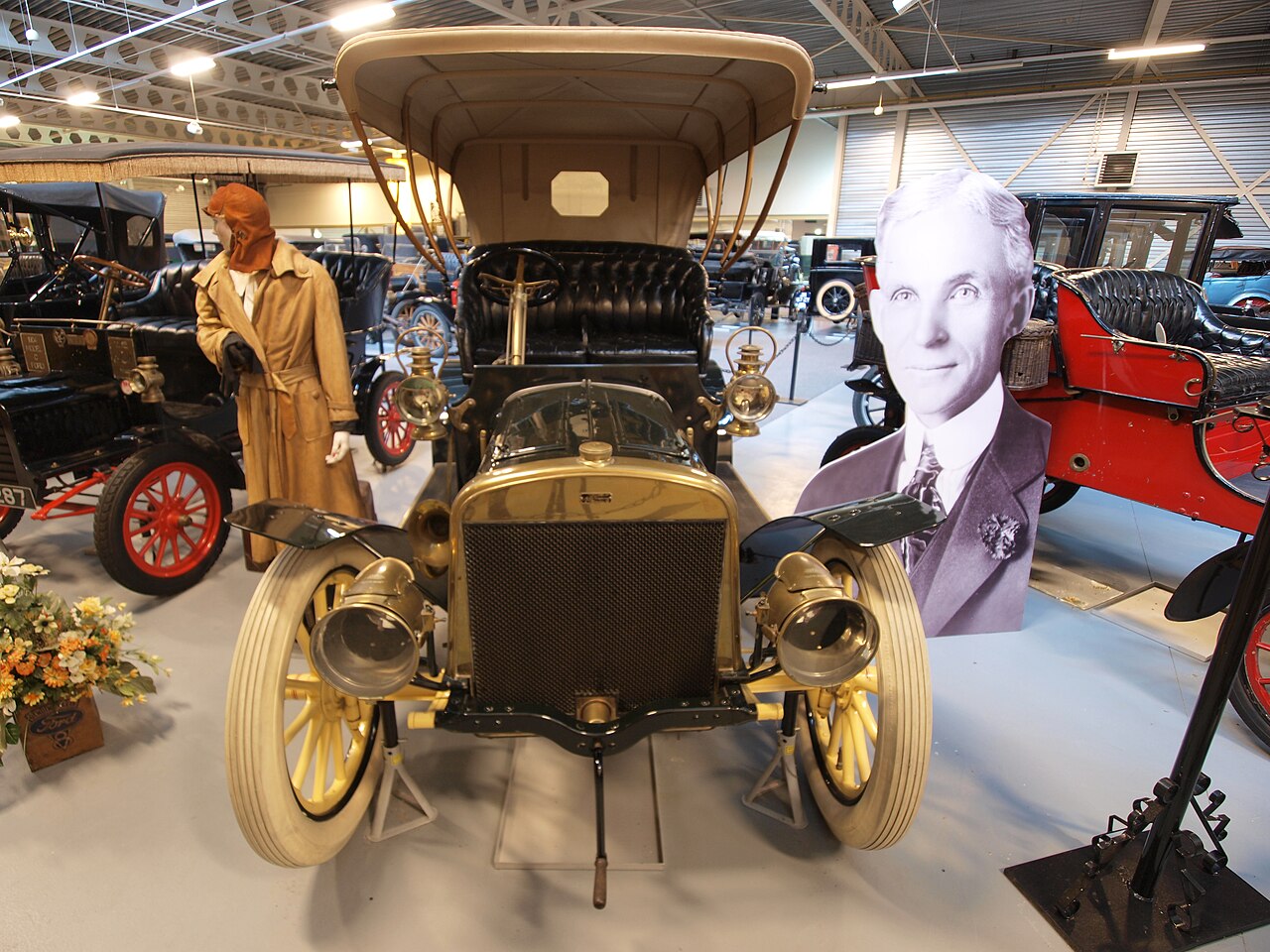
In the museum photograph, the tall cooling face and long upright bonnet make the front-engine layout immediately legible. Large lamps sit outside that central structure, while the high passenger canopy extends the car’s visual height. Pale wheels and chassis details contrast with the darker bodywork. The result reads as a substantial touring carriage with a power unit clearly placed ahead of its occupants. These visible relationships make an effective comparison with the earlier Model A: front, passenger space and wheels occupy different proportions even before the specification table is consulted. The picture explains architecture rather than merely supplying a decorative historic-car image.
Identifying the original configuration
Keep Model B tied to the 1904 introduction while recording a particular example’s own construction and registration dates separately. Early model histories often cross calendar years, and the linked custodial record concerns a 1905 example rather than the museum car in this photograph. Its replacement-engine history must not be transferred to another specimen. Equally, a model photograph cannot verify an unseen engine casting or original body timber. Individual records should connect chassis identity, body configuration and mechanical work. The profile establishes the original named programme and a matching visual example, leaving specimen-specific restoration claims to the vehicle’s actual documentation.
Collector context and preservation
A strong collection presentation can show how the Model B changed the passenger experience as well as the engine position. Photograph the entrance, seating, canopy supports and driver’s controls so a reader can understand how people occupied the vehicle. Retain the full side-entrance description in captions, because it adds useful information beyond the Ford badge. An archive should also distinguish the approximate programme count from any statement about surviving examples. The former describes historical scale; the latter would require a maintained census. Keeping those questions separate allows the profile to remain useful even as more restored cars and new documents become publicly visible.
Reading the evidence for this profile
The original source links below identify the programme and the historical statements used in this article. The photograph has its own creator and licence record, separate from the manufacturer’s vehicle history. Keep both when transferring this profile into a collection catalogue. A manufacturing tally describes how many cars belong to a defined original programme; it does not measure how many survive, how many are publicly visible, or how many retain all their original components. Those individual questions require dated chassis and restoration evidence. The reference year likewise describes the programme’s introduction or named historic configuration, while the supplied caption states the photographed setting and any established individual identity. This lets future research expand the car’s history without blurring the scope of the record already assembled here.
Specifications and verified rarity
| Reference year | 1904 |
|---|---|
| Model / programme | Model B |
| Body / role | Four-cylinder side-entrance touring car |
| Documented engine | Front-mounted inline four, rated 24 hp |
| Architecture / transmission | Shaft drive; two-speed planetary transmission |
| Exact manufacturing tally | Not established |
| Eligibility bound | 500 for the documented scope or parent programme |
| Rarity scope | Complete original Model B programme, introduced late in 1904. The custodial source reports around 500 sold before replacement by the Model K. This is an approximate programme-scale figure, not a verified exact manufacturing tally. |
| Inventory reference | FRD-003 — Verified |
Frequently asked questions
What is the Ford Model B?
Ford’s early front-engine four-cylinder touring programme, with side-entrance passenger accommodation and an approximate complete-series figure of 500.
What engineering defines this Ford?
Front-mounted inline four, rated 24 hp. Shaft drive; two-speed planetary transmission. These are the documented programme or preserved-concept specifications. Connect an individual vehicle’s installed components to its own dated records before assigning a factory configuration to that particular example.
Why is 1904 the reference year?
It identifies the introduction or original historical configuration described in this article. The photograph can show a later example or a later display of the original subject. The source inventory’s original heading remains an identity alias wherever the date or model name has been corrected.
How should an individual Model B be documented?
Start with the chassis identity and connect it to dated construction, registration or custodial records. Keep exterior, interior, engine and underbody photographs together. Record changes to finish, equipment and mechanical specification as separate events, so the physical car’s history can grow without changing the definition of the original programme.
What rarity or archive scope is verified?
Complete original Model B programme, introduced late in 1904. The custodial source reports around 500 sold before replacement by the Model K. This is an approximate programme-scale figure, not a verified exact manufacturing tally.
Who took the supplied photograph?
Alf van Beem via Wikimedia Commons, under CC0. The original file and licence links accompany the image. Retain that credit when the photograph is uploaded, exported or reused.
Related Ford profiles
Sources and photo credits
Photograph: Alf van Beem via Wikimedia Commons original file, CC0. Source-provided photograph supplied without local cropping, retouching or text removal. A source thumbnail is used where available. 1904-labelled Ford Model B at the former Den Hartogh Ford Museum; the photograph is not assigned to the auction-source chassis.
Built in limited numbers
Complete original Model B programme, introduced late in 1904. The custodial source reports around 500 sold before replacement by the Model K. This is an approximate programme-scale figure, not a verified exact manufacturing tally.
Gallery
Specifications
Factory specifications may vary by model year, market and configuration.
Identity & production
- Official model
- Model B