1903 Ford Model A Rear-Entry Tonneau
Explore 1903 Ford Model A Rear-Entry Tonneau: sourced history, design, specifications, rarity evidence and a real photograph with creator credits.
The 1903 Ford Model A rear-entry tonneau belongs to the beginning of Ford Motor Company’s production history.
History and purpose
The 1903 Ford Model A rear-entry tonneau belongs to the beginning of Ford Motor Company’s production history. Its extra passenger accommodation makes it a specific body configuration within the original Model A programme. The company’s later 1928 Model A is a separate design and should always carry its own date. RM Sotheby’s original custodial account anchors the early tonneau’s mechanical layout, while the Henry Ford Heritage Association records 1,708 cars for the complete early Model A series. That parent figure establishes the programme’s small scale without pretending to resolve the number completed with this particular passenger body.
Design and engineering
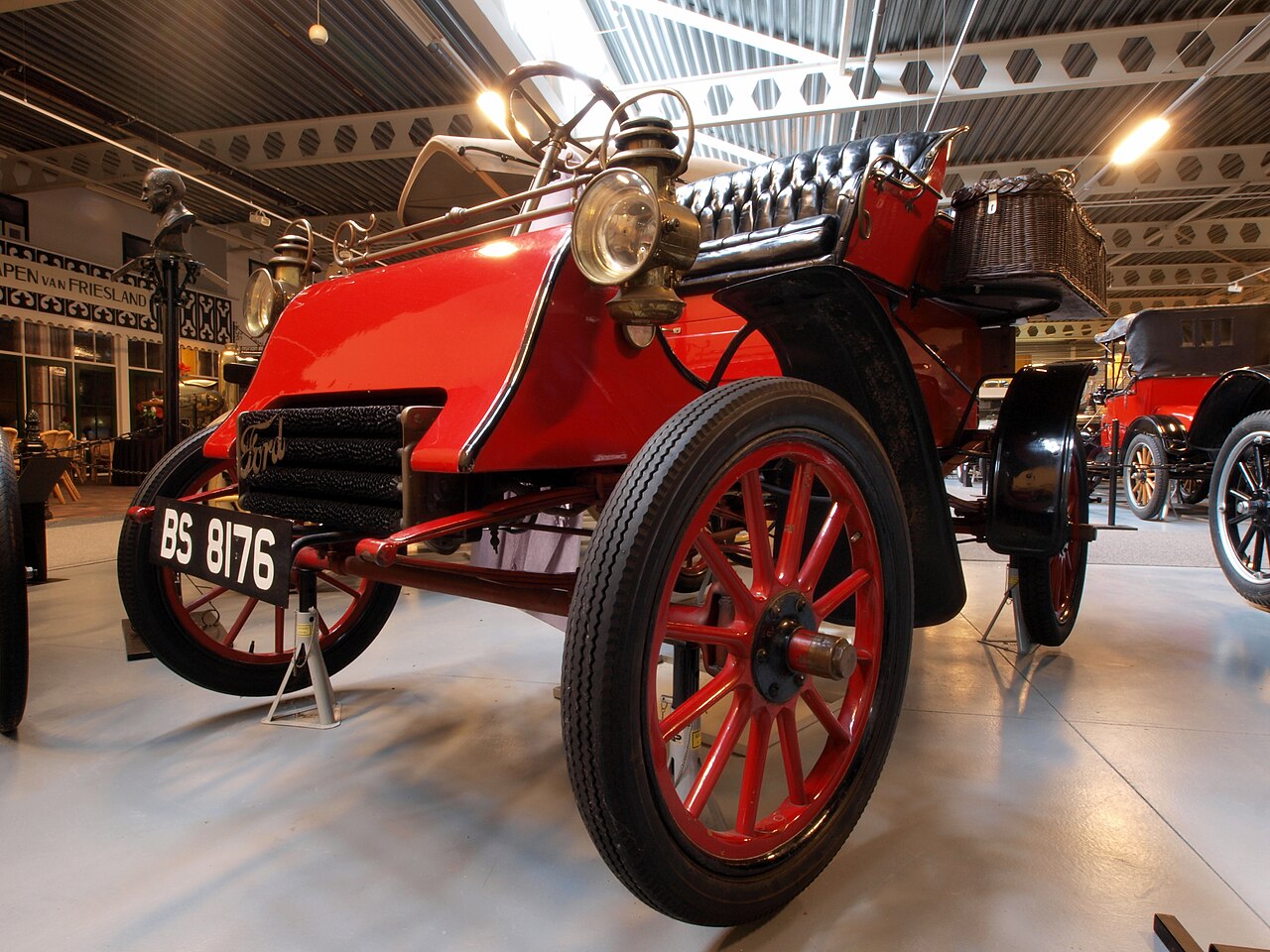
The photograph shows a compact carriage-like vehicle in red, with exposed wheels, separate lamps and seating rising above a short body. Large spokes and slim tyres leave the mechanical structure visually prominent. The opposed two-cylinder engine sits beneath the seating area rather than beneath the long bonnet associated with later Fords. That arrangement helps explain the unusually compact nose. The rear passenger accommodation also belongs to the identity of a tonneau: it adds useful capacity while keeping the basic early-car architecture visible. A collection display can make this relationship clear by pairing the frontal photograph with a future side view of the body.
Identifying the original configuration
Use the complete name, year and body configuration together when cataloguing this car. A broad title such as Ford Model A can mix two very different periods of Ford history; a title such as 1903 runabout can lose the rear passenger body. The supplied Den Hartogh museum photograph documents a tonneau example, but it does not identify it as the particular chassis sold in the linked auction. The auction car’s individual history therefore remains attached to that source record. A model-level article can use its documented architecture while leaving the photographed example’s chassis number and ownership chain unset.
Collector context and preservation
The Model A is useful in a collection because its construction is easy to read. The viewer can follow wheels, lamps, passenger accommodation and exposed structure without needing a cutaway illustration. Preserve those relationships with clear whole-car views before adding close-ups of controls or serial marks. The main historical interest is the original programme and its early engineering, rather than a claim that every present component has survived untouched. Paint, upholstery, tyres and mechanical repairs should have dated entries. That approach lets a vehicle profile explain both the historic design and the later work that keeps a surviving early automobile presentable.
Reading the evidence for this profile
The original source links below identify the programme and the historical statements used in this article. The photograph has its own creator and licence record, separate from the manufacturer’s vehicle history. Keep both when transferring this profile into a collection catalogue. A manufacturing tally describes how many cars belong to a defined original programme; it does not measure how many survive, how many are publicly visible, or how many retain all their original components. Those individual questions require dated chassis and restoration evidence. The reference year likewise describes the programme’s introduction or named historic configuration, while the supplied caption states the photographed setting and any established individual identity. This lets future research expand the car’s history without blurring the scope of the record already assembled here.
Specifications and verified rarity
| Reference year | 1903 |
|---|---|
| Model / programme | Model A Rear-Entry Tonneau |
| Body / role | Open rear-entry tonneau |
| Documented engine | Under-seat opposed two-cylinder, rated 8 hp |
| Architecture / transmission | Two-speed planetary transmission; chain final drive |
| Exact manufacturing tally | Not established |
| Eligibility bound | 1708 for the documented scope or parent programme |
| Rarity scope | Original 1903 Model A rear-entry tonneau configuration within the complete 1,708-car Model A parent programme. Exact tonneau-body tally is unknown; the bound is the whole original Model A series, not a count of survivors. |
| Inventory reference | FRD-001 — Verified |
Frequently asked questions
What is the Ford Model A Rear-Entry Tonneau?
The original 1903 Ford Model A with a rear-entry passenger tonneau; distinct from both its runabout body and the later 1928 Model A.
What engineering defines this Ford?
Under-seat opposed two-cylinder, rated 8 hp. Two-speed planetary transmission; chain final drive. These are the documented programme or preserved-concept specifications. Connect an individual vehicle’s installed components to its own dated records before assigning a factory configuration to that particular example.
Why is 1903 the reference year?
It identifies the introduction or original historical configuration described in this article. The photograph can show a later example or a later display of the original subject. The source inventory’s original heading remains an identity alias wherever the date or model name has been corrected.
How should an individual Model A Rear-Entry Tonneau be documented?
Start with the chassis identity and connect it to dated construction, registration or custodial records. Keep exterior, interior, engine and underbody photographs together. Record changes to finish, equipment and mechanical specification as separate events, so the physical car’s history can grow without changing the definition of the original programme.
What rarity or archive scope is verified?
Original 1903 Model A rear-entry tonneau configuration within the complete 1,708-car Model A parent programme. Exact tonneau-body tally is unknown; the bound is the whole original Model A series, not a count of survivors.
Who took the supplied photograph?
Alf van Beem via Wikimedia Commons, under CC0. The original file and licence links accompany the image. Retain that credit when the photograph is uploaded, exported or reused.
Related Ford profiles
Sources and photo credits
- Manufacturer, institutional or original custodial record
- Henry Ford Heritage Association: complete early Model A programme
Photograph: Alf van Beem via Wikimedia Commons original file, CC0. Source-provided photograph supplied without local cropping, retouching or text removal. A source thumbnail is used where available. 1903 Ford Model A rear-entry tonneau at the former Den Hartogh Ford Museum; no individual chassis number assigned.
Built in limited numbers
Original 1903 Model A rear-entry tonneau configuration within the complete 1,708-car Model A parent programme. Exact tonneau-body tally is unknown; the bound is the whole original Model A series, not a count of survivors.
Gallery
Specifications
Factory specifications may vary by model year, market and configuration.
Identity & production
- Official model
- Model A Rear-Entry Tonneau