Modern coachbuilding and bespoke bodies: five rare-car design programmes
A small-series body can change the way familiar engineering is understood. The shape is the beginning of the story; the collaboration, manufacturing process and precise programme identity explain how it came into being.
Modern coachbuilding is not a single production method. An external design house working with a manufacturer, an in-house bespoke division and a manufacturer’s own labour-intensive special project are related approaches, but they are not interchangeable descriptions.
This selection puts those approaches alongside one another. The purpose is to understand who shaped the car, what was distinctive about the project and which parts of its identity belong to the body programme. It is a design and manufacturing story rather than a ranking of exclusivity.
01 / A collaboration becomes a family — Aston Martin Vanquish Zagato Coupé
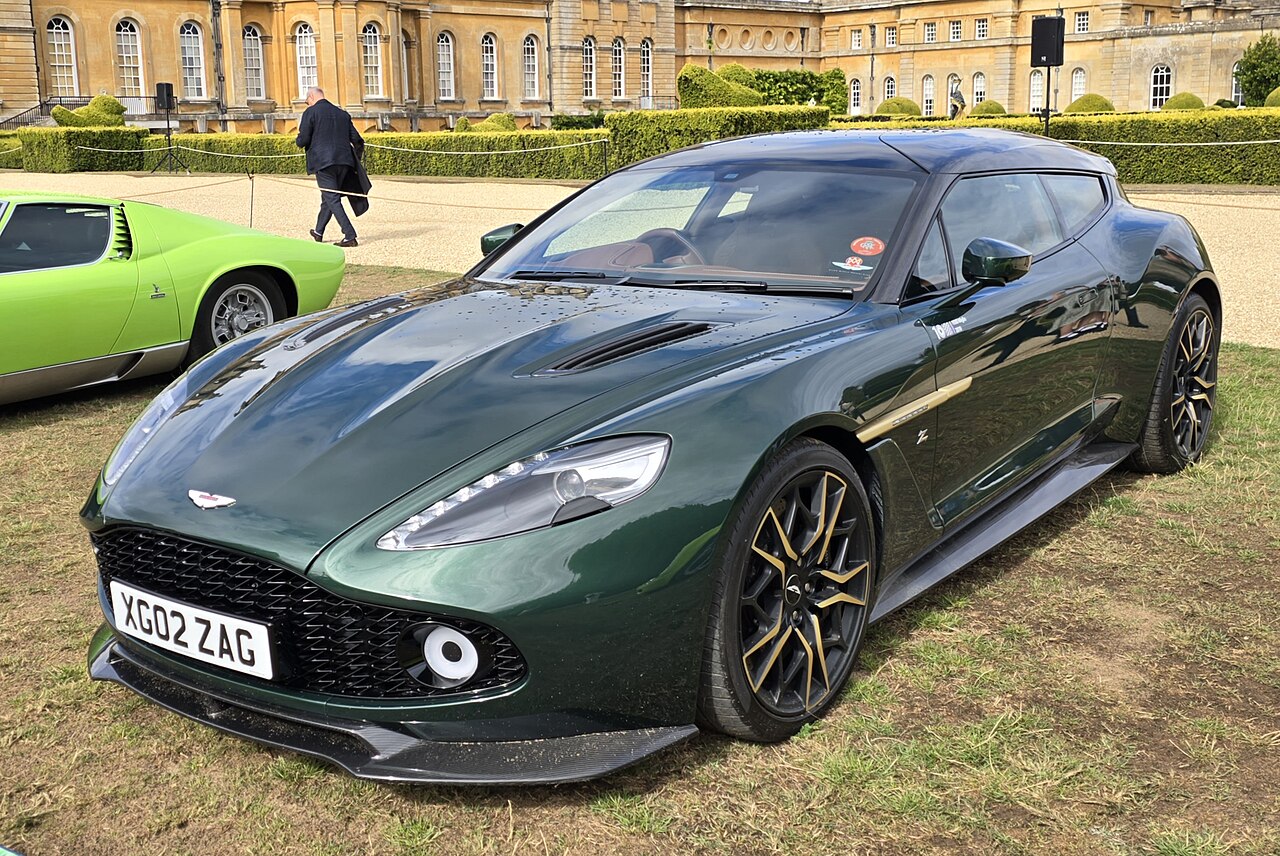
Aston Martin’s Vanquish Zagato programme eventually included a coupé, Volante, Speedster and Shooting Brake. The manufacturer announced 99 coupés, 99 Volantes, 28 Speedsters and 99 Shooting Brakes. The linked profile concerns the coupé; its 99-car scope should stay attached to that body style. [1]
The family demonstrates a useful distinction between a shared design partnership and a single vehicle programme. A collaboration can establish a visual vocabulary and then use it to create several different body configurations. Similar names and related styling do not erase those configurations.
When studying a coachbuilt collection, begin by naming the precise body. Then ask which elements of the underlying engineering remain familiar and which aspects of the object are specific to the collaboration. This provides a more useful framework than assuming that every limited version of a model carries the same significance.
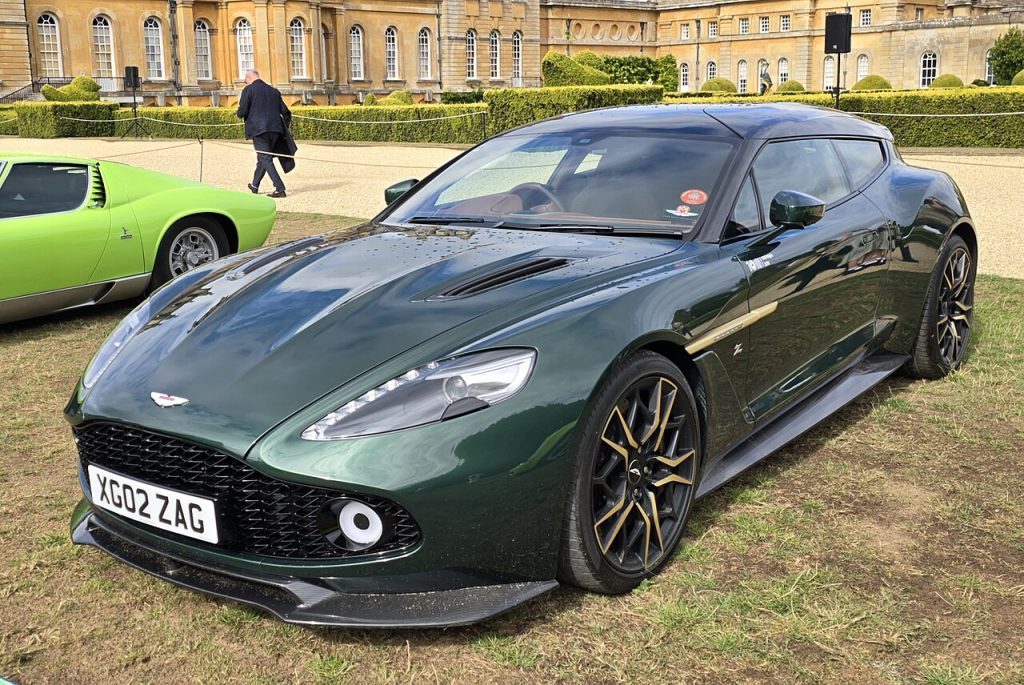
Aston Martin Vanquish Zagato Coupe
The Vanquish Zagato coupe turned a May 2016 Villa d’Este concept into a 99-car limited series built at Gaydon. Its carbon-fibre coachwork, double-bubble roof and circular rear-light treatment connected Aston Martin’s flagship…
Explore the full profile02 / The in-house coachbuilder — Bentley Bacalar
Bentley presented the Bacalar as a return to the pinnacle of coachbuilding through Mulliner, its in-house specialist division. The programme comprised 12 individually specified barchettas. Bentley’s account places personal specification and handcraft at the centre of the project. [2]
The small number is important, but the division of responsibilities is equally revealing. Mulliner is part of Bentley; this is a different organisational relationship from a manufacturer commissioning an entirely separate design house. Both can produce a bespoke body, yet their development and customer processes need not be identical.
The Bacalar also shows why an individual car’s specification belongs beside the programme record. A series can have a consistent overall identity while giving its owners considerable freedom over finishes and materials. Programme rarity and the uniqueness of an individual combination are two distinct layers of the same object.
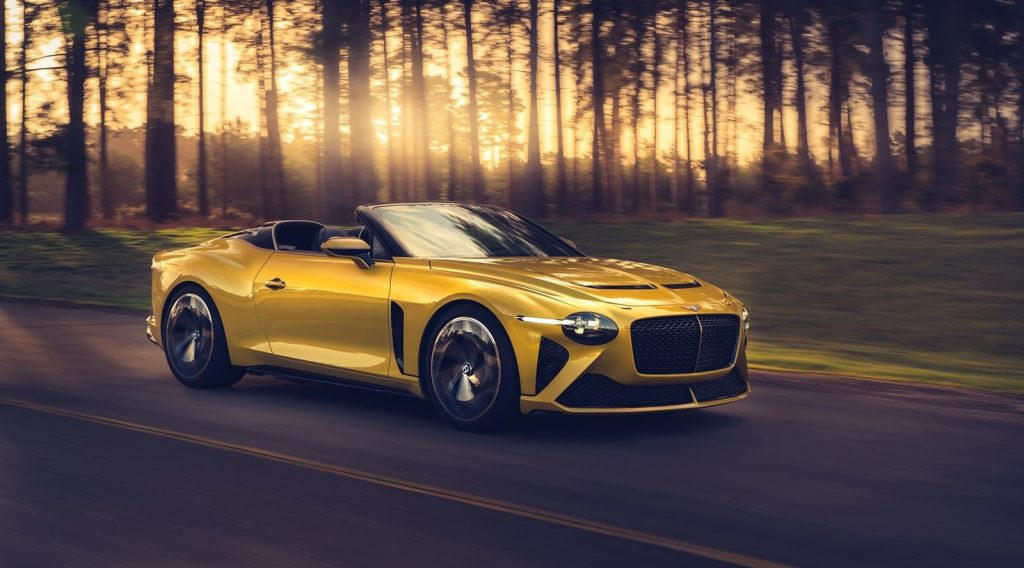
Bentley Bacalar by Mulliner
The Bacalar marks Mulliner’s return to bespoke coachbuilding with a twelve-customer-car programme. Unveiled at Crewe in March 2020, the two-seat barchetta combines a roofless body with a 650 bhp W12 and materials…
Explore the full profile03 / A small series points forward — Bentley Batur
Bentley announced the Batur coupé as a collection of 18 series cars and described it as the beginning of a new design direction. The manufacturer identified Mulliner as the division responsible for the project. This chapter concerns that coupé programme, rather than the separately developed Batur Convertible. [3]
Coachbuilding need not be an exercise in looking backwards. A small-series model can give a manufacturer room to explore a future visual identity before related ideas appear more widely. In that role, the car becomes both an individual product and a statement about direction.
For the reader, the useful question is which details belong to that statement. Study the relationship of the front, cabin and rear as a whole, then follow the manufacturer’s explanation of the programme. A photograph provides the form; the project account explains the intention behind it.
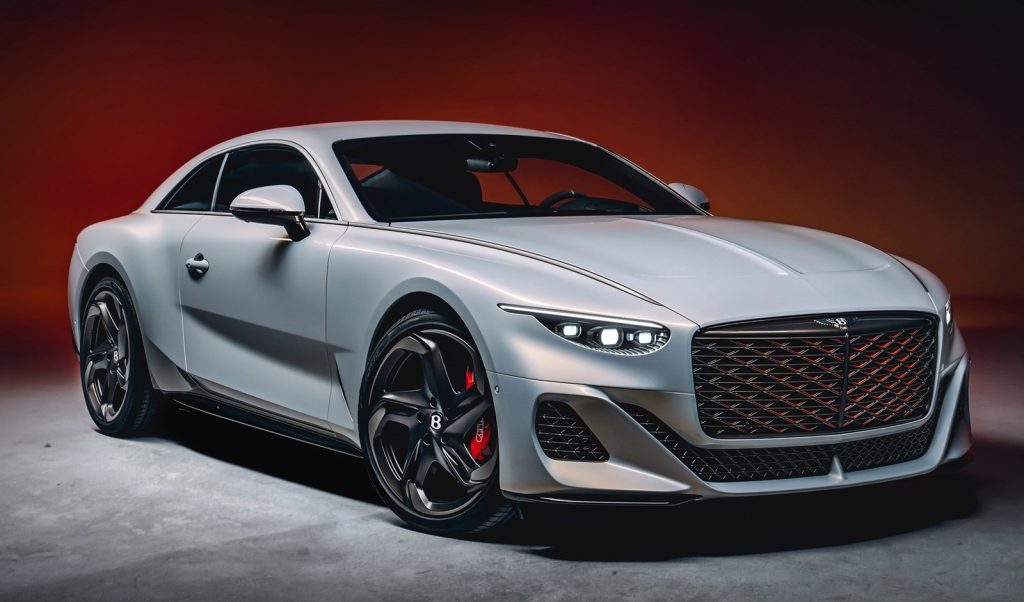
Bentley Batur by Mulliner
The Batur by Mulliner is an eighteen-customer-car coachbuilt coupé introduced in August 2022. It combines a new Bentley design direction with the final development era of the W12. Later engineering releases identify…
Explore the full profile04 / An earlier chapter in the partnership — Aston Martin DB7 Zagato
Aston Martin describes the DB7 Zagato as a project first discussed at Pebble Beach in 2001, with a plan for 99 examples. The manufacturer’s history treats the closed DB7 Zagato and the open DB AR1 as separate derivatives, each with its own 99-car production scope. [4] [6]
The distinction is a reminder that the story of a design partnership is broader than any one model. Looking at successive projects can reveal continuity in the relationship while preserving each car’s individual brief. A shared badge or designer does not make the projects interchangeable.
The DB7 name also provides a useful anchor. A reader can follow the relationship between the underlying model family and the design collaboration without reducing the result to a cosmetic package. In an archive, recording both identities makes the car easier to place in the histories of the manufacturer and the design house.
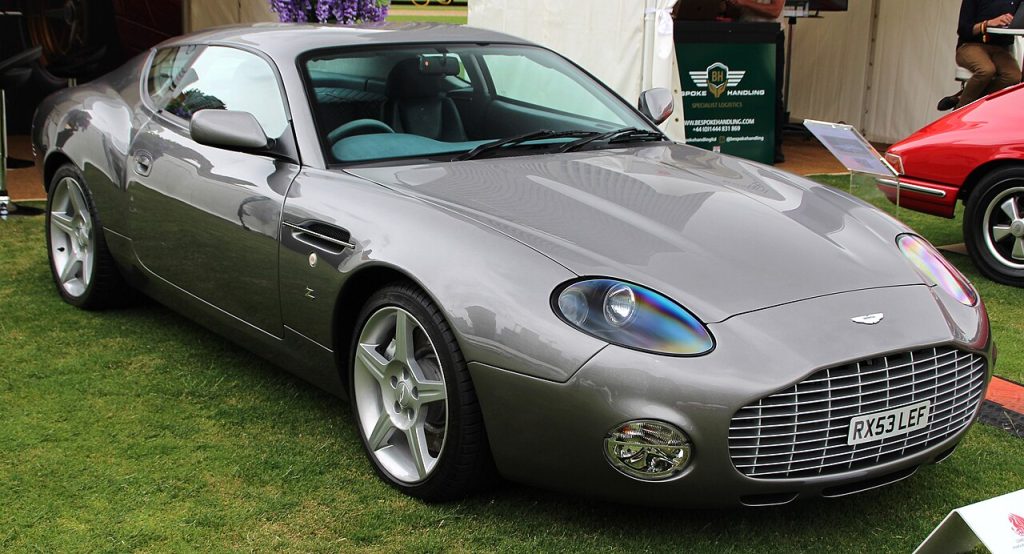
Aston Martin DB7 Zagato
The DB7 Zagato brought distinctive closed coachwork to a ninety-nine-car customer programme at the end of the DB7 era. Its 2002 announcement and prototype preceded the 2003 customer model. The double-bubble roof,…
Explore the full profile05 / A manufacturer’s own bespoke process — BMW 3.0 CSL
BMW announced the 2022 3.0 CSL as a run of exactly 50 consecutively numbered cars. Its press kit describes hand-produced carbon-fibre components, a specialised painting process and an assembly sequence involving eight production stations. This is BMW’s own small-series manufacturing project, rather than an external coachbuilder commission. [5]
Including it here makes the boundary of the subject clearer. Bespoke bodywork and elaborate handcraft can exist inside a manufacturer as well as through a traditional design-house partnership. The organisation and process should be described accurately instead of stretching one label to cover everything.
The numbered programme, historical name and production method each contribute a different part of the identity. Keeping them separate helps explain why the car matters: one tells us its scale, another its reference point, and the third how it was made.
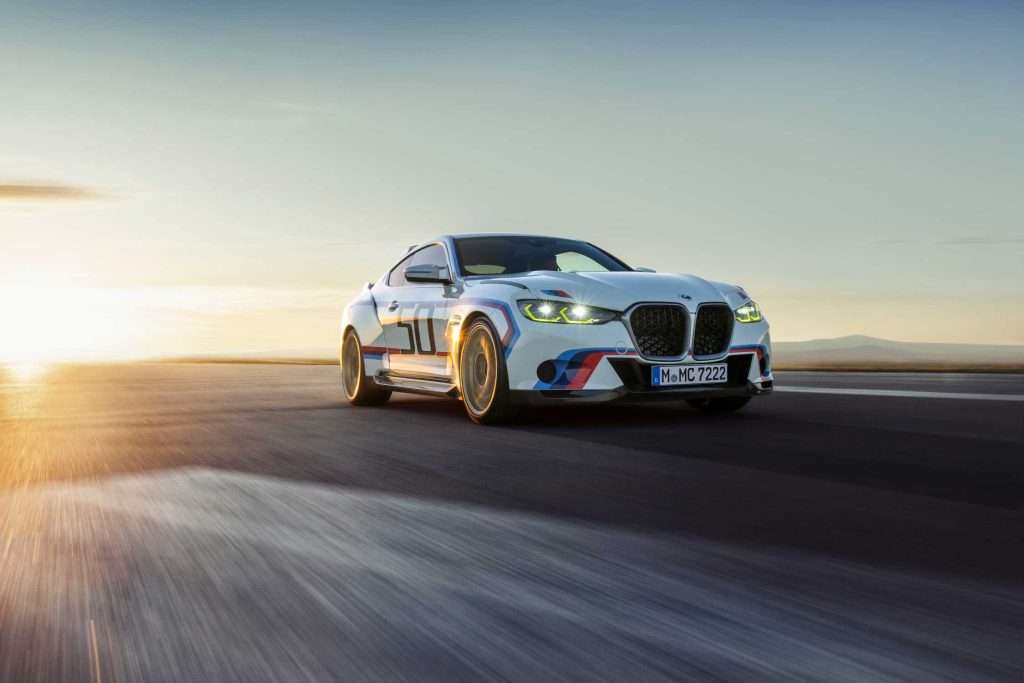
BMW 3.0 CSL — 2022 Fifty-Car Series
The 2022 BMW 3.0 CSL revived one of the marque’s most important names in a fifty-car anniversary series. Created for BMW M’s fiftieth birthday, the new coupé combined a manual gearbox, rear-wheel…
Explore the full profileFollow the people as well as the shape
The best way into these programmes is to build a small project record: manufacturer, design collaborator or in-house division, body style, stated production scope and original specification. This preserves the chain of responsibility behind the finished car.
It also prevents several common confusions. A prototype can belong to the same design story without being another customer car. An open derivative can share a partnership while remaining a separate programme. An individually specified finish can be unusual without creating another independently documented production series.
Collecting the linked profiles brings those distinctions together. The result is a history of how manufacturers choose to work at a small scale: with partners, specialist divisions and dedicated processes that give an existing technical vocabulary a different physical form.
Sources & further reading
- Aston Martin: The Vanquish Zagato quartet — The four body programmes and their announced numbers.
- Bentley: Bacalar and the return to coachbuilding — Mulliner’s 12-car project.
- Bentley: Batur starts a design revolution — The 18-car coupé programme and design direction.
- Aston Martin: DB7 Zagato — Origins of the project and planned customer series.
- BMW: The BMW 3.0 CSL — Fifty-car edition and dedicated manufacturing process.
- Aston Martin: DB7 Zagato and DB AR1 — Factory heritage account stating 99 examples of each derivative.