Bentley Bacalar by Mulliner
The Bacalar marks Mulliner’s return to bespoke coachbuilding with a twelve-customer-car programme. Unveiled at Crewe in March 2020, the two-seat barchetta combines a roofless body with a 650 bhp W12 and materials influenced by EXP 100 GT. Each customer car was individually commissioned; the launch and development vehicles remain separately identified photographic subjects.
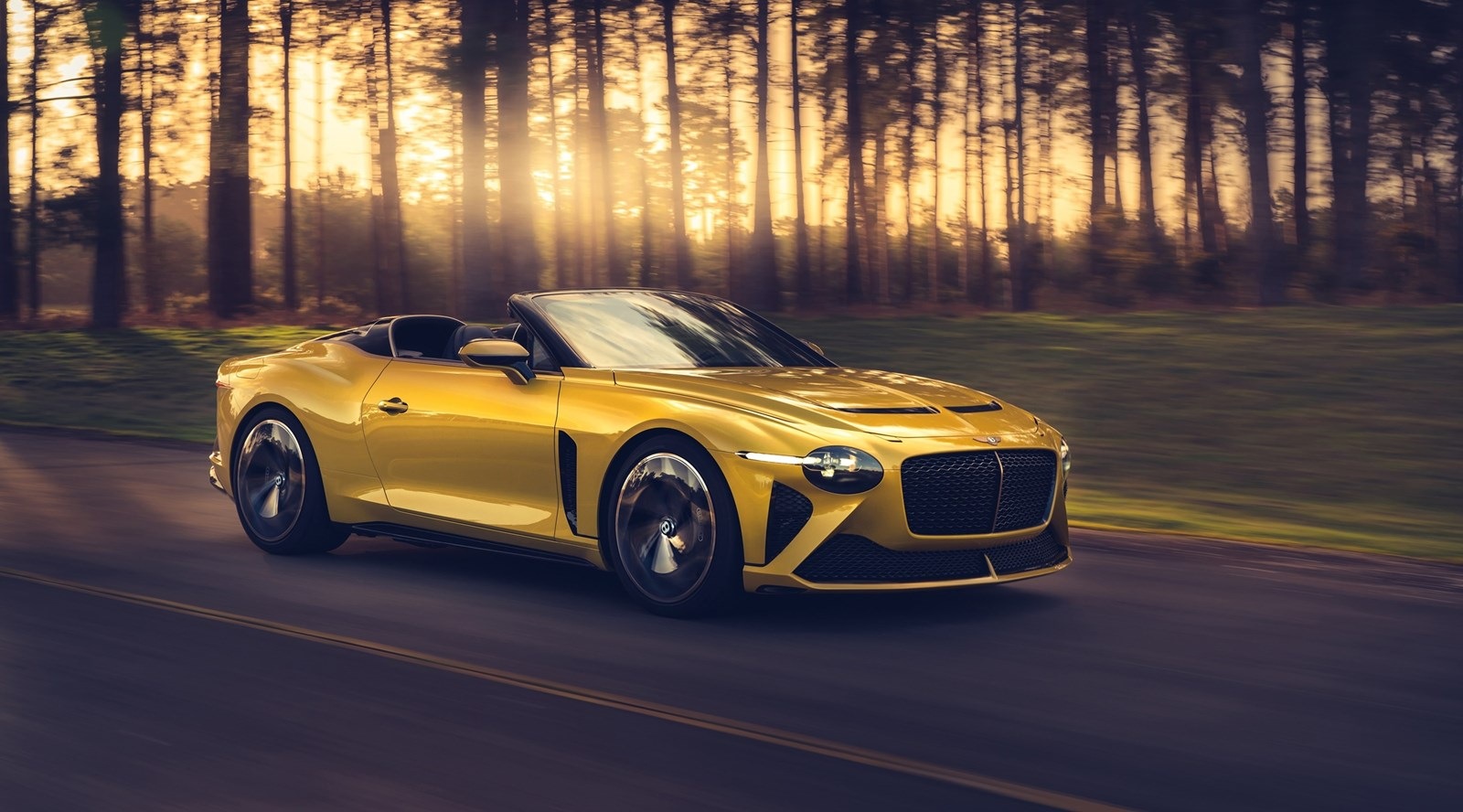
The Bacalar marks Mulliner’s return to bespoke coachbuilding with a twelve-customer-car programme. Unveiled at Crewe in March 2020, the two-seat barchetta combines a roofless body with a 650 bhp W12 and materials influenced by EXP 100 GT. Each customer car was individually commissioned; the launch and development vehicles remain separately identified photographic subjects.
Bentley Bacalar by Mulliner at a glance
| Manufacturer | Bentley |
|---|---|
| Model / family | Bacalar |
| Profile scope | Limited coachbuilt customer programme |
| Historical reference year | 2020 |
| Inventory reference | BEN-137 |
| Engine reference | 6.0-litre twin-turbocharged W12 |
| Documented production scope | 12 — Twelve customer Bacalars; development Car Zero separate |
| Manufacturer power reference | 650 bhp; dated model reference |
A return to a specifically coachbuilt Bentley
Bacalar is a distinct Mulliner coachbuilt model, rather than a Continental GT fitted with a finishing package. Its name and body define a separate programme whose customers could work directly with the design team. That makes the model an important point in a Bentley archive: it explains how individual commissioning can extend beyond paint, upholstery and badges into the vehicle’s exterior form. The word coachbuilt should be read through that physical distinction. Study the front lighting, cockpit boundary and rear body together. They reveal a coherent model shape, with its own visual identity, rather than a group of decorative additions to a familiar coupé.
Twelve customer cars, with development vehicles kept separate
The March 2020 launch describes twelve allocated customer cars. Bentley’s later Stockholm account states that twelve units had been produced and separately identifies Bacalar Car Zero. This profile therefore keeps the twelve-car scope attached to the customer programme. It does not absorb every development or presentation vehicle into the same number. Such distinctions matter in very small programmes because one extra demonstrator changes the apparent population substantially. An individual car’s identity should record whether it is a commissioned customer vehicle or a development example. The launch image used here illustrates the model and is not presented as an identified member of the twelve customer chassis.
What barchetta means in the Bacalar’s design
Bacalar is deliberately roofless, with two seats and a body shaped around the open cockpit. That is different from a Continental convertible whose folding hood can enclose the passenger compartment. The distinction changes the design discussion: the cockpit edge, rear cowls and windscreen become especially important parts of the car’s visible architecture. Look at how the body wraps around the occupants and continues behind them. Those surfaces define the passenger experience even when the car is stationary. The profile does not imply hidden weather protection from the convertible models elsewhere in the archive. Its open form is central to the Bacalar’s identity and the brief behind the customer programme.
The W12 specification and its labelled units
Bentley’s model reference gives the 6.0-litre W12 659 PS, quoted as 650 bhp, with 900 Nm. Those power units describe the same published output and should remain labelled when comparing records. The engine reference places Bacalar beside other W12 grand tourers, but the coachbuilt body gives it a different use and visual character. A technical file should connect the dated model specification with the particular car’s original build information. The engine layout alone does not establish Bacalar identity. The model’s appeal comes from the combination of a substantial grand-touring powertrain, a two-seat open cabin and an individually commissioned exterior and interior treatment.
The body is more than a trim variation
The launch account describes bodywork created specifically for Bacalar and a mix of aluminium and carbon-fibre components. That gives the coachbuilding claim a concrete basis. A reader can study how the front, doors and rear deck differ from other Bentley models without assuming every structure underneath is unrelated. New bodywork and shared engineering can coexist within a modern coachbuilt programme. This is a useful comparison with edition cars such as Number 1: an edition can be rare and carefully finished while retaining the standard model’s body architecture. Bacalar takes the commissioning brief further by giving the car a separate exterior design.
From concept materials to a customer programme
Bentley connects Bacalar’s materials with ideas first shown in EXP 100 GT, including Riverwood, wool and paint incorporating rice-husk ash. The interesting question is how a concept’s material proposal becomes part of a car that customers can commission. In Bacalar, the open cabin gives those choices a prominent place in the design. A useful archive file photographs the veneers and textiles in context, alongside the original specification. That allows readers to distinguish an available material from the particular combination chosen for one car. It also avoids treating a launch vehicle’s upholstery and paint as compulsory for every member of an individually tailored programme.
Reading the launch photograph accurately
The bundled image is Bentley’s March 2020 Bacalar launch imagery. It shows the model in the manufacturer’s presentation, with its open cockpit and distinctive body clearly visible. The caption does not assign an unsupported customer chassis number to it. That is especially important for Bacalar because Car Zero later appeared in different finishes and presentation settings. Photographs can illustrate the coachbuilt model while still needing an individual-subject label. Here, the source and credit preserve what is known: this is the launch vehicle used to introduce the programme, rather than a generic Continental convertible or a fabricated image of a customer commission.
Bacalar between EXP 100 GT and Batur
The Bacalar profile forms a useful bridge between a future-facing concept and the later Batur coachbuilt coupé. EXP 100 GT proposed new visual and material ideas; Bacalar translated selected influences into a roofless customer model; Batur explored another body form and design direction. These are connected programmes, but they have different physical subjects and counts. Bacalar’s twelve customer cars remain a defined population within that story. For a collector archive, the model matters because it makes the return to contemporary Bentley coachbuilding tangible through a separate body, an open two-seat brief and a commissioning process that allowed each completed car to have its own configuration.
Frequently asked questions
How many customer Bacalars were made?
Bentley’s later account states twelve were produced. That customer-car scope is kept separate from Car Zero.
Does Bacalar have a folding roof?
No. Bentley describes it as a roofless two-seat barchetta, distinct from the Continental convertible.
What power does Bentley quote?
659 PS, quoted as 650 bhp, from the 6.0-litre W12, with 900 Nm.
Is the photographed launch car assigned to a customer chassis?
No. The caption identifies the manufacturer’s launch vehicle and does not invent customer-car membership.
Explore related vehicle profiles
- Bentley EXP 100 GT
- Bentley Batur by Mulliner
- Bentley Continental GT Convertible Number 1 Edition by Mulliner
Sources
- Bentley — Bacalar launch and coachbuilding programme, 3 March 2020
- Bentley — Bacalar model specifications
- Bentley — twelve Bacalars produced; Car Zero identified separately
Facts are sourced to the linked manufacturer, institutional and specialist records. Design comparisons and documentation suggestions are editorial analysis. Announced limits and completed production populations are labelled separately.
Photography and credit
Bacalar launch vehicle in Bentley’s March 2020 manufacturer imagery; illustrates the coachbuilt model, rather than an identified customer chassis. Photo: Bentley Motors / Bentley Newsroom · Editorial reproduction only. Resized and JPEG encoded without cropping or content changes. Bentley permits editorial reproduction only, excluding advertising, marketing and sales-related use. Copyright Bentley Motors; individual photographer not identified.
Why this machine matters
The Bacalar marks Mulliner’s return to bespoke coachbuilding with a twelve-customer-car programme. Unveiled at Crewe in March 2020, the two-seat barchetta combines a roofless body with a 650 bhp W12 and materials influenced by EXP 100 GT. Each customer car was individually commissioned; the launch and development vehicles remain separately identified photographic subjects.
Built in limited numbers
Twelve customer-car population supported by later factory account; Car Zero separate. Launch photograph identified as presentation vehicle, not a specific customer chassis. 659 PS and 650 bhp labelled as different units.
Gallery
Specifications
Factory specifications may vary by model year, market and configuration.
Identity & production
- Official model
- Bentley Bacalar by Mulliner
- Base model
- Bacalar
- Worldwide production
- 12
Powertrain & performance
- Engine
- 6.0-litre twin-turbocharged W12