Anniversary and heritage cars: five limited editions with a story
A date can become a production number. A seat fabric can recall a decade. An anniversary car works best when its details explain what, exactly, the manufacturer chose to remember.
Celebration is a different brief from the pursuit of a lap time. It gives designers a reason to select particular colours, materials and references, and sometimes gives an otherwise familiar model a tightly defined production programme. The interesting question is how those choices connect to the history.
This edition follows five approaches, from a number that points directly to a founding year to the colours of a competition identity. Each has a clear place in its own manufacturer’s story. Their production scopes remain separate: a global anniversary series, two body styles sharing one allocation, and a family of individually defined versions are different things.
01 / An origin written into the number — Porsche 911 50th Anniversary
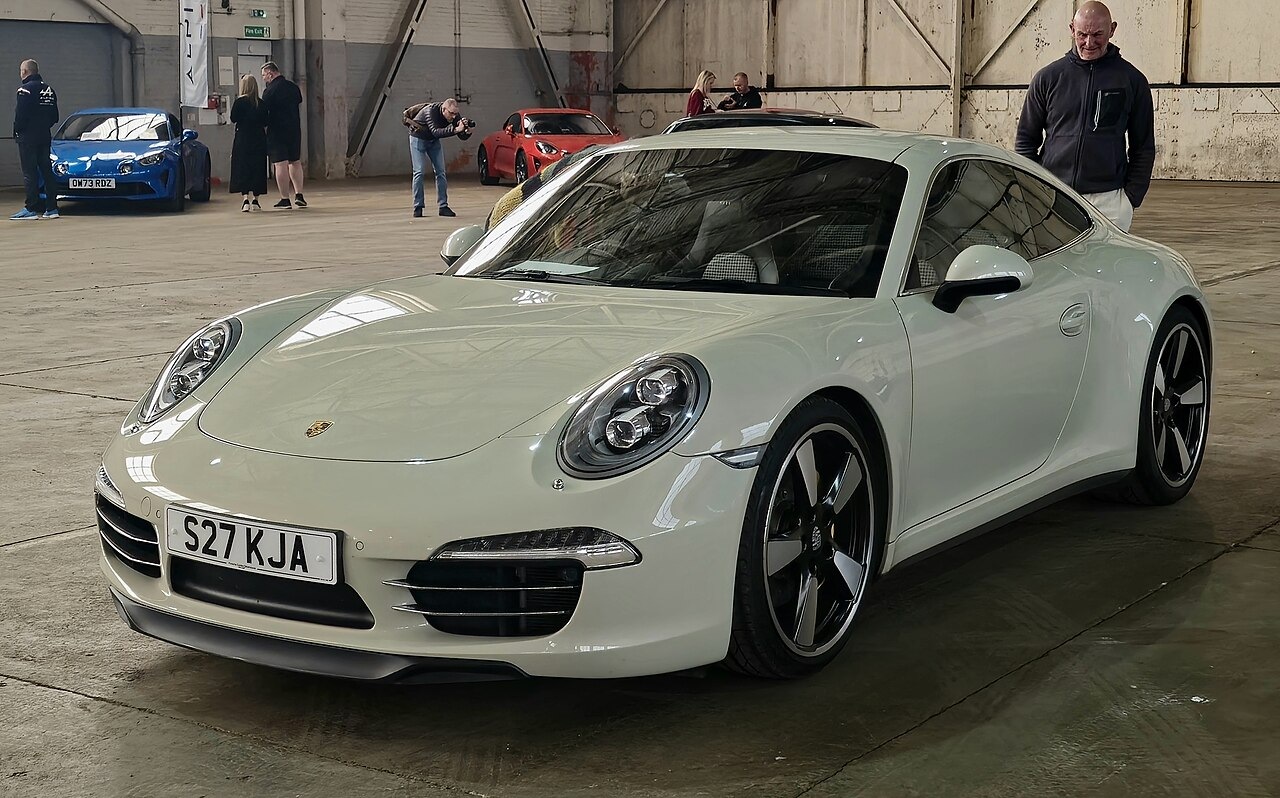
Porsche tied its 2013 anniversary edition to 1963, the year the 911 first appeared, with a run of 1,963 cars. Its heritage account describes green instrument numerals, wheels recalling the Fuchs design and a wider body normally associated with all-wheel-drive versions. The seat fabric also reached back to the Pepita pattern of the 1960s. [1]
Those details do more than decorate a brochure. They place the anniversary at several scales: the whole programme through its number, the silhouette through its body and the driver’s immediate surroundings through the instruments and upholstery. A car can carry a historical reference without reproducing the original vehicle.
For a collector, this suggests a useful distinction between an edition’s factory specification and a general retro appearance. Record the equipment and identifying details of the edition first; then consider how a particular example was originally ordered. The connection to history becomes clearer when the factory-defined package remains visible.
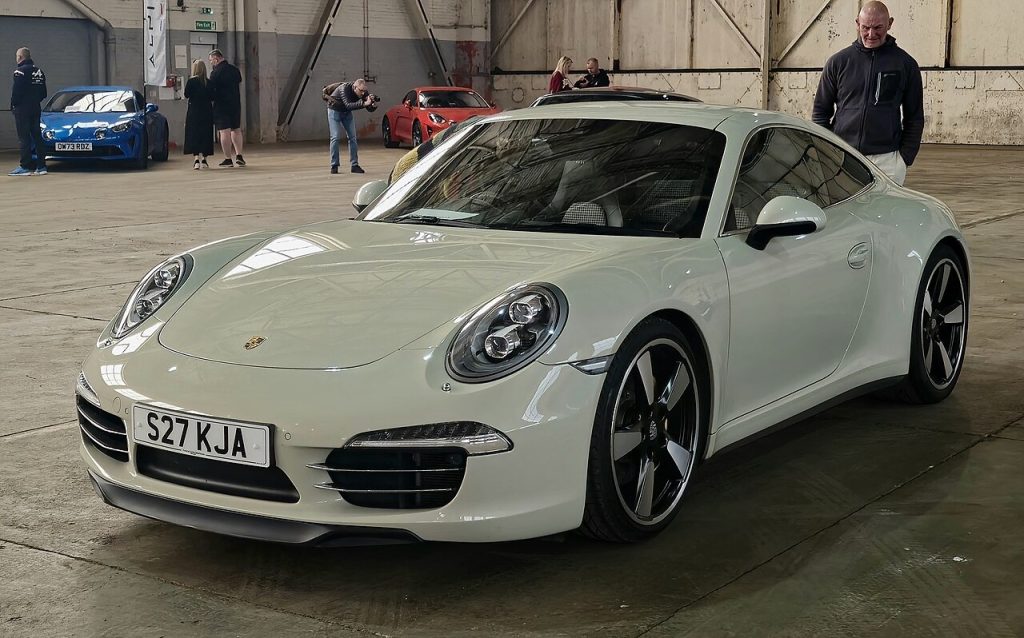
2013 Porsche 911 50th Anniversary Edition
The 2013 Porsche 911 50th Anniversary Edition placed rear-wheel-drive Carrera S engineering inside the wider body normally associated with Carrera 4 models. Porsche announced a limit of 1,963 cars, recalling the original…
Explore the full profile02 / A performance saloon marks its age — BMW M5 Edition 35 Years
BMW based the M5 Edition 35 Years on the M5 Competition and announced a worldwide limit of 350. The manufacturer’s United States material separately described a 35-car U.S. allocation. A regional allocation belongs within the worldwide figure; it is not another production run to add to it. [2]
The significance is the choice of starting point. BMW used an established high-performance saloon to mark the longevity of the M5 idea. In this case the anniversary does not require a replacement model family: the celebration is expressed through an edition of the current car.
That makes the full designation worth keeping in a collection record. “M5,” “M5 Competition” and “M5 Edition 35 Years” describe related identities at different levels. Preserving those distinctions is more informative than treating every special specification as either an entirely new model or an interchangeable option package.
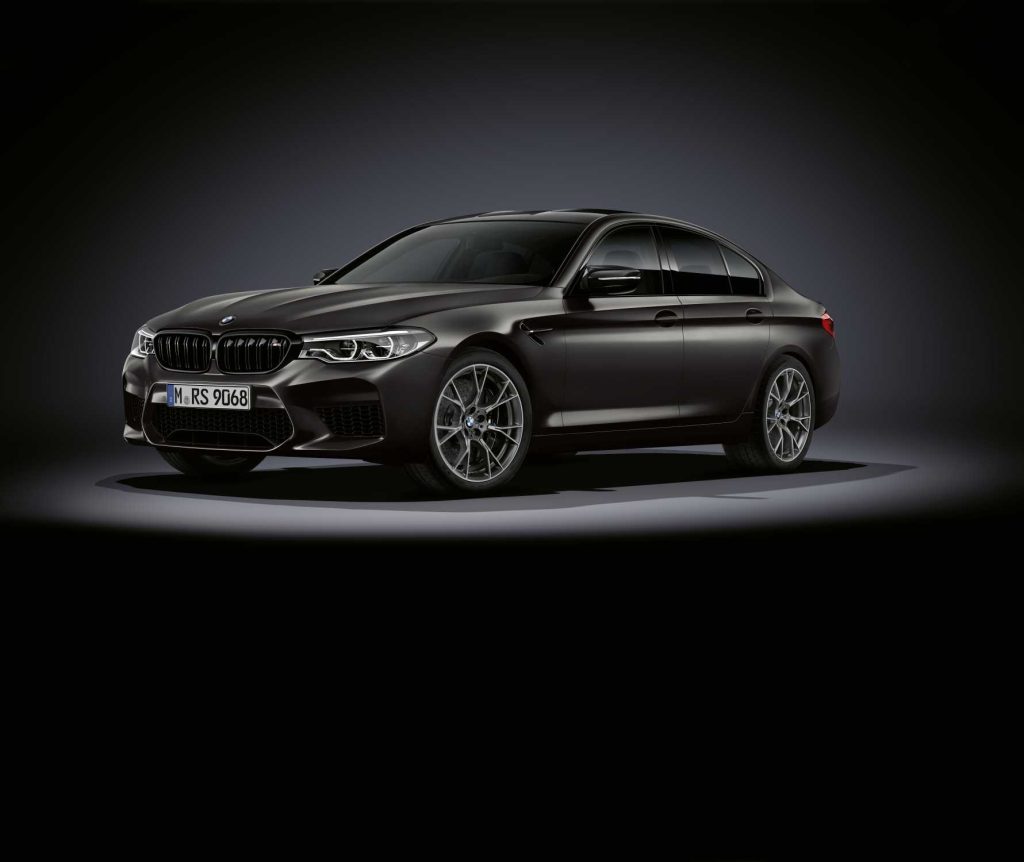
BMW M5 Edition 35 Years
The BMW M5 Edition 35 Years commemorated the sedan’s thirty-fifth anniversary with a 350-car worldwide programme. Available globally from July 2019 and described in the US as a 2020 model, it placed…
Explore the full profile03 / A colour makes the occasion visible — Mazda MX-5 30th Anniversary
Mazda introduced Racing Orange for the MX-5’s 30th Anniversary Edition in 2019 and announced worldwide sales limited to 3,000. Both the soft-top and retractable-hardtop RF belonged to that anniversary programme. The soft-top profile linked here represents one body style within it, not a separate 3,000-car soft-top allocation. [3]
The programme shows how an anniversary can remain close to the character of the underlying car. Rather than creating a different category of vehicle, Mazda concentrated the occasion into a recognisable specification and colour. The edition can be identified as part of a wider MX-5 history while retaining its own visual signature.
Colour is an accessible entry point, but it should not be the end of the investigation. The numbered edition, the correct body style and its original equipment describe a richer identity than orange paint alone. This is especially useful when looking at photographs: visual resemblance and documented edition membership answer different questions.
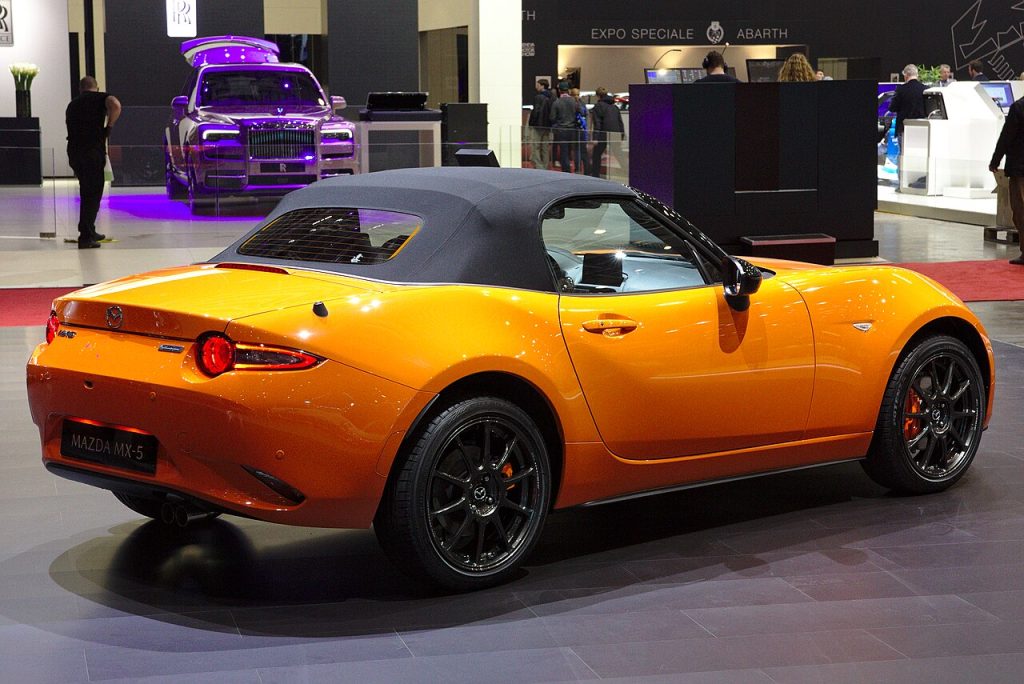
2019 Mazda MX-5 30th Anniversary Edition Soft Top
The soft-top 2019 Mazda MX-5 30th Anniversary Edition celebrates the roadster’s original open-air character with a vivid Racing Orange finish. Its fabric-roof body is a distinct configuration within the same worldwide programme…
Explore the full profile04 / A founder, two body styles — Lamborghini Centenario
Lamborghini created the Centenario to honour the centenary of Ferruccio Lamborghini’s birth. Its model account describes a total programme of 40 cars: 20 coupés and 20 roadsters, with a naturally aspirated V12. The coupé is the version selected for this edition. [4]
Here the anniversary takes the form of a dedicated small-series model, rather than a commemorative specification applied to a broad mainstream range. That difference matters when comparing anniversary cars. The date may be the common trigger, but the scale of the design response can vary considerably.
The two body-style figures also show why a production number needs a noun attached to it. Twenty describes the coupés; 40 describes the combined programme. Neither figure tells us how many cars remain in a particular country or how often they change hands. A precise description of the original programme is already useful without adding those separate claims.
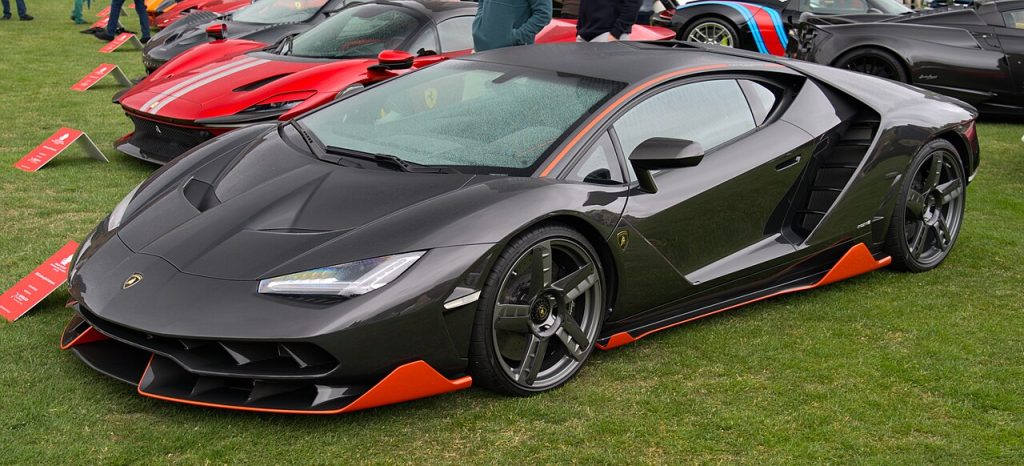
2016 Lamborghini Centenario Coupé
The Lamborghini Centenario coupé marks the centenary of Ferruccio Lamborghini’s birth through a distinct few-off programme. Its twenty-coupé scope is separate from the twenty Roadsters announced alongside it.
Explore the full profile05 / Heritage expressed through a visual system — BMW M4 Edition ///M Heritage
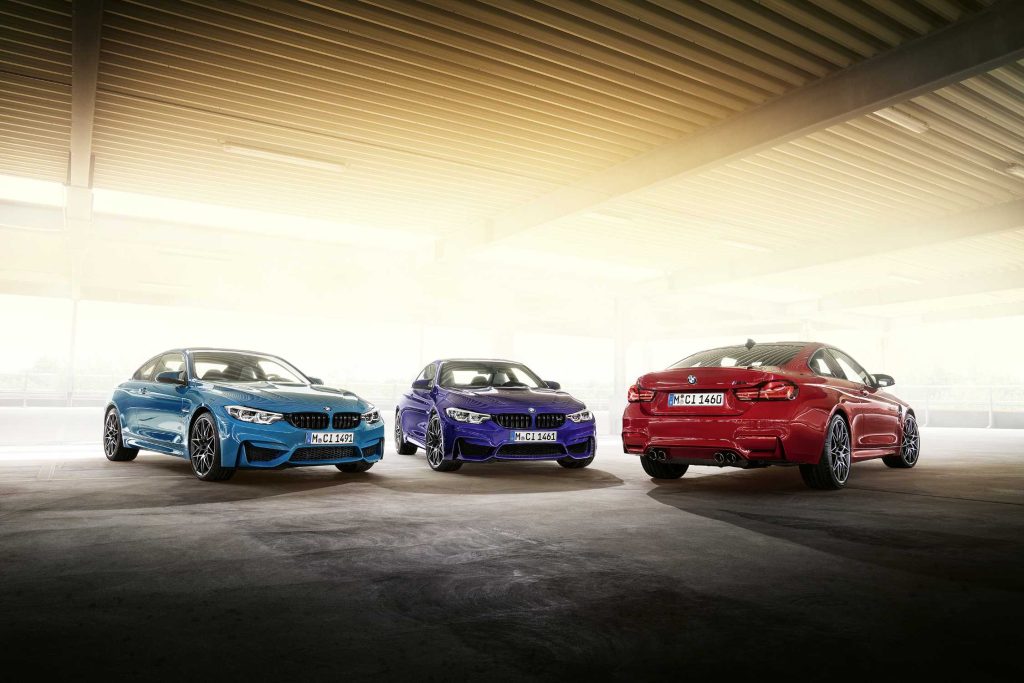
The M4 Edition ///M Heritage used a worldwide programme limited to 750 cars. BMW’s launch material explains the use of three exterior colours and a carbon-fibre roof incorporating the colours associated with BMW M. The interior trim and door sills carried the edition identity and the “1/750” marking. [5]
The lesson is that heritage need not depend on a single anniversary date printed across the body. It can be communicated through an established visual language: a set of colours, their arrangement and the way they recur through the exterior and cabin.
For an archive, those repeated details help explain how the edition was intended to be read. They should be recorded as a connected specification, rather than isolated accessories. The numbered marking identifies the limited programme; it does not, by itself, authenticate the full history or original equipment of an individual car.
BMW M4 Edition ///M Heritage
The BMW M4 Edition ///M Heritage celebrated the M colour tradition through a 750-car worldwide F82 programme. Revealed in 2019, with production announced for November 2019 to April 2020, the edition appeared…
Explore the full profileWhat is the car celebrating?
These editions suggest three starting questions: which event or period does the car reference, which details carry that reference, and what population does the production figure describe? Answering them makes anniversary cars easier to compare without pretending they were all created for the same purpose.
The Porsche makes a founding year numerical. The Mazda makes an anniversary colour immediately recognisable. The Centenario turns a founder’s birthday into a separate small-series model. The BMWs show two different ways to attach history to an existing performance-car identity.
Save the profiles whose details interest you. A collection of anniversary editions can become a history of design references: the materials and motifs a manufacturer keeps, the ones it revisits, and the ones it interprets differently for a new generation.
Sources & further reading
- Porsche: 911 Carrera S 50th Anniversary Edition — Factory heritage account and production scope.
- BMW: M5 Edition 35 Years — Worldwide series and U.S. allocation.
- Mazda: MX-5 30th Anniversary — Racing Orange and shared body-style programme.
- Lamborghini: Centenario — Coupé and roadster programme.
- BMW: M4 Edition ///M Heritage — Edition specification and worldwide limit.