Alpine A108 Cabriolet
The Alpine A108 Cabriolet tells the open-car side of Alpine’s early development. It belongs in a collection interested in how the marque expanded beyond the first Coach, with body identity and mechanical history carrying more weight than a generic badge or headline production figure.
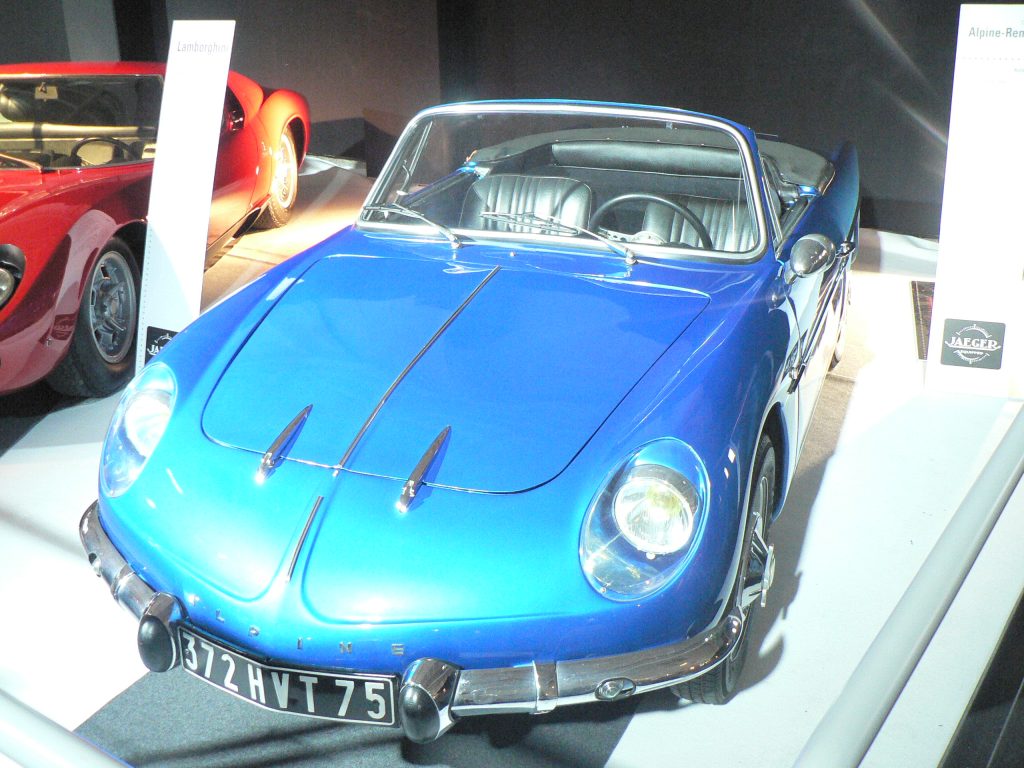
The Alpine A108 Cabriolet tells the open-car side of Alpine’s early development. It belongs in a collection interested in how the marque expanded beyond the first Coach, with body identity and mechanical history carrying more weight than a generic badge or headline production figure.
History and documented identity
Alpine’s Retromobile history says the A106 cabriolet evolved in 1958 with Dauphine mechanical components. The open body’s connection to Giovanni Michelotti is part of that account. This establishes the development lineage without turning every surviving cabriolet into one identical engine specification. Alpine — Alpine passion through the years at Retromobile.
Design and collector significance
An open car asks the collector to examine more than its roof arrangement. The relationship between body, structure, windscreen, doors and weather equipment can define how faithfully a restoration represents its chosen period. A photograph may show a handsome cabriolet while revealing little about its original hardware. Understanding that hardware is part of appreciating the vehicle as a historical object.
How to identify the right specification
The A108 Cabriolet should be separated from the earlier A106 cabriolet, the closed Coupé Sport and later cars carrying A110 mechanicals. Model names may overlap in sales advertisements, so ask how the identification was reached. A registration date or an engine now fitted to the car should not be used alone to settle the original model. Catalogue descriptions are useful starting points, not replacements for a joined-up identity file.
Production, rarity and counting scope
A body-specific cabriolet total has not been established in the sources used here. The 236 Dieppe reference in one Alpine history and the broader A108 count given by the club address different scopes. Neither supports the statement one of 236 Cabriolets. The production field stays blank pending a traceable count for the exact derivative.
What to inspect before buying
Inspect the steel structure and body attachment points, and review the evidence for structural repairs. Ask an experienced restorer to assess door fit, windscreen installation, hood equipment and the correctness of trim. Those are inspection priorities, not claims that all A108 Cabriolets suffer one named defect. Check what is actually fitted, how it was repaired and whether replacement components reproduce the intended period configuration.
Where it fits in an Alpine collection
The A108 Coach focuses on the early closed derivative. The Berlinette shows the next body concept. A collection can use these three records to explain Alpine’s development without forcing all three into a single shared production allocation. The open car’s significance remains distinct even where mechanical parts are related.
Collector documentation checklist
- Separate the original build description from the car’s current specification.
- Keep chassis, engine and ownership evidence together in a dated file.
- Record which claims come from factory material, club research, an auction catalogue or the present owner.
- Retain photographs of restoration and significant component replacements.
- Keep completed production, regional allocation and known survivors in separate fields.
Frequently asked questions
Who designed the cabriolet lineage?
Alpine’s history attributes the early cabriolet design to Giovanni Michelotti.
Is the photo an A110 because of its file name?
The source description identifies the subject as an A108 Convertible. File names alone are not authoritative vehicle identifications.
Is there a verified Cabriolet-only production total?
No separate body-specific count is entered in this draft.
Explore related Alpine profiles
Sources and research scope
- Alpine — Alpine passion through the years at Retromobile
- Club Alpine Dieppe — A108 history
- Alpine — Celebrating 60 years of Alpine
Historical facts follow the linked records; inspection guidance and collection comparisons are editorial analysis. Where sources use different counting scopes or a subtype remains broad, those limits are stated rather than resolved with an invented number.
Photography and credit
Alpine A108 Cabriolet at the 2006 Paris Motor Show. The Commons description identifies an A108 Convertible despite the file name. Photo: Ton1~commonswiki / Wikimedia Commons · CC BY-SA 3.0. Original file imported without content retouching. WordPress may resize display copies; the website layout may crop them.
Why this machine matters
The Alpine A108 Cabriolet tells the open-car side of Alpine’s early development. It belongs in a collection interested in how the marque expanded beyond the first Coach, with body identity and mechanical history carrying more weight than a generic badge or headline production figure.
Built in limited numbers
A body-specific cabriolet total has not been established in the sources used here. The 236 Dieppe reference in one Alpine history and the broader A108 count given by the club address different scopes. Neither supports the statement one of 236 Cabriolets. The production field stays blank pending a traceable count for the exact derivative.
Gallery
Specifications
Factory specifications may vary by model year, market and configuration.
Identity & production
- Official model
- Alpine A108 Cabriolet
- Base model
- A108
- Country of manufacture
- France