2000 Nissan Hypermini Production EV
Explore the Hypermini Production EV: history, verified identity, specification references, rarity evidence and real credited photos.
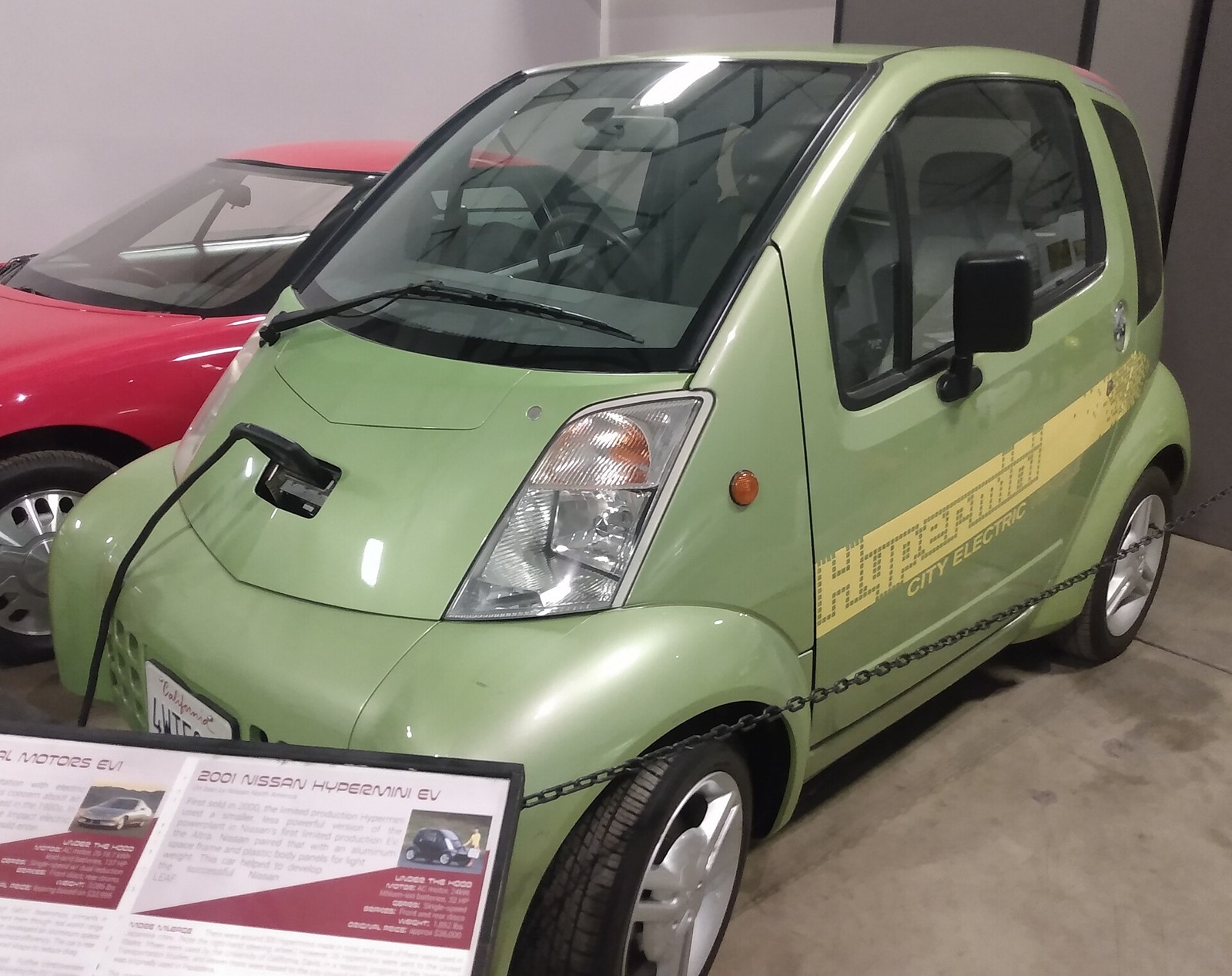
The Hypermini brought Nissan's electric-vehicle research into an unusually compact two-seat production car. The Heritage Collection distinguishes its 1997 concept appearance from the production release in 2000, correcting the inventory's 1999 reference. Its lightweight aluminium structure, run-flat tyres and car-sharing-oriented entry system make it a distinctive early EV subject. The approximately 219-car estimate is not elevated to a verified completed total by this profile.
A city car designed around electricity
The Hypermini's compact body and two-seat layout were not attempts to imitate a conventional family sedan. Nissan presents it as a neighbourhood mobility vehicle, with a short wheelbase and a quoted turning radius of 3.9 metres. That use case explains why dimensions and ease of access matter as much as maximum speed. It belongs in the early production-EV story as a complete vehicle shaped around a specific urban task.
Nissan Heritage: Hypermini production and specification
Separating concept and production dates
Nissan records a Tokyo Motor Show appearance in 1997 and a production-model release in 2000. These dates should not be collapsed into an extra 1999 edition. A later photo caption may describe a preproduction or development appearance, while the production entry supplies the release boundary. Keeping the original spreadsheet year in the audit trail makes the correction reviewable without allowing an earlier label to overwrite the manufacturer's chronology.
The technical reference
The collection lists a permanent-magnet synchronous motor with 24 kW output and 130 Nm torque, an 840 kg weight reference and a 1,890 mm wheelbase. Its listed dimensions are 2,665 by 1,475 by 1,550 mm. These are historical vehicle references, not evidence that every surviving battery still provides original performance. An older EV's present capability depends on the actual electrical and battery condition, which needs individual documentation.
Nissan Heritage: Hypermini production and specification
Car-sharing ideas before the modern app era
Nissan describes an IC-card keyless-entry system developed with car sharing in mind, and says Hyperminis supported experiments in Yokohama and Ebina. This gives the model significance beyond its unusual proportions. The vehicle was also a platform for investigating how access and fleet use could work. A fleet or research-car history would need its own records; the general programme account does not identify the service life of any specific photographed example.
Nissan Heritage: Hypermini production and specification
Range, speed and preservation
The museum narrative quotes 115 kilometres per charge and a 100 km/h maximum speed. These are period manufacturer figures, not current operating guarantees or a modern test standard. A collector file should preserve charging equipment, battery work, control-system changes and original manuals alongside body and registration history. That documentation is particularly important for a scarce EV, where a visually complete vehicle may have undergone substantial electrical renewal without any obvious exterior change.
Specifications and identity reference
| Production release | 2000; concept shown 1997 |
|---|---|
| Model | EA0 |
| Seats | Two |
| Motor reference | Permanent-magnet synchronous; 24 kW |
| Torque reference | 130 Nm |
| Wheelbase / weight | 1,890 mm / 840 kg |
| Manufacturer period range | 115 km per charge |
| Maximum speed reference | 100 km/h |
Rarity and production scope
Verified early production-EV identity. The inventory's approximately 219 completed figure is not confirmed by the selected primary entry and remains unassigned. Concept, pilot-fleet use and customer production are different scopes; they are not counted as separate Hypermini editions here.
What the photograph represents
A Hypermini identified by its photographer as a 2001 example. It illustrates the production model introduced in 2000, rather than the original 1997 show setting.
Related Nissan heritage profiles
Frequently asked questions
Was production launched in 1999?
The selected Nissan entry dates the production release to 2000 and the concept appearance to 1997.
Is 219 verified here?
No. The model is verified, while that approximate completed total is not established by this primary entry.
What is the production-count boundary for this profile?
Verified early production-EV identity. The inventory's approximately 219 completed figure is not confirmed by the selected primary entry and remains unassigned. Concept, pilot-fleet use and customer production are different scopes; they are not counted as separate Hypermini editions here.
Sources and further reading
Research checked 16 October 2026. Manufacturer records support identity and the specifically attributed historical figures. Photographic descriptions identify the illustrated subject. Design analysis and suggested authentication steps are editorial interpretation.
Built in limited numbers
Verified early production-EV identity. The inventory's approximately 219 completed figure is not confirmed by the selected primary entry and remains unassigned. Concept, pilot-fleet use and customer production are different scopes; they are not counted as separate Hypermini editions here.
Gallery
Specifications
Factory specifications may vary by model year, market and configuration.
Identity & production
- Official model
- Nissan Hypermini Production EV
Sources and verification
Source citations are being prepared for this profile.