2017 NIO EVE Concept
Explore EVE Concept: factory identity, history, specifications, rarity evidence, identification notes and credited photos.
EVE explored NIO’s idea of an electric vehicle as a second living room. Introduced at South by Southwest in Austin in 2017, the physical concept placed passenger space and an automated-driving vision at the centre of its design. It provides a useful counterpart to the EP9: one investigated performance demonstrations, while the other investigated how people might inhabit a future vehicle.
The 2017 concept and its public identity
NIO’s original securities filing records EVE’s unveiling at South by Southwest in March 2017. The company’s contemporary vision-car event page and later design account support that identity. EVE is therefore a named physical concept programme, with an introduction separate from the launch of an ordinary customer model. A later exhibition photograph should retain its own date and location rather than being presented as if it documented the Austin debut.
NIO: official 2018 registration statement records EVE’s March 2017 SXSW unveiling
A living-space brief changes the questions
NIO’s later account explicitly describes EVE through its second-living-room idea. That brief changes the useful way to examine the car. Instead of beginning with acceleration or luggage capacity, a reader can examine seating relationships, sightlines and the balance between privacy and shared space. Those are design questions, and the interpretation here concerns what the proposed cabin encourages people to do. It does not require a claim that the concept’s systems were ready for unrestricted public-road use.
NIO: second-living-room design account
What the manufacturer’s experience page proposes
The official EVE experience page describes accommodation for six people through five permanent positions and a folding seat, together with NOMI-led interaction and an augmented windscreen. These are concept descriptions. They establish what NIO wanted to communicate about the passenger experience. They do not turn every screen, seating position or proposed digital function into a production-equipment promise, nor do they establish a later customer option package carrying the EVE name.
NIO: EVE experience and cabin proposal
Reading the body and glazing
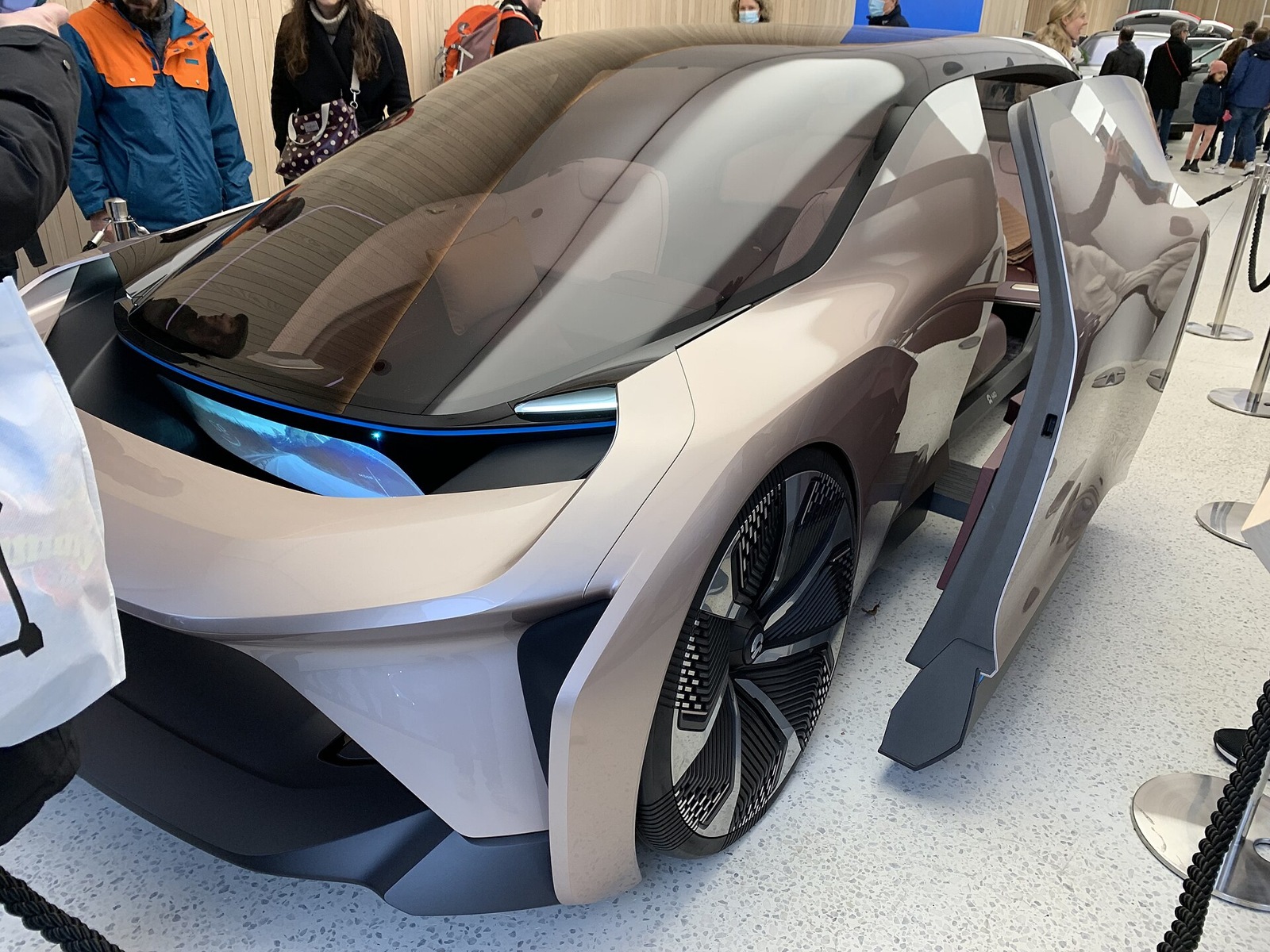
The displayed concept’s long, smooth body and extensive glazing make the cabin visually central. As an editorial reading, the shape gives the impression that occupants and their view outwards organise the vehicle more strongly than a conventional bonnet-and-boot layout would. The included photograph is useful for studying that physical presentation. Its caption keeps the later Oslo display context visible; it does not claim to identify an unchanged chassis from the first Austin event.
An autonomous vision remains a dated proposal
EVE appeared in a period when NIO was describing an autonomous-vehicle future. Preserve that historical setting without converting a vision film or show display into a present-day capability classification. A concept narrative can illustrate intended interactions while leaving the working implementation unresolved. The distinction helps readers understand the ambition on its own terms and prevents later software or production-vehicle features from being pasted backwards into a 2017 specification.
Later appearances can develop one programme
NIO’s 2018 Auto China announcement explicitly mentions a new variation of EVE. That is a useful reminder that concepts may change during their public lives. An archive can describe a design lineage while distinguishing the date and configuration of individual appearances. This profile does not use later photographs to certify the debut car’s exact interior, nor does it multiply editions for every exhibition. A complete physical-build history remains a separate research question.
NIO: 2018 exhibition announcement identifies an EVE variation
Why the concept is an archive entry
EVE has no customer road-series quantity assigned here. A manufacturer can exhibit one concept while having additional styling models, engineering structures or revised displays that are not described in the public release. One photograph is therefore not a worldwide build census. The archive status makes the record useful without pretending that EVE was a numbered customer edition or adding it to the production totals of ES8, ET7 or another NIO model.
Following the idea into the rest of the archive
The first ET7 body-in-white offers a later manufacturing comparison, and the EP9 offers a contemporary performance comparison. Together they show three different kinds of evidence: an inhabited-space proposal, a physical body structure and a track-development programme. Those links are editorial connections. They do not establish a shared chassis or a single production run, and they leave each vehicle or programme with its own dated identity and photographic scope.
Specification and identity reference
| Introduction | March 2017, SXSW, Austin |
|---|---|
| Role | Physical electric lifestyle concept |
| Manufacturer design theme | Second living room |
| Cabin proposal | Six occupants; five permanent positions plus folding seat |
| Interaction proposal | NOMI / augmented-windscreen experience |
| Later development | 2018 manufacturer announcement mentions an EVE variation |
| Customer production quantity | Not assigned |
Rarity and production scope
Physical EVE concept programme. No customer road series or complete development/display-body census assigned.
This record belongs to the archive. Concepts, manufacturing structures and competition programmes are excluded from customer road-production totals. A documented individual is a member of a wider production total and is not added as extra production.
Identifying the documented subject
Match the complete model name, date and programme to the linked evidence. Keep any chassis-specific provenance separate from a general description of the model. A period image confirms what was photographed, while a production or technical claim requires the corresponding document.
Comparisons and related profiles
Continue through these connected NIO records, each with its own factory identity and production scope.
Frequently asked questions
What is the rarity scope of this archive record?
Physical EVE concept programme. No customer road series or complete development/display-body census assigned.
Does the title date match every photograph?
2017 is the documentary reference used for the profile. A later exhibition or museum photograph can show the same programme. Its caption identifies the photographic scope without creating another edition.
Sources and further reading
- NIO: official 2018 registration statement records EVE’s March 2017 SXSW unveiling
- NIO: EVE experience and cabin proposal
- NIO: second-living-room design account
- NIO: 2018 exhibition announcement identifies an EVE variation
Research checked 16 October 2026. Original manufacturer announcements, official competition history and photographic evidence are identified separately. Design readings and documentation guidance are editorial interpretation.
Built in limited numbers
Physical EVE concept programme. No customer road series or complete development/display-body census assigned.
Gallery
Specifications
Factory specifications may vary by model year, market and configuration.
Identity & production
- Official model
- NIO EVE Concept
Sources and verification
Source citations are being prepared for this profile.