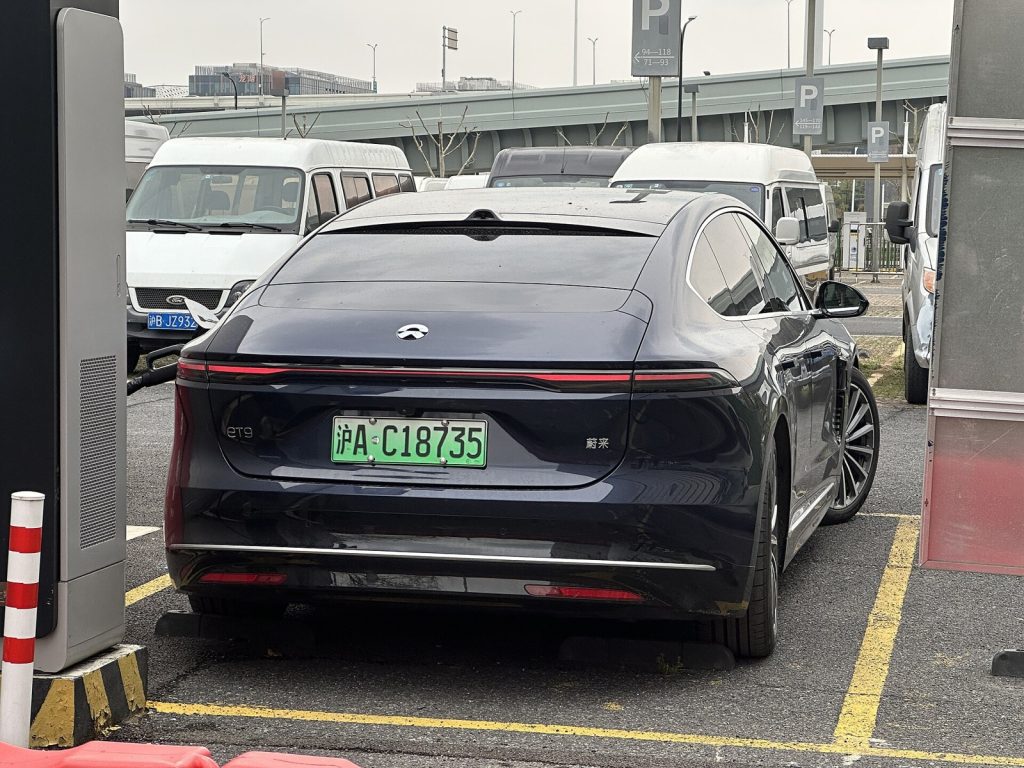
2021 NIO First ET7 Body-in-White
Explore First ET7 Body-in-White: factory identity, history, specifications, rarity evidence, identification notes and credited photos.
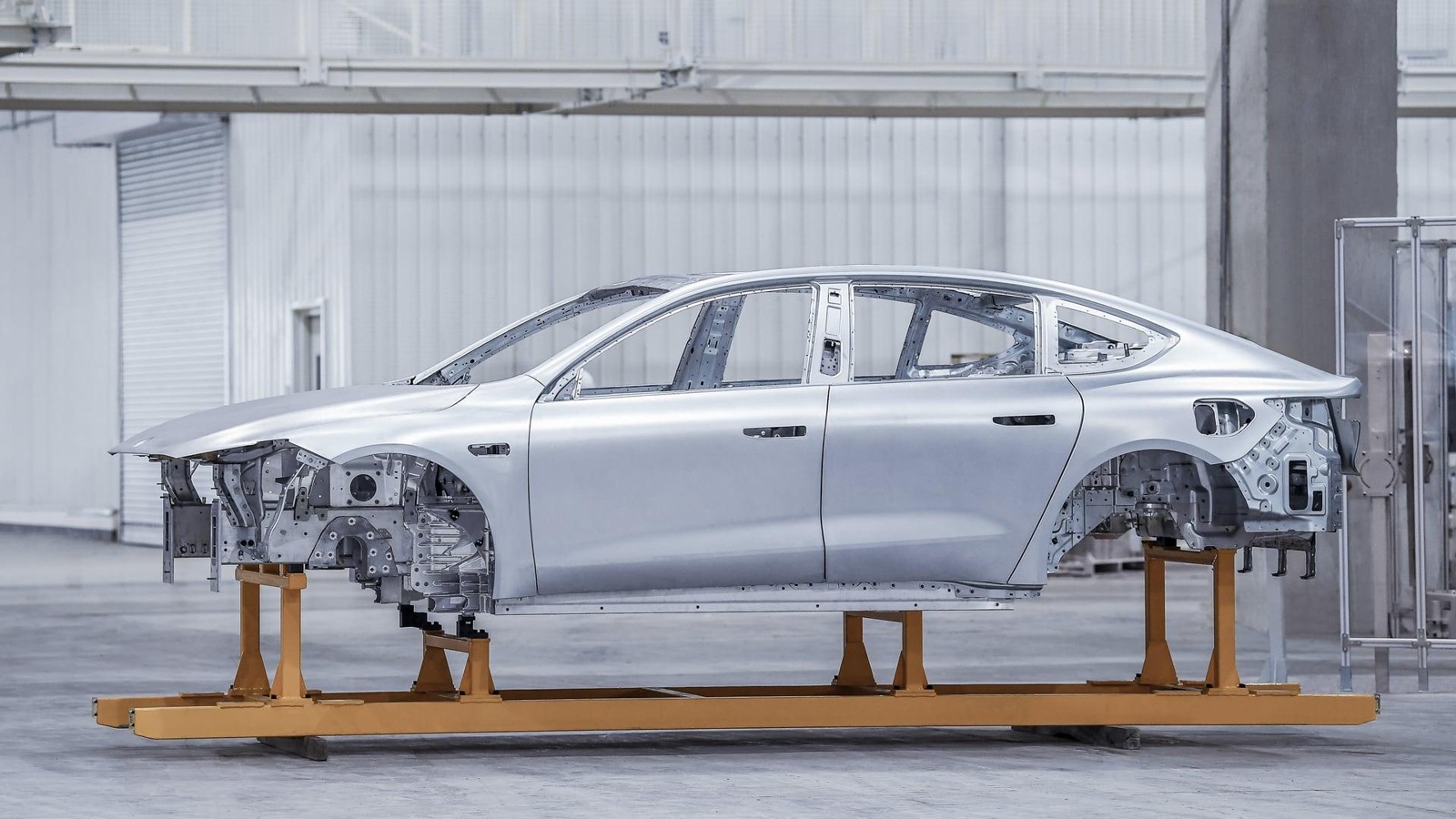
NIO’s first documented ET7 body-in-white rolled off the line on 1 April 2021. It is a physical manufacturing milestone: the joined body structure shown before a vehicle becomes a completed, equipped sedan. The record belongs in the prototype and manufacturing archive, with the body’s identity kept separate from the first finished ET7 or first customer delivery.
The date and the physical object
NIO’s manufacturing report explicitly identifies the first ET7 body-in-white and gives 1 April 2021 as its roll-off date. The company also publishes photographs of the structure and manufacturing review. Together those provide a clear object and event for the archive. The article does not assign a completed-road-car identity to the structure, nor does it infer a later VIN, owner or preserved location that the report does not establish.
NIO: first ET7 body-in-white manufacturing report
What body-in-white means in this record
A body-in-white is the structural stage of a vehicle before the complete car is assembled and equipped. The term identifies a manufacturing state; it is not a promise that every visible surface will be literally white. A useful way to examine the supplied photograph is to distinguish the joined structure from the powertrain, chassis equipment, glazing and interior that a finished passenger car needs. The picture documents a stage of manufacture rather than a road-ready specification.
Why the first structure is worth documenting
The first body creates a tangible link between a public vehicle proposal and the process that must repeatedly make its physical structure. As editorial interpretation, the historical interest lies in that transition. Design intent has to be expressed through parts, joints, geometry and an assembly sequence. One milestone report does not disclose the complete quality-control process, but it does give the archive a dated physical reference for the start of this part of the ET7 manufacturing story.
The ET7 context in the original report
NIO describes ET7 as its first flagship sedan and places it after ES8, ES6 and EC6 in the developing product portfolio. That is the period context of the report. This article does not borrow later battery choices, software versions or production-car range claims to fill a specification table for an incomplete structure. The relevant specification is its manufacturing state and model programme, not the performance of a later assembled sedan.
NIO: first ET7 body-in-white manufacturing report
Reading the manufacturer’s photographs
The primary image shows the body structure in a controlled factory setting. Other images in the report record people and the manufacturing environment. Their value is documentary: they connect the milestone with a physical object and a public announcement. They do not independently certify every material, joint or dimensional measurement. Such engineering claims would need their own drawings, test records or technical publications rather than deductions from a small photograph.
Keeping three ET7 milestones separate
The first body-in-white, the first completed production vehicle and the first customer-delivered ET7 are different claims. A body may later be assembled, used for validation or retained, but that later history has not been established here. This profile therefore does not merge the workbook’s unresolved first-production ET7 row into a completed-car biography. The dates and manufacturing stages must be reconciled before a claim that two records describe one chassis can be made.
A prototype quantity is not an edition limit
The source identifies the first body at the named milestone. It does not provide a census of development structures, validation bodies or completed ET7s. The singular event is therefore described in words, while the customer production fields remain empty. That approach preserves the manufacturing significance without suggesting that the regular ET7 series was limited to one or that this body was an extra road car outside the production system.
A manufacturing comparison within this batch
The 100,000th production-vehicle record follows a different milestone only days later in April 2021. One concerns the first body of a sedan programme; the other concerns cumulative completed-vehicle production. Linking the two helps readers understand the different units being counted. The EVE concept offers another comparison, showing an earlier design proposal whose public exhibition should not be confused with either manufacturing milestone.
Specification and identity reference
| Milestone date | 1 April 2021 |
|---|---|
| Object | First documented ET7 body-in-white |
| Manufacturing state | Body structure; not a completed road car |
| Programme | ET7 flagship sedan |
| Later VIN / custody | Not assigned by the inspected report |
| Customer production quantity | Not applicable |
Rarity and production scope
First documented ET7 body-in-white manufacturing milestone, not a completed road car or a customer series. No full body-build census assigned.
This record belongs to the archive. Concepts, manufacturing structures and competition programmes are excluded from customer road-production totals. A documented individual is a member of a wider production total and is not added as extra production.
Identifying the documented subject
Match the complete model name, date and programme to the linked evidence. Keep any chassis-specific provenance separate from a general description of the model. A period image confirms what was photographed, while a production or technical claim requires the corresponding document.
Comparisons and related profiles
Continue through these connected NIO records, each with its own factory identity and production scope.
Frequently asked questions
What is the rarity scope of this archive record?
First documented ET7 body-in-white manufacturing milestone, not a completed road car or a customer series. No full body-build census assigned.
Does the title date match every photograph?
2021 is the documentary reference used for the profile. A later exhibition or museum photograph can show the same programme. Its caption identifies the photographic scope without creating another edition.
Sources and further reading
Research checked 16 October 2026. Original manufacturer announcements, official competition history and photographic evidence are identified separately. Design readings and documentation guidance are editorial interpretation.
Built in limited numbers
First documented ET7 body-in-white manufacturing milestone, not a completed road car or a customer series. No full body-build census assigned.
Gallery
Specifications
Factory specifications may vary by model year, market and configuration.
Identity & production
- Official model
- NIO First ET7 Body-in-White
Sources and verification
Source citations are being prepared for this profile.