1960 Lotus Type 18 Formula Junior / Formula One
Explore the 1960 Lotus Type 18 Formula Junior / Formula One: programme history, design, verified rarity scope, specifications and credited photography.
The Lotus Type 18 brought the engine behind the driver and opened a new single-seater phase for Lotus. Its Formula Junior and Formula One identities belong to related branches of one Type family, with their records kept distinct rather than merged into an invented total.
History and verified programme identity
Classic Team Lotus dates the Formula One and Formula Two Type 18 programme to 1960–1961 and calls it the first rear-engined Lotus. Its separate Formula Junior page states that a Junior-specification Type 18 appeared publicly at Brands Hatch on Boxing Day 1959. The 1960 profile year follows the family’s major Formula programme, while that earlier appearance is retained as a dated event. Stirling Moss’s 1960 Monaco win was the first championship Grand Prix victory for a Lotus car. It was a Lotus-car milestone, distinct from Team Lotus’s later first works-team championship victory in the Type 21.
Engineering and design
Moving the engine behind the driver changes the whole single-seater package. The long front section required by a front power unit can shrink, and the relationship between the cockpit, fuel, cooling and rear running gear can be reconsidered. The Type 18’s significance is therefore visible in proportion as well as in its competition record. Formula Junior and Grand Prix versions still need separate specifications because the category determines the allowed power unit and other requirements. A broad Type 18 profile can explain that relationship without assigning the Formula One engine, gearbox or race history to a photographed Junior car.
The physical car in the supplied photograph
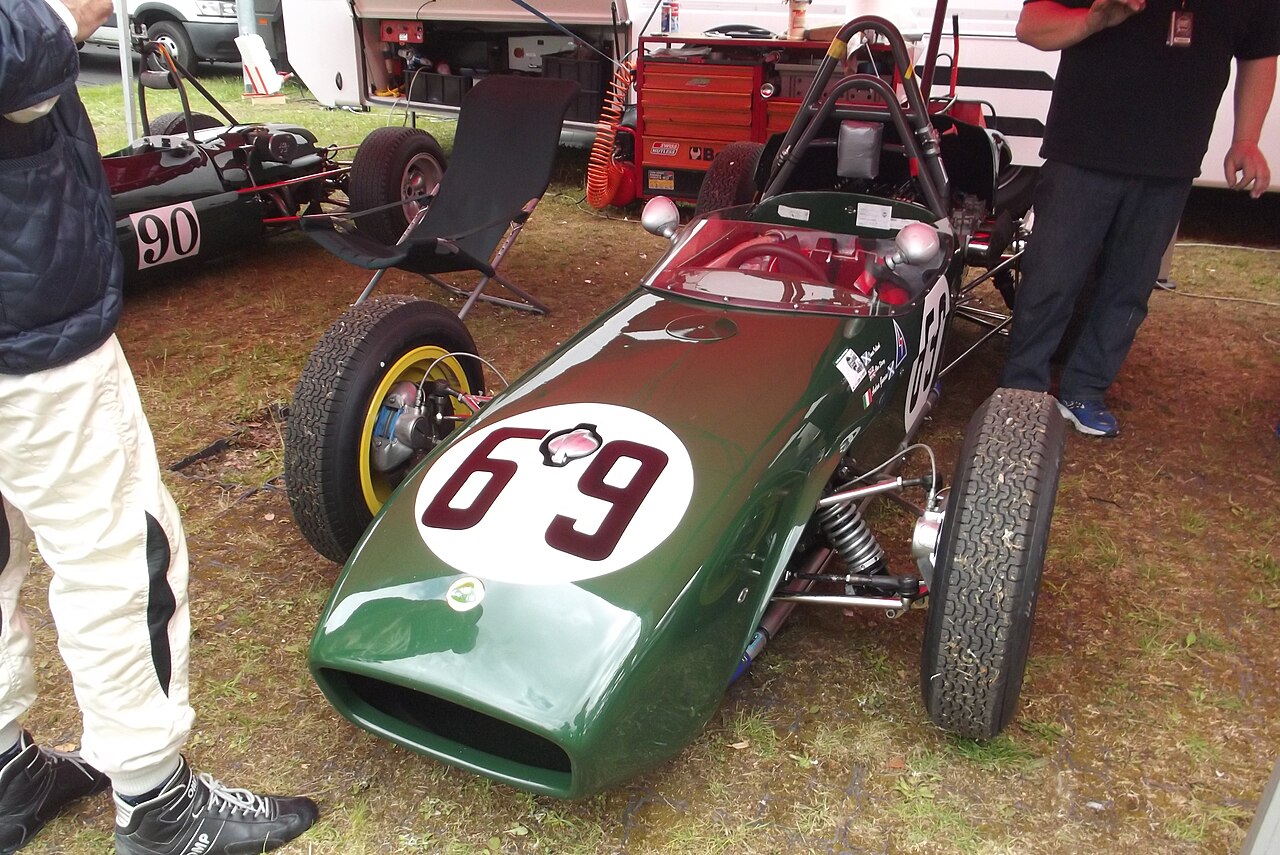
The supplied photograph shows a Type 18 at Pau in 2015, with competition number 69 on the nose. Its low front body, open wheels and exposed rear powertrain area are visible in the paddock. The creator identifies the Type, but the photograph is not used to authenticate a particular works chassis or every currently installed mechanical component. The caption consequently follows the model and setting rather than adding an unsupported driver identity.
One Type number can serve several Formula categories
The Type 18 shows why a numbered design family does not always correspond to one universal specification. The separate Junior and Formula One/Two records describe different competitive contexts, and their public chronology does not begin on exactly the same date. A family profile can connect them while making those branches explicit. The photographed car supplies a real physical illustration, but its fitted engine must not be inferred from the broad family name alone. This approach also improves future research. A chassis number can be added within the appropriate branch, with its original category and later conversions kept in sequence. The shared Type then becomes a useful organizing relationship rather than a reason to merge incomplete counts. It explains the design family while protecting the identity of the individual cars constructed within it.
Collecting and chassis evidence
Classic Team Lotus publishes separate registers for Formula One/Two and Formula Junior Type 18s. The visible 27-entry Formula One/Two list is not treated as the whole family’s manufacturing total, and the two branches are not added from incomplete evidence. An individual file should establish its original category, chassis number and dated conversions. Later development cars and hybrids also need their own chronology. This preserves the distinction between an original Type 18 and an 18/21 development without creating a second physical chassis record every time a body or suspension detail changed.
Related Lotus designs and meaningful comparisons
The Type 16 provides the clearest earlier contrast through its front-engine layout. The Type 21 shows the later Formula One evolution and the different first-win wording that follows it. Reading the three profiles together makes the change in packaging and the sequence of competition milestones easier to understand. The Type 18’s Junior branch is equally important because it shows how a shared design family could serve more than one Formula category. That connection adds context while retaining the boundaries of each chassis and category record.
Reading the sources
The programme sources and the photograph answer different questions. Manufacturer and custodial records establish the original model, Type, category and published production scope. The creator’s file establishes the pictured subject, setting and image permission. An individual chassis history can then add ownership, competition entries and dated repairs without changing the scope of the original programme. Build references are not survivor counts, and a later specification does not automatically become an additional newly manufactured vehicle. Where primary evidence does not establish a complete fabrication census, that field remains unassigned.
Specifications and rarity evidence
| Programme reference year | 1960 |
|---|---|
| Model / Type | Type 18 Formula Junior / Formula One — Type 18 |
| Body / competition role | Rear-engined Formula-car family |
| Formula One/Two programme | 1960–1961 |
| Earlier public Junior appearance | Brands Hatch, Boxing Day 1959 |
| Engine location | Behind the driver |
| 1960 milestone | Moss’s Monaco victory: first championship GP win for a Lotus car |
| Family fabrication census | Unassigned across the separate branches |
| Published build / register reference | No complete tally assigned |
| Independently audited completed tally | Not assigned |
| Count scope | Documented physical Team Lotus competition Type archive. Complete fabrication census unassigned; works, customer and later converted cars are not added into an invented total. |
| Original inventory status | LOT-016 — Verified |
Frequently asked questions
Can the Formula One/Two register count be used for all Type 18s?
No. Classic Team Lotus has separate Formula One/Two and Formula Junior records. This family profile leaves the complete combined fabrication total unassigned.
How is Type 18 Formula Junior / Formula One classified?
This is a Team Lotus competition Type archive. It remains separate from Lotus road-car production. Customer cars, works entries and converted chassis need a reconciled scope before any complete fabrication tally is assigned.
Which technical details are established for the programme?
The primary record supports formula one/two programme: 1960–1961; earlier public junior appearance: Brands Hatch, Boxing Day 1959; engine location: Behind the driver. These are programme or explicitly attributed photo references. A particular surviving car’s engine, chassis repairs and competition preparation require its own dated documentation.
Does the photographed appearance establish factory originality?
The caption records a real creator-identified Type 18 Formula Junior / Formula One subject and its later setting. It establishes the illustration’s scope, while original components, restoration work and individual race provenance require chassis-specific evidence. A competition number, current paint or museum display is not used as an originality certificate.
What rarity or archive scope is verified?
Documented physical Team Lotus competition Type archive. Complete fabrication census unassigned; works, customer and later converted cars are not added into an invented total.
Who photographed the supplied image?
Handelsgeselschaft via Wikimedia Commons, under CC BY-SA 4.0. The original file and licence are linked with the image. Retain the creator, source and licence when uploading, exporting or reusing it; local retouching and synthetic enlargement have not been performed.
Related Lotus profiles
Sources and photo credits
Photograph: Handelsgeselschaft via Wikimedia Commons original source, CC BY-SA 4.0. Source-provided thumbnail supplied without local cropping, retouching or synthetic enlargement.
Built in limited numbers
Documented physical Team Lotus competition Type archive. Complete fabrication census unassigned; works, customer and later converted cars are not added into an invented total.
Gallery
Specifications
Factory specifications may vary by model year, market and configuration.
Identity & production
- Official model
- Type 18 Formula Junior / Formula One