1999 Ford Racing Puma
Explore 1999 Ford Racing Puma: sourced history, design, specifications, rarity evidence and a real photograph with creator credits.
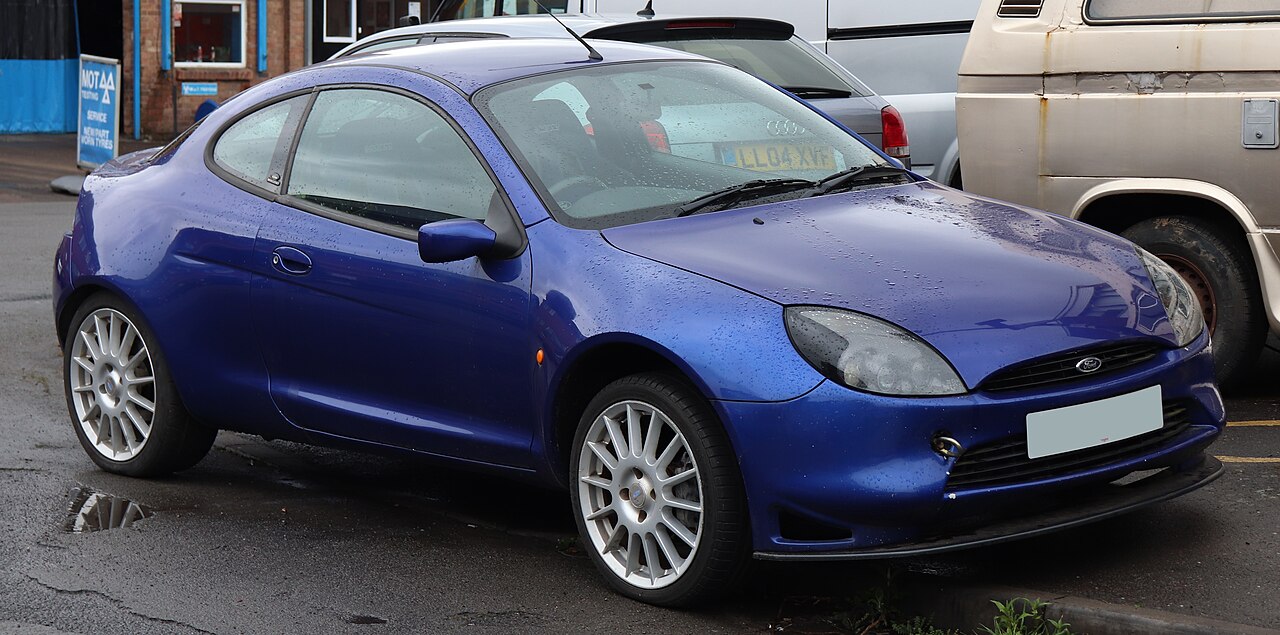
The Ford Racing Puma transformed the compact Puma through a factory-backed conversion carried out by Tickford.
History and purpose
The Ford Racing Puma transformed the compact Puma through a factory-backed conversion carried out by Tickford. Original pre-production material preserved by the specialist archive describes a proposed 1,000-car programme, while its completed-series history records 500 after the German allocation was cancelled. This profile covers the complete final conversion programme, rather than claiming a smaller national slice of a larger completed series. The exact manufacturing field remains unset because the figure is retained as a specialist reconstruction. The 1999 reference year identifies the original introduction. A later photographed 2000 example is still a valid illustration of the same original programme.
Design and engineering
The blue road car has visibly wider wheel areas, a stronger lower-body stance and distinctive multi-spoke wheels while retaining the Puma’s compact glasshouse. The changes make the small coupé look more substantial without losing its basic proportions. The archive documents a modified 1.7-litre Zetec-SE engine and an IB5-based manual gearbox. Its original drivetrain research also explains factory conversion details rather than treating the car as a generic styling kit. The photograph shows the road-car shape clearly, but cannot establish the specimen’s manifold build number or limited-slip differential configuration. Those individual details need their own records and should not be inferred from the exterior.
Identifying the original configuration
Racing Puma should remain distinct from an ordinary Puma fitted with similar arches or wheels. The original programme involved a documented conversion process and a numbered identity, making build evidence important in a specimen file. The selected photographer identifies this road example as a Racing Puma, with visible body configuration matching the archived programme description. The earlier 1,000-car plan is preserved in the history because it explains the development, but the article does not call it a completed tally. Likewise, the cancelled German allocation does not become a second manufactured edition. These distinctions keep the programme’s complete scope readable as more original documentation is added.
Collector context and preservation
The Racing Puma gives a collection a compact road-performance counterpart to the RS500. Both involved a specialised conversion process, but their shapes and mechanical packages communicate different purposes. Preserve the widened body, wheel design, cabin and manifold identification through dated photographs where available. Conversion paperwork and build records should accompany those images so a later restoration can retain the car’s original identity. The specialist 500-car full-series figure describes the final programme and remains distinct from its earlier plan. It is not a count of currently registered cars or a certification that every surviving example retains all the equipment fitted during conversion.
Reading the evidence for this profile
The original source links below identify the programme and the historical statements used in this article. The photograph has its own creator and licence record, separate from the manufacturer’s vehicle history. Keep both when transferring this profile into a collection catalogue. A manufacturing tally describes how many cars belong to a defined original programme; it does not measure how many survive, how many are publicly visible, or how many retain all their original components. Those individual questions require dated chassis and restoration evidence. The reference year likewise describes the programme’s introduction or named historic configuration, while the supplied caption states the photographed setting and any established individual identity. This lets future research expand the car’s history without blurring the scope of the record already assembled here.
Specifications and verified rarity
| Reference year | 1999 |
|---|---|
| Model / programme | Racing Puma |
| Body / role | Tickford-built factory-backed sporting conversion |
| Documented engine | Modified 1.7-litre Zetec-SE four-cylinder |
| Architecture / transmission | Front-wheel drive; IB5-based five-speed manual |
| Exact manufacturing tally | Not established |
| Eligibility bound | 500 for the documented scope or parent programme |
| Rarity scope | Complete original Racing Puma customer-conversion programme: specialist reconstruction records a final 500-car series after the planned German allocation was cancelled. Original pre-production documents planned 1,000; that earlier plan is not claimed as completed manufacture. Exact completed tally is not marked verified here. |
| Inventory reference | FRD-251 — Verified |
Frequently asked questions
What is the Ford Racing Puma?
The complete original Ford Racing Puma Tickford conversion programme, reconstructed at 500 after the earlier 1,000-car plan was reduced.
What engineering defines this Ford?
Modified 1.7-litre Zetec-SE four-cylinder. Front-wheel drive; IB5-based five-speed manual. These are the documented programme or preserved-concept specifications. Connect an individual vehicle’s installed components to its own dated records before assigning a factory configuration to that particular example.
Why is 1999 the reference year?
It identifies the introduction or original historical configuration described in this article. The photograph can show a later example or a later display of the original subject. The source inventory’s original heading remains an identity alias wherever the date or model name has been corrected.
How should an individual Racing Puma be documented?
Start with the chassis identity and connect it to dated construction, registration or custodial records. Keep exterior, interior, engine and underbody photographs together. Record changes to finish, equipment and mechanical specification as separate events, so the physical car’s history can grow without changing the definition of the original programme.
What rarity or archive scope is verified?
Complete original Racing Puma customer-conversion programme: specialist reconstruction records a final 500-car series after the planned German allocation was cancelled. Original pre-production documents planned 1,000; that earlier plan is not claimed as completed manufacture. Exact completed tally is not marked verified here.
Who took the supplied photograph?
Vauxford via Wikimedia Commons, under CC BY-SA 4.0. The original file and licence links accompany the image. Retain that credit when the photograph is uploaded, exported or reused.
Related Ford profiles
Sources and photo credits
- Manufacturer, institutional or original custodial record
- Specialist full-series reconstruction and cancelled allocation
- Original drivetrain and conversion research
Photograph: Vauxford via Wikimedia Commons original file, CC BY-SA 4.0. Source-provided photograph supplied without local cropping, retouching or text removal. A source thumbnail is used where available. 2000 Ford Racing Puma road example photographed in Leamington Spa; no manifold build number or differential specification inferred.
Built in limited numbers
Complete original Racing Puma customer-conversion programme: specialist reconstruction records a final 500-car series after the planned German allocation was cancelled. Original pre-production documents planned 1,000; that earlier plan is not claimed as completed manufacture. Exact completed tally is not marked verified here.
Gallery
Specifications
Factory specifications may vary by model year, market and configuration.
Identity & production
- Official model
- Racing Puma