1973 Ford Escort RS2000 Mk I
Explore 1973 Ford Escort RS2000 Mk I: sourced history, design, specifications, rarity evidence and a real photograph with creator credits.
The Mk I Ford Escort RS2000 gave the compact Escort a sporting specification built around Ford’s two-litre Pinto engine.
History and purpose
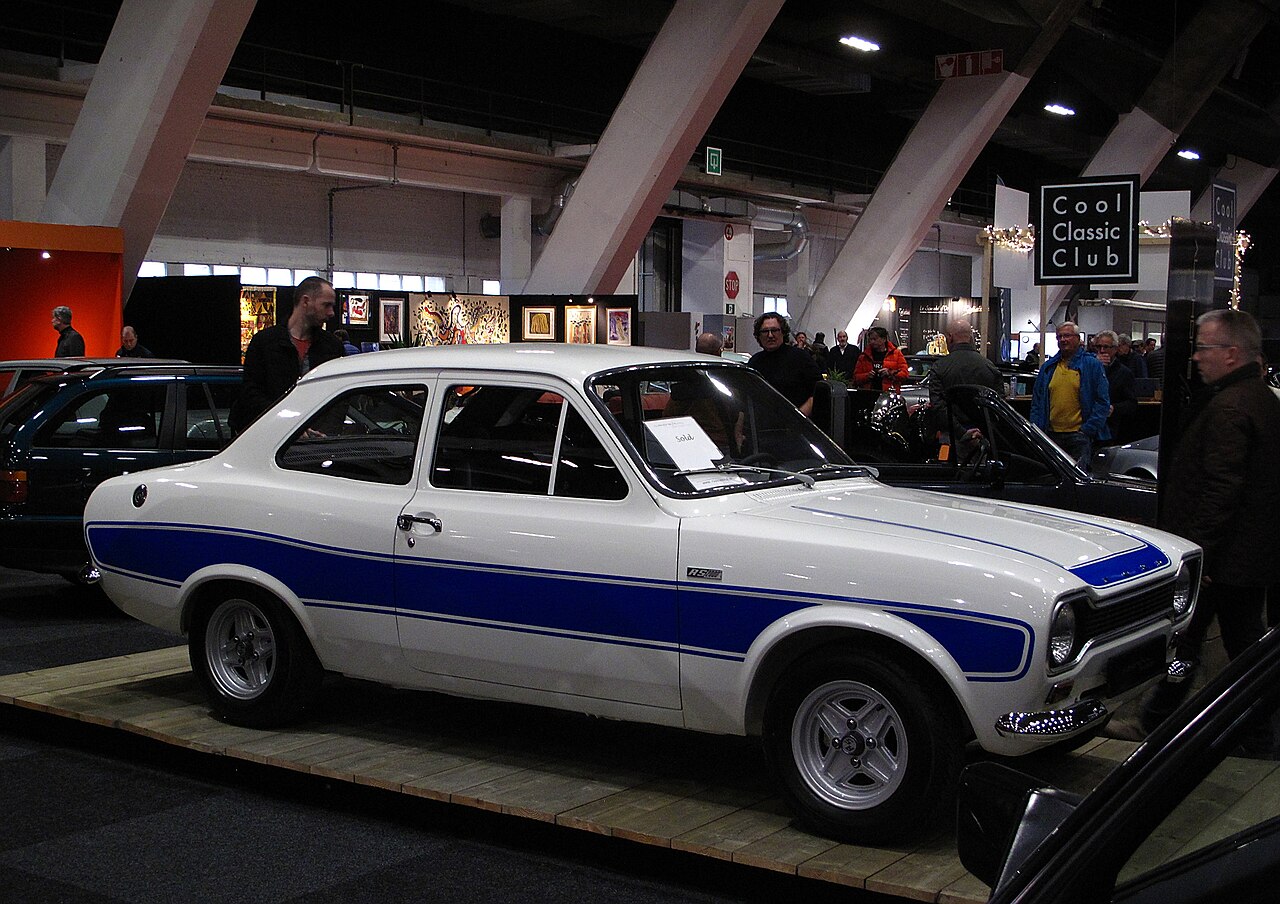
The Mk I Ford Escort RS2000 gave the compact Escort a sporting specification built around Ford’s two-litre Pinto engine. Introduced in 1973, it belongs to a distinct original programme before the later Mk II reused the RS2000 name. Custodial and specialist identification research reports 5,334 cars across the Mk I series. This profile uses that whole-programme figure with the exact manufacturing field unset, rather than extracting a smaller year or export-market subset. The supplied photograph shows a 1974 car also documented by its original seller, making the visual subject unusually well anchored. Its individual sales history remains separate from the wider programme account.
Design and engineering
The white car’s blue side stripe and lower-body accent draw attention to the Escort’s compact two-door outline. Round headlamps, a short bonnet and an upright passenger cell keep the ordinary saloon architecture visible. The documented Pinto engine gives the RS2000 a different mechanical identity from the BDA-powered RS1600. That contrast makes the two articles useful together: they share a basic body vocabulary but explain different engineering choices. The photograph is a later show appearance and includes the specimen’s visible finish and wheels. It should not be treated as proof that every detail is unchanged from the factory or common to all Mk I RS2000s.
Identifying the original configuration
Use the Mk I suffix whenever this programme is uploaded or cross-linked. RS2000 alone can mix several generations and much larger later series. The linked seller record identifies the same April 1974 white car pictured at the show, supporting the model-level illustration without requiring an invented chassis reference. Its installed displacement and condition should remain in that specimen’s record; programme engineering is described at the two-litre Pinto level. A proper individual file can connect factory identity, registration, body finish and later maintenance. Keeping those details separate lets the article explain the model confidently while leaving component originality to actual documentation.
Collector context and preservation
The RS2000 gives a collection an approachable way to discuss specialised road cars without relying entirely on racing imagery. Compare its compact stance with the Lotus Cortina and Capri RS2600, then explain the different engine families behind them. Preserve stripe placement, interior, badges and engine-bay views with dates, particularly before repainting or restoring a car. A familiar appearance can be reproduced, so physical documentation matters as much as the recognised colour treatment. The 5,334 research figure describes the complete Mk I programme. It should not become a sum with later RS2000 generations or a claim about how many examples retain their original mechanical configuration today.
Reading the evidence for this profile
The original source links below identify the programme and the historical statements used in this article. The photograph has its own creator and licence record, separate from the manufacturer’s vehicle history. Keep both when transferring this profile into a collection catalogue. A manufacturing tally describes how many cars belong to a defined original programme; it does not measure how many survive, how many are publicly visible, or how many retain all their original components. Those individual questions require dated chassis and restoration evidence. The reference year likewise describes the programme’s introduction or named historic configuration, while the supplied caption states the photographed setting and any established individual identity. This lets future research expand the car’s history without blurring the scope of the record already assembled here.
Specifications and verified rarity
| Reference year | 1973 |
|---|---|
| Model / programme | Escort RS2000 Mk I |
| Body / role | Pinto-engined sporting two-door saloon |
| Documented engine | Ford Pinto 2.0-litre single-overhead-cam four-cylinder |
| Architecture / transmission | Front engine; rear-wheel drive; four-speed manual |
| Exact manufacturing tally | Not established |
| Eligibility bound | 5334 for the documented scope or parent programme |
| Rarity scope | Complete original Mk I Escort RS2000 programme, 1973–1975. Original custodial and specialist identification research reports 5,334; exact manufacturing tally remains unset. Mk II RS2000 and later same-name programmes are separate subjects. |
| Inventory reference | FRD-175 — Verified |
Frequently asked questions
What is the Ford Escort RS2000 Mk I?
The complete 1973–1975 Mk I Escort RS2000 programme, using Pinto power and a published full-series research figure of 5,334.
What engineering defines this Ford?
Ford Pinto 2.0-litre single-overhead-cam four-cylinder. Front engine; rear-wheel drive; four-speed manual. These are the documented programme or preserved-concept specifications. Connect an individual vehicle’s installed components to its own dated records before assigning a factory configuration to that particular example.
Why is 1973 the reference year?
It identifies the introduction or original historical configuration described in this article. The photograph can show a later example or a later display of the original subject. The source inventory’s original heading remains an identity alias wherever the date or model name has been corrected.
How should an individual Escort RS2000 Mk I be documented?
Start with the chassis identity and connect it to dated construction, registration or custodial records. Keep exterior, interior, engine and underbody photographs together. Record changes to finish, equipment and mechanical specification as separate events, so the physical car’s history can grow without changing the definition of the original programme.
What rarity or archive scope is verified?
Complete original Mk I Escort RS2000 programme, 1973–1975. Original custodial and specialist identification research reports 5,334; exact manufacturing tally remains unset. Mk II RS2000 and later same-name programmes are separate subjects.
Who took the supplied photograph?
Rutger van der Maar via Wikimedia Commons, under CC BY 2.0. The original file and licence links accompany the image. Retain that credit when the photograph is uploaded, exported or reused.
Related Ford profiles
Sources and photo credits
- Manufacturer, institutional or original custodial record
- Original seller: photographed April 1974 specimen
- Original custodial Mk I RS2000 count and identification
Photograph: Rutger van der Maar via Wikimedia Commons original file, CC BY 2.0. Source-provided photograph supplied without local cropping, retouching or text removal. A source thumbnail is used where available. April 1974 Escort RS2000 Mk I at InterClassics Brussels 2024; photo linked to the seller’s matching white-and-blue specimen record.
Built in limited numbers
Complete original Mk I Escort RS2000 programme, 1973–1975. Original custodial and specialist identification research reports 5,334; exact manufacturing tally remains unset. Mk II RS2000 and later same-name programmes are separate subjects.
Gallery
Specifications
Factory specifications may vary by model year, market and configuration.
Identity & production
- Official model
- Escort RS2000 Mk I