1970 Ford Escort RS1600 Mk I
Explore 1970 Ford Escort RS1600 Mk I: sourced history, design, specifications, rarity evidence and a real photograph with creator credits.
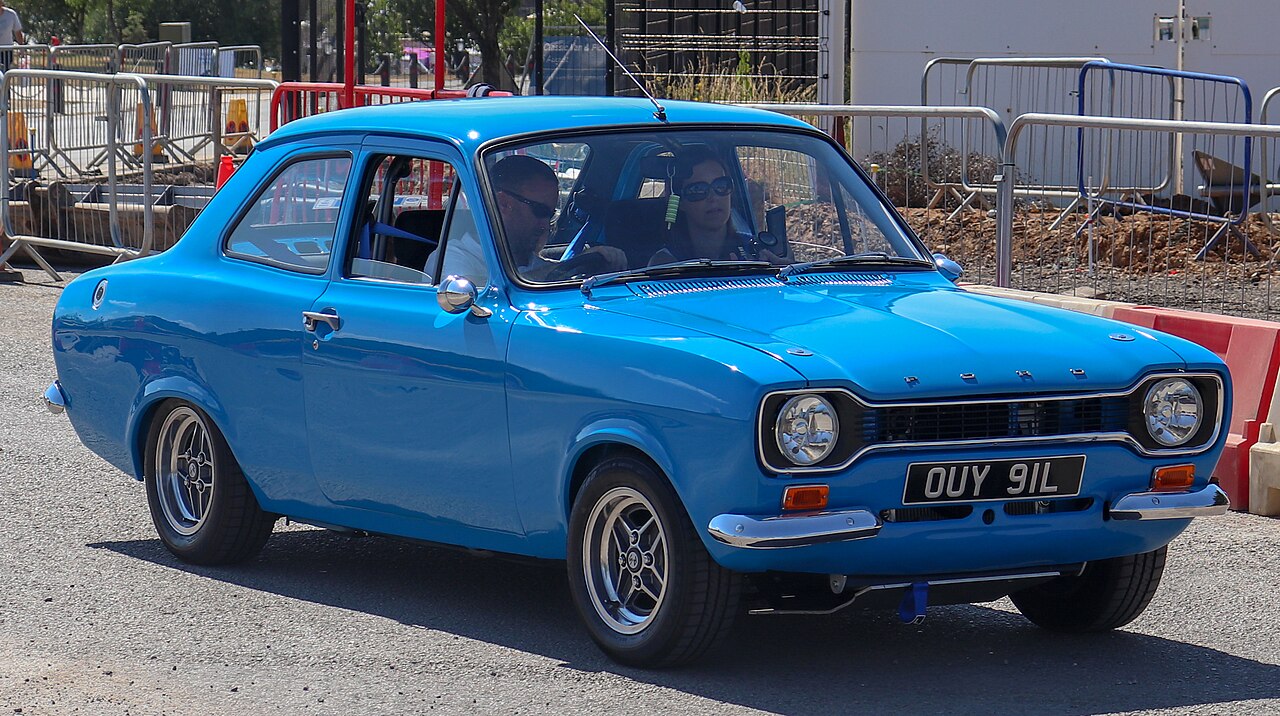
The Ford Escort RS1600 placed Cosworth BDA engineering inside a compact Mk I saloon.
History and purpose
The Ford Escort RS1600 placed Cosworth BDA engineering inside a compact Mk I saloon. The FIA’s historic homologation record anchors the original road-car identity, while specialist history estimates approximately 1,137 examples across the complete 1970–1974 programme. This profile retains the estimate and leaves the exact manufacturing tally unset. The scope includes the original series rather than only a chosen year, a national registration list or surviving competition cars. Its importance is the relationship between a small familiar body and specialised engine architecture. The supplied photograph presents a road-car example, allowing readers to see that relationship without assigning an unsupported works-rally chassis history.
Design and engineering
The blue example has an upright cabin, short boot and simple round headlamps. Its modest exterior proportions are part of the story: much of the model’s significance lies beneath a saloon body that remains easy to recognise. The documented BDA uses twin overhead camshafts and four valves per cylinder, distinguishing it from less specialised Escort power units. The photograph supplies a clear frontal-quarter view, but does not reveal an engine number or the precise cylinder-block configuration. Those details belong to a specimen’s dated file. Preserve the distinction between road homologation form and later competition preparation when describing a car that has acquired different wheels, arches or engine equipment.
Identifying the original configuration
The full RS1600 name matters because the Escort Mexico, RS2000 and later RS1800 represent different original specifications. A similar two-door shell or sporting paint treatment does not resolve those identities. This profile checks the photographed model against its source description and anchors the programme in FIA documentation. It does not certify unseen component originality from an exterior image. A particular car’s build record, serial marks, engine evidence and modification history should support its individual identification. The estimated complete-programme figure also remains separate from any count of cars registered today, which would require a current, geographically defined and carefully maintained census.
Collector context and preservation
The RS1600 is especially useful beside the Mk I RS2000 and Lotus Cortina. The three profiles reveal different ways of putting sporting engineering into compact Ford saloons. Display their whole-car photographs first, then let technical records explain the less visible distinctions. For preservation, record engine-bay layout and structural details before restoration work changes the evidence. Keep historic competition images connected to a named chassis when possible. That approach helps readers appreciate the RS1600’s sporting purpose while preserving the difference between an original road homologation programme and an individual car’s later life as a rally machine, restored display car or modified enthusiast vehicle.
Reading the evidence for this profile
The original source links below identify the programme and the historical statements used in this article. The photograph has its own creator and licence record, separate from the manufacturer’s vehicle history. Keep both when transferring this profile into a collection catalogue. A manufacturing tally describes how many cars belong to a defined original programme; it does not measure how many survive, how many are publicly visible, or how many retain all their original components. Those individual questions require dated chassis and restoration evidence. The reference year likewise describes the programme’s introduction or named historic configuration, while the supplied caption states the photographed setting and any established individual identity. This lets future research expand the car’s history without blurring the scope of the record already assembled here.
Specifications and verified rarity
| Reference year | 1970 |
|---|---|
| Model / programme | Escort RS1600 Mk I |
| Body / role | Cosworth BDA road homologation saloon |
| Documented engine | 1,599 cc Cosworth BDA twin-cam four-cylinder in road homologation form |
| Architecture / transmission | Front engine; rear-wheel drive; original Mk I sporting saloon architecture |
| Exact manufacturing tally | Not established |
| Eligibility bound | 1137 for the documented scope or parent programme |
| Rarity scope | Complete original Mk I Escort RS1600 programme, 1970–1974. Specialist research estimates approximately 1,137 across the full series; exact tally is unconfirmed. This is an estimated whole-programme scale, not a year, survivor or competition-only subset. |
| Inventory reference | FRD-152 — Verified |
Frequently asked questions
What is the Ford Escort RS1600 Mk I?
The complete original Mk I Escort RS1600 BDA road homologation programme, with an estimated 1,137-car full-series figure and exact tally unset.
What engineering defines this Ford?
1,599 cc Cosworth BDA twin-cam four-cylinder in road homologation form. Front engine; rear-wheel drive; original Mk I sporting saloon architecture. These are the documented programme or preserved-concept specifications. Connect an individual vehicle’s installed components to its own dated records before assigning a factory configuration to that particular example.
Why is 1970 the reference year?
It identifies the introduction or original historical configuration described in this article. The photograph can show a later example or a later display of the original subject. The source inventory’s original heading remains an identity alias wherever the date or model name has been corrected.
How should an individual Escort RS1600 Mk I be documented?
Start with the chassis identity and connect it to dated construction, registration or custodial records. Keep exterior, interior, engine and underbody photographs together. Record changes to finish, equipment and mechanical specification as separate events, so the physical car’s history can grow without changing the definition of the original programme.
What rarity or archive scope is verified?
Complete original Mk I Escort RS1600 programme, 1970–1974. Specialist research estimates approximately 1,137 across the full series; exact tally is unconfirmed. This is an estimated whole-programme scale, not a year, survivor or competition-only subset.
Who took the supplied photograph?
Vauxford via Wikimedia Commons, under CC BY-SA 4.0. The original file and licence links accompany the image. Retain that credit when the photograph is uploaded, exported or reused.
Related Ford profiles
Sources and photo credits
- Manufacturer, institutional or original custodial record
- Specialist full-programme estimate and original history
Photograph: Vauxford via Wikimedia Commons original file, CC BY-SA 4.0. Source-provided photograph supplied without local cropping, retouching or text removal. A source thumbnail is used where available. 1972 Ford Escort RS1600 photographed at the British Motor Museum’s Old Ford Rally in 2018; programme illustration, individual chassis not assigned.
Built in limited numbers
Complete original Mk I Escort RS1600 programme, 1970–1974. Specialist research estimates approximately 1,137 across the full series; exact tally is unconfirmed. This is an estimated whole-programme scale, not a year, survivor or competition-only subset.
Gallery
Specifications
Factory specifications may vary by model year, market and configuration.
Identity & production
- Official model
- Escort RS1600 Mk I