BMW M3 Compact Prototype E36 (1996)
Discover BMW M3 Compact Prototype E36 (1996) history, specifications and rarity, with sourced details, FAQs and authentic photographs with visible credits.
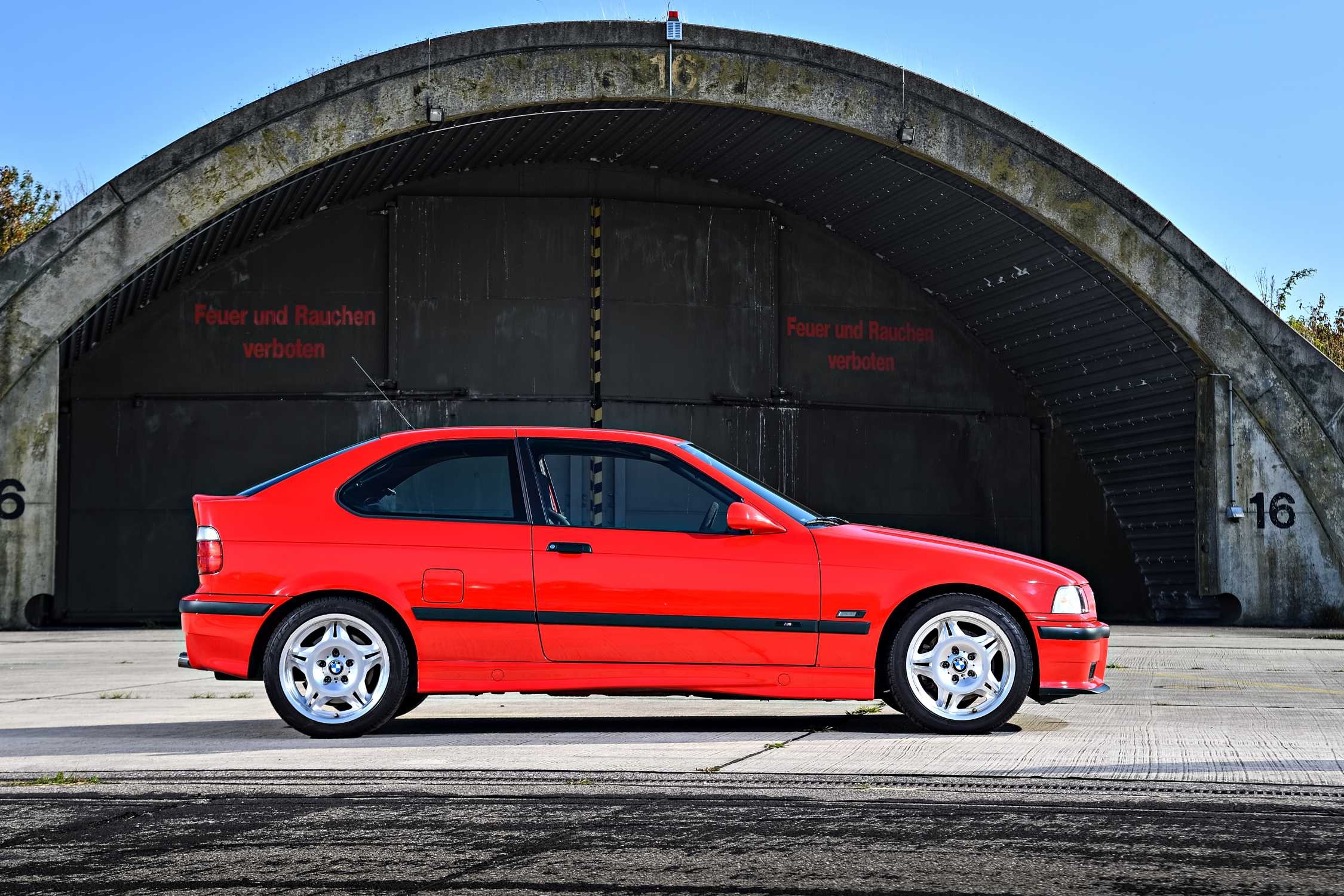
BMW’s 1996 M3 Compact prototype combines the short E36 Compact body with the S50B32 engine from the M3. Its published 321 hp and 1,300 kg weight give the project a clear performance brief, but its significance goes beyond a specification comparison. It explored a smaller-bodied M car long before that idea became familiar through later models.
Record: BMW-049 · Factory prototype one-off · Germany · 1996.
Specifications and rarity
| Item | Documented reference and scope |
|---|---|
| Construction year | 1996 |
| Engine | S50B32, 3.2-litre naturally aspirated inline-six |
| Published output | 321 hp |
| Factory weight reference | 1,300 kg |
| Body relationship | Approximately 23 cm shorter at the rear than the E36 M3 Coupé; unchanged wheelbase |
| Cabin | Recaro racing seats, roll bar and reduced equipment |
| Count scope | One factory feasibility prototype; excludes enthusiast conversions |
| Production outcome | Never entered series production |
The M3 that put a six-cylinder engine in a Compact body
The count is one original factory prototype. The car never became a series-production M3 Compact, and privately converted Compacts do not enlarge the factory count. BMW-049 therefore follows a specific feasibility project rather than creating an umbrella entry for every Compact fitted with an M engine.
Shorter overhang does not mean a shorter wheelbase
BMW’s account makes a useful distinction: the rear body is approximately 23 centimetres shorter than the M3 Coupé’s, while the wheelbase remains unchanged. The reduced overall length comes from the body behind the rear axle. This corrects the tempting assumption that every shorter car necessarily places its axles closer together.
That difference matters when thinking about vehicle movement. Weight carried beyond an axle contributes to the mass distributed around the car’s center. Removing or reducing it can change how a vehicle responds, even when the distance between the axles remains the same. Actual handling still depends on suspension, tires and many other choices; length alone is not a complete explanation.
In the side photograph, the abbreviated tail is easy to see. It gives the prototype its hatchback identity while preserving the familiar front-engine BMW proportions. The shape is an important part of the engineering experiment, rather than merely a styling variation applied to an unchanged coupé.
The S50B32 gave the experiment a serious mechanical foundation
The naturally aspirated 3.2-litre inline-six is central to the factory project. It places a full M3 engine in a more compact-bodied vehicle instead of relying on a small increase in output from a standard Compact engine. The resulting concept asks how much performance a smaller package can usefully carry.
An inline-six arranges its cylinders in one bank, making engine length an important packaging consideration. Installing that engine in a short-bodied car does not make the powertrain itself shorter. The challenge is to integrate the complete system, including cooling, transmission and the surrounding structure, within the intended vehicle.
The prototype’s output should also stay attached to its European S50B32 identity. Earlier E36 editions used other configurations, and US-market engines had their own published figures. The M3 badge alone is not enough to select a specification: generation, market and exact engine reference all contribute to the answer.
A stripped cabin explains the development priorities
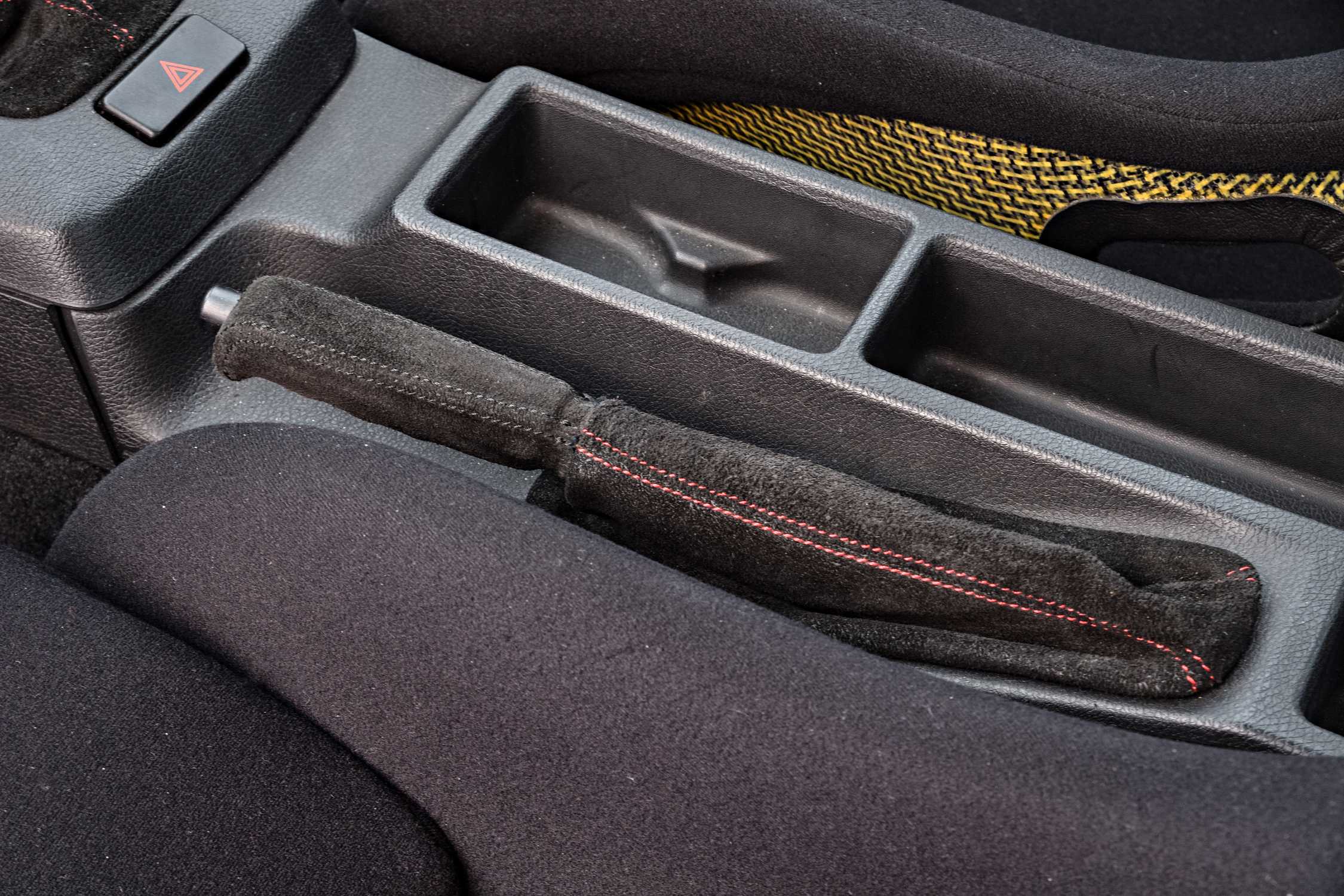
BMW describes a minimalist interior with Recaro racing seats and a roll bar. Those choices make the purpose of the prototype visible. It was an exercise in a concentrated driving experience, with comfort and unnecessary equipment taking a lower priority.
The interior also reveals the Compact’s relationship with earlier BMW component architecture. Its dashboard arrangement differs from the other E36 M3 bodies. That is useful context for anyone comparing the prototype with a coupé: the difference is not confined to the tailgate and rear overhang.
A roll bar and racing seat are functional equipment, but they do not independently establish a car’s factory origin. An enthusiast-built conversion can contain similar parts. The original prototype is identified through BMW’s documented project and archive photography, rather than through a checklist of aftermarket-looking details.
A feasibility study with influence, rather than a retail edition
BMW presents the Compact as an early exploration of a smaller performance-car idea. It is reasonable to compare that approach with later compact M models, but comparison is not the same as claiming a direct transfer of every component. Different generations can address a similar goal through very different engineering.
The decision not to proceed into production is part of the car’s history. It leaves the prototype as evidence of what was physically explored, rather than a missing customer model whose equipment list can be reconstructed from speculation. The finished object is more informative than an imagined production brochure.
This also explains why it belongs beside the E46 M3 Touring concept. Both investigate another body type for an established performance model, while remaining distinct projects. The Compact concentrates the package; the Touring adds utility. Their shared experimental status does not make them duplicates.
Reading the photographs and the count of one
The supplied BMW heritage photographs establish the original red Compact and provide another view of the project’s equipment. Their archive context is September 2016, twenty years after the construction year. The caption preserves that distinction so a modern heritage photograph is not mistaken for a period development image.
Start with the complete body to understand the shortened rear section, then examine the detail image. This sequence gives the equipment a physical setting. A component photograph becomes much more useful when the reader already knows which exact car it belongs to.
The production field counts the original factory feasibility prototype. It excludes ordinary 3 Series Compact production and later private conversions. That scope allows the entry to stand alongside the M3 GT and Lightweight without pretending that all three were customer editions of the same kind.
Frequently asked questions
Did BMW sell an M3 Compact?
The documented 1996 factory project never entered series production.
Which engine did it use?
The S50B32 naturally aspirated 3.2-litre inline-six, with BMW publishing 321 hp.
Was its wheelbase shorter than the M3 Coupé’s?
BMW expressly says the wheelbase was identical. The reduced length came from the rear body section.
What weight does BMW publish?
1,300 kg for the prototype.
How many does this profile count?
One original factory prototype, excluding privately built Compact conversions.
Why is it compared with the Touring concept?
Both explored a different body package for an M3, but they are separate factory projects with different goals.
Explore related verified BMW profiles
Sources and photo credits
Photo: BMW AG / BMW Group PressClub · Press/editorial use only. BMW-supplied press photograph under BMW PressClub terms. Original supplied photograph retained without local cropping or content alteration.
Photo: BMW AG / BMW Group PressClub · Press/editorial use only. BMW-supplied press photograph under BMW PressClub terms. Original supplied photograph retained without local cropping or content alteration.
Why this machine matters
The production field counts the original factory feasibility prototype. It excludes ordinary 3 Series Compact production and later private conversions. That scope allows the entry to stand alongside the M3 GT and Lightweight without pretending that all three were customer editions of the same kind.
Built in limited numbers
One factory feasibility prototype; excludes enthusiast conversions
Gallery
Specifications
Factory specifications may vary by model year, market and configuration.
Identity & production
- Official model
- BMW M3 Compact Prototype E36 (1996)
- Base model
- M3 E36
- Worldwide production
- 1
Powertrain & performance
- Engine
- S50B32, 3.2-litre naturally aspirated inline-six