BMW 635 CSi Art Car — Ernst Fuchs, 1982
Discover BMW 635 CSi Art Car Ernst Fuchs history, specifications and rarity, with sourced details, FAQs and authentic photographs with visible credits.
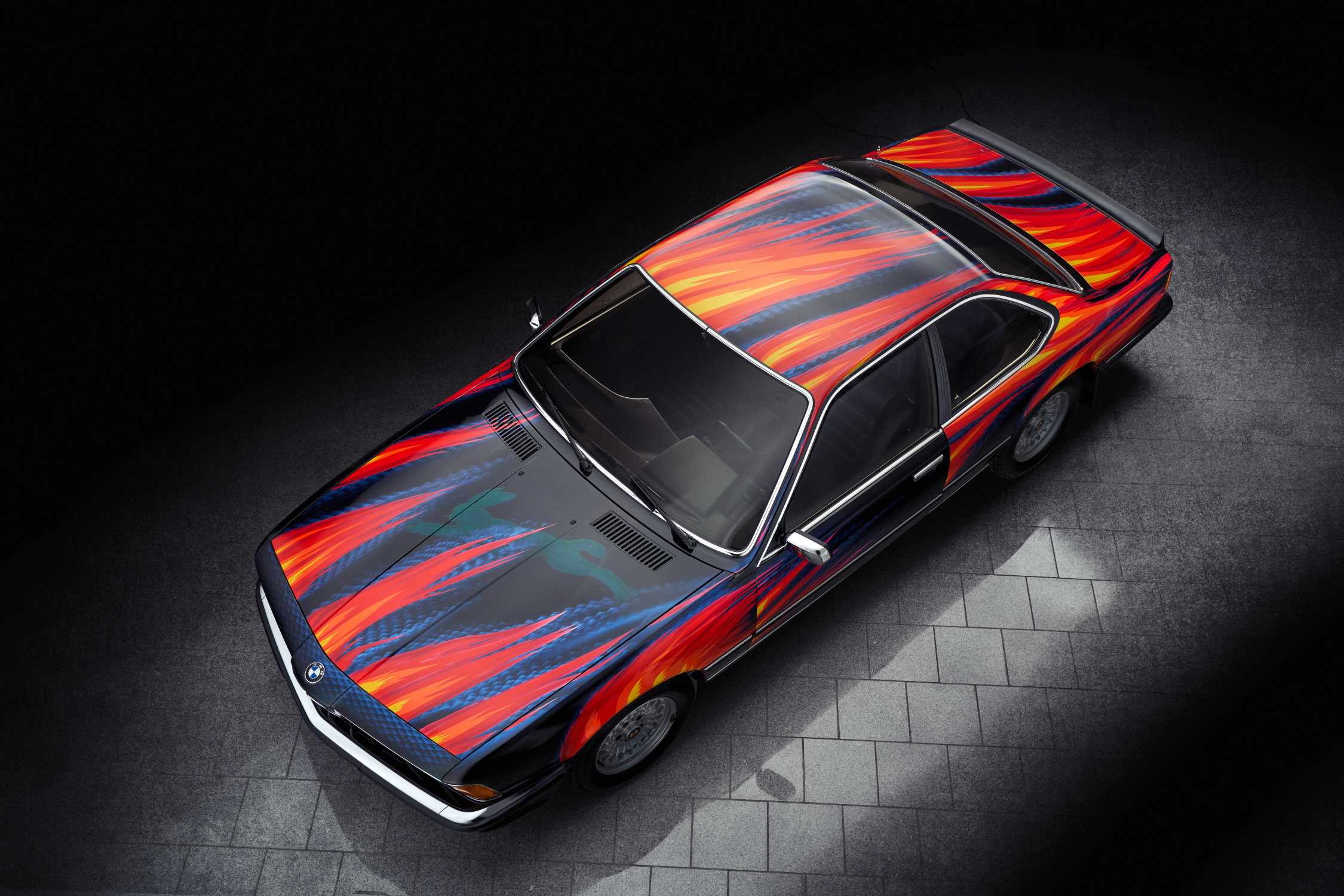
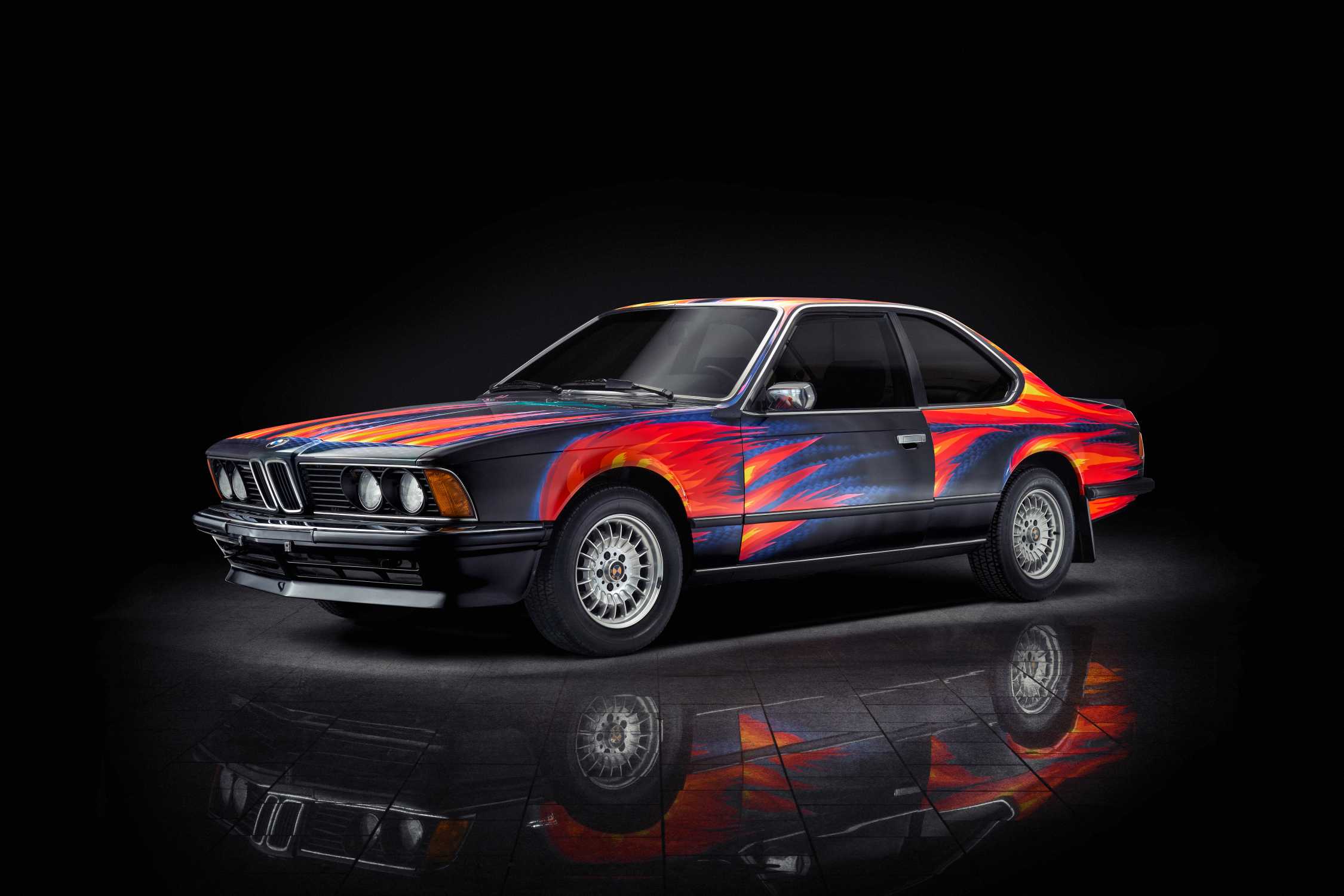
Ernst Fuchs’s BMW 635 CSi is the fifth BMW Art Car, created in 1982. BMW identifies it as the collection’s first work based on a production model rather than a competition car. That change is more significant than a simple change of body shape: it shifts attention from a race entry toward the automobile as an exhibition object.
Record: BMW-015 · Individual BMW Art Car · Germany · 1982.
Specifications and rarity
| Item | Documented reference and scope |
|---|---|
| Art Car number | 5 |
| Artist / creation year | Ernst Fuchs, 1982 |
| Base vehicle | BMW 635 CSi, E24 |
| Historical engine reference | 3,430 cc inline-six with overhead camshaft |
| Factory catalogue reference | 218 bhp; 229 km/h |
| Purpose | Created for exhibition; first Art Car based on a production model |
| Count scope | One original artwork/car; not an M1 or a customer 6 Series edition |
Ernst Fuchs brought the Art Car collection onto a production-car platform
This record corrects the workbook’s M1 and 1981 identification. The documented Fuchs car is an E24-generation 635 CSi from the 1982 Art Car project. The inventory reference remains BMW-015 so the research trail stays intact, while the displayed name and technical fields follow the factory catalogue.
Flames, darkness and a fantastic visual narrative
The photographs show vivid, flame-like areas against a dark body. Strong contrasts organize the long bonnet and coupé surfaces, drawing the eye around the car rather than leaving it fixed on one panel. This is a useful starting point for visual reading before attempting to interpret the story behind the work.
BMW’s catalogue associates Fuchs’s design with an imagined nocturnal scene involving a hare and a burning automobile. The imagery belongs to the artist’s fantastic vision. It is not a literal account of an incident in the vehicle’s mechanical history, and it should not be turned into a claim that the car suffered fire damage.
The E24’s long body gives the artwork a very different surface from the earlier M1. Its bonnet, roof and side sections create a continuous coupé form on which the design can unfold. Readers comparing the two should keep artist, model and year together; an artist name by itself cannot correct an incorrectly assigned chassis family.
A 635 CSi reference specification with an exhibition purpose
BMW’s historical catalogue lists a 3,430 cc six-cylinder, 218 bhp and a 229 km/h speed reference for the Fuchs 635 CSi. Those numbers describe the base-car technical reference associated with the artwork. They are not a record of an independent performance test of the painted exhibit.
The same catalogue presents the Art Car as intended for exhibition. There is no Le Mans race entry to attach to this vehicle. Its connection to the collection comes through artistic authorship and the documented project, rather than through the competition biography that belongs to the preceding Warhol M1.
For a profile reader, this distinction prevents a common error: assuming that every early Art Car was a racing car. The collection developed through different vehicle types and purposes. A production-based coupé can be an individual artwork without becoming a motorsport homologation special.
Reading modern exhibition photographs
The supplied BMW photographs identify the 1982 Fuchs Art Car and name photographer Enes Kucevic. Their publication context is much later than the creation of the artwork. A modern photograph of a historical object should preserve both dates where needed: the car’s artwork year and the photograph’s archive date.
Look first at the full body to understand how the colors are distributed. Then examine the relationship between the graphic treatment and the headlights, wheel arches and long side surfaces. The mechanical shape remains visible beneath the painting, which is part of the tension that makes an automobile an interesting artistic support.
The image credit names the photographer and BMW PressClub supply. Fuchs receives a separate artwork credit. Combining those roles into a single invented photographer credit would obscure the very authorship the profile is meant to document.
Why this is one Art Car, not a limited-production M1
The original individual artwork is the count scope. Nothing in this profile establishes a run of Fuchs-painted M1s, a numbered 6 Series retail package or a survival census for ordinary 635 CSi models. Those would be different research questions.
Its place in the collection is best understood beside the Warhol M1 and Rauschenberg 635 CSi. The first provides a racing comparison, while the second shows another artist working with the same general coupé family. Shared body architecture does not erase the difference between the two artworks.
Correct identification makes those comparisons possible. The model correction is therefore carried into the title, chassis field, related links and source notes instead of being hidden in a small footnote that leaves the public record wrong.
Frequently asked questions
Was Ernst Fuchs’s Art Car a BMW M1?
No. BMW identifies it as a 635 CSi based on the E24 6 Series.
What year was it created?
1982, correcting the workbook’s 1981 reference.
Which Art Car number is it?
Number 5.
Why is it a milestone in the collection?
BMW calls it the first Art Car based on a production model.
Was it a Le Mans race car?
No. The factory catalogue describes an exhibition purpose rather than a competition entry.
How many does this profile count?
One original individual Art Car, not a retail special edition.
Explore related verified BMW profiles
- BMW M1 Art Car — Andy Warhol, 1979
- BMW 635 CSi Art Car — Robert Rauschenberg, 1986
- BMW 535i Art Car — Matazo Kayama, 1990
Sources and photo credits
Photo: Enes Kucevic / BMW Group PressClub · Press/editorial use only. BMW-supplied press photograph under BMW PressClub terms. Artwork: Ernst Fuchs, 1982. Original supplied photograph retained without local cropping or content alteration.
Photo: Enes Kucevic / BMW Group PressClub · Press/editorial use only. BMW-supplied press photograph under BMW PressClub terms. Artwork: Ernst Fuchs, 1982. Original supplied photograph retained without local cropping or content alteration.
Why this machine matters
Correct identification makes those comparisons possible. The model correction is therefore carried into the title, chassis field, related links and source notes instead of being hidden in a small footnote that leaves the public record wrong.
Built in limited numbers
One original artwork/car; not an M1 or a customer 6 Series edition
Gallery
Specifications
Factory specifications may vary by model year, market and configuration.
Identity & production
- Official model
- BMW 635 CSi Art Car — Ernst Fuchs, 1982
- Base model
- 6 Series E24
- Worldwide production
- 1
Powertrain & performance
- Engine
- 3,430 cc inline-six with overhead camshaft