BMW M1 Art Car — Andy Warhol, 1979
Discover BMW M1 Art Car Andy Warhol history, specifications and rarity, with sourced details, FAQs and authentic photographs with visible credits.
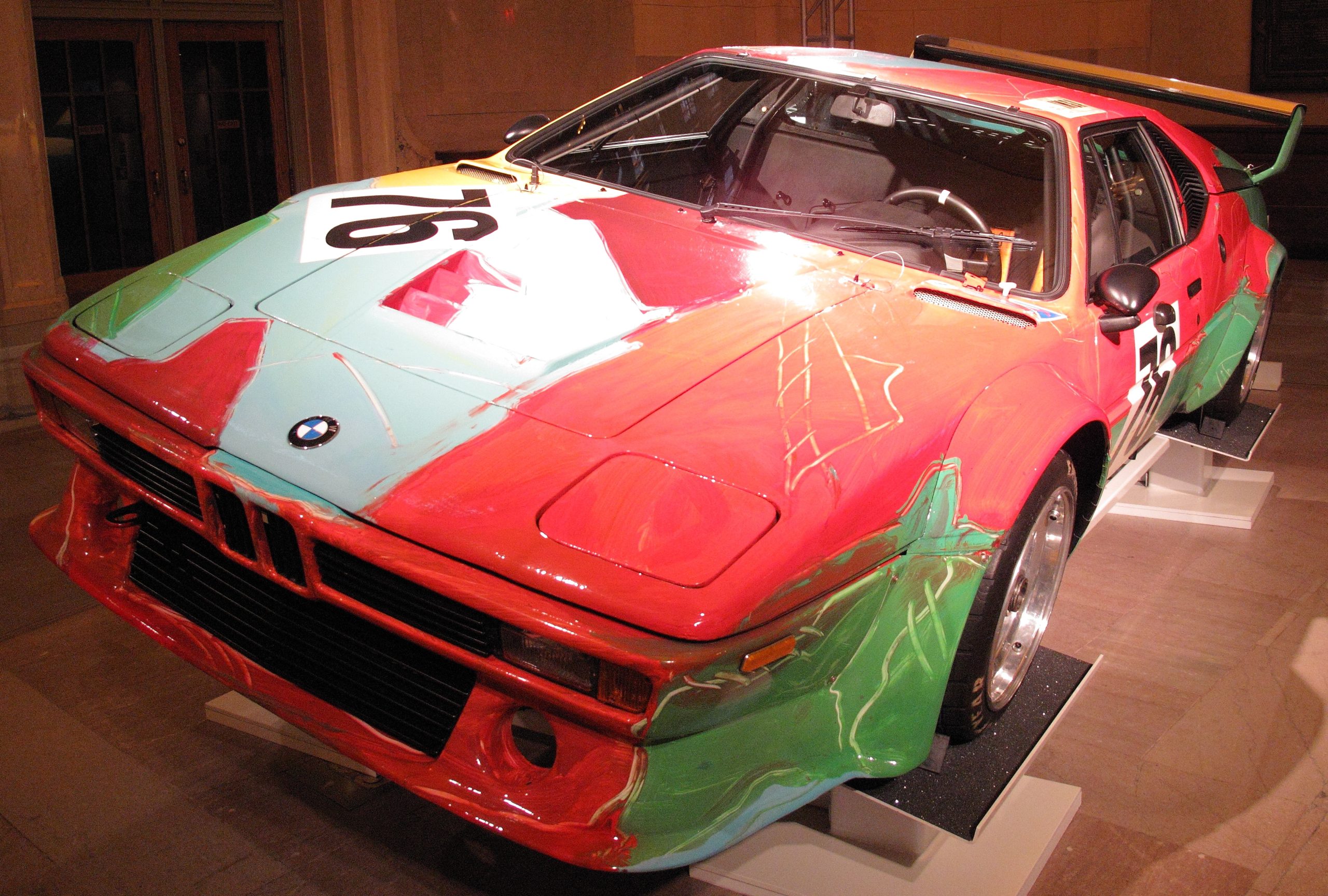
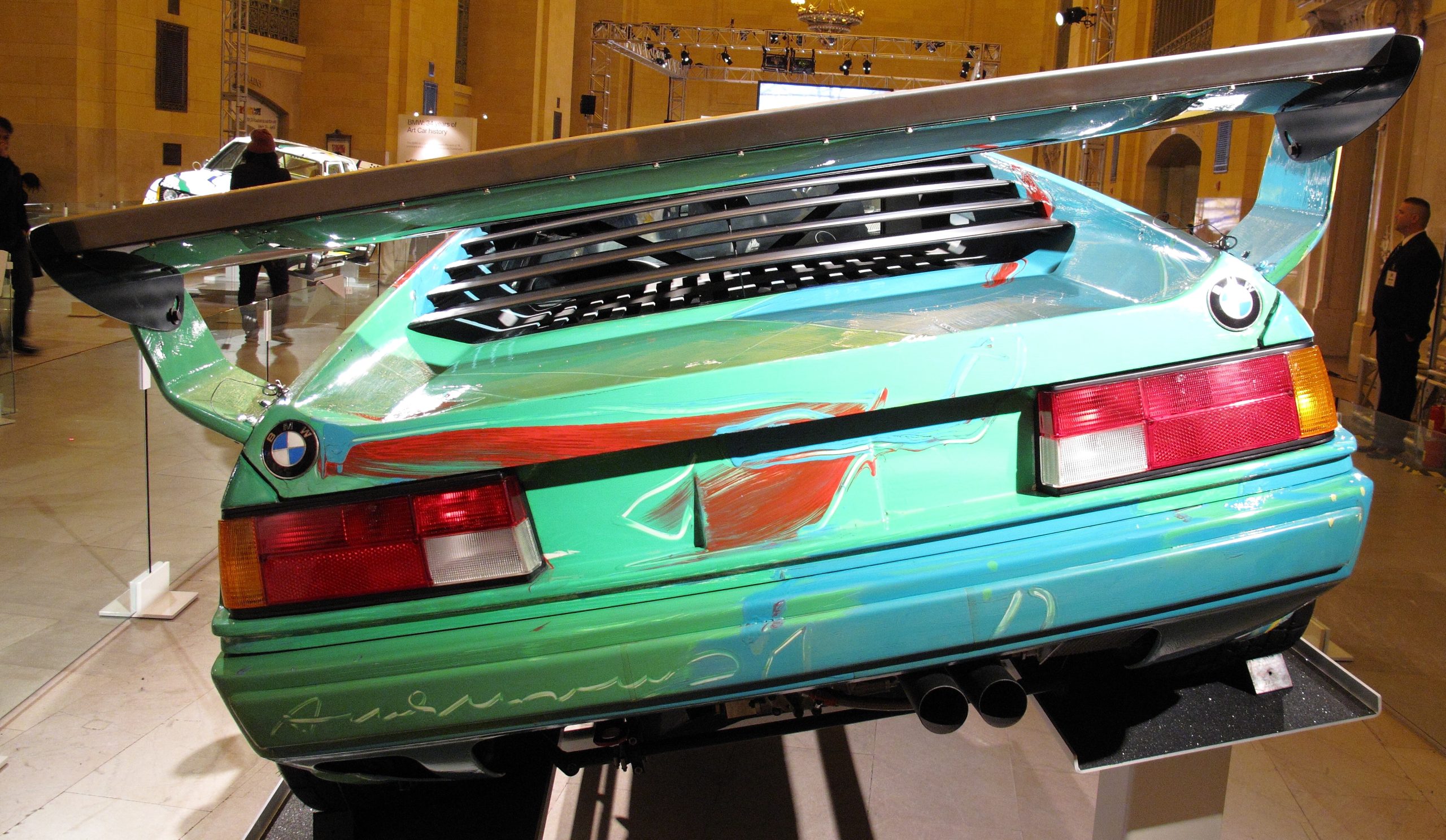
The BMW M1 Art Car by Andy Warhol is the fourth BMW Art Car, created in 1979 on a Group 4 racing version of the mid-engined M1. Its painted body and competition history belong to the same individual object. It is neither a numbered customer edition nor a road M1 that later acquired a Warhol-inspired wrap.
Record: BMW-014 · Individual BMW Art Car · Germany · 1979.
Specifications and rarity
| Item | Documented reference and scope |
|---|---|
| Art Car number | 4 |
| Artist / creation year | Andy Warhol, 1979 |
| Configuration | BMW M1 Group 4 racing version |
| Factory historical engine reference | 3,500 cc inline-six; four valves per cylinder; twin overhead camshafts |
| Factory historical power / speed | 470 bhp; 307 km/h, as published in the Art Car catalogue |
| Le Mans entry | 1979; race number 76 |
| Drivers | Manfred Winkelhock, Hervé Poulain and Marcel Mignot |
| Result | Sixth overall and second in class |
| Rarity scope | One original individual Art Car; not the M1 programme total |
Andy Warhol’s BMW M1: a painted race car with a real Le Mans result
The strongest way to understand it is to follow three connected stories: the physical act of painting the car, the visual impression of speed across its body, and its endurance-racing appearance at Le Mans. Each contributes something different. Warhol supplies authorship, the M1 supplies a highly distinctive three-dimensional surface, and the race gives the finished artwork a documented competitive biography.
Warhol worked directly on the full-size M1
BMW’s account emphasizes that Warhol painted the full-size car himself, unlike earlier projects in which an artist’s scale-model design was transferred to the vehicle. The distinction gives the finished surface a close relationship to the artist’s movements and decisions. It is useful to look at the paint as a record of that process, rather than only as an attractive combination of colors.
Broad gestures cross panel boundaries and resist the tidy organization of a conventional racing livery. The surfaces are not treated simply as spaces for logos. Viewed close up, the body becomes a field of marks; viewed from a distance, those marks become part of the car’s overall movement. The changing reading is one reason a detail view and a complete-car photograph can be equally valuable.
Warhol’s subject was the impression of speed. BMW explains that the painting was intended to evoke contours and colors becoming indistinct when a car moves rapidly. That is an artistic idea, not a claim that the paint improves the M1’s acceleration. Keeping visual effect and mechanical performance separate makes both stories clearer.
The Group 4 M1 underneath the artwork
The factory Art Car catalogue identifies a Group 4 racing version with a six-cylinder engine of approximately 3.5 litres. It publishes 470 bhp and a 307 km/h speed reference. These are historical catalogue figures for the race-car configuration; they should not be copied into the specification of every M1 road car.
The distinction is especially important because the M1’s basic silhouette remains recognizable. A low nose, sharply defined roof and mid-engine proportions connect the Art Car with the wider model programme, while racing preparation gives this vehicle a different purpose. The model-level M1 profile explains production and road specification; this individual profile explains the Warhol car.
Historical specifications also do not establish a museum vehicle’s present operating condition. An archive can describe the configuration associated with a car’s racing period without certifying a current dynamometer result. This table preserves the source’s scope and units, avoiding a modern measurement claim that the catalogue does not supply.
Le Mans 1979: number 76 and the three-driver crew
At the 1979 24 Hours of Le Mans, the car carried number 76. BMW identifies Manfred Winkelhock, Hervé Poulain and Marcel Mignot as its drivers and records sixth overall and second in class. The class placing and overall placing are separate results; neither should be rewritten as an outright victory.
Those details give readers practical identifiers for period photographs. Race number, event year and vehicle shape together are stronger evidence than paint colors alone. The documented crew also connects the object with the people who used it under competition conditions, keeping the car from becoming merely a famous name attached to a static exhibit.
The race result adds another layer to the painting’s theme. The car did not only represent movement; it competed in an event in which the painted object actually moved through a demanding endurance programme. That observation is an interpretation of its history, not an additional performance statistic.
How to read the Warhol M1 photographs
Start with the complete car and then follow the painted gestures across the bonnet, roof and rear body. The architecture is unusually angular, so a gesture that crosses an edge can change direction in the viewer’s field of vision. The relationship between the mark and the panel is more informative than judging an isolated patch of color.
Both supplied photographs show the Art Car on display on 4 April 2009. They provide two views of the finished artwork and are not photographs of the 1979 race.
The photograph and the painted artwork also have different authors. The visible credits name Davidwiz as photographer, Wikimedia Commons as the photo source and Warhol as the artist. That is especially useful for this subject because the authorship of the surface is central to why the vehicle has its own profile.
Rarity, reproductions and the wider M1 story
The count in this entry is one original individual Art Car. It does not mean that only one M1 was manufactured, and it does not count scale models, printed reproductions or vehicles carrying later tribute graphics. The wider M1 programme has its own production-count questions and a separate profile.
Warhol’s M1 can be compared with Calder’s CSL, Stella’s grid-covered CSL and Lichtenstein’s 320i without treating their artistic approaches as interchangeable. Calder emphasizes large color shapes, Stella gives the body a drawing-like structure, and Warhol foregrounds energetic marks. The comparison helps readers see the collection as a sequence of individual decisions.
The vehicle’s lasting interest comes from that combination of authorship, physical surface and competition history. Each is documented without adding an invented chassis number, a claim about private availability or an unsupported surviving-population estimate.
Frequently asked questions
Which BMW Art Car did Andy Warhol create?
He created Art Car number 4, a BMW M1 Group 4 racing version, in 1979.
Did Warhol paint the actual full-size car?
BMW’s account says he worked directly on the full-size M1 himself.
Did the Warhol M1 race at Le Mans?
Yes. It competed in 1979 as number 76.
Who drove it at Le Mans?
Manfred Winkelhock, Hervé Poulain and Marcel Mignot.
What was its Le Mans result?
BMW records sixth overall and second in class, not an overall victory.
Does the 470 bhp figure apply to road M1s?
No. It is the factory catalogue’s historical reference for this Group 4 racing Art Car.
How many Warhol M1 Art Cars does this profile count?
One original individual artwork/car. Miniatures, prints and tribute liveries are separate objects.
Why are both photo and artwork credits supplied?
The image supplier or photographer and the artist who created the painted surface have separate roles.
Explore related verified BMW profiles
- BMW M1 E26 — Road Supercar and Procar Foundation
- BMW 3.0 CSL Art Car — Alexander Calder, 1975
- BMW 635 CSi Art Car — Ernst Fuchs, 1982
Sources and photo credits
- BMW Art Car Collection: factory technical and racing histories
- BMW: Andy Warhol’s Art Car turns forty
Photo: Davidwiz / Wikimedia Commons · CC BY 3.0. Photograph licensed CC BY 3.0 by Davidwiz; underlying artwork rights are separate. Artwork: Andy Warhol, 1979. Original supplied photograph retained without local cropping or content alteration.
Photo: Davidwiz / Wikimedia Commons · CC BY 3.0. Photograph licensed CC BY 3.0 by Davidwiz; underlying artwork rights are separate. Artwork: Andy Warhol, 1979. Original supplied photograph retained without local cropping or content alteration.
Why this machine matters
The vehicle’s lasting interest comes from that combination of authorship, physical surface and competition history. Each is documented without adding an invented chassis number, a claim about private availability or an unsupported surviving-population estimate.
Built in limited numbers
One original individual Art Car; not the M1 programme total
Gallery
Specifications
Factory specifications may vary by model year, market and configuration.
Identity & production
- Official model
- BMW M1 Art Car — Andy Warhol, 1979
- Base model
- M1 E26
- Worldwide production
- 1
Powertrain & performance
- Engine
- 3,500 cc inline-six; four valves per cylinder; twin overhead camshafts