Bentley Continental GT Convertible Number 1 Edition by Mulliner
The Continental GT Convertible Number 1 Edition by Mulliner closes Bentley’s centenary trilogy with a tribute to the historic No. 1 Blower. Its 100-car programme pairs a W12 convertible with a numbered grille and an unusual cabin artefact: a miniature wheel spinner cast using metal from a replaced piston of the original racing car. The modern edition and the pre-war single-seater are distinct vehicles.
The Continental GT Convertible Number 1 Edition by Mulliner closes Bentley’s centenary trilogy with a tribute to the historic No. 1 Blower. Its 100-car programme pairs a W12 convertible with a numbered grille and an unusual cabin artefact: a miniature wheel spinner cast using metal from a replaced piston of the original racing car. The modern edition and the pre-war single-seater are distinct vehicles.
Bentley Continental GT Convertible Number 1 Edition by Mulliner at a glance
| Manufacturer | Bentley |
|---|---|
| Model / family | Continental GT |
| Profile scope | Limited centenary edition |
| Historical reference year | 2019 |
| Inventory reference | BEN-132 |
| Engine reference | 6.0-litre twin-turbocharged W12 |
| Announced edition limit | 100 — Announced Number 1 Edition convertible limit |
The final car in the centenary trilogy
Bentley’s centenary editions connected three modern cars with three different pieces of its past. The W.O. Edition Mulsanne honoured the founder, the Continental GT Number 9 Edition referred to a Team Blower, and Number 1 focused on the Brooklands single-seater. Number 1’s convertible body gives the final member a different character from the closed GT coupé. The collection is best understood through those specific relationships, rather than as three interchangeable cars wearing anniversary badges. For readers arriving through a model search, the important starting point is the full name: this is the Continental GT Convertible edition created in 2019, with its own specification and commemorative purpose.
A modern convertible inspired by a separate racing car
The No. 1 reference belongs to Bentley’s historic Blower single-seater and its Brooklands story. The Continental carries that inspiration into a much later road car, with different construction, accommodation and powertrain. A number painted on a modern grille does not transfer the old vehicle’s chassis identity or competition history to the new car. This distinction is useful when exploring the archive: the original and the commemorative edition deserve separate profiles, connected through a clear explanation. The appeal of Number 1 comes from making that reference visible in an open-top grand tourer, rather than attempting a literal recreation of the single-seater.
The announced programme of 100
The manufacturer’s reproduced release sets the edition limit at 100. That figure describes Number 1 convertibles, separate from the Number 9 coupé programme and the W.O. Mulsanne programme. The article keeps it as an announced edition limit; a completed individual-car census is not supplied here. For an archive record, the model name and original build specification establish which programme a car belongs to. A treadplate can support the visual record, but the programme’s 100-car wording does not by itself identify an individual car’s position in a production sequence. Document the car’s actual markings without inventing a numbered order that the source does not establish.
The piston-metal wheel spinner
A small wheel-spinner object in the Bentley Rotating Display is the edition’s most unusual detail. The manufacturer account says it was cast from material taken from a No. 1 piston replaced during restoration. It is a newly made commemorative object with a historical material connection, rather than the original racing car’s actual wheel spinner. That difference makes the artefact’s provenance more interesting and more precise. Photograph it closely enough to show the setting as well as the object. Its position within a modern display brings an engineering reference into the passenger cabin, giving the edition a physical link that a painted number alone could not provide.
Colour choices and the numbered grille
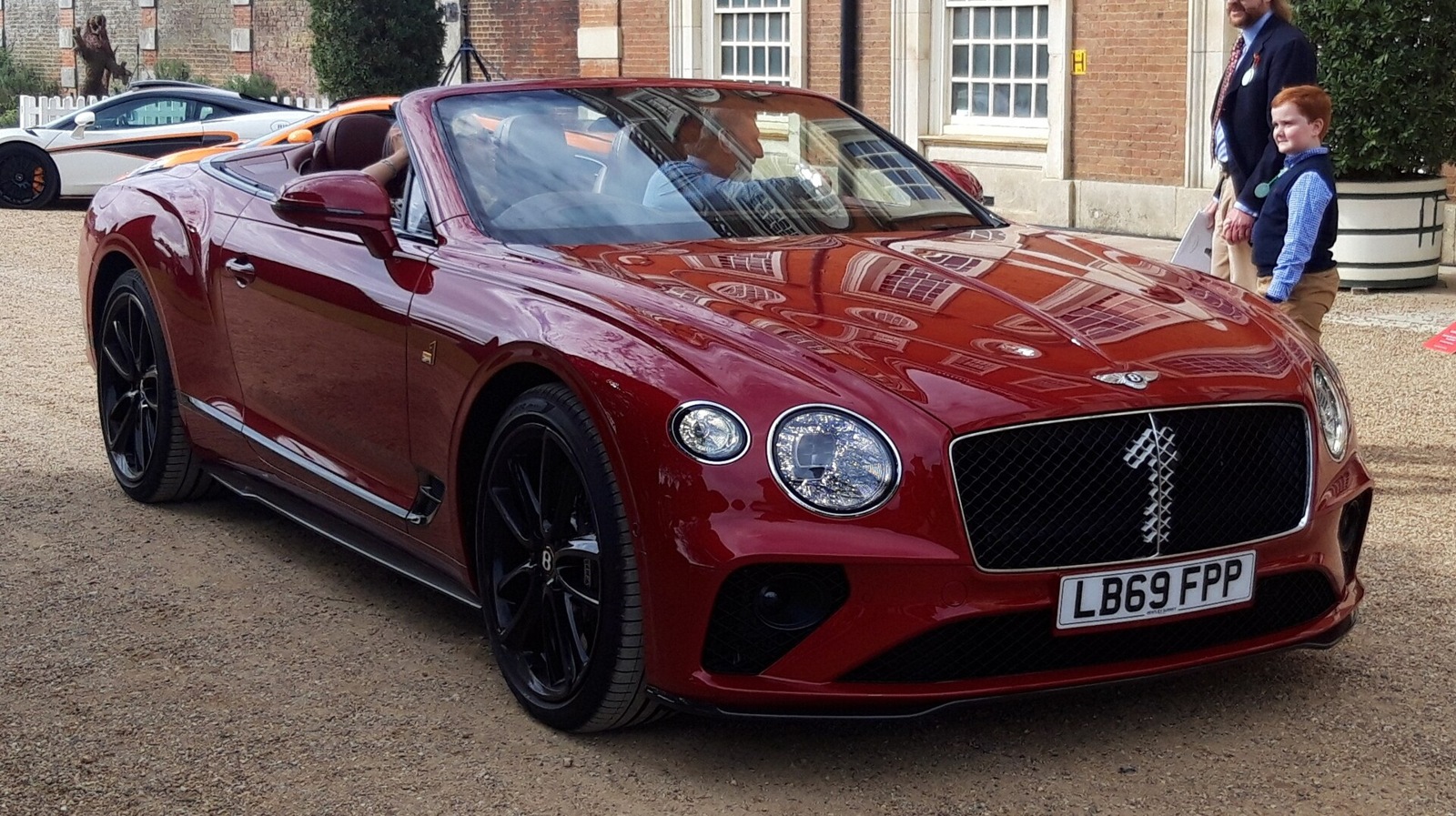
The launch account offers Dragon Red II or Beluga paint and Claret or Beluga hood choices, together with a painted Number 1 grille. The credited photograph shows a red example with the numeral clearly visible. Comparing the body colour, roof and grille is a useful first step in reading the design, but an individual order record remains the stronger identity document. A genuine edition should not be judged against one photograph’s colour combination alone. The bonnet, front wings and open cabin also reveal how the commemorative treatment sits within the contemporary convertible’s proportions, with the dark detailing giving the large body a more concentrated visual outline.
A cabin where old and new meet
Engine Spin metalwork, a dedicated British Jaeger clock and gold-plated details form part of the manufacturer’s cabin description. These references work differently from the mechanical specification: they evoke an earlier period through finishes and objects rather than reproducing a pre-war dashboard. To understand the cabin, look at the contrast between patterned metal, hide and the rotating display. The heritage artefact is one focal point within a modern passenger environment. An interior photograph should capture those relationships instead of reducing the edition to a close-up badge. The quality of a collector file improves when the visual treatment and its stated historical inspiration can be read together.
W12 grand touring and convertible accommodation
The reproduced release identifies a 6.0-litre twin-turbocharged W12 foundation. The edition’s special identity rests chiefly on its centenary specification and historical reference; the article does not invent an extra performance increase from the name Number 1. For a particular car, retain the original technical specification with its build date and equipment. Roof-up and roof-down photographs explain another important distinction: this Continental offers an open passenger environment while remaining a modern grand tourer. Comparing it with the roofless Bacalar shows two very different approaches to open-air Bentley design, one within the Continental range and the other a separate coachbuilt programme.
The photographed example and its archive value
MrWalkr’s Commons photograph identifies a Number 1 Edition at the Hampton Court Concours in 2020. It illustrates the actual edition and preserves a traceable author, event and licence. The photographic year is separate from the 2019 edition introduction, and the creator’s 2020 model description is retained in the source record. The image is especially useful for the grille numeral, exterior colour and convertible roof arrangement. Together with the manufacturer release, it gives the profile a visual and documentary basis. Number 1’s significance lies in that combination: a limited modern programme with a distinctive body style and a carefully described connection to Bentley’s racing past.
Frequently asked questions
Is Number 1 Edition the original Blower No. 1?
No. It is a modern Continental GT Convertible commemorating the historic single-seater; their identities remain separate.
What was the edition limit?
Bentley announced 100 Number 1 Edition convertibles, separate from the other centenary programmes.
Is the cabin object an original wheel spinner?
It is a newly cast miniature spinner made using material from a replaced piston of the historic No. 1.
Why does the photo refer to 2020?
It records a car photographed at the 2020 Hampton Court Concours. The edition was introduced in 2019.
Explore related vehicle profiles
- Bentley Continental GT Number 9 Edition by Mulliner
- Bentley Bacalar by Mulliner
- Bentley Blower Continuation Series
Sources
- Bentley’s Number 1 Edition manufacturer release, reproduced by The Malta Independent
- Bentley Pasadena — Number 1 Edition model account
Facts are sourced to the linked manufacturer, institutional and specialist records. Design comparisons and documentation suggestions are editorial analysis. Announced limits and completed production populations are labelled separately.
Photography and credit
A Bentley Continental GTC Number 1 Edition taken at the Hampton Court Concours 2020. Photo: MrWalkr / Wikimedia Commons · CC BY-SA 4.0. Resized and JPEG encoded without cropping or content changes. Retain author attribution, a link to the source and license, and the stated changes. Where ShareAlike applies, redistributed adaptations retain the same license.
Why this machine matters
The Continental GT Convertible Number 1 Edition by Mulliner closes Bentley’s centenary trilogy with a tribute to the historic No. 1 Blower. Its 100-car programme pairs a W12 convertible with a numbered grille and an unusual cabin artefact: a miniature wheel spinner cast using metal from a replaced piston of the original racing car. The modern edition and the pre-war single-seater are distinct vehicles.
Built in limited numbers
2019 edition announcement separate from photographed 2020 example. 100 retained as announced cap. Original Blower No.1 BEN-014 is a different historical vehicle. Spinner is newly cast using replaced piston material, not an original spinner.
Gallery
Specifications
Factory specifications may vary by model year, market and configuration.
Identity & production
- Official model
- Bentley Continental GT Convertible Number 1 Edition by Mulliner
- Base model
- Continental GT
Powertrain & performance
- Engine
- 6.0-litre twin-turbocharged W12