Audi R8 LMX
The Audi R8 LMX is the 99-car first-generation R8 edition announced in 2014 around a new laser high-beam system. Audi paired that technology with a 419 kW V10, seven-speed S tronic and quattro. Its collector identity rests on the complete factory LMX specification, with lighting history as important as the limited allocation.
The Audi R8 LMX is the 99-car first-generation R8 edition announced in 2014 around a new laser high-beam system. Audi paired that technology with a 419 kW V10, seven-speed S tronic and quattro. Its collector identity rests on the complete factory LMX specification, with lighting history as important as the limited allocation.
Audi R8 LMX at a glance
| Manufacturer | Audi |
|---|---|
| Model / programme | R8 |
| Profile scope | Limited road edition |
| Historical reference year | 2014 |
| Inventory reference | AUDI-045 |
| Engine reference | 5.2-litre naturally aspirated V10 FSI |
| Published edition limit | 99 — This named edition; exact completed-production census not certified here |
| Manufacturer power reference | 419 kW |
| Manufacturer power reference | 570 PS; concept rating where applicable |
| Manufacturer torque reference | 540 Nm; concept rating where applicable |
The LMX’s place in the first-generation R8 story
Audi’s May 2014 announcement specifies a 5.2-litre V10 rated at 419 kW or 570 PS and 540 Nm, a seven-speed S tronic gearbox and quattro. The Coupe edition was limited to 99. Published performance references are 3.4 seconds from zero to 100 km/h and a 320 km/h maximum. Audi’s later retrospective places it at the final evolution of the first-generation R8. The interest is in the way a rare road edition combined a recognisable performance platform with a conspicuous technology story. Calling it merely another blue V10 misses the reason its exact factory identity matters.
Rarity: 99 allocated, with scope preserved
The 99 figure describes the factory’s LMX edition limit. It does not establish how many examples survive in original condition or provide a count for any single national market. The profile stores the cap separately from an independently verified completed-chassis census. A seller’s claimed local rarity needs additional evidence. For an individual car, the build record should identify the LMX specification before the discussion turns to colour or condition. This keeps the published number useful without asking it to prove more than the source states. The allocation already falls comfortably within the site’s 7,500-car requirement.
Laser high beam as the defining technology
The launch describes a laser-generated high-beam supplement, rather than suggesting that every function of the headlamp is a laser. Audi explains the use of blue laser light and its conversion within the lighting system. That distinction matters when a casual description refers simply to laser headlights. For a collector, the interesting historical feature is the complete factory implementation and its place in the edition. Verify the correct equipment through build data and a specialist inspection. A blue accent or familiar lamp appearance does not independently prove that the original hardware and controls are still present and functioning.
A lighting milestone needs precise attribution
Audi’s launch presented the LMX as the first production car with laser high beam. Retain that as the manufacturer’s period claim rather than broadening it into a statement about every kind of laser lighting or all future markets. Technical claims are often shortened in later advertising until their original scope disappears. An archive should do the opposite: preserve the exact technology being discussed and the source that made the claim. The performance figures also belong to a defined factory configuration. The historical achievement is clearer when the wording remains specific and readers can inspect the original manufacturer record.
LMX, original GT and ordinary V10 are different identities
The LMX and Type 42 GT belong in the same R8 family but should retain separate specifications and allocations. The GT’s lightweight brief and the LMX’s lighting-focused story provide different reasons for studying them. A standard V10 fitted with similar exterior details does not become an LMX. Use factory documentation to establish the model before comparing its appearance. The R8 LMS offers another useful contrast because it is a competition subject rather than a numbered road edition. These distinctions make related links informative instead of encouraging readers to treat every R8 derivative as the same car with another badge.
What the identification file should contain
Start with VIN-linked factory data, original delivery documents and the edition designation. Add service invoices, photographs over time and any evidence of lamp or control-module replacement. Record whether removed original components accompany the car. Where a lighting assembly has been changed, ask a specialist to identify the installed part and the quality of the work. Those questions are particularly relevant to the LMX’s historical identity, but they do not imply a universal failure. A concise, complete history lets a future owner distinguish necessary maintenance from changes that alter the car’s original specification.
Condition deserves more than a mileage figure
Assess the actual body, structure, mechanical equipment and interior with an appropriate specialist. A low mileage record is one piece of information, not a comprehensive condition report. Storage history, repair quality and the consistency of invoices can matter just as much to a collector. The lighting system and its operation should be reviewed alongside the usual powertrain questions. Keep present condition separate from the factory’s 2014 performance claims. The article can explain what the edition was; it cannot prove what an individual car will deliver today simply because a period specification sheet quotes an impressive acceleration time.
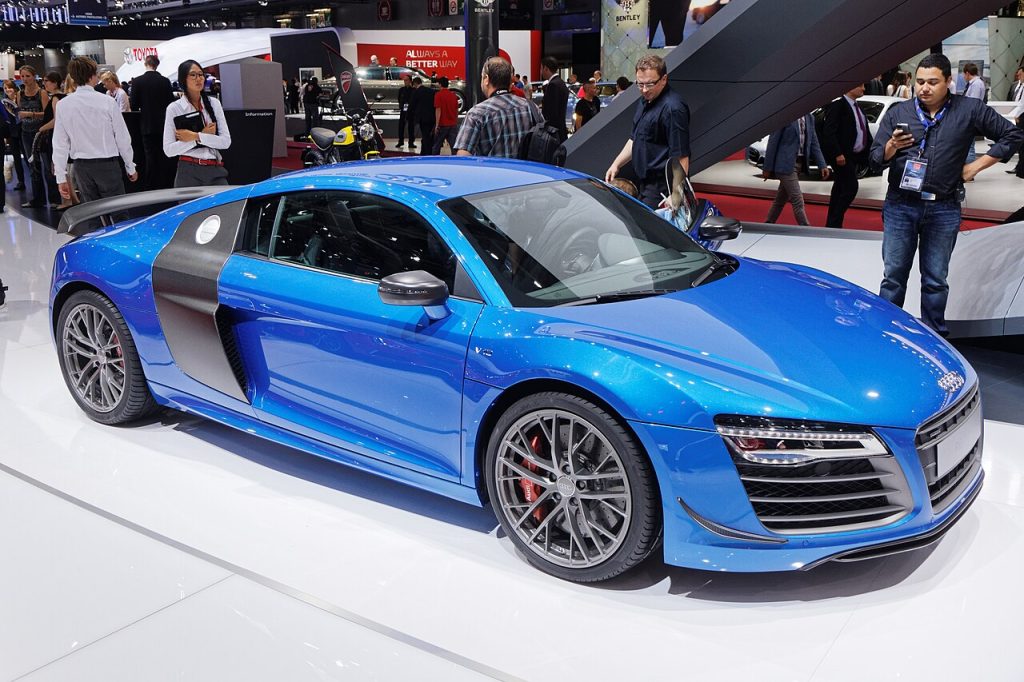
The blue Paris motor-show car in the photograph
The bundled image is identified as an R8 LMX displayed at the 2014 Paris motor show. It gives the article a contemporary physical reference and a useful view of the Coupe’s visible presentation. The photo does not authenticate the pictured chassis’s individual number or prove all its equipment from the exterior. Its linked credit identifies Thesupermat and the applicable Creative Commons licence. A replacement owner photograph should provide a similarly clear subject description and permission record. Add detail images where they help explain the lighting story, rather than assuming a general exterior photograph can demonstrate every technical distinction.
Preserving an edition centred on technology
For collection use, retain the original manuals, technical literature and records of updates or replacement equipment. A technology-led edition can lose part of its explanatory value if only the exterior is documented. Keep photographs of the lamps, cabin controls and relevant identification details with the file, while avoiding unnecessary exposure of personal records. If the car is used regularly, document service work rather than presenting maintenance as a threat to its identity. The goal is an accurate account of the original factory package and the changes made to keep a particular example complete and usable.
Why the R8 LMX is more than a production number
The small allocation introduces rarity, while the technology story explains why the edition deserves attention. A collector can place it beside the original GT to compare two different performance-car briefs, then use the R8 V12 TDI concept to explore another technical experiment. The Le Mans quattro study offers an earlier design connection. None of those relationships predicts future value or certifies an individual car’s originality. The LMX’s strongest profile combines its documented factory identity, carefully scoped lighting milestone and a transparent condition history. That gives readers a clear reason to remember it beyond the number 99.
Frequently asked questions
How many Audi R8 LMX cars were allocated?
Audi announced a limited series of 99 Coupes. This is the edition cap, not a certified current survival count.
What power did Audi quote for the LMX?
The factory rating is 419 kW or 570 PS from the 5.2-litre V10, with 540 Nm.
Did the LMX use R tronic?
Audi specified seven-speed S tronic for the LMX. Keep it distinct from the original GT’s R tronic transmission.
Were all headlight functions laser-based?
No. The defining technology was a laser high-beam supplement. Verify the correct factory equipment and its condition on an individual car.
Explore related vehicle profiles
Sources
- Audi Swiss media archive — R8 LMX factory announcement, May 2014
- Audi Japan — R8 LMX technology and 99-car edition
- Audi — R8 historical retrospective, November 2024
History and published specifications follow the linked manufacturer records. Visual comparisons, documentation questions and inspection priorities are editorial analysis. Photographs retain their original subject descriptions and separate rights records.
Photography and credit
Audi R8 LMX at the 2014 Paris motor show, as identified by the photographer. Photo documents the edition display, not an individual chassis certificate. Photo: Thesupermat / Wikimedia Commons · CC BY-SA 3.0. Wikimedia thumbnail resized from original; no cropping or color changes.
Why this machine matters
The Audi R8 LMX is the 99-car first-generation R8 edition announced in 2014 around a new laser high-beam system. Audi paired that technology with a 419 kW V10, seven-speed S tronic and quattro. Its collector identity rests on the complete factory LMX specification, with lighting history as important as the limited allocation.
Built in limited numbers
The 99 figure describes the factory’s LMX edition limit. It does not establish how many examples survive in original condition or provide a count for any single national market. The profile stores the cap separately from an independently verified completed-chassis census. A seller’s claimed local rarity needs additional evidence. For an individual car, the build record should identify the LMX specification before the discussion turns to colour or condition. This keeps the published number useful without asking it to prove more than the source states. The allocation already falls comfortably within the site’s 7,500-car requirement.
Gallery
Specifications
Factory specifications may vary by model year, market and configuration.
Identity & production
- Official model
- Audi R8 LMX
- Base model
- R8
Powertrain & performance
- Engine
- 5.2-litre naturally aspirated V10 FSI