Auto Union Type A Grand Prix Car
The Auto Union Type A began the company’s Grand Prix programme in 1934 with a supercharged V16 behind the driver. It is included as Audi corporate heritage, with the Auto Union name retained. This is a works-racing design archive rather than a postwar Audi production edition, and later recreations need to remain visibly separate from period chassis.
The Auto Union Type A began the company’s Grand Prix programme in 1934 with a supercharged V16 behind the driver. It is included as Audi corporate heritage, with the Auto Union name retained. This is a works-racing design archive rather than a postwar Audi production edition, and later recreations need to remain visibly separate from period chassis.
Auto Union Type A Grand Prix Car at a glance
| Manufacturer | Auto Union |
|---|---|
| Archive connection | Audi corporate heritage |
| Model / programme | Type A |
| Profile scope | Auto Union works Grand Prix heritage archive |
| Historical reference year | 1934 |
| Inventory reference | AUDI-002 |
| Historical engine reference | Supercharged V16 |
| Exact original build total | Unresolved; no certified production number populated |
| Historical displacement reference | 4358 cc; programme source, not present engine measurement |
Auto Union’s first Grand Prix type
The Type A is the opening chapter in the Auto Union Grand Prix sequence, rather than a trim level on an Audi passenger car. Naming it correctly preserves the distinction between a 1930s works programme and the modern company that maintains the heritage. The four rings provide a meaningful connection, but they do not change the period manufacturer. An archive entry can sit within an Audi collection while still describing Auto Union as the builder and identifying the specific racing type in its title, captions and technical notes.
The 1934 reference and the new formula
Audi’s historical account ties the programme to the 750-kilogram dry-weight formula introduced for 1934. That is a rule defining the design challenge, not a measured weight for every surviving exhibit. The Type A should be read through that period constraint, where engine layout and mass distribution were central engineering decisions. A later recreation may reproduce the appearance and major mechanisms effectively, yet its individual weight and components should be recorded independently instead of being assumed from a regulation that governed the original competition cars.
A V16 placed behind the driver
Audi Japan specifies a supercharged V16 of 4,358 cc for the Type A. The unusual position behind the driver is the most immediate feature that helps explain its place in racing history. In modern terminology the manufacturer describes the layout as mid-engined. That terminology should not obscure the historical context: it was a distinctive choice in this particular Grand Prix programme. A visual comparison with the later Type C reveals development within the same general concept, while the Type D introduces another engine configuration and regulatory setting.
Ferdinand Porsche and the Zwickau programme
Audi credits Ferdinand Porsche’s design work and the racing department based at the Horch factory in Zwickau. This is a collaboration and company-history reference, rather than evidence that every component now displayed was made by the original department. For an individual car, surviving drawings, manufacture records and restoration files matter alongside the famous designer’s name. A clear archive account allows readers to appreciate the engineering authorship without using it as a substitute for the difficult work of authenticating a particular engine, frame or body.
AVUS and the beginning of competition
The English Audi account dates the first competition appearance to May 27, 1934 at AVUS; the Japanese page uses May 26. The difference is retained as a source discrepancy rather than silently averaged away. The essential chronology is the May 1934 debut season. A profile of a specific event should resolve the day against a period programme or result record. This guide does not assign a photographed recreation to that race merely because it wears a familiar number or reproduces the configuration.
Rarity without an invented build total
The sources establish a purpose-built works-racing type, but the retrieved material does not provide a reconciled original Type A chassis census. The production field therefore remains unset. Modern replica numbers, race entries and engines are not added together to manufacture a total. For a racing archive, rarity can be explained through the specific programme and the difficulty of preserving original objects while openly separating numerical uncertainty. A small-series description should not be converted into one-of-one status simply because only one particular car is photographed.
Type A, Type B and Type C
The alphabetical sequence identifies development stages. It does not prove that all surviving parts retained a single specification throughout their working lives. A racing engine or chassis can be altered during a programme, and a later restoration may choose a representative season configuration. Comparing the Type A with the Type C is useful when the comparison follows source-labelled details. It becomes less useful when every later power figure or body feature is applied retrospectively to the 1934 car because the outward family resemblance is strong.
Interpreting period performance references
Historical output and speed figures need their units, configuration and source. This guide does not treat the same numeral labelled hp, bhp or PS in different summaries as a precise unit conversion. Nor does a record-run achievement become the top speed of an ordinary Grand Prix setup. A specialist report should identify the fuel, engine specification and body used when those details are available. That makes the original performance interesting on its own terms while preventing a recreation’s present condition from being certified through historical publicity.
The included photograph is a recreation
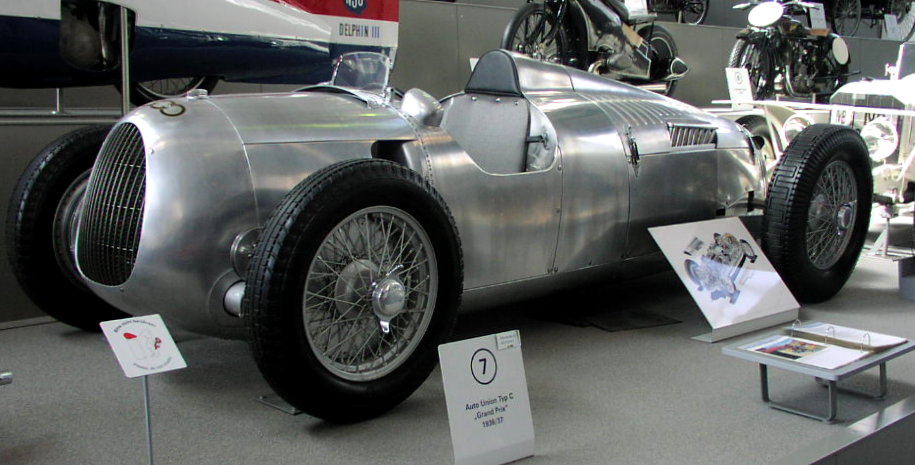
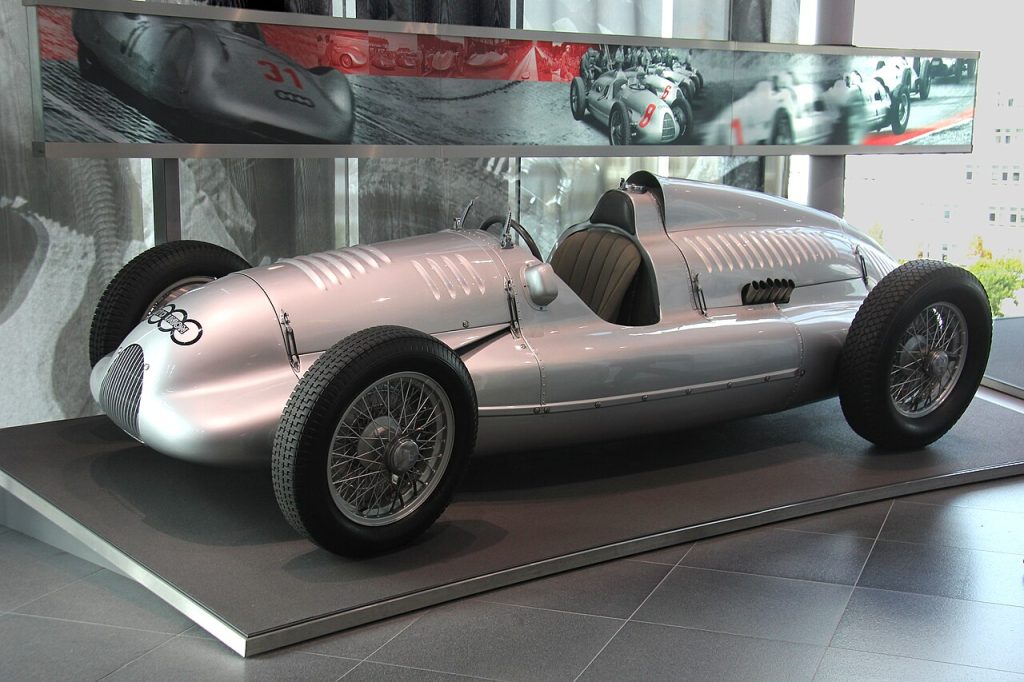
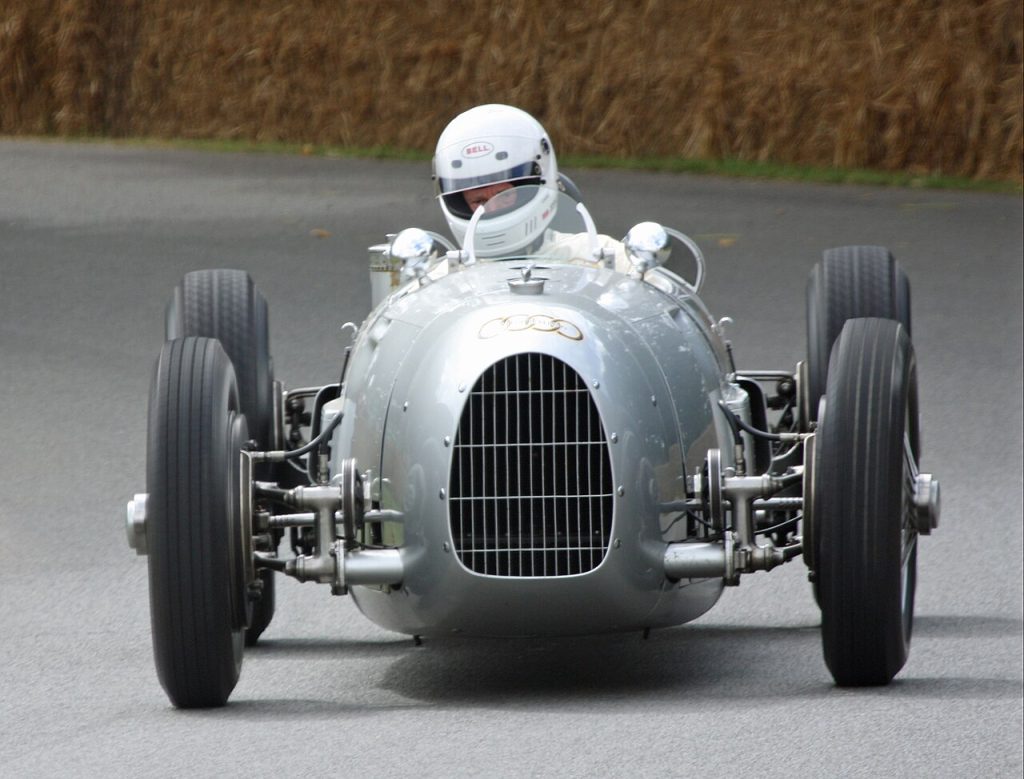
The selected Commons photograph explicitly identifies a Type A replica. It is supplied as a labelled recreation reference, not as an original 1934 race car. The photograph helps explain the overall shape, cockpit position and engine layout without proving period material or competition provenance. The draft retains a photo-review note so an editor can add an authenticated original-object or period photograph when suitable rights are secured. The replica itself is not imported as a separate rare-vehicle entry; the guide remains about the historical Type A programme.
How an original-object claim should be assessed
An original Type A claim needs more than a model designation on an exhibition board. Useful evidence would connect identifiable frame and engine components with period records and describe later replacement work. Bodywork history is especially relevant because a visually complete racing car can incorporate extensive new construction. Preserve the distinction between an original object restored with replacement pieces and a new recreation built to the historical design. Both can be educational, but readers deserve to know which kind of object they are viewing.
What a museum or event visitor can learn
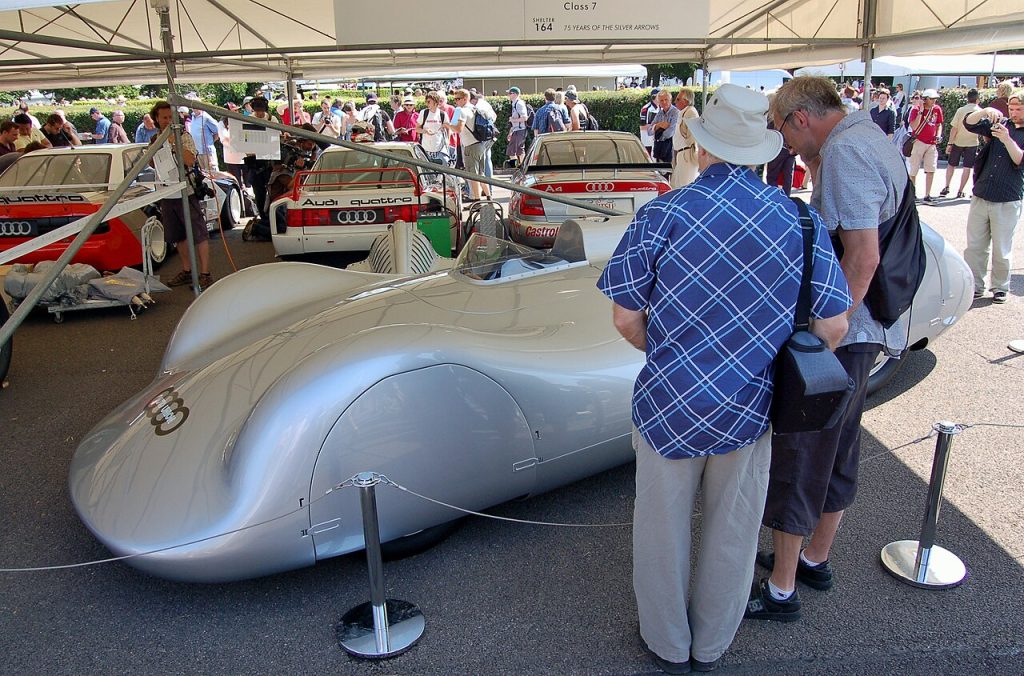
A static display can make the Type A’s packaging comprehensible without revealing every mechanical detail. Start with the driver’s position, the length of the rear body and the relationship between exposed wheels and cockpit. Then use the documentary material to understand the engine and period rules. A demonstration appearance provides another kind of record, documenting the vehicle at that event. It does not by itself resolve originality, performance in period or current ownership beyond what the event and object sources actually identify.
Its place within Audi corporate heritage
The Type A belongs beside the later Auto Union racing types because it explains how the new company promoted its identity through high-level competition. It also creates a useful comparison with much later Audi circuit cars, where different rules produced very different solutions. The collector significance lies in that documented role and in the evidence attached to individual objects. Keeping the Auto Union name visible makes the relationship clearer for readers and prevents corporate ancestry from being mistaken for a modern Audi limited-production road series.
Frequently asked questions
Was the Type A an Audi-branded production car?
No. It was an Auto Union works Grand Prix type, included here as Audi corporate heritage.
What engine did the Type A use?
Audi Japan lists a 4,358 cc supercharged V16, positioned behind the driver.
How many original Type As were built?
A reconciled original chassis total is not established by the retrieved primary sources; no exact total is populated.
Is the supplied Type A photo an original car?
No. Its source identifies a recreation, and the caption and draft note disclose that scope.
Explore related vehicle profiles
Sources
- Audi Japan — Auto Union Type A, 1934
- Audi — How the Silver Arrow legend was born
- Audi — The age of the Silver Arrows
- Audi — History of the Four Rings
Programme history and specifications follow the linked manufacturer and heritage records. Where figures or dates differ, their source contexts are retained. Collector-file and inspection guidance is editorial analysis; exact physical-car identity requires its own evidence.
Photography and credit
RECREATION REFERENCE: source-identified Auto Union Type A replica. It illustrates the 1934 design, not an authenticated surviving original race chassis. Photo: Brian Snelson from Hockley, Essex, England / Wikimedia Commons · CC BY 2.0. Wikimedia thumbnail resized from original; no cropping or color changes.
Why this machine matters
The Auto Union Type A began the company’s Grand Prix programme in 1934 with a supercharged V16 behind the driver. It is included as Audi corporate heritage, with the Auto Union name retained. This is a works-racing design archive rather than a postwar Audi production edition, and later recreations need to remain visibly separate from period chassis.
Built in limited numbers
The sources establish a purpose-built works-racing type, but the retrieved material does not provide a reconciled original Type A chassis census. The production field therefore remains unset. Modern replica numbers, race entries and engines are not added together to manufacture a total. For a racing archive, rarity can be explained through the specific programme and the difficulty of preserving original objects while openly separating numerical uncertainty. A small-series description should not be converted into one-of-one status simply because only one particular car is photographed.
Gallery
Specifications
Factory specifications may vary by model year, market and configuration.
Identity & production
- Official model
- Auto Union Type A Grand Prix Car
- Base model
- Type A
Powertrain & performance
- Engine
- Supercharged V16