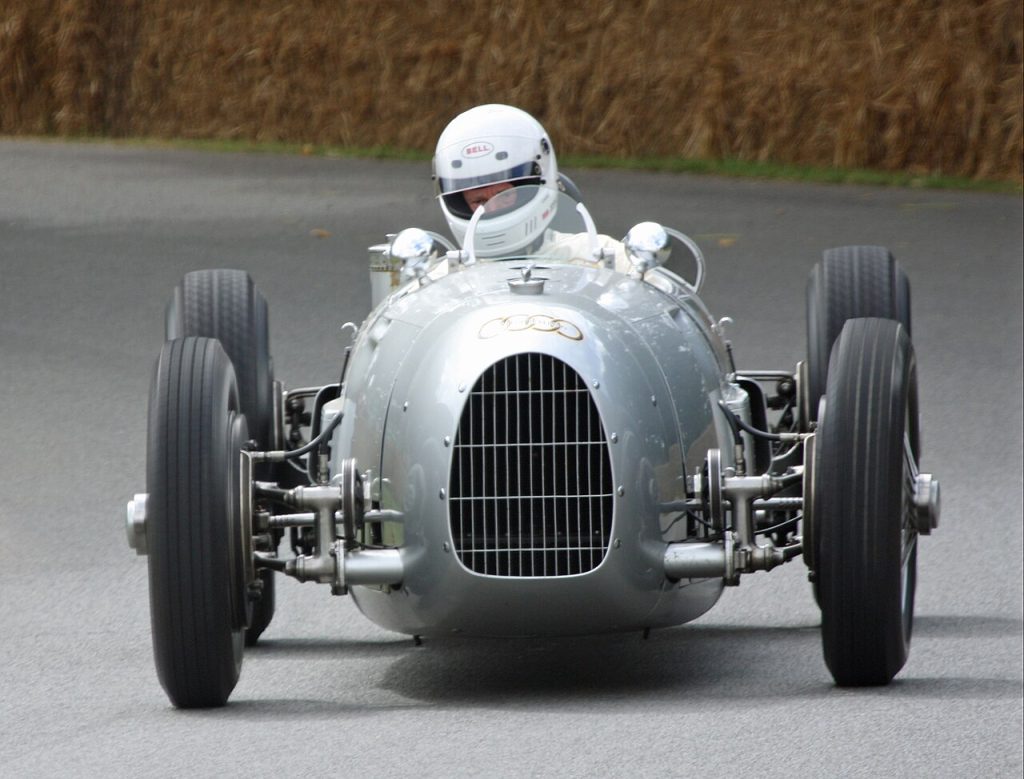
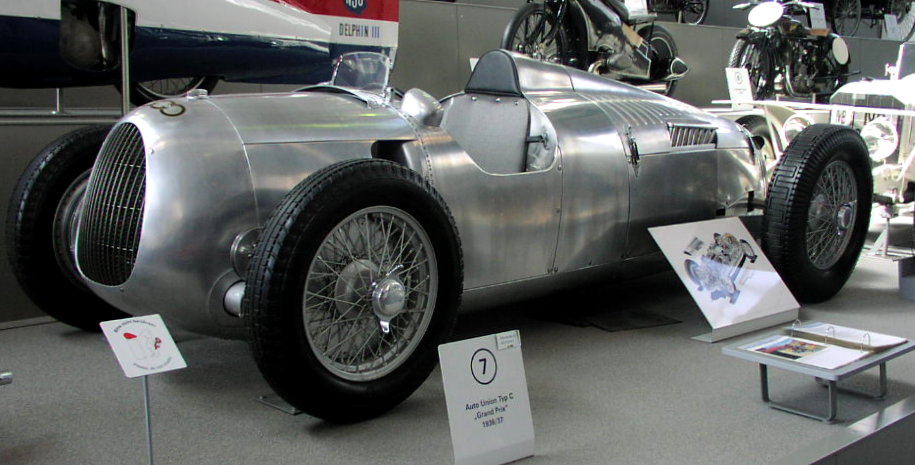
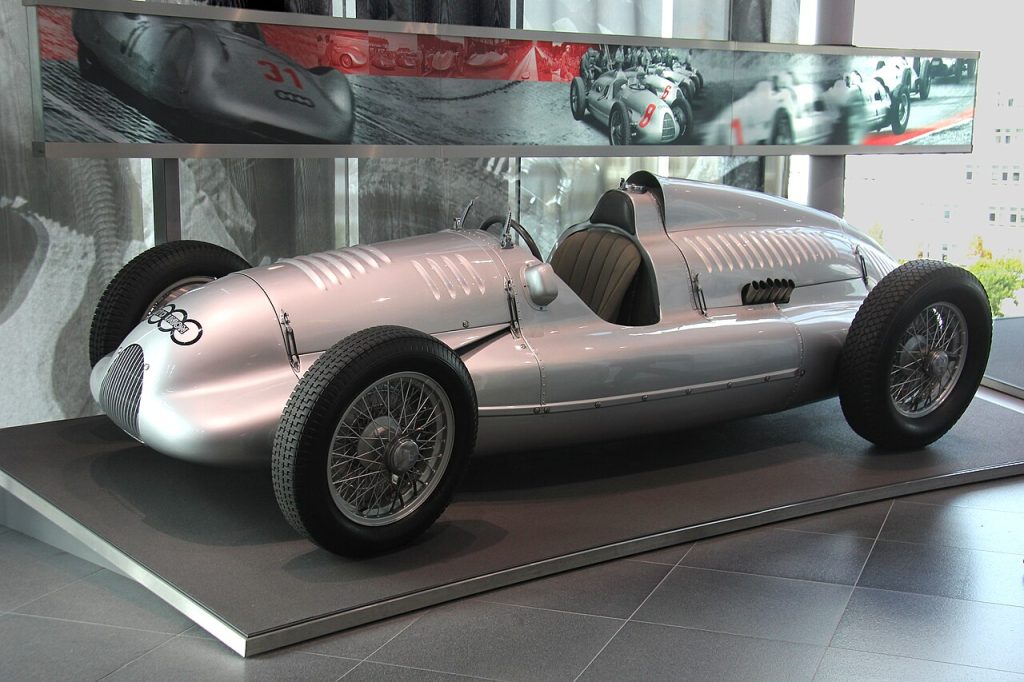
Auto Union Type C Streamliner
The Auto Union Type C Streamliner turns a works Grand Prix design into an aerodynamic archive subject. Its 1937 history includes streamlined racing and record-attempt contexts that need separate configuration notes. The supplied photograph shows a later recreation, explicitly labelled as such. This guide profiles the historical programme rather than importing that replica as an original rare vehicle.
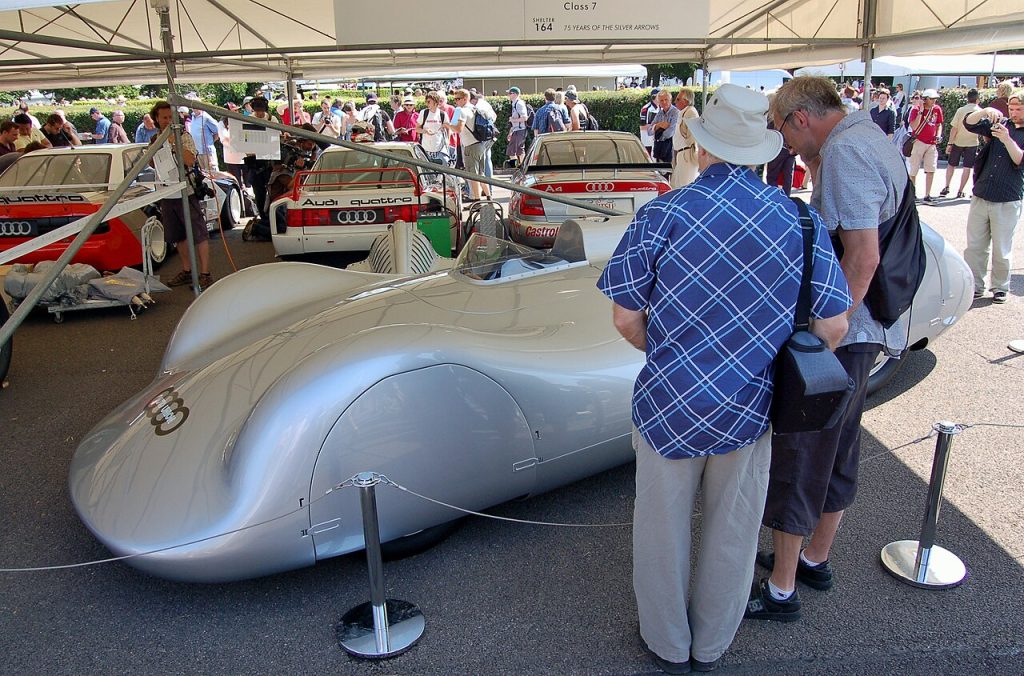
The Auto Union Type C Streamliner turns a works Grand Prix design into an aerodynamic archive subject. Its 1937 history includes streamlined racing and record-attempt contexts that need separate configuration notes. The supplied photograph shows a later recreation, explicitly labelled as such. This guide profiles the historical programme rather than importing that replica as an original rare vehicle.
Auto Union Type C Streamliner at a glance
| Manufacturer | Auto Union |
|---|---|
| Archive connection | Audi corporate heritage |
| Model / programme | Type C Streamliner |
| Profile scope | Auto Union aerodynamic competition heritage archive |
| Historical reference year | 1937 |
| Inventory reference | AUDI-004 |
| Historical engine reference | Type C supercharged V16 foundation; event configuration requires separate record |
| Exact original build total | Unresolved; no certified production number populated |
A streamlined derivative with a different purpose
The Type C Streamliner belongs to the aerodynamic development surrounding Auto Union’s V16 racing programme. Its enveloping body immediately separates it from the exposed-wheel Grand Prix form. That difference is more than styling: the shape directs attention toward airflow, sustained speed and the particular event for which a car was prepared. A useful guide begins with those purposes and then identifies the historical configuration being discussed, rather than treating every streamlined photograph as one interchangeable record-breaking machine.
Why 1937 is the reference year
Audi’s aerodynamic exhibition account places development of the fully streamlined Type C in early 1937 and identifies the AVUS appearance that year. The guide uses 1937 as the historical reference, not as the manufacture date of a photographed modern recreation. The original design and its later reconstructions need two separate timelines. A museum caption can legitimately refer to a 1937 car design while the physical object on display was made decades afterward. Leaving that distinction visible is essential to a verified heritage entry.
The engine and chassis relationship
The manufacturer’s exhibition account describes engine and chassis as largely unchanged from the Type C foundation when the streamlined form was developed. That is a programme statement, not proof that every subsequent record-attempt version retained identical details. The body’s relationship to the racing type is the reliable starting point. For a specification assigned to a particular event or surviving exhibit, the editor should seek an exact configuration record. A generic Type C engine figure should not become a measured specification for a later recreation merely through family association.
AVUS racing and motorway records
A circuit appearance and a motorway record run answer different performance questions. Audi’s company history connects the streamlined Type C with Rosemeyer’s October 1937 motorway achievement above 400 km/h. This does not make that speed a certified capability of every racing-bodied Type C or of the supplied demonstration replica. The archive should attach the achievement to its date and record-attempt context. That approach keeps the engineering story powerful while allowing readers to distinguish lap-speed references, measured record runs and later public demonstrations.
Rarity: do not count the replicas as originals
The retrieved sources do not establish a reconciled original streamliner build census. The exact production-total field remains unset. Later recreations are not added to the original record-car count, and a single surviving museum exhibit is not used to prove that the historical programme built only one physical car. The inventory’s chassis-specific wording requires care for exactly this reason. A historical programme profile can establish the design and its significance, while a future object profile should identify one particular original or later vehicle and its documentary chain.
Aerodynamics as an engineering story
The enclosed wheels and continuous body invite a useful question: how did engineers try to control air around an otherwise exposed racing machine? The visual answer can be explored without claiming a drag coefficient that has not been reconciled for the precise version. Photographs reveal surface shape and packaging, but cannot certify wind-tunnel conditions or present high-speed stability. For a technical account, identify the test body, scale, facility and date where available. That separates an observable design feature from a numerical result measured under a particular set of conditions.
The fatal 1938 attempt is a separate event
Audi’s historical account describes Rosemeyer’s fatal January 1938 record attempt. That tragedy belongs in the programme’s chronology, but it should not turn every 1937-style streamliner exhibit into the actual crash car. A date, a driver and a broadly similar body do not establish physical identity. The guide treats the event with clear historical boundaries and avoids transferring a specific configuration or outcome to the supplied replica. A detailed account of the attempt would need its own primary record, rather than a combined description of all Type C activity.
What Audi’s heritage representative said
In the FIVA authenticity forum, Audi’s representative describes the Type C Streamline as a complete recreation and explains its exhibition and demonstration role. This testimony supports a distinction between historical design and newly made object. The guide does not rely on every translated technical phrase in the proceedings, where wording differs between languages. Its narrow use is the representative’s account of why Audi recreated lost machinery. The recreated car can teach audiences about the programme without being presented as original 1930s material.
The Goodwood photograph and its honest caption
The bundled image is source-identified as a Type C Stromlinie replica displayed at Goodwood in 2009. The caption and alternative text both disclose recreation status. It gives readers a clear view of the streamlined form and supplies a reusable, credited illustration. It is not a photograph from AVUS in 1937 or a motorway record run. The profile’s photo note remains open for an authenticated period or original-object image with usable rights, while the existing illustration remains valuable precisely because its limits are stated.
Recreation value and historical provenance
A faithful recreation can reproduce dimensions, mechanisms and appearance while carrying a later manufacture history. That later history may itself be well documented and important to the preservation programme. What it cannot do is acquire a period race result solely because it follows an old drawing. An object report should record the builder, construction date, design sources, changes and demonstration appearances. The historical guide and the physical recreation can then support each other educationally without collapsing into one identity or an unsupported original-chassis claim.
A photographic record beyond a dramatic angle
An expanded gallery would show the side, nose, cockpit opening, rear body and any identifying labels. For a recreation, add the construction record and avoid cropping out signage that explains its status. For period photographs, preserve event and date information rather than using an unattributed image merely because it looks authentic. Each view should answer a question about the design or object. This gives readers more than a dramatic silhouette and provides a curator with a traceable record of what was actually photographed.
Where the streamliner fits in the archive
The open-wheel Type C is the direct related subject, while the Type A explains the earlier engine-position concept and the Type D explains the subsequent Grand Prix change. Together those guides make the aerodynamic experiment easier to understand. The streamliner’s significance is its documented role in the development of racing and record-car design. It does not require an invented production number or a replica presented as an original. A precise distinction between programme, configuration and physical object makes the archive stronger and more useful.
Frequently asked questions
Was the Streamliner an ordinary Audi limited edition?
No. It was an Auto Union competition and record-car derivative, included as corporate heritage.
Is the bundled Streamliner photo a period original?
No. Its source identifies a recreation at Goodwood in 2009, and the caption states that.
How many original streamliners were built?
A reconciled original build census is not established here; later recreations are excluded from any original-series count.
Does the motorway record speed apply to every Type C?
No. Record figures belong to the dated record-attempt configuration, not every Grand Prix car or later recreation.
Explore related vehicle profiles
Sources
- Audi — Aerodynamics exhibition and Type C Streamline
- Audi — Company history
- Audi — The age of the Silver Arrows
- FIVA authenticity forum — Audi heritage representative on recreations
Programme history and specifications follow the linked manufacturer and heritage records. Where figures or dates differ, their source contexts are retained. Collector-file and inspection guidance is editorial analysis; exact physical-car identity requires its own evidence.
Photography and credit
RECREATION REFERENCE: source-identified Type C Stromlinie replica at Goodwood in 2009. This is a later illustration of the 1937 streamliner, not the original record car. Photo: Bahnfrend / Wikimedia Commons · CC BY-SA 4.0. Wikimedia thumbnail resized from original; no cropping or color changes.
Why this machine matters
The Auto Union Type C Streamliner turns a works Grand Prix design into an aerodynamic archive subject. Its 1937 history includes streamlined racing and record-attempt contexts that need separate configuration notes. The supplied photograph shows a later recreation, explicitly labelled as such. This guide profiles the historical programme rather than importing that replica as an original rare vehicle.
Built in limited numbers
The retrieved sources do not establish a reconciled original streamliner build census. The exact production-total field remains unset. Later recreations are not added to the original record-car count, and a single surviving museum exhibit is not used to prove that the historical programme built only one physical car. The inventory’s chassis-specific wording requires care for exactly this reason. A historical programme profile can establish the design and its significance, while a future object profile should identify one particular original or later vehicle and its documentary chain.
Gallery
Specifications
Factory specifications may vary by model year, market and configuration.
Identity & production
- Official model
- Auto Union Type C Streamliner
- Base model
- Type C Streamliner
Powertrain & performance
- Engine
- Type C supercharged V16 foundation; event configuration requires separate record