Aston Martin DB4 GT Zagato Continuation
The DB4 GT Zagato Continuation is the modern Works-built, track-only half of the DBZ Centenary Collection. Its nineteen-car allocation revisits a celebrated historic form through new construction and continuation-specific engineering. The finished model appeared at Le Mans in 2019, with first customer deliveries confirmed that November.
The DB4 GT Zagato Continuation is the modern Works-built, track-only half of the DBZ Centenary Collection. Its nineteen-car allocation revisits a celebrated historic form through new construction and continuation-specific engineering. The finished model appeared at Le Mans in 2019, with first customer deliveries confirmed that November.
Aston Martin DB4 GT Zagato Continuation at a glance
| Manufacturer | Aston Martin |
|---|---|
| Model / family | DB4 GT Zagato |
| Profile scope | Factory track-only continuation archive |
| Historical reference year | 2019 |
| Inventory reference | AST-143 |
| Factory allocation limit | 19; completed census not independently certified |
| Combined parent allocation limit | 19; count scope discussed below |
| Documented customer delivery year | 2019; not an inferred production-start year |
| Historical engine reference | 4.7-litre naturally aspirated straight-six; continuation programme |
A modern factory continuation with a historic form
This entry concerns cars newly constructed for the centenary project, rather than surviving Zagato-bodied DB4 GTs from the 1960s. That distinction is fundamental to their history and collecting identity. A modern continuation can carry a direct manufacturer relationship and a compelling engineering story without acquiring the competition history of an original car. Record the actual build identity and explain the project on its own terms. That produces a more useful archive than allowing the famous body shape to blur two different periods of construction.
Rarity: nineteen continuation allocations
The factory limited the DBZ project to nineteen pairs, each including one DB4 GT Zagato Continuation. This defines a nineteen-car component allocation. It does not independently certify the exact completion date of every chassis or the number surviving in a particular condition. The original Zagato series and the continuation series must remain separate populations. The collection entry also overlaps this vehicle profile, so its nineteen paired sets are a way to describe the same programme rather than an additional group of physical DB4s.
The connection with the DBZ Centenary Collection
The DB4 was originally offered alongside the contemporary DBS GT Zagato. The pairing linked a newly built interpretation of heritage with a modern Zagato design, making the collection itself part of the purchasing and presentation story. An individual continuation car can be described accurately even if its paired DBS is not present in a later sale. Ask whether original paired documentation remains available and whether the cars’ relationship is still established. The answer adds context without changing the identity of either component.
Le Mans reveal and confirmed customer deliveries
Aston Martin prepared the finished continuation model for a public appearance at the 2019 Le Mans event. The November 7 factory release then confirms that the first cars were reaching customers. Earlier releases contained delivery schedules, so retain those as plans rather than treating them as evidence that all cars had already been handed over. The documented delivery year is 2019. A particular chassis may have its own build, handover and registration records, which should be recorded separately when they can be verified.
Works construction at Newport Pagnell
The project belongs to Aston Martin Works and its heritage operation at Newport Pagnell. That connection is historically meaningful because it places new construction alongside the knowledge used to service and restore older Astons. It does not turn a modern build into a period original. A collector file should identify the actual manufacturer records, build date and continuation status clearly. The site relationship explains the project’s institutional lineage while allowing the physical vehicle to retain an honest, distinct modern history.
Aluminium form and modern production methods
The initial collection release describes thin aluminium panels over a tubular structure, with digital scanning supporting the body-making process. This combines a historic construction idea with modern methods of achieving consistency. Assessing the result requires attention to panel condition, fit, repairs and the documentation of any work. The interest lies in the process as well as the silhouette. A photograph can communicate the overall form, while a build record and specialist inspection explain how the actual car was constructed and how it has been maintained.
Continuation-specific engine and transmission
The reveal release identifies a 4.7-litre straight-six, a four-speed manual and a limited-slip differential, with output described as above 390 bhp. Retain that threshold wording instead of rounding it into an unsupported exact figure. Do not import the smaller engine specification of the historic original simply because the body name is familiar. A continuation profile should explain the factory’s actual modern programme, and an individual technical record should distinguish that published specification from any later engine work or installed-component measurements.
Track-only scope and equipment
The factory presented the DB4 GT Zagato Continuation for track use and described a roll cage and race-oriented seating in the reveal specification. Its intended use is materially different from the road role of the paired DBS. A road appearance in a photograph, or an advertisement describing a later conversion, does not alter the original launch scope. Any subsequent change in permitted use requires its own documentation. For the archive, preserve what the manufacturer built and then describe verified later modifications as a separate part of the vehicle’s history.
Reveal colors are not a universal build certificate
The Le Mans presentation car had a particular exterior and cabin treatment. That reveal specification is useful context, but it should not be assigned automatically to every continuation chassis. Original order and handover records establish an individual car’s finishes. A photograph of a differently colored example is therefore not, by itself, evidence against continuation identity. The archive should separate programme features, presentation-car choices and actual customer specification. Doing so avoids both overgeneralising a launch image and treating later cosmetic differences as unexplained mechanical changes.
Authenticating a modern continuation
Start with the continuation chassis identity and Works build documentation. Reconcile the body, equipment and mechanical record with the actual order, then explain any alterations. A historic registration, a Zagato badge or a convincing body conversion is insufficient on its own to establish this factory programme identity. The same process also protects original historic cars from being confused with modern builds. Clear terminology benefits both categories: the continuation can be appreciated for its craftsmanship while the original retains its distinct period provenance.
Inspection for use and preservation
A specialist assessment should consider the chassis and body, engine, manual driveline, brakes, tires, safety equipment and the effects of storage or circuit use. These are assessment priorities rather than asserted defects affecting every car. Check the dates and maintenance requirements of equipment intended for the vehicle’s actual use. If the owner plans occasional demonstrations rather than sustained circuit running, record that intention when selecting a maintenance approach. Preservation and usability can both be informed by a precise account of what has been fitted and how it has been cared for.
The Chantilly photograph and related history
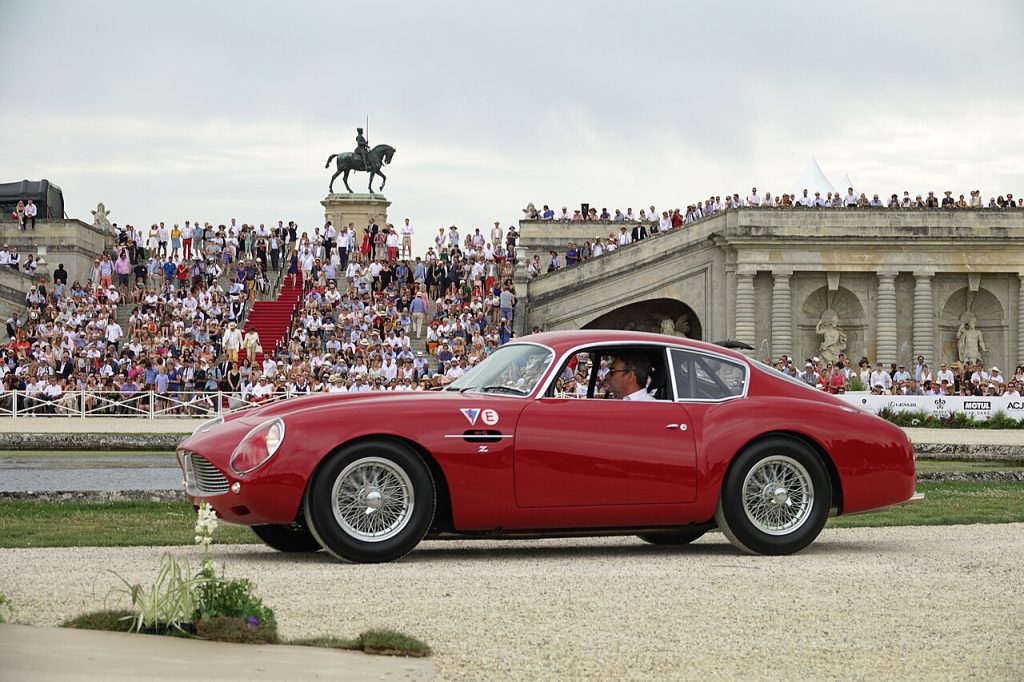
The bundled photograph is source-identified as a DB4 GT Zagato Continuation at Chantilly in June 2019. It provides a real illustration of the modern programme, with its source and license visibly credited. It is not assigned an original 1960s chassis or the racing record of a historic car. The related original DB4 GT Zagato profile gives readers the earlier history, while the DBS and collection entries explain the centenary relationship. Each keeps its own count, construction period and documentary scope.
Frequently asked questions
How many DB4 GT Zagato Continuations were allocated?
Nineteen, one for each planned DBZ Centenary Collection pair. This is the factory component allocation, kept separate from original 1960s cars and from a completed chassis census.
Is the continuation a period DB4 GT Zagato?
No. It is a modern factory Works build associated with the centenary project. A period original has a separate identity, construction date and provenance.
What engine did the continuation launch specification use?
The 2019 reveal identifies a 4.7-litre straight-six producing above 390 bhp, with a four-speed manual and limited-slip differential.
When were customer deliveries confirmed?
Aston Martin’s November 7, 2019 release confirms first deliveries. Earlier timetables remain schedules and do not certify every chassis handover.
Explore related Aston Martin profiles
- Aston Martin DB4 GT Zagato Original
- Aston Martin DBS GT Zagato
- Aston Martin DBZ Centenary Collection
Sources
- Aston Martin: DBZ Collection announcement, 2018, nineteen pairs and separate road/track roles
- Aston Martin: DB4 GT Zagato Continuation Le Mans reveal, 11 June 2019, 4.7-litre engine and track specification
- Aston Martin: first DB4 GT Zagato Continuation deliveries confirmed, 7 November 2019
- Aston Martin Works: continuation history, distinguishing modern builds from David Brown-era originals
Historical claims follow the linked manufacturer, archive, specialist and catalogue records, with disputed findings retained. Inspection and collecting guidance is editorial analysis. Catalogue condition and custody statements remain dated to their sources.
Photography and credit
Source-identified modern DB4 GT Zagato Continuation at Chantilly in June 2019. This is a continuation programme photograph, not an original 1960s Zagato. Photo: Y.Leclercq© / Wikimedia Commons · CC BY-SA 4.0. Wikimedia thumbnail resized from original; no cropping or colour changes.
Why this machine matters
The DB4 GT Zagato Continuation is the modern Works-built, track-only half of the DBZ Centenary Collection. Its nineteen-car allocation revisits a celebrated historic form through new construction and continuation-specific engineering. The finished model appeared at Le Mans in 2019, with first customer deliveries confirmed that November.
Built in limited numbers
The factory limited the DBZ project to nineteen pairs, each including one DB4 GT Zagato Continuation. This defines a nineteen-car component allocation. It does not independently certify the exact completion date of every chassis or the number surviving in a particular condition. The original Zagato series and the continuation series must remain separate populations. The collection entry also overlaps this vehicle profile, so its nineteen paired sets are a way to describe the same programme rather than an additional group of physical DB4s.
Gallery
Specifications
Factory specifications may vary by model year, market and configuration.
Identity & production
- Official model
- Aston Martin DB4 GT Zagato Continuation
- Base model
- DB4 GT Zagato
Powertrain & performance
- Engine
- 4.7-litre naturally aspirated straight-six; continuation programme