Aston Martin DBS GT Zagato
The DBS GT Zagato is the contemporary road-car component of the DBZ Centenary Collection. Its factory allocation of nineteen accompanies nineteen DB4 GT Zagato Continuations. Revealed in finished form in October 2019, it combines a twin-turbo V12 with a distinctive roof, dynamic grille and highly individual material treatments.
The DBS GT Zagato is the contemporary road-car component of the DBZ Centenary Collection. Its factory allocation of nineteen accompanies nineteen DB4 GT Zagato Continuations. Revealed in finished form in October 2019, it combines a twin-turbo V12 with a distinctive roof, dynamic grille and highly individual material treatments.
Aston Martin DBS GT Zagato at a glance
| Manufacturer | Aston Martin |
|---|---|
| Model / family | DBS Zagato |
| Profile scope | Factory Zagato collection component archive |
| Historical reference year | 2019 |
| Inventory reference | AST-144 |
| Factory allocation limit | 19; completed census not independently certified |
| Combined parent allocation limit | 19; count scope discussed below |
| Historical engine reference | 5.2-litre twin-turbo V12; factory DBS GT Zagato programme |
A contemporary Zagato with a paired identity
The DBS GT Zagato’s history begins with the collection relationship, rather than with an ordinary DBS fitted with a few special finishes. It provides the contemporary counterpart to a Works-built continuation car. That brief gives the model a particular place in Aston Martin’s collaborations with Zagato. When cataloguing an example, preserve its original collection relationship and the vehicle’s own order and build records. The paired sale concept explains part of its significance, while its actual design and mechanical identity explain the rest.
Rarity: the nineteen-car collection component
The factory programme was limited to nineteen paired sets, each containing one DBS GT Zagato. This supports a nineteen-car allocation for the modern component. It is not a count of nineteen cars across both models, and the separate collection entry does not create nineteen further DBSs. A full completed-chassis census has not been established by the records used here. Keeping the allocation and the collection unit distinct makes the archive easier to use and prevents numerical rarity from becoming misleading as readers move between related entries.
Renderings, finished reveal and production schedule
The 2019 design releases showed the developing production-intent appearance before the finished car’s October 4 reveal at Audrain’s Newport event. Those stages are different historical milestones. The same period records scheduled DBS customer deliveries for late 2020; a schedule should not be promoted into a confirmed handover date for every vehicle. This profile uses 2019 as the reveal reference and leaves a completed production span unset. An individual car’s build and delivery records can add precision without changing the programme chronology.
The full-length roof and camera mirror
The July design release explains a long carbon roof replacing the conventional rear-window arrangement, supported by a camera-operated central mirror. This offers a clear example of technology enabling a particular body expression. Inspection should follow both parts of that relationship: the surface and condition of the roof, and the function of the viewing system. An attractive roofline photograph alone cannot assess the equipment that makes the layout usable. A complete archive records design, specification and dated function separately.
The dynamic grille as a functional design detail
The factory described a grille whose individual elements change position when the car starts. The design creates a different visual presentation while allowing air to the engine. For a collector, document the equipment’s actual operation and any service work rather than treating an exterior photograph as a functional test. The grille also helps distinguish the car’s engineering brief from a purely cosmetic edition. Its importance comes from the combination of form and operation, which is best explained with appropriate records of the real vehicle.
The V12 reference belongs to the finished Zagato
At the October reveal, Aston Martin specified a 5.2-litre twin-turbo V12 with 760 bhp for the DBS GT Zagato. That statement should remain attached to the model and its published unit. It should not be replaced by an ordinary DBS output simply because the broader family supplied the foundation. Nor does a factory figure certify the present output of a used example. The collector file should record engine identity, software or hardware alterations and maintenance evidence where those are verified.
Centenary Specification and customer choices
The reveal car showed a coordinated Centenary Specification with Supernova Red and particular metal, carbon and cabin details. The manufacturer also described configurable finishes and further Q personalisation. The display vehicle therefore provides a documented example, not a universal instruction to assign every revealed choice to all nineteen cars. Original order information matters when comparing two DBS GT Zagatos. A different finish may be entirely consistent with the programme, while an undocumented later alteration still deserves a clear account in the individual car’s record.
Printed interior finishes and craftsmanship
Zagato’s atelier account highlights configurable carbon and metal printed interior finishes. Their collecting interest includes the way a modern production method supports a bespoke material expression. Examine the actual finish and its documentation rather than assuming the most striking reveal treatment was fitted to every example. Repairs, refinishing and replacement trim should be recorded specifically. A public profile becomes more informative when it describes the materials of the real car and how they relate to the order, rather than repeating a launch image as a complete specification.
Authentication beyond the distinctive silhouette
The body is visually distinctive, but factory identity remains the starting point. Obtain the original order and build record, then reconcile the roof, grille, cabin and other identifying features with that specification. Record any manufacturer development or prototype status explicitly when it applies to an individual vehicle. A source filename mentioning a prototype is not interchangeable with a customer-series label. The supplied image is selected as a source-identified DBS GT Zagato example, without assigning it a serial or using it to reconcile the complete production population.
Inspecting a rare contemporary coachbuilt car
A condition assessment should include body surfaces, carbon details, the active grille, camera mirror, cabin finishes, wheels and underlying driveline. These are priorities to investigate, not claimed universal weaknesses. Ask for invoices and dated specialist reports when unusual components have received attention. A description such as serviced can hide very different scopes of work. Knowing what was checked and what was repaired gives the next owner a better basis for deciding how to use and preserve the car.
Preserving the relationship with its DB4 partner
Retain the original pair documentation if it survives, and distinguish that original association from the cars’ present locations or ownership. A DBS offered alone can still have an accurately documented collection history. Conversely, two appropriately named cars displayed together do not automatically establish an original factory pair. When the history matters to a sale or exhibition, reconcile the records for both vehicles. The collection’s special significance is best supported by that linkage rather than a photograph that merely places similar cars in the same scene.
The Salon Prive photograph and collector comparisons
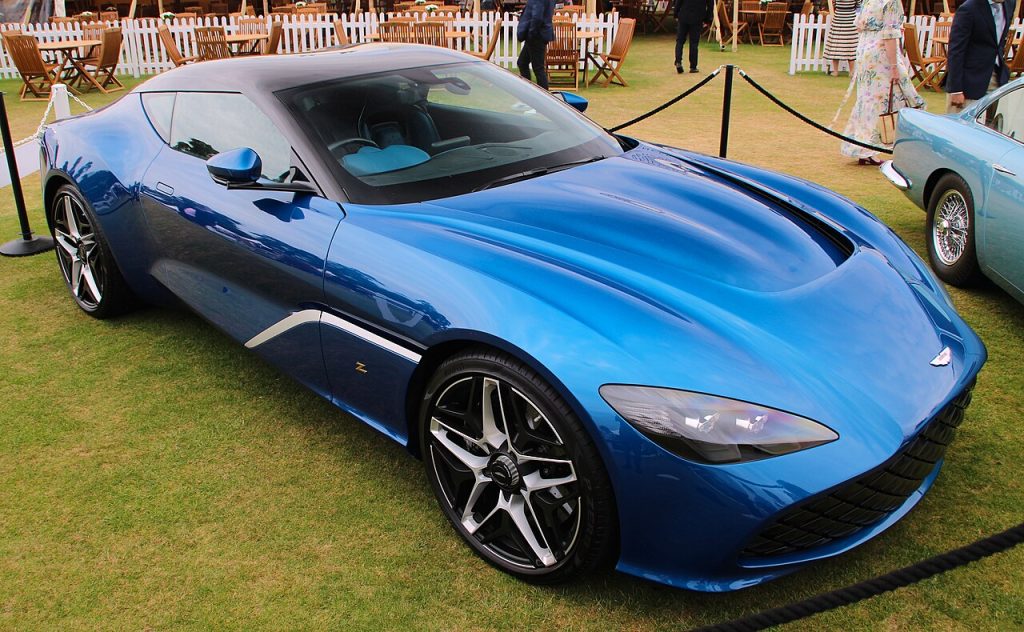
The supplied image shows a source-identified DBS GT Zagato at Salon Prive in August 2024. The source’s 2020 example label remains distinct from the model’s 2019 reveal. It illustrates the contemporary body with visible source and license credits, without certifying original pairing or current condition. The DB4 and collection profiles explain its direct programme relationship. The Vanquish Zagato coupe offers a wider design comparison, helping readers understand the collaboration while keeping each model’s materials, count and historical context separate.
Frequently asked questions
How many DBS GT Zagatos were allocated?
Nineteen, as the modern component of nineteen DBZ Centenary Collection pairs. The collection and component profiles overlap and should not be added as extra cars.
When was the finished DBS GT Zagato revealed?
The factory unveiled it at Audrain’s Newport event on October 4, 2019. Period 2020 delivery references were schedules, not proof of every customer handover.
Did every example have the red reveal specification?
The red car showed the Centenary Specification, while the manufacturer also described finish choices and Q personalisation. An individual order establishes the actual delivered specification.
Does a photograph establish an original DBZ pair?
No. The original pairing requires linked factory and delivery documentation for the DBS and its DB4 continuation partner.
Explore related Aston Martin profiles
- Aston Martin DB4 GT Zagato Continuation
- Aston Martin DBZ Centenary Collection
- Aston Martin Vanquish Zagato Coupe
Sources
- Aston Martin: DBS GT Zagato production-intent design, dynamic grille and camera mirror, 9 July 2019
- Aston Martin: DBZ world debut at Audrain, 4 October 2019, DBS engine and specification choices
- Zagato atelier: DBS GT Zagato within the nineteen-pair Centenary Collection
- Aston Martin: DBZ Collection announcement, 2018, nineteen pairs and separate road/track roles
- Aston Martin: first DB4 GT Zagato Continuation deliveries confirmed, 7 November 2019
Historical claims follow the linked manufacturer, archive, specialist and catalogue records, with disputed findings retained. Inspection and collecting guidance is editorial analysis. Catalogue condition and custody statements remain dated to their sources.
Photography and credit
Source-identified DBS GT Zagato at Salon Prive in August 2024. The source example year 2020 is distinct from the model reveal in 2019. Photo: MrWalkr / Wikimedia Commons · CC BY-SA 4.0. Wikimedia thumbnail resized from original; no cropping or colour changes.
Why this machine matters
The DBS GT Zagato is the contemporary road-car component of the DBZ Centenary Collection. Its factory allocation of nineteen accompanies nineteen DB4 GT Zagato Continuations. Revealed in finished form in October 2019, it combines a twin-turbo V12 with a distinctive roof, dynamic grille and highly individual material treatments.
Built in limited numbers
The factory programme was limited to nineteen paired sets, each containing one DBS GT Zagato. This supports a nineteen-car allocation for the modern component. It is not a count of nineteen cars across both models, and the separate collection entry does not create nineteen further DBSs. A full completed-chassis census has not been established by the records used here. Keeping the allocation and the collection unit distinct makes the archive easier to use and prevents numerical rarity from becoming misleading as readers move between related entries.
Gallery
Specifications
Factory specifications may vary by model year, market and configuration.
Identity & production
- Official model
- Aston Martin DBS GT Zagato
- Base model
- DBS Zagato
Powertrain & performance
- Engine
- 5.2-litre twin-turbo V12; factory DBS GT Zagato programme