Aston Martin Vanquish Zagato Coupe
The Vanquish Zagato coupe turned a May 2016 Villa d’Este concept into a 99-car limited series built at Gaydon. Its carbon-fibre coachwork, double-bubble roof and circular rear-light treatment connected Aston Martin’s flagship with Zagato’s design language. The coupe’s original series remains separate from the later four-body family and its combined 325-car plan.
The Vanquish Zagato coupe turned a May 2016 Villa d’Este concept into a 99-car limited series built at Gaydon. Its carbon-fibre coachwork, double-bubble roof and circular rear-light treatment connected Aston Martin’s flagship with Zagato’s design language. The coupe’s original series remains separate from the later four-body family and its combined 325-car plan.
Aston Martin Vanquish Zagato Coupe at a glance
| Manufacturer | Aston Martin |
|---|---|
| Model / family | Vanquish Zagato |
| Profile scope | Historic road-model archive |
| Historical reference year | 2016 |
| Inventory reference | AST-129 |
| Original series total | 99 — Original Vanquish Zagato coupe series as described by Zagato atelier; other bodies excluded |
| Combined parent allocation limit | 325; count scope discussed below |
| Historical engine reference | Vanquish-based naturally aspirated V12; factory family 600PS/Touchtronic III reference |
From Villa d’Este concept to a limited coupe
Zagato’s May 2016 account identifies the concept’s Lake Como presentation and collaboration between its designers and Aston Martin’s team led by Marek Reichman. The atelier’s later model history describes the resulting limited coupe series. Those two records distinguish the concept’s debut from customer production, which the factory’s 2017 family announcement places from late 2016. A photographed car carrying a later model-year label does not alter that programme chronology. The profile follows the original coupe project rather than treating every later Zagato-bodied Vanquish as an indistinguishable continuation of the same body or delivery period.
Rarity: 99 coupes within a broader four-body family
Zagato’s atelier history states that the coupe was assembled as a 99-unit series at Gaydon. This primary partner record supports the scoped original coupe total used here. The later factory announcement describes a family plan of 325 cars: 99 coupes, 99 Volantes, 28 Speedsters and 99 Shooting Brakes. The parent figure is not an additional production batch added to the coupe count. Nor should the rarest open subset become the rarity label for this body. A useful archive retains the body programme and the broader family relationship together, allowing related cars to be compared without double counting.
Carbon-fibre panels and the double-bubble roof
The atelier describes carbon-fibre bodywork with large panels, fewer split lines and the characteristic double-bubble roof. That gives the coupe a specific visual identity rather than simply an edition badge on a standard Vanquish. An enthusiast can compare how the roof, sides and rear treatment work together, but a design reading does not certify every visible panel as original retained material. A condition report should identify repairs and replacements at the actual car. Coachwork history and chassis identity belong together: the supported limited-series count remains meaningful while the conservation of one surviving example is assessed separately.
Circular lights and the family’s shared design details
Zagato’s history emphasizes the circular rear-light treatment, while Aston Martin’s family announcement describes Vulcan-inspired light-blade technology and repeated Z motifs. These references connect the coupe with the later family without making the bodies identical. In a visual comparison, rear shape, roof and opening arrangements help distinguish coupe, Volante, Speedster and Shooting Brake. Do not identify a car solely from a cropped emblem or a familiar tail-light detail. A wider dated image and the original records provide better context. This makes the design discussion useful to readers while avoiding an unsupported claim that one styling feature authenticates a particular chassis.
The Vanquish-based V12 and Touchtronic III reference
The factory family release identifies a 600 PS naturally aspirated V12 and Touchtronic III transmission, with damping tuned for the individual models. These are programme references rather than present measured performance for the photograph’s car. The specialist technical page contains inconsistent seating entries and power-unit conversions, so those fragments are not copied into exact metadata without reconciliation. For a particular coupe, establish the original seating and market specification through its order and build record. A rare coachbuilt appearance does not remove the need to distinguish source-quality issues, regional configuration and the actual installed equipment.
Cabin motifs and options should follow the individual order
The specialist account describes Z quilting, bronze details and optional leather or Villa d’Este treatments. They provide collecting context, but should not be assumed identical on every coupe. A documented customer choice can explain why two genuine cars look different inside. Compare retained material with original delivery photographs before interpreting a changed finish or a familiar quilt pattern. Record replacements and their reasons separately. This is particularly useful for a bespoke low-volume series: the objective is a coherent account of the vehicle’s own configuration, not an invented claim that every original option combination constitutes a separately numbered production edition.
Coachwork inspection needs a clear material history
Ask a specialist familiar with the construction to assess panels, mounting areas, finish and underlying structure, with previous repair records available where possible. Photographs taken before and during work can explain more than an attractive final image alone. These are editorial inspection priorities, not a report that this edition suffers a specific universal fault. If a rare panel or trim component was replaced, document what was retained and how the work was performed. The car’s original series identity and its present conservation are related questions, but neither a production plaque nor a uniform glossy finish can answer both by itself.
A concept appearance is different from customer provenance
The May 2016 concept, later production coupes and vehicles shown at subsequent events belong to distinct moments in the programme. A modern catalogue should not describe an individual customer car as the Villa d’Este concept simply because it has a similar color or styling. That particular claim would require car-specific evidence. Trace the order, build, delivery and later appearances with dates, keeping source-attributed statements clear. This method lets a collector appreciate the programme’s origin while understanding the actual object being considered. It also avoids turning one photograph’s filename year into a universal production-end date for every coupe.
Earlier Zagatos and the Vulcan broaden the comparison
The DB7 Zagato and original DB4 GT Zagato provide earlier interpretations of the Aston Martin–Zagato relationship, with their own chassis and production histories. Vulcan offers a different reference for the modern rear-light technology mentioned by the factory. These links help explain continuity in design without borrowing another car’s competition record or purpose. The Vanquish coupe is a modern limited GT, and its collecting story stands on that identity. An informed comparison preserves body programme, date and original use before discussing rarity, rather than treating every Zagato-badged Aston Martin as one continuous model with one shared total.
The credited coupe photograph and its model-year label
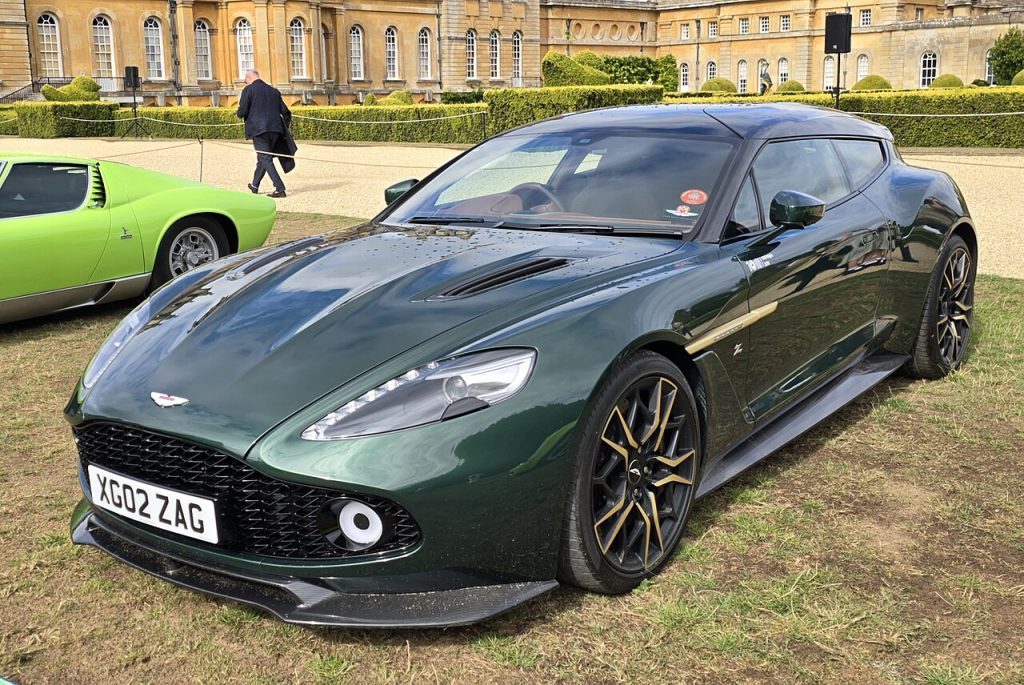
The bundled image is source-identified as a Vanquish Zagato coupe photographed in August 2025. Its filename uses a 2019 model-year label, retained as source attribution rather than as a new claim about the programme’s debut or all customer completion dates. Linked photographer, Commons source, licence and resizing disclosure accompany the image. No chassis serial or present installed specification is independently assigned. This gives the guide a useful subject photograph while preserving the distinction between a dated public appearance, a source label and the original production history. Keep those limits attached when the image is shared or replaced.
Frequently asked questions
How many original Vanquish Zagato coupes are supported?
Zagato’s atelier history identifies a 99-unit coupe series assembled at Gaydon.
Does the 325 family figure add another 325 coupes?
No. It is the broader four-body plan containing the coupe programme, not additive production.
When did the coupe project become public?
The concept appeared at Villa d’Este in May 2016; the factory places coupe production from late 2016.
Does a 2019 photo filename change the introduction date?
No. The source label and the original programme chronology are different findings.
Explore related Aston Martin profiles
Sources
- Zagato atelier: Vanquish Zagato coupe debut, carbon coachwork and 99-unit series
- Zagato May 2016: Villa d’Este concept and collaboration with Aston Martin
- Aston Martin August 2017: four-body Zagato family, coupe production chronology and powertrain
- Tim Cottingham: Zagato coupe specification and inconsistent seating/power conversion entries
Historical claims follow the linked manufacturer, archive, specialist and catalogue records, with disputed findings retained. Inspection and collecting guidance is editorial analysis. Catalogue condition and custody statements remain dated to their sources.
Photography and credit
Source-identified Vanquish Zagato coupe photographed in August 2025. Filename model-year label retained; programme debuted in 2016. A dated image does not establish chassis serial or current specification. Photo: Calreyn88 / Wikimedia Commons · CC BY-SA 4.0. Wikimedia thumbnail resized from original; no cropping or colour changes.
Why this machine matters
The Vanquish Zagato coupe turned a May 2016 Villa d’Este concept into a 99-car limited series built at Gaydon. Its carbon-fibre coachwork, double-bubble roof and circular rear-light treatment connected Aston Martin’s flagship with Zagato’s design language. The coupe’s original series remains separate from the later four-body family and its combined 325-car plan.
Built in limited numbers
Zagato’s atelier history states that the coupe was assembled as a 99-unit series at Gaydon. This primary partner record supports the scoped original coupe total used here. The later factory announcement describes a family plan of 325 cars: 99 coupes, 99 Volantes, 28 Speedsters and 99 Shooting Brakes. The parent figure is not an additional production batch added to the coupe count. Nor should the rarest open subset become the rarity label for this body. A useful archive retains the body programme and the broader family relationship together, allowing related cars to be compared without double counting.
Gallery
Specifications
Factory specifications may vary by model year, market and configuration.
Identity & production
- Official model
- Aston Martin Vanquish Zagato Coupe
- Base model
- Vanquish Zagato
- Worldwide production
- 99
Powertrain & performance
- Engine
- Vanquish-based naturally aspirated V12; factory family 600PS/Touchtronic III reference