Aston Martin Vulcan
The Aston Martin Vulcan was a purpose-built track supercar combining a carbon-fibre structure, naturally aspirated 7.0-litre V12 and a supported driver-development programme. Announced in 2015, all 24 customer cars were delivered during 2016 according to the manufacturer. The later AMR Pro package upgraded existing Vulcans rather than creating an additional original series.
The Aston Martin Vulcan was a purpose-built track supercar combining a carbon-fibre structure, naturally aspirated 7.0-litre V12 and a supported driver-development programme. Announced in 2015, all 24 customer cars were delivered during 2016 according to the manufacturer. The later AMR Pro package upgraded existing Vulcans rather than creating an additional original series.
Aston Martin Vulcan at a glance
| Manufacturer | Aston Martin |
|---|---|
| Model / family | Vulcan |
| Profile scope | Track-only customer supercar archive |
| Historical reference year | 2015 |
| Inventory reference | AST-124 |
| Original series total | 24 — Original completed Vulcan customer chassis; later AMR Pro upgrades are not additional production |
| Documented customer delivery year | 2016; not an inferred production-start year |
| Historical engine reference | Naturally aspirated 7.0-litre V12; launch 800-plus bhp, later factory 820 bhp reference |
A track-only brief rather than an ordinary road flagship
Aston Martin’s February 2015 launch release presents Vulcan as a track-only customer supercar, with its public debut scheduled for Geneva in March. That original brief is central to the model’s identity. It was intended to provide a closely supported track experience rather than simply add a more powerful specification to a road-going grand tourer. A collector comparing it with One-77 should begin with that purpose before looking at cylinder count or visual drama. Road registration, where claimed for an individual later conversion, is a separate history and cannot be assigned to the original series as universal factory approval.
Rarity: 24 built and delivered to customers
The June 2017 factory AMR Pro announcement states that all 24 Vulcans had been built and delivered, with customer deliveries during 2016. That retrospective supports a completed original customer-series total, stronger evidence than the earlier announcement’s limit alone. This profile keeps the 2015 unveiling distinct from the delivery period and excludes later upgrades from additive production. A development object or a changed specification still needs its own identity explained. The supported rarity finding is a small completed customer programme, not a claim that every surviving car remains in its delivery condition or that the current owner population is unchanged.
Carbon-fibre construction and the Multimatic connection
The original release identifies a carbon-fibre monocoque and body developed with Multimatic, giving the Vulcan a construction story distinct from the aluminium-based VH road cars. A conservation assessment should therefore be specific about the structure, external panels and attachment areas being examined. A uniform exterior finish cannot by itself describe the history of the tub beneath it. Retain repair records, photographs and the specialist’s explanation of any intervention. That is editorial inspection guidance drawn from the material distinction, not a report of damage on the pictured example. The supplier relationship also does not turn into a claim of Canadian final assembly.
The 7.0-litre V12 and original sequential transmission
The launch document specifies a naturally aspirated 7.0-litre V12 and a rear-mounted Xtrac six-speed sequential gearbox. It introduces output as more than 800 bhp, while the later upgrade release uses an 820 bhp reference. These are dated programme statements rather than a measured output for every photographed car. The transmission’s original competition-oriented architecture should remain separate from a road-model automatic with a similar number of ratios. An individual equipment record needs to establish the fitted components, rebuilds and setup, especially when a car’s later use or upgrade history changes the configuration described at delivery.
Adjustable systems and a supported learning programme
The original release describes adjustable damping, traction control and anti-lock braking, alongside a staged driver-training programme. The ownership idea linked the car with tuition rather than assuming that collecting experience automatically supplied track proficiency. For a subsequent owner, the practical question is which support arrangements, preparation needs and current systems apply to that particular car. The historical programme is useful context, but it should not be presented as a service entitlement that necessarily transfers unchanged years later. Establish the present scope with the responsible specialists and document how the car is prepared for its intended events.
AMR Pro was an upgrade to the existing fleet
In 2017 Aston Martin announced AMR Pro as a package available to owners of the 24 Vulcans, with aerodynamic revisions and shorter gearing. It therefore belongs to a car’s work history rather than a new batch of original chassis added to the production count. A listing that describes AMR Pro should support the installation and date with records. Equally, a standard-configuration Vulcan should not be judged as incorrectly built merely because it lacks the later package. The useful archive preserves original delivery and subsequent evolution together, allowing readers to understand what changed without multiplying one physical vehicle into two supposed production cars.
Track history needs more detail than an appearance count
A public demonstration, private test and sustained circuit use create different histories. When researching an example, ask for dated maintenance, preparation and use records that explain the work associated with its actual activities. A show photograph or a short demonstration clip cannot establish the full operating record. This is an editorial method for understanding a specialist track car, not an assertion that any particular amount of use is automatically desirable or undesirable. The important point is whether condition and work history can be connected to the same chassis, so an owner understands the car’s present configuration and intended next role.
A collection plan should include the support around the car
For a track-focused collector, the vehicle is only one part of the proposed use. Discuss transport, storage, preparation, event requirements and access to suitable technical support before settling on a plan. Those considerations are distinct from the historical 24-car rarity figure and should be based on the intended events. A display-focused owner may have a different conservation brief from someone planning regular circuit activity. Neither role changes the original programme identity. An informed collection file explains the goal and documents the work that follows, rather than assuming that a scarce model can be treated exactly like an ordinary road grand tourer.
Vulcan, One-77 and Zagato illustrate different ambitions
The One-77 provides a road-going halo comparison with a different completed population and construction story. The Vanquish Zagato shows a rare design collaboration, while the historical DBR1 belongs to a competition era with its own sporting record. These links help readers understand the breadth of Aston Martin’s special projects without assigning another car’s road approval or victories to Vulcan. The profile’s collecting significance comes from its supported track-only brief and small customer fleet. A shared visual reference or manufacturer name can connect the stories while leaving their use, engineering and rarity scopes distinct.
The Donington Park photograph and configuration limits
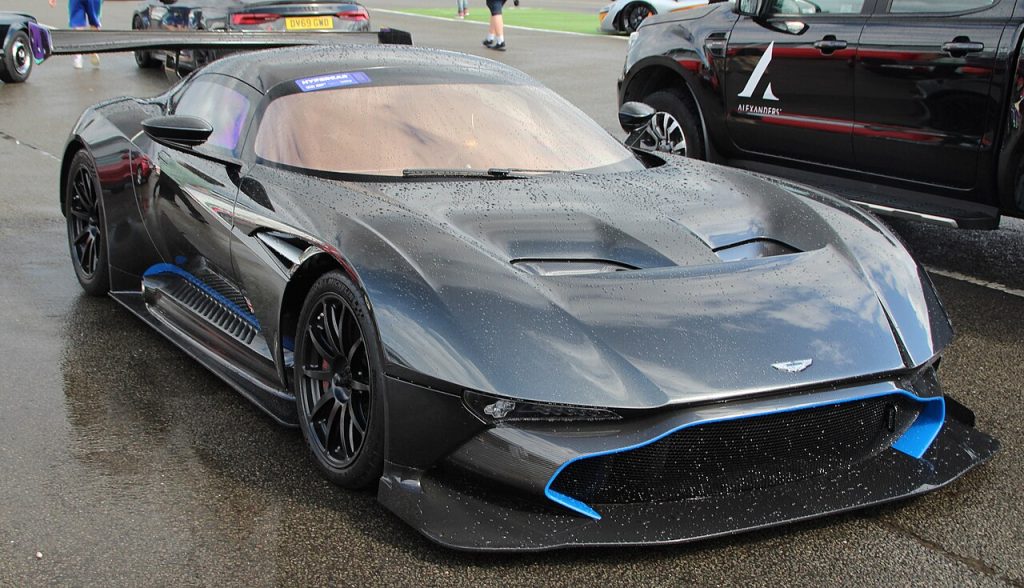
The licensed photograph shows a Vulcan at Donington Park in July 2023. It is a source-identified model image, with linked photographer, Commons source, licence and resizing disclosure. The caption does not certify its chassis serial, road registration or present upgrade configuration. A dated appearance can illustrate the car’s shape and track context, but it cannot replace a mechanical or provenance assessment. When a new image is added later, retain its own date and identifying evidence rather than copying current-custody language into a permanent caption. This keeps the visual record useful without making the photograph carry findings it cannot establish.
Frequently asked questions
How many original customer Vulcans were completed?
Aston Martin’s 2017 retrospective confirms all 24 were built and delivered; deliveries occurred during 2016.
Was Vulcan originally a road car?
The factory launch identifies a track-only customer supercar. Any later individual road conversion needs separate evidence.
Did AMR Pro add more original Vulcans?
No. It was an upgrade package offered to the existing 24-car fleet.
What was the original engine and gearbox reference?
The launch specifies a naturally aspirated 7.0-litre V12 and Xtrac six-speed sequential transmission.
Explore related Aston Martin profiles
Sources
- Aston Martin February 2015 Vulcan launch release: construction, powertrain and training programme
- Aston Martin: Vulcan track-only model and original 24-car limit
- Aston Martin June 2017: all 24 Vulcans built/delivered and AMR Pro upgrade
Historical claims follow the linked manufacturer, archive, specialist and catalogue records, with disputed findings retained. Inspection and collecting guidance is editorial analysis. Catalogue condition and custody statements remain dated to their sources.
Photography and credit
Vulcan photographed at Donington Park in July 2023. Model image; current mechanical setup, upgrade history and road registration are not established by the photograph. Photo: MrWalkr / Wikimedia Commons · CC BY-SA 4.0. Wikimedia thumbnail resized from original; no cropping or colour changes.
Why this machine matters
The Aston Martin Vulcan was a purpose-built track supercar combining a carbon-fibre structure, naturally aspirated 7.0-litre V12 and a supported driver-development programme. Announced in 2015, all 24 customer cars were delivered during 2016 according to the manufacturer. The later AMR Pro package upgraded existing Vulcans rather than creating an additional original series.
Built in limited numbers
The June 2017 factory AMR Pro announcement states that all 24 Vulcans had been built and delivered, with customer deliveries during 2016. That retrospective supports a completed original customer-series total, stronger evidence than the earlier announcement’s limit alone. This profile keeps the 2015 unveiling distinct from the delivery period and excludes later upgrades from additive production. A development object or a changed specification still needs its own identity explained. The supported rarity finding is a small completed customer programme, not a claim that every surviving car remains in its delivery condition or that the current owner population is unchanged.
Gallery
Specifications
Factory specifications may vary by model year, market and configuration.
Identity & production
- Official model
- Aston Martin Vulcan
- Base model
- Vulcan
- Worldwide production
- 24
Powertrain & performance
- Engine
- Naturally aspirated 7.0-litre V12; launch 800-plus bhp, later factory 820 bhp reference