Aston Martin DBS V8 Ogle Sotheby Special
The Ogle Sotheby Special was a radical DBS V8-based design project, with an original motor-show car and a second promotional road car. A third privately commissioned Ogle followed. The initial pair’s roles, construction and changing promotional appearance need separate records rather than a blanket two-car production claim for every related Ogle.
The Ogle Sotheby Special was a radical DBS V8-based design project, with an original motor-show car and a second promotional road car. A third privately commissioned Ogle followed. The initial pair’s roles, construction and changing promotional appearance need separate records rather than a blanket two-car production claim for every related Ogle.
Aston Martin DBS V8 Ogle Sotheby Special at a glance
| Manufacturer | Aston Martin |
|---|---|
| Model / family | DBS V8 / Ogle |
| Profile scope | Coachbuilt promotional-design archive |
| Historical reference year | 1972 |
| Inventory reference | AST-057 |
| Specialist-reported scoped count | 2; scope explained below, not factory certification |
| Parent / broader count scope | 3; not additive to this profile |
| Historical engine reference | DBS V8-related project; show and road installations individually scoped |
A 1972 debut rather than the inventory’s 1971 label
The H&H announcement identifies the original show object and its DBS V8 basis, while the specialist chronology places the Montreal debut in January 1972 and Geneva appearance later that year. This guide uses 1972 as the public introduction reference, preserving 1971 in the inventory audit. Development may precede a show appearance, but that does not justify presenting an unsupported public debut. The model name also needs its sponsor context: it was a promotional design project, not a normal retail derivative delivered through a standard production programme.
Rarity: two promotional subjects within three related Ogles
The source accounts distinguish the original show car, a second roadgoing promotional car and a third private commission. The inventory’s two is therefore used as the initial promotional-pair scope, with the third related Ogle explicitly acknowledged. Exact factory-production fields remain unset. A rolling show object and a completed road car are not interchangeable forms of one retail edition. A collecting account should identify which chassis it concerns before describing equipment or custody. The count remains useful only when readers can see why the private commission is related but outside the initial pair.
The original show object has its own chassis
H&H identifies the original as DBSV8/10380/R, constructed for show and never road-registered. That is an identity reference for one object, not a specification certificate for the roadgoing counterpart. A show car can carry mechanical assemblies without having the same operating role as a completed road vehicle. When researching it, preserve its exhibition appearances, later disassembly and restoration history under the same chassis. Do not import the second car’s registration merely to fill a missing field. Each object’s role should remain supported by its own documentary and physical evidence.
The second car and changing promotional colours
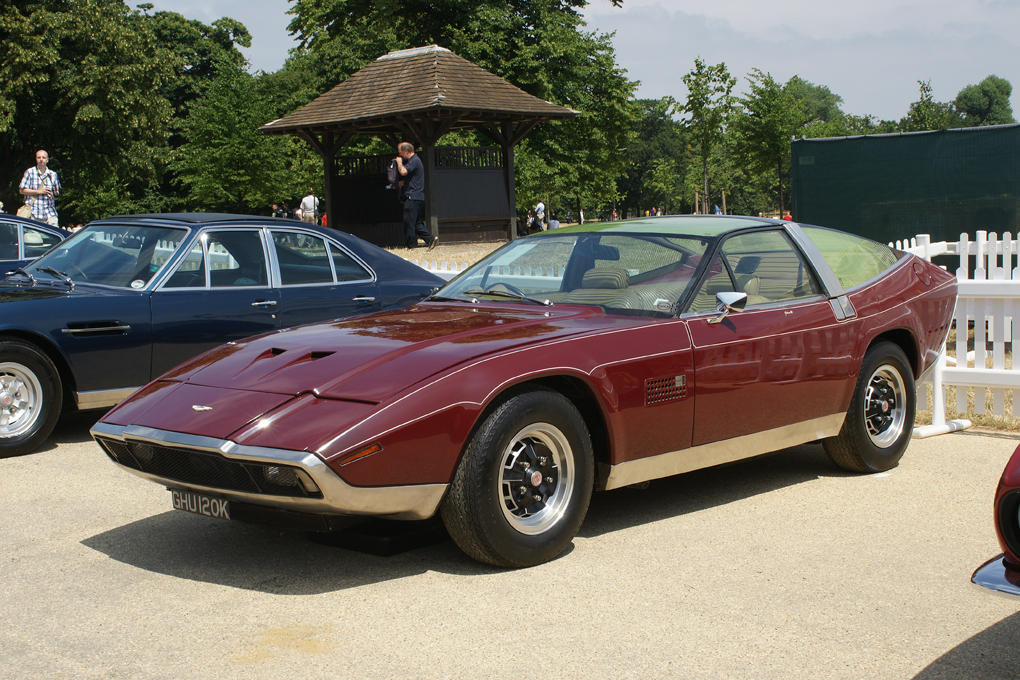
Cottingham identifies the second chassis as DBSV8/10381/RC, with the roadgoing registration GHU120K, and distinguishes its promotional history from the first object. Later Embassy branding is part of a dated presentation change, not a new model or a different physical car. Period photographs should therefore keep dates and identity references together. The supplied Kensington Palace image shows the roadgoing Ogle in a later display. It should not be captioned as proof that the original unregistered show car was roadworthy. A supported chronology can explain changing colours without multiplying objects or merging their specifications.
Ogle’s materials and lighting concept
The H&H announcement describes glassfibre coachwork, a Reynolds 531 tubular support structure, a Perspex show-car glasshouse and an unusual rear-light arrangement. These are object-specific historical construction references. The second road car’s glazing should not automatically receive the same description. For conservation, examine the fitted materials and any replacements with a specialist rather than assuming a single universal Ogle specification. Bespoke lighting and closures deserve photographs and drawings before intervention. The design’s technical interest is stronger when its experimental features are tied to the correct object and stage of development.
The private third car remains a separate history
The sources identify a later private commission after the design attracted public attention. Its own chassis, gearbox and subsequent modifications should remain distinct from the promotional pair. It is not an extra original show appearance or merely another colour scheme of the second car. A family archive can connect the three through design authorship while preserving separate object records. For an individual assessment, obtain the actual build and work history before borrowing equipment from another Ogle. This distinction lets the rarity story explain the project accurately without turning a small related group into an invented uniform series.
Reading a sale announcement as dated evidence
H&H’s 2015 offering describes the show car’s stored condition and preparation needs as they stood then. Preserve that date rather than repeating its condition language as a current finding. A later restoration or transfer should be supported by separate records. An auction announcement can anchor identity and a documentary milestone, but it is not a permanent guarantee of custody or completeness. Where firsthand specialist photographs add detail, keep their dates and subject identification. A useful object file allows future researchers to distinguish what was seen, what was reported and what still requires inspection.
Bespoke restoration and intended use
Inspect coachwork, structural support, glazing, closures, lighting, fuel equipment and mechanical installation with someone familiar with the specific design. A show object and a roadgoing vehicle can require different conservation and operating decisions. Define the intended role before agreeing changes or attempting to reproduce original mechanisms. Parts shared with DBS V8 do not make every bespoke feature straightforward to repair. Keep removed material and document replacements where feasible. These practical questions concern the actual object; the broad design name cannot settle present roadworthiness, preparation needs or authenticity of each assembly.
Comparing Ogle with Bulldog and Lagonda
Bulldog provides another experimental design comparison, while the first-series Lagonda explores a low-volume four-door use of Aston Martin’s V8 family. Compare original purpose, construction and completed-object scope before using a rarity number. The Ogle show car’s role differs from a production saloon or a running speed demonstrator. Related profiles make these distinctions easier to understand. An individual coachbuilt object can be historically important without belonging to a numbered retail edition. Its supported identity, design story and material history offer a more informative basis for collecting interest.
The credited roadgoing-car photograph
The bundled Ogle image was photographed at Kensington Palace in July 2013 and is retained as a later subject image. Its visible credit links author, source and exact reuse licence, with no visual alterations disclosed beyond the supplied file. It illustrates the roadgoing design rather than certifying the show car’s operating state. A durable archive should retain both chassis identities, dated promotional appearances and conservation records. When a new photograph or document emerges, attach it to the relevant object rather than rewriting the whole project as one car with a confusing sequence of registrations.
Frequently asked questions
Does two mean every related Ogle ever built?
No. It describes the initial show/promotional pair; a third private commission is separately documented.
Was the original show car road-registered?
H&H describes DBSV8/10380/R as a show object that was never road-registered.
Which year is used for public introduction?
1972, following the Montreal/Geneva chronology.
Does the supplied photo certify the show car?
No. It shows the roadgoing design in a later presentation, with its own scope.
Explore related Aston Martin profiles
Sources
- H&H Classics 2015 announcement reproduced by Racecar: show car and related Ogles
- Tim Cottingham: firsthand Ogle photographs and three-chassis distinction
Historical claims follow the linked manufacturer, archive, specialist and catalogue records, with disputed findings retained. Inspection and collecting guidance is editorial analysis. Catalogue condition and custody statements remain dated to their sources.
Photography and credit
Roadgoing Ogle at Kensington Palace in July 2013; this later display does not certify the unregistered original show object. Photo: Ian Leech / Wikimedia Commons · CC BY-SA 2.0. Original image supplied without visual changes.
Why this machine matters
The Ogle Sotheby Special was a radical DBS V8-based design project, with an original motor-show car and a second promotional road car. A third privately commissioned Ogle followed. The initial pair’s roles, construction and changing promotional appearance need separate records rather than a blanket two-car production claim for every related Ogle.
Built in limited numbers
The source accounts distinguish the original show car, a second roadgoing promotional car and a third private commission. The inventory’s two is therefore used as the initial promotional-pair scope, with the third related Ogle explicitly acknowledged. Exact factory-production fields remain unset. A rolling show object and a completed road car are not interchangeable forms of one retail edition. A collecting account should identify which chassis it concerns before describing equipment or custody. The count remains useful only when readers can see why the private commission is related but outside the initial pair.
Gallery
Specifications
Factory specifications may vary by model year, market and configuration.
Identity & production
- Official model
- Aston Martin DBS V8 Ogle Sotheby Special
- Base model
- DBS V8 / Ogle
Powertrain & performance
- Engine
- DBS V8-related project; show and road installations individually scoped