Aston Martin DB5 Saloon
The original DB5 saloon brought Aston Martin’s four-litre grand touring programme to worldwide attention in the 1960s. The manufacturer records 887 original saloons. That population includes factory Vantage cars and should remain distinct from convertibles, later coachbuilt transformations, film-car identities and modern Goldfinger continuations.
The original DB5 saloon brought Aston Martin’s four-litre grand touring programme to worldwide attention in the 1960s. The manufacturer records 887 original saloons. That population includes factory Vantage cars and should remain distinct from convertibles, later coachbuilt transformations, film-car identities and modern Goldfinger continuations.
Aston Martin DB5 Saloon at a glance
| Manufacturer | Aston Martin |
|---|---|
| Model / family | DB5 |
| Profile scope | Historic road-model archive |
| Historical reference year | 1963 |
| Inventory reference | AST-046 |
| Original series total | 887 — Original DB5 saloon body population, including factory Vantage saloons; later continuation cars excluded |
| Historical engine reference | Historical four-litre twin-cam six-cylinder saloon programme |
A 1963 grand tourer with a lasting identity
The manufacturer’s anniversary account identifies the September 1963 Frankfurt debut, placing DB5 after the final DB4 development. This guide concerns the original saloon body population rather than every later object using the name. Individual construction dates still come from their chassis records. A model-level introduction date should not be used to date every surviving example or a modern continuation. The DB5’s visibility can make its identity feel self-evident, but a collecting account should still explain the specific body, programme and original delivery specification of the car being described.
Rarity: 887 saloons, with subsets included
Aston Martin records 887 original saloons. That figure includes the factory Vantage-engined saloons and is not a standard-engine-only total. Do not add a Vantage subset to 887 when constructing a production table. Convertible and coachbuilt histories require their own scope, particularly where an existing car was transformed rather than newly manufactured. This profile uses the supported saloon population without trying to reconcile every DB5 family total across different factory pages. A clearly defined count is useful even when broader sources disagree, provided it is not presented as a total of all bodies and later programmes.
The historical engine reference
The heritage entry describes Tadek Marek’s four-litre twin-cam six with triple SU carburettors and a claimed 282 bhp. Another factory account rounds standard output differently, so the profile keeps figures attributed instead of creating a present measured value. For an actual car, inspect the fitted unit and records of enlargement, rebuilding or replacement. A historical model specification is not a guarantee that every survivor has the same induction, capacity or output. The technical interest is strongest when the original design and subsequent configuration are described clearly enough for a specialist to verify them.
Equipment should follow the individual car
The manufacturer emphasizes DB5’s extensive instruments and equipment. A surviving cabin can show both original features and later restoration choices, so record what is actually fitted. Transmission type, electrical changes, trim and accessories deserve chassis-specific evidence. A model guide should not imply that one photographed dashboard defines every delivery specification. For a collecting file, compare the build record, early photographs and restoration invoices before calling equipment original. This helps explain the grand touring character while leaving practical questions about condition and operation to an inspection of the actual vehicle.
The Vantage relationship is an engine-option subset
Aston Martin’s Vantage history identifies an optional higher-output specification within the saloon population. The separate Vantage guide retains the published 65-versus-68 count disagreement. Neither figure makes Vantage cars additional to the 887 saloons. A badge or Weber installation on a surviving car can represent original specification or later work. Establish which from the build documentation and dated changes. A standard saloon that has been upgraded can have an honest and useful history without becoming a factory-original Vantage. The model archive should connect these records while keeping delivered and current specification separate.
Film fame belongs to identified vehicles
The DB5’s Bond association is part of the model’s cultural significance, but it does not make every silver saloon a film-used car. An individual cinematic claim needs production documentation and a supported chassis history. Replicas, promotional cars and later factory continuations have different identities even when they display familiar equipment. Keep the role, date and physical object together in the record. A general DB5 photograph illustrates the model, not a specific screen appearance. This lets a profile acknowledge the design’s public recognition without borrowing provenance that belongs to an entirely different vehicle.
Originals and modern continuations
Later Goldfinger continuation cars have their own manufacture dates, factory programme and equipment. Official production is relevant to their identity, but it does not place them within the original 1960s saloon count. Determine the construction programme before presenting rarity or original use. A period car restored in a cinematic style is another distinct case requiring its own modification history. The archive should explain these differences in plain language. That preserves the historical 887-car scope while allowing later cars to be described accurately and appreciated for what they actually represent.
Structure and restoration need an evidence trail
A specialist should assess structural condition, body framework, panel repairs and mechanical installation. Review photographs from before and during restoration rather than treating a fresh finish as proof of a sound underlying car. Document replacement material and the reason for major work. Original colour, current colour and any period colour change belong in different fields. A collecting description becomes more useful when it can explain how the present condition was achieved. These are assessment principles for an individual saloon, not a declaration that the pictured example has any particular defect or degree of originality.
Planning use and comparing related models
For touring, establish the actual gearbox, cooling, braking, steering, tyres and service condition. Match preparation to intended use and preserve decisions about upgrades. The DB5 Convertible offers a body-style comparison; the Vantage derivative offers an engine-option comparison; the DB4 GT offers a different competition purpose. Their totals describe different populations and should not be used alone as a ranking of collecting interest. A well-documented regular saloon can provide a different ownership proposition from a modified or competition-focused car. Condition, identity and intended role should guide the comparison.
Photography and the long-term vehicle record
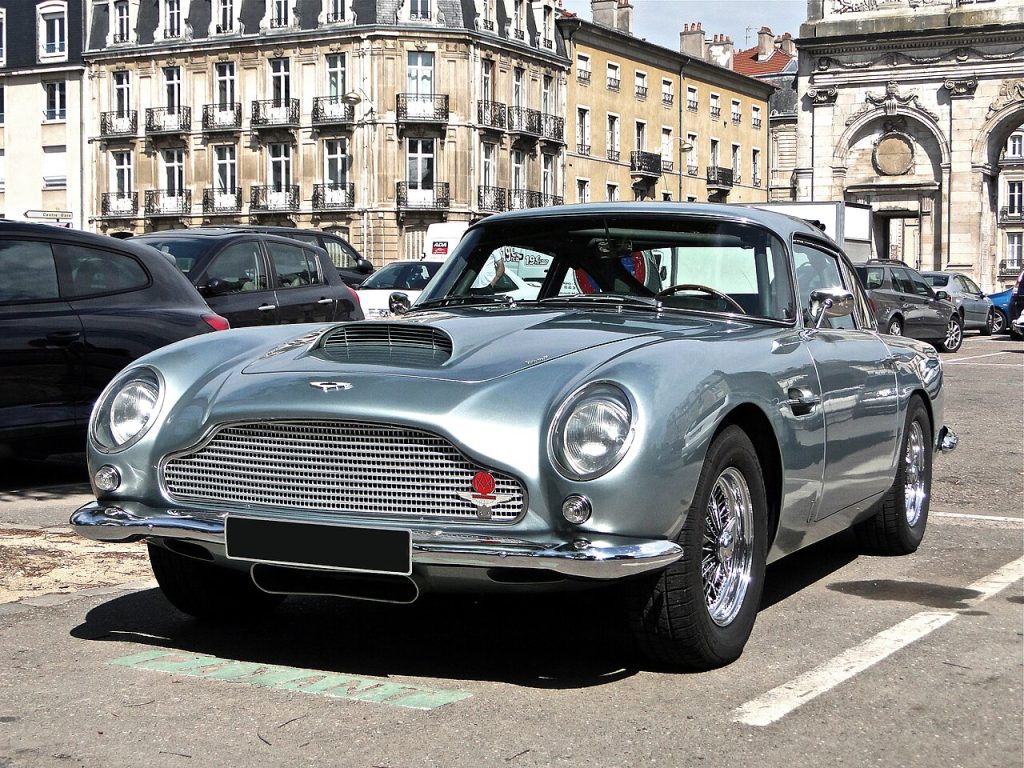
The credited DB5 saloon photograph was made in 2011 and carries linked author, Commons source, licence and resizing disclosure. It does not establish a film-car identity, original engine option or authenticated serial. Keep the caption intact when reusing the image. An individual file should connect factory records, mechanical changes, restoration photographs and custody transitions under one chassis identity. This provides a stronger basis for future research than an accumulated collection of unsourced specifications. The model’s enduring appeal can be explained through design and cultural context while the particular car’s claims remain supported by its own evidence.
Frequently asked questions
How many original saloons are recorded?
887 in Aston Martin’s anniversary account.
Does 887 exclude Vantage saloons?
No. The Vantage cars are a subset within the saloon population.
Is every silver DB5 a Bond film car?
No. Film provenance requires evidence for the individual physical car.
Are modern Goldfinger continuations counted here?
No. They belong to a separate later construction programme.
Explore related Aston Martin profiles
Sources
- Aston Martin: DB5 heritage engine and equipment reference
- Aston Martin: 2023 DB5 anniversary, 887 saloons and 123 convertibles
- Aston Martin: 2020 Vantage history reports 68 DB5 saloons and eight convertibles
Historical claims follow the linked manufacturer, archive, specialist and catalogue records, with disputed findings retained. Inspection and collecting guidance is editorial analysis. Catalogue condition and custody statements remain dated to their sources.
Photography and credit
DB5 saloon photographed in 2011; model image without inferred film-car identity, chassis serial or original engine option. Photo: Alexandre Prévot from Nancy, France / Wikimedia Commons · CC BY-SA 2.0. Wikimedia thumbnail resized from original; no cropping or colour changes.
Why this machine matters
The original DB5 saloon brought Aston Martin’s four-litre grand touring programme to worldwide attention in the 1960s. The manufacturer records 887 original saloons. That population includes factory Vantage cars and should remain distinct from convertibles, later coachbuilt transformations, film-car identities and modern Goldfinger continuations.
Built in limited numbers
Aston Martin records 887 original saloons. That figure includes the factory Vantage-engined saloons and is not a standard-engine-only total. Do not add a Vantage subset to 887 when constructing a production table. Convertible and coachbuilt histories require their own scope, particularly where an existing car was transformed rather than newly manufactured. This profile uses the supported saloon population without trying to reconcile every DB5 family total across different factory pages. A clearly defined count is useful even when broader sources disagree, provided it is not presented as a total of all bodies and later programmes.
Gallery
Specifications
Factory specifications may vary by model year, market and configuration.
Identity & production
- Official model
- Aston Martin DB5 Saloon
- Base model
- DB5
- Worldwide production
- 887
Powertrain & performance
- Engine
- Historical four-litre twin-cam six-cylinder saloon programme