Aston Martin DB5 Vantage
The original DB5 Vantage saloon used Aston Martin’s optional higher-output engine specification within the regular saloon programme. Factory and auction accounts publish different original counts, 68 and 65. This profile keeps the disagreement visible and separates factory-original cars from standard DB5s upgraded to similar specification later.
The original DB5 Vantage saloon used Aston Martin’s optional higher-output engine specification within the regular saloon programme. Factory and auction accounts publish different original counts, 68 and 65. This profile keeps the disagreement visible and separates factory-original cars from standard DB5s upgraded to similar specification later.
Aston Martin DB5 Vantage at a glance
| Manufacturer | Aston Martin |
|---|---|
| Model / family | DB5 |
| Profile scope | Historic road-model archive |
| Historical reference year | 1964 |
| Inventory reference | AST-049 |
| Published count disagreement | 65 or 68; exact reconciled total unconfirmed |
| Parent / broader count scope | 887; not additive to this profile |
| Historical engine reference | Historical DB5 Vantage four-litre six-cylinder option; current installation requires individual records |
Vantage identifies an original engine option
This profile concerns DB5 saloons originally supplied with Vantage specification. The name is not used here as a blanket label for every DB5 now wearing a badge or Weber carburettors. The inventory’s 1964 reference provides a derivative-era anchor, while each car’s actual build date and order require individual documents. Vantage appears across many Aston Martin generations, so it needs a model and period context. A collecting file should establish original delivery specification before describing later modifications. That provides a clear identity basis without assuming that similar present hardware proves the same original factory history.
Rarity: 65 and 68 remain competing published counts
Aston Martin’s 2020 account reports 68 original Vantage saloons within 887 DB5 saloons. RM Sotheby’s London 2015 catalogue gives 65 and discusses factory correspondence for the car offered. The inventory uses 65; this guide preserves both figures and leaves the exact completed-production badge unset pending reconciliation. Both counts are below the rarity ceiling. The smaller number is not automatically preferable because it sounds rarer, and the larger one is not silently substituted without explanation. A transparent count note makes the evidence useful and prevents a derivative total from being added to its inclusive parent population.
The engine’s programme specification
The manufacturer describes triple Weber carburettors and quoted 325 bhp for the DB5 Vantage. These are historical option references, not measured present output. The actual engine can have a different capacity, head, induction or ignition after decades of service and restoration. Obtain records of those changes and inspect the installed assemblies. A factory-original Vantage identity and a later engine specification can coexist when both are documented. Equally, an engine upgrade in a standard saloon should be described as later work rather than proof of original option identity. The technical comparison depends on dates and evidence.
A build card can need supporting correspondence
RM’s 2015 account of DB5/2016/R describes apparently inconsistent build-card entries: standard-type induction references alongside a non-standard-equipment entry for a Vantage engine. It also records factory correspondence supporting that particular car’s original Vantage identity. This is a useful authentication example, not permission to resolve every ambiguous card the same way. Retain the original document, correspondence and specialist interpretation together. Where entries disagree, explain the basis for the conclusion. An honest file can handle documentary complexity without discarding inconvenient evidence or turning a generic model label into a chassis-specific certification.
Factory-original cars versus conversions
A later conversion may reproduce aspects of Vantage specification and can have value as a practical ownership choice. Its construction date, work quality and fitted equipment should be documented on that basis. It does not automatically become one of the original 65-or-68 cars. For an original claim, establish the delivered option before examining current specification. Then record changes rather than expecting every survivor to be untouched. This comparison is strongest when condition and history are considered alongside identity. A well-documented modified saloon and a factory-original Vantage can interest different owners for different reasons.
Numbers, components and originality
Review the actual engine markings, chassis identifiers, build records and restoration invoices together. A statement about matching numbers should specify which items were examined and whether a replacement or restamped component is involved. Original block, original engine assembly and period-correct installed specification are not interchangeable descriptions. Photograph identifiers and preserve records of removed material. A mechanical rebuild may retain significant original parts while changing others. The collecting account should explain that sequence. This is more useful for future stewardship than a broad originality claim that hides the condition, identity and configuration questions an expert would need to answer.
Assessing condition for road use
A current inspection should cover structure, body support, cooling, lubrication, braking, steering, tyres and the installed gearbox. Review service evidence and discuss parts support for the engine actually fitted. Quoted period power should not drive a use decision without understanding present preparation. A car used mainly for static display may require a different recommissioning plan from one regularly toured. Keep the intended role and proposed work documented. This guide does not diagnose the photographed saloon or certify its operating capability; it explains how practical questions can be connected with the car’s historical and mechanical records.
The saloon and convertible subsets remain separate
The Vantage Convertible is a parallel original option within the DB5 open-body population, not part of a new additive saloon count. Its own seven-versus-eight discrepancy needs separate reconciliation. The regular Saloon guide records the inclusive 887-car body population. A clear archive can show these parent and subset relationships while avoiding duplicate physical vehicles in a production table. Compare original body type, engine option and actual build history before using a number as a rarity headline. The distinctions are especially helpful where a later conversion or steering-position change has altered an individual car’s present presentation.
Comparing DB5 Vantage with DB4 GT
DB4 GT pursues a shortened competition-oriented format, whereas DB5 Vantage is an engine option within the saloon touring programme. A higher-output label does not make the latter a GT chassis or transfer the GT prototype’s race results. Compare original purpose, body, platform and evidence scope rather than only published power. For an individual acquisition, condition and supported identity should guide the comparison alongside intended use. The linked guides let readers explore different Aston Martin performance paths while preserving the model relationships and the distinction between factory specification, later preparation and genuine competition provenance.
The source-identified photo and publication hold
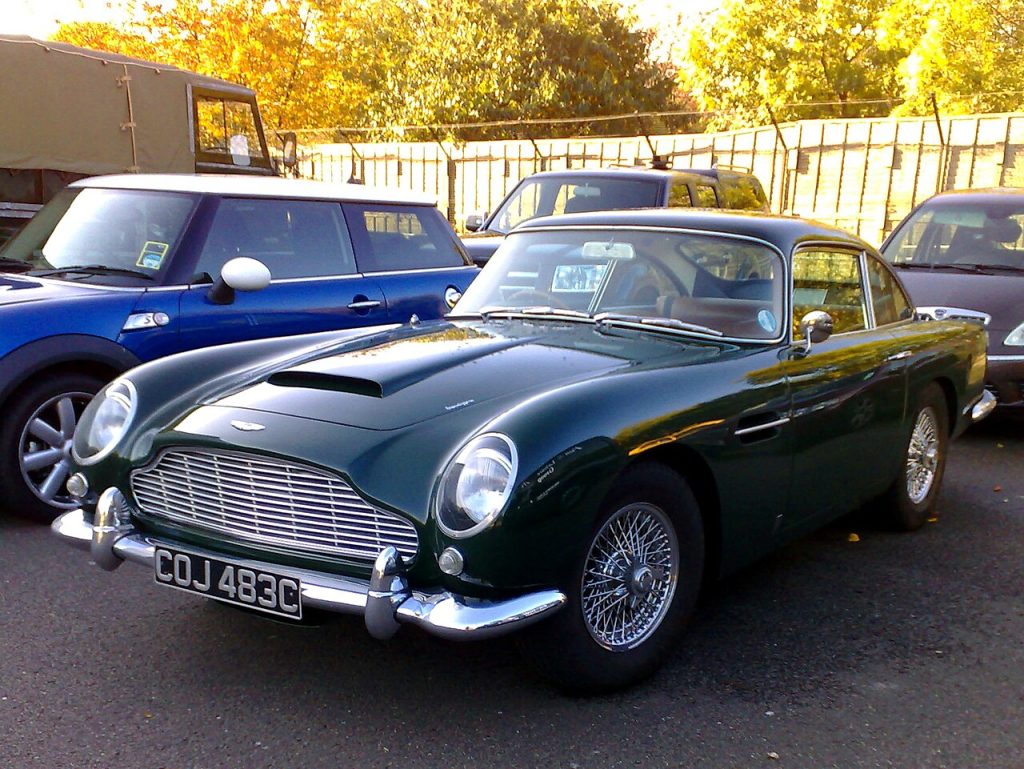
The supplied image is described by its source as a DB5 Vantage, photographed in 2008. That identification supports a specification reference, but original factory-option build versus later conversion has not been independently established. The caption states this limit and retains linked photographer, source, licence and resizing disclosure. An authenticated original-subset licensed image remains a publication hold. Keep the photo attribution intact and seek chassis-supported imagery before final publication. A useful draft can explain the Vantage option accurately without allowing a photograph’s confident title to become an unsupported factory-build certificate.
Frequently asked questions
How many original DB5 Vantage saloons are verified?
The exact total remains unresolved: factory history says 68, RM’s catalogue says 65.
Are Vantage saloons additional to 887?
No. They are a subset within the original DB5 saloon population.
Can a later conversion be described as factory-original?
Only if the original option is independently documented; fitted equipment alone is insufficient.
Does the supplied image prove original Vantage delivery?
No. Its source identification is retained as a reference, with an exact-subset photo hold.
Explore related Aston Martin profiles
Sources
- Aston Martin: 2020 Vantage history reports 68 DB5 saloons and eight convertibles
- RM Sotheby’s: DB5/2016/R factory correspondence and reported 65 Vantages, London 2015
Historical claims follow the linked manufacturer, archive, specialist and catalogue records, with disputed findings retained. Inspection and collecting guidance is editorial analysis. Catalogue condition and custody statements remain dated to their sources.
Photography and credit
Source-identified DB5 Vantage photographed in 2008. Original factory Vantage build versus later conversion is not independently established. This is a specification reference; an authenticated original-subset licensed photograph remains a publication hold. Photo: Ed Callow / Wikimedia Commons · CC BY 2.0. Wikimedia thumbnail resized from original; no cropping or colour changes.
Why this machine matters
The original DB5 Vantage saloon used Aston Martin’s optional higher-output engine specification within the regular saloon programme. Factory and auction accounts publish different original counts, 68 and 65. This profile keeps the disagreement visible and separates factory-original cars from standard DB5s upgraded to similar specification later.
Built in limited numbers
Aston Martin’s 2020 account reports 68 original Vantage saloons within 887 DB5 saloons. RM Sotheby’s London 2015 catalogue gives 65 and discusses factory correspondence for the car offered. The inventory uses 65; this guide preserves both figures and leaves the exact completed-production badge unset pending reconciliation. Both counts are below the rarity ceiling. The smaller number is not automatically preferable because it sounds rarer, and the larger one is not silently substituted without explanation. A transparent count note makes the evidence useful and prevents a derivative total from being added to its inclusive parent population.
Gallery
Specifications
Factory specifications may vary by model year, market and configuration.
Identity & production
- Official model
- Aston Martin DB5 Vantage
- Base model
- DB5
Powertrain & performance
- Engine
- Historical DB5 Vantage four-litre six-cylinder option; current installation requires individual records