Aston Martin DB4 GT Bertone Jet
The DB4 GT Bertone Jet is the unique coachbuilt Aston Martin associated with chassis 0201L and a Giorgetto Giugiaro design for Bertone. Its chassis was dispatched in late 1960 and the completed design appeared at Geneva in 1961. This individual object belongs to a specific coachbuilding history, not a separate one-car retail edition.
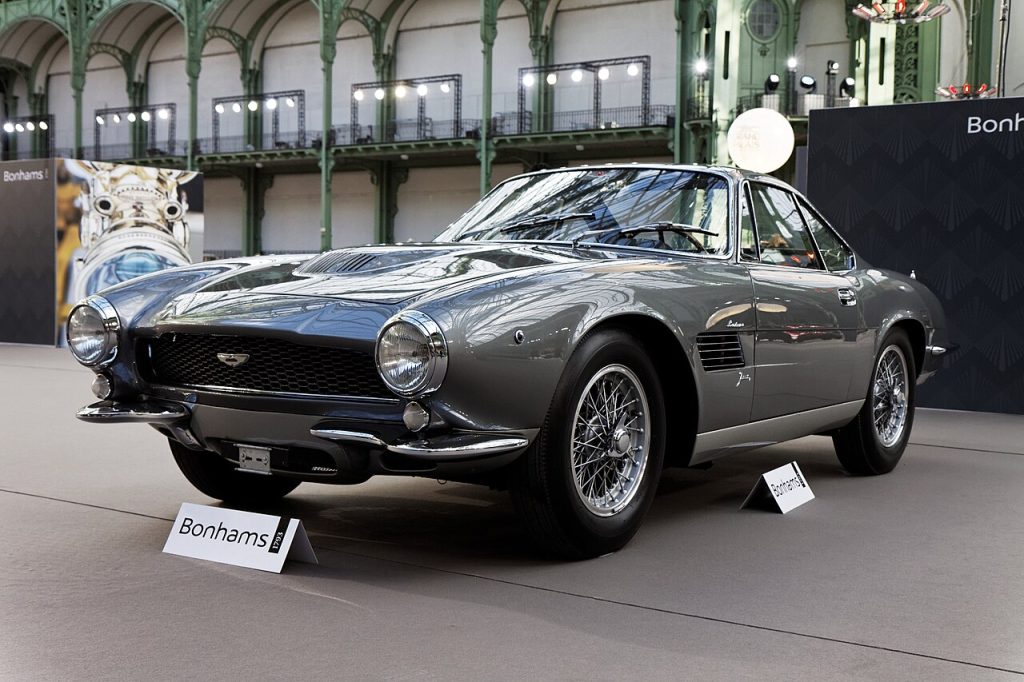
The DB4 GT Bertone Jet is the unique coachbuilt Aston Martin associated with chassis 0201L and a Giorgetto Giugiaro design for Bertone. Its chassis was dispatched in late 1960 and the completed design appeared at Geneva in 1961. This individual object belongs to a specific coachbuilding history, not a separate one-car retail edition.
Aston Martin DB4 GT Bertone Jet at a glance
| Manufacturer | Aston Martin |
|---|---|
| Model / family | DB4 GT |
| Profile scope | Individual coachbuilt-object archive |
| Historical reference year | 1961 |
| Inventory reference | AST-042 |
| Object / count scope | One identified Bertone coachbuilt object; parent GT chassis-count treatment requires register reconciliation |
| Historical chassis identifier | DB4GT/0201/L |
| Historical engine reference | GT-family six-cylinder; Bonhams historical engine reference 370/0201/GT |
The chronology: 1960 chassis, 1961 presentation
Bonhams identifies the Jet as a 1960 DB4GT with chassis 0201L. Tim Cottingham’s account describes dispatch to Bertone before Christmas 1960 and presentation at Geneva in 1961. These dates refer to different stages, rather than requiring one to erase the other. The inventory’s 1962 reference is corrected to a 1961 presentation reference, with the chassis date retained in the narrative. A one-off deserves this distinction because its underlying chassis and finished coachwork can have separate milestones. An accurate description should explain the sequence rather than selecting the year that looks most convenient.
Rarity: one identified coachbuilt object
Bonhams’ announcement identifies the Jet as the sole example of its type. This guide therefore records one documented object under the supported chassis identity, without populating a fictitious one-car numbered-edition limit. The car is related to the DB4 GT family, whose counts use their own scope. Do not infer a revised parent total by adding one for this profile without reconciling the original chassis register. A unique body and a production model are different levels of description. The object’s collecting significance is better expressed through design authorship, identity and material history than through an invented allocation scheme.
Giugiaro’s interpretation for Bertone
The specialist account credits the Jet principally to Giorgetto Giugiaro at Bertone. Its notchback design provides a different visual interpretation from the standard DB4 GT and Zagato derivatives. Read the coachwork as a specific design project rather than an option offered across the whole GT series. An individual body’s details should be compared with dated photographs and restoration findings. If a panel or trim component has been recreated, the design attribution can remain valid while the material history becomes more complex. That distinction is useful when describing any important coachbuilt car.
Steel coachwork changes the material discussion
Cottingham identifies a steel body, contrasting with the usual aluminium-bodied Aston Martin context. This is a historical construction description, not a current materials survey of every panel. An individual conservation report should establish what remains and what was replaced. Coachbuilt bodywork can involve bespoke fittings and details that deserve documentation before intervention. Avoid borrowing a standard GT weight or panel specification simply because the chassis is related. The important comparison is how this particular design was constructed and preserved. A generic family specification table would conceal more than it explains for such an individual object.
Chassis and engine references remain distinct
The Bonhams catalogue identifies chassis 0201L and engine 370/0201/GT. Those are documented catalogue references, not a fresh physical examination of the car today. Keep them alongside original and later photographs of identification markings, factory records and restoration paperwork. A correct-looking number needs context and continuity. If an engine assembly or component has changed, record the actual installation and the disposition of removed material. This gives a future custodian a clear account of what the catalogue identified and what was subsequently verified, rather than treating a historical listing as a permanent mechanical certificate.
Restoration and sale history should stay dated
The 2013 Bonhams offering describes the Jet as restored by Works Service. That is a source-dated description of the car offered then, not a present-condition guarantee or a current ownership claim. A collecting file should obtain the underlying work records and later service history before drawing conclusions about today’s state. Separate the car’s appearances, restoration interventions and transfers of custody. A famous auction can be a valuable documentary milestone, but a catalogue is only one part of the chain. Preserve its date and scope when using it in a public profile.
The Jet name across different Aston Martins
Bertone’s later Jet 2 and Jet 2+2 are separate projects associated with later Aston Martin platforms. They should not be counted as additional examples of this original DB4 GT coachbuilt object. A shared name expresses a design relationship, not interchangeable chassis or build dates. When researching photographs, check which Jet is actually shown before copying specifications. The original’s late-1960 chassis dispatch and 1961 presentation offer a useful anchor. A well-organized archive can connect the projects through coachbuilder and naming history while retaining a separate vehicle record for each physical subject.
A conservation assessment for bespoke details
For practical stewardship, inspect body support, structural condition, glazing, trim, closures and any bespoke fittings with a specialist who understands the car’s construction. Record details photographically before repair or replacement. A unique component may require a different sourcing or conservation decision from a part shared with standard GTs. The intended role also matters: a museum-style presentation and regular road use do not make identical demands. This guidance does not diagnose the photographed object. It explains why the actual car’s material evidence and use plan deserve attention beyond an attractive overall finish.
Comparing the Jet with Zagato and the standard GT
The standard original GT, the nineteen original Zagatos and the Jet each illustrate a different relationship between platform and body. Compare design, original purpose and construction programme rather than treating rarity as a simple hierarchy of numbers. A unique body is not automatically the best-preserved or best-documented example of a family. An individual appraisal needs condition and provenance evidence. The related profiles allow readers to explore the design alternatives while keeping a single coachbuilt identity distinct from a series and from any later sanctioned or continuation project.
A credited photograph that preserves the date distinction
The bundled Paris photograph was taken in February 2013 and identifies the DB4GT Bertone Jet. Its source uses the 1960 chassis date; the profile separately explains the 1961 show presentation. Photographer, source, licence and resizing disclosure remain visible in the caption. The image does not establish current custody, engine installation or untouched panels. Preserve those limits when reusing it. An enduring object record should retain its dated appearances, construction references and conservation documents together, so future research can refine the history of this particular car rather than creating another nominal edition from the same physical subject.
Frequently asked questions
Why are both 1960 and 1961 mentioned?
1960 refers to the chassis/catalogue date and dispatch; 1961 to the finished design’s Geneva presentation.
How many Jets of this type are identified?
One coachbuilt object, identified by Bonhams as unique.
What chassis reference is used?
Bonhams records 0201L; the specialist account uses DB4GT/0201/L.
Are Jet 2 and Jet 2+2 the same car?
No. They are separate later Bertone projects on different Aston Martin platforms.
Explore related Aston Martin profiles
Sources
- Bonhams: unique 1960 DB4GT Jet, chassis 0201L, 2013 catalogue
- Bonhams: Bertone Jet announced as the only example of its type
- Tim Cottingham: Jet 1960 dispatch and 1961 Geneva presentation
Historical claims follow the linked manufacturer, archive, specialist and catalogue records, with disputed findings retained. Inspection and collecting guidance is editorial analysis. Catalogue condition and custody statements remain dated to their sources.
Photography and credit
DB4 GT Bertone Jet photographed in Paris in February 2013. The source uses the 1960 chassis date; the design appeared at Geneva in 1961. Photo: Thesupermat / Wikimedia Commons · CC BY-SA 3.0. Wikimedia thumbnail resized from original; no cropping or colour changes.
Why this machine matters
The DB4 GT Bertone Jet is the unique coachbuilt Aston Martin associated with chassis 0201L and a Giorgetto Giugiaro design for Bertone. Its chassis was dispatched in late 1960 and the completed design appeared at Geneva in 1961. This individual object belongs to a specific coachbuilding history, not a separate one-car retail edition.
Built in limited numbers
Bonhams’ announcement identifies the Jet as the sole example of its type. This guide therefore records one documented object under the supported chassis identity, without populating a fictitious one-car numbered-edition limit. The car is related to the DB4 GT family, whose counts use their own scope. Do not infer a revised parent total by adding one for this profile without reconciling the original chassis register. A unique body and a production model are different levels of description. The object’s collecting significance is better expressed through design authorship, identity and material history than through an invented allocation scheme.
Gallery
Specifications
Factory specifications may vary by model year, market and configuration.
Identity & production
- Official model
- Aston Martin DB4 GT Bertone Jet
- Base model
- DB4 GT
Powertrain & performance
- Engine
- GT-family six-cylinder; Bonhams historical engine reference 370/0201/GT