Aston Martin TT1 Green Pea
TT1, later known as Green Pea, belongs to the two-car 1922 Aston Martin Grand Prix programme. The Heritage Trust links the surviving identity to chassis 1913 and registration XL 3125. Its long working life and later demonstrations make dated configuration and provenance essential to an accurate collector account.
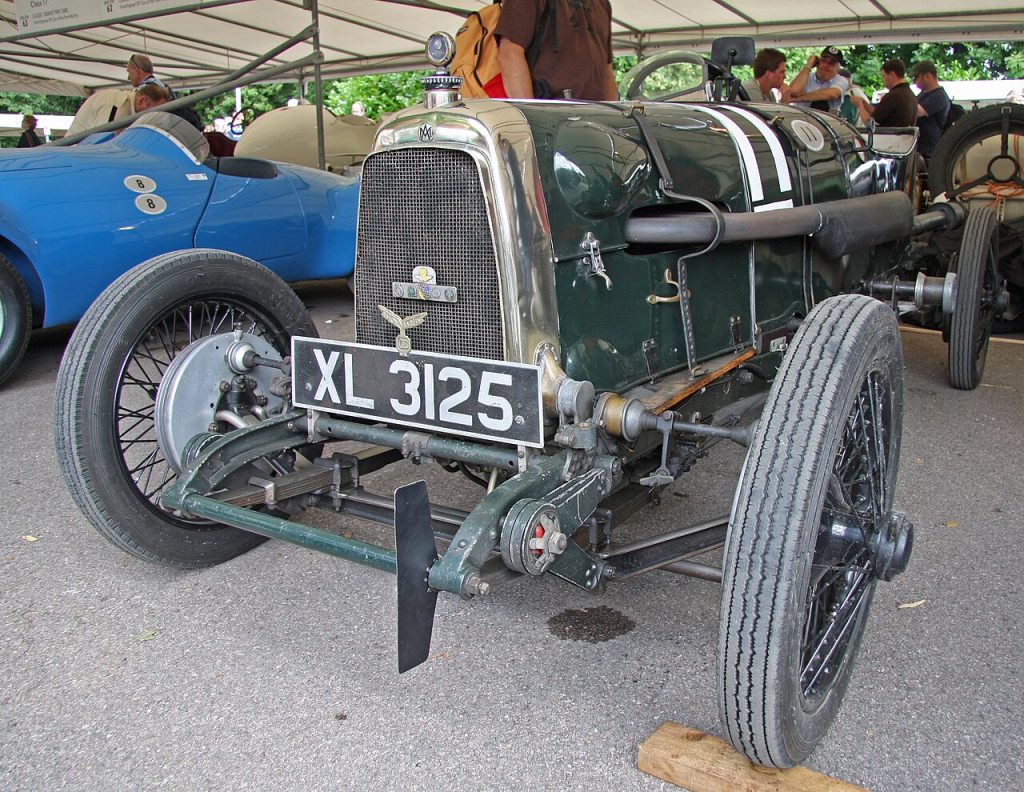
TT1, later known as Green Pea, belongs to the two-car 1922 Aston Martin Grand Prix programme. The Heritage Trust links the surviving identity to chassis 1913 and registration XL 3125. Its long working life and later demonstrations make dated configuration and provenance essential to an accurate collector account.
Aston Martin TT1 Green Pea at a glance
| Manufacturer | Aston Martin |
|---|---|
| Model / family | Works racers |
| Profile scope | Individual works-chassis archive |
| Historical reference year | 1922 |
| Inventory reference | AST-003 |
| Object / count scope | One identified competition chassis within original two-car programme |
| Historical chassis identifier | TT1 / 1913 |
| Historical registration reference | XL 3125 |
| Historical engine reference | 1922 four-cylinder twin-cam, sixteen-valve programme reference |
| Displacement reference | 1486 cc; original programme reference, not current installed measurement |
TT1 and the first Grand Prix programme
Aston Martin’s 1922 programme paired TT1 with TT2. The cars were intended for the Tourist Trophy but made their Grand Prix debut at Strasbourg in July after preparation delays. The team’s heritage account identifies Zborowski with TT1 and Gallop with TT2. Keep that attribution linked to its source because some image descriptions interchange early names and numbers. This guide treats TT1 as a specific chassis history within a two-car programme. It does not turn the whole early racing activity into a uniform customer model or transfer every team result to this individual vehicle.
Green Pea is a documented object identity
The Heritage Trust’s collection record identifies Green Pea as TT1, chassis 1913, with registration XL 3125. That provides a stronger anchor than a broad early-Aston caption. The number 1913 is a chassis identifier in this record and must not replace 1922 as the programme year. Keep name, chassis and registration in separate fields. When historical photographs use different descriptions, compare their provenance and visible features with the object record rather than selecting whichever label creates the simplest story. Good identification makes the surviving car’s significance easier to understand and check.
The original engine programme and later hardware
The manufacturer’s Grand Prix history describes a 1,486 cc four-cylinder, sixteen-valve twin-cam programme with approximately 55 bhp. That is a dated early specification, not a guarantee that a surviving or photographed TT1 carries every original assembly. Establish later engine changes from its individual file. In particular, the bundled photograph’s source gives a conflicting 3.7-litre caption; this guide does not adopt it as verified displacement. Record original programme data alongside confirmed present hardware, leaving an uncertain installed value open rather than silently reconciling incompatible descriptions.
Rarity: TT1 within a two-car programme
One identified TT1 is the subject of this profile, while two cars were commissioned for the early programme. Neither number is a retail limited-edition allocation. The archive therefore uses an individual competition-chassis scope and leaves conventional edition fields empty. A complete component census is a separate question: engines, spares and later replacement structures need their own documentation. This distinction preserves rarity without inflating precision. It also prevents a TT1 entry and a Green Pea entry from counting the same physical vehicle twice simply because the object has acquired a memorable nickname.
The riding mechanic in the design
The manufacturer describes a two-seat arrangement that accommodated a riding mechanic, with fuel-tank pressurization among the practical duties. This helps explain why early Grand Prix bodywork differs from later single-seat Formula One cars. The second position was part of the original competition context rather than a modern passenger amenity. For interpretation, compare dated rules and photographs with the individual configuration. Do not assume that a modern demonstration reproduces every original control or task. The useful history explains the role of the design while leaving operational claims to a properly documented present inspection.
The 2022 centenary demonstration
Aston Martin documented Sebastian Vettel driving TT1 at Circuit Paul Ricard in July 2022 to mark the Grand Prix centenary. That is a verified later appearance, distinct from an original-period race result. It demonstrates the car’s continuing heritage role without establishing untouched material or an uninterrupted engine configuration. Keep the demonstration date and source alongside its earlier programme history. A collector file should identify the preparation and equipment used for any such appearance separately. This gives the public event its proper significance while avoiding making one celebratory lap answer every question about the surviving object.
A long history needs configuration dates
An early racer can remain recognizable while bodywork, power unit, controls and other parts change over decades. Describe each supported stage with its date and evidence. A later restoration may choose one historical period, while another appearance records a different working state. Neither should be treated as the universal specification for the car’s entire life. Keep period photographs and workshop records together. For TT1, the familiar green finish should not replace a dated technical history.
Authenticating race and ownership claims
Correlate chassis identification, archive records, registration, transfer documents and dated event evidence. A famous driver’s connection to the programme does not authenticate every appearance claimed for the physical car. Record whether a statement concerns a race entry, a demonstration, practice or later historic use. Ownership should be supported by its own chain of custody. This makes an individual collecting description far more useful than a list of celebrated names. The archive can acknowledge the car’s significance while still explaining which claims attach directly to TT1 and which describe the wider Aston Martin racing story.
The licensed Green Pea photograph
The bundled modern photograph identifies Green Pea and shows its later presentation, rather than the July 1922 starting specification. Photographer Brian Snelson, the Commons source, CC BY 2.0 licence and resizing note are linked in the visible credit. Its inconsistent displacement description is preserved in the source evidence and excluded from verified technical metadata. Visual identity and an image’s engine caption are different findings. A useful profile can employ genuine subject photography while clearly stating which source assertions were checked and which remain unsuitable for a factual specification field.
TT1 compared with TT2 and Razor Blade
TT2 is the companion Grand Prix chassis; Razor Blade pursued a specialized narrow-body racing and record brief. Their relationship is useful context, but their hardware and later histories should remain separately documented. A shared early-engine lineage does not make the cars interchangeable. Compare purpose, date, configuration and evidence before comparing performance. The related guides give readers a path through this small early programme without creating duplicate chassis identities or a fictional common edition. Each subject has its own physical and documentary questions, even when the marque’s early competition ambitions connect them.
Preserving a working heritage vehicle
Qualified specialists should assess the actual structure, wheels, steering, brakes, lubrication, fuel and ignition systems for any proposed use. A past public run is evidence of that appearance, not a current condition certificate. Static conservation and active demonstration can require different decisions about replacement material and retained equipment. Keep those decisions documented so later custodians can understand them. TT1’s value as a historical object depends on both continuity and an honest account of intervention. A well-maintained operating file supports that history more effectively than an unsupported assertion that the car remains exactly as built.
A useful record for future researchers
Maintain a single object record under the supported TT1/Green Pea identity and attach dated configuration, appearance, maintenance and custody material. Keep disputed labels visible in research notes rather than rewriting them as settled fact. New factory or archive evidence should refine the specific finding it addresses. This permits the profile to remain useful as the car continues to appear or new documents emerge. The aim is a supported account of a significant early Aston Martin, with enough distinction between programme history and object history that another researcher can follow the evidence.
Frequently asked questions
Is Green Pea TT1?
The Aston Martin Heritage Trust links Green Pea to TT1, chassis 1913 and registration XL 3125.
Is 1913 the build year used here?
No. It is a chassis identifier; the Grand Prix programme is dated 1922.
Who drove the 2022 centenary demonstration?
Aston Martin documents Sebastian Vettel driving TT1 at Circuit Paul Ricard.
Is the photo source’s 3.7-litre description accepted?
No. Original programme specification and current installed hardware remain separately scoped; that caption is not verified.
Explore related Aston Martin profiles
Sources
- Aston Martin: TT1 centenary demonstration, July 2022
- AMHT collection record: Green Pea, TT1/chassis 1913, XL 3125
- Aston Martin: Grand Prix history, December 2020
- Aston Martin F1 Team: TT1 and TT2 Grand Prix heritage
Historical claims follow the linked manufacturer, archive, specialist and catalogue records, with disputed findings retained. Inspection and collecting guidance is editorial analysis. Catalogue condition and custody statements remain dated to their sources.
Photography and credit
Green Pea/TT1 in a later presentation at Goodwood in 2008. Its XL 3125 identity is supported by the AMHT object record. The source’s conflicting 3.7-litre engine caption is not adopted as a verified installed specification. Photo: Brian Snelson from Hockley, Essex, England / Wikimedia Commons · CC BY 2.0. Wikimedia thumbnail resized from original; no cropping or colour changes.
Why this machine matters
TT1, later known as Green Pea, belongs to the two-car 1922 Aston Martin Grand Prix programme. The Heritage Trust links the surviving identity to chassis 1913 and registration XL 3125. Its long working life and later demonstrations make dated configuration and provenance essential to an accurate collector account.
Built in limited numbers
One identified TT1 is the subject of this profile, while two cars were commissioned for the early programme. Neither number is a retail limited-edition allocation. The archive therefore uses an individual competition-chassis scope and leaves conventional edition fields empty. A complete component census is a separate question: engines, spares and later replacement structures need their own documentation. This distinction preserves rarity without inflating precision. It also prevents a TT1 entry and a Green Pea entry from counting the same physical vehicle twice simply because the object has acquired a memorable nickname.
Gallery
Specifications
Factory specifications may vary by model year, market and configuration.
Identity & production
- Official model
- Aston Martin TT1 Green Pea
- Base model
- Works racers
Powertrain & performance
- Engine
- 1922 four-cylinder twin-cam, sixteen-valve programme reference