Aston Martin TT2
TT2 was the companion to TT1 in Aston Martin’s first Grand Prix programme in 1922. Manufacturer and team histories associate it with Clive Gallop at Strasbourg. The individual chassis deserves its own record, with period imagery kept distinct from later reconstructions, museum presentation and unsupported technical or race-history claims.
TT2 was the companion to TT1 in Aston Martin’s first Grand Prix programme in 1922. Manufacturer and team histories associate it with Clive Gallop at Strasbourg. The individual chassis deserves its own record, with period imagery kept distinct from later reconstructions, museum presentation and unsupported technical or race-history claims.
Aston Martin TT2 at a glance
| Manufacturer | Aston Martin |
|---|---|
| Model / family | Works racers |
| Profile scope | Individual works-chassis archive |
| Historical reference year | 1922 |
| Inventory reference | AST-004 |
| Object / count scope | One named competition chassis within original two-car programme |
| Historical chassis identifier | TT2 |
The companion chassis in the 1922 plan
The two early Grand Prix cars were part of a commissioned project rather than an ordinary production range. TT2’s identity is therefore relational as well as individual: it belongs alongside TT1, but it should not inherit TT1’s nickname, surviving registration file or later demonstrations. A rare-vehicle catalogue needs both guides so readers can understand the programme without treating the cars as interchangeable. The manufacturer’s dated history supplies the basic pairing. A more detailed collecting record should connect the actual TT2 object to original identification, later custody and each documented configuration.
A Tourist Trophy name and a Strasbourg debut
The TT designations reflect the original Tourist Trophy intention. Delayed preparation led to an outing at the French Grand Prix on 15 July 1922 instead. The event change explains why a TT-labelled car can be central to a Grand Prix history. Do not turn the original plan into a completed Tourist Trophy start. Programme intention and an actual event are different findings. Preserving that distinction makes the chronology useful, particularly where later captions compress the development story into a single date or describe every early appearance as the same racing debut.
Gallop’s documented TT2 assignment
Aston Martin’s 2020 history and the team heritage account identify Clive Gallop with TT2, with H.J. Bentley as riding mechanic in the manufacturer account. This attribution should stay linked to its source. Some public image labels swap TT names or conflate the cars, so a familiar driver name alone should not settle every photograph. For a precise event file, preserve the original entry and image provenance. The guide can explain the supported assignment while avoiding constructing an entire chassis chronology from reused captions that were written long after the original programme.
Rarity: an individual racer within two commissioned cars
The archive concerns a specific TT2 chassis in a two-car programme. A one-object profile scope is not an independently reconciled total of all associated engines, bodywork or spare material. Conventional numbered-edition fields remain empty. This matters when comparing an individual racer with a customer sports-car series: the numbers describe different populations. The history should be concrete about which object is being discussed and what evidence identifies it. A small early programme creates historical interest without making an unsupported census claim about every component or surviving reconstruction associated with its name.
A programme specification with a date
The early cars used a small four-cylinder, sixteen-valve racing-engine programme. This model-level context should not be treated as a permanent installed specification for every later configuration. Establish the engine, transmission and fitted equipment of the particular object through inspection and dated records. Missing modern performance fields remain unset. A useful technical description can explain the programme’s purpose without assuming that one later photograph proves original hardware. This also prevents a capacity or output repeated in a general early-Aston history from silently becoming an authenticated measurement of TT2 as it exists at another time.
The riding mechanic and period operating context
The team’s two-seat arrangement reflected the duties of a riding mechanic in that era. It gives the car a different design context from later single-seat machinery. For a public display, explain that role with dated evidence rather than describing the second position as a modern road passenger seat. Controls and fuel-system arrangements should be identified from actual records. A present demonstration may adopt different procedures or equipment. The historical explanation remains valuable because it shows why the original car was arranged as it was, without implying that those conditions can simply be reproduced today.
The first outing was not an outright victory
The team’s heritage account records both cars retiring with engine problems at the debut. That is the supported programme outcome and should not be overwritten by later podiums mentioned in broader histories. A subsequent team result needs its own chassis attribution before it becomes a TT2 achievement. Keep class, overall and demonstration results separately labelled. This makes the racing story more credible: an ambitious early attempt can matter without a victory claim. The archive should explain what the entry represented and what happened, then leave unresolved later assignments visible for further research.
Period photographs and identity checks
Use original photograph provenance, visible numbers, driver or mechanic identification and dated event records together. A number visible in one image does not create a permanent chassis identifier for every later appearance. Where a modern source caption conflicts with the manufacturer’s assignment, retain the discrepancy in the research file. A well-supported identification should explain how the sources connect rather than relying on the confidence of a filename. This is particularly useful for paired early racing cars whose bodywork and presentation can appear similar even when their individual histories must remain separate.
The supplied Strasbourg photograph
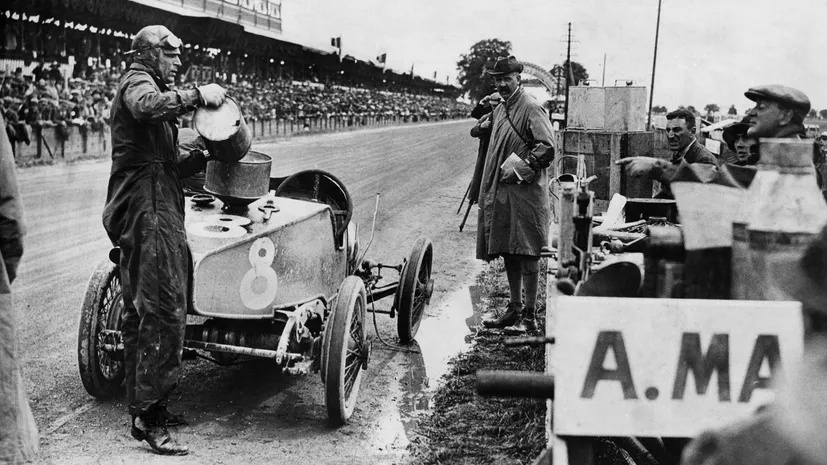
The bundled archival image is source-labelled TT2 at the French Grand Prix in July 1922, with the visible number 8 supporting the Gallop assignment in the manufacturer chronology. Commons assesses the old unknown-photographer image as public domain; the linked source and rights assessment remain visible. The caption does not invent a later engine state or custody history. This is an original-period subject image rather than a modern recreation. Its digital file is converted to JPEG for the importer, with that change disclosed and no recolouring or reconstruction of missing visual detail.
A survival claim needs its own object file
The public programme history does not by itself establish the present custody, material completeness or authenticity of every car now called TT2. A collecting file should correlate identification, transfer documents, restoration records and physical examination. Be precise if the subject is original material, a rebuilt chassis or a replica. A museum association should have its own dated evidence rather than be inferred from a general photograph of a 1922 Aston Martin. This gives readers a useful standard for evaluating an individual claim without implying that a famous early chassis name guarantees every later object description.
Comparison with TT1’s later public life
TT1 has a Heritage Trust object record and a documented 2022 centenary demonstration. Those findings belong to TT1 and should not be copied into TT2 simply because the cars started in the same programme. Related guides can show what is shared and where the documentary paths diverge. Compare the quality of individual evidence, configuration and conservation needs. This is more informative than rank the cars through a generalized founding-era story. The archive should support a precise comparison while preserve the individuality of each physical machine and its later historical account.
Keeping a paired-car archive clear
Store TT2 once, with its original programme links and a separate individual timeline. Record new identifications, custody evidence and technical findings with dates. Do not merge a later nickname or a conflicting picture label automatically into the record. A future researcher should be able to see which statements rest on manufacturer history and which need further object-level evidence. That approach allows TT2’s role in Aston Martin’s Grand Prix beginning to remain prominent while the profile stays useful for careful historical research and any later examination of the surviving material.
Frequently asked questions
Why is a Grand Prix car called TT2?
The programme initially targeted the Tourist Trophy before making its Grand Prix debut at Strasbourg.
Who is associated with TT2 in manufacturer history?
Clive Gallop; the manufacturer account also identifies riding mechanic H.J. Bentley.
Did the debut produce an outright victory?
No. The team heritage account records both cars retiring with engine problems.
Does the archival photo prove present custody?
No. It supports a period TT2 identification and event context, not a modern ownership or condition claim.
Explore related Aston Martin profiles
Sources
- Aston Martin: Grand Prix history, December 2020
- Aston Martin F1 Team: TT1 and TT2 Grand Prix heritage
Historical claims follow the linked manufacturer, archive, specialist and catalogue records, with disputed findings retained. Inspection and collecting guidance is editorial analysis. Catalogue condition and custody statements remain dated to their sources.
Photography and credit
Source-identified TT2 at the French Grand Prix in July 1922; visible number 8 is consistent with the Gallop assignment in manufacturer history. No later configuration or custody is inferred. Photo: Unknown photographer / Wikimedia Commons · Public domain (Commons source assessment). Original WebP converted to JPEG; no cropping or colour changes.
Why this machine matters
TT2 was the companion to TT1 in Aston Martin’s first Grand Prix programme in 1922. Manufacturer and team histories associate it with Clive Gallop at Strasbourg. The individual chassis deserves its own record, with period imagery kept distinct from later reconstructions, museum presentation and unsupported technical or race-history claims.
Built in limited numbers
The archive concerns a specific TT2 chassis in a two-car programme. A one-object profile scope is not an independently reconciled total of all associated engines, bodywork or spare material. Conventional numbered-edition fields remain empty. This matters when comparing an individual racer with a customer sports-car series: the numbers describe different populations. The history should be concrete about which object is being discussed and what evidence identifies it. A small early programme creates historical interest without making an unsupported census claim about every component or surviving reconstruction associated with its name.
Gallery
Specifications
Factory specifications may vary by model year, market and configuration.
Identity & production
- Official model
- Aston Martin TT2
- Base model
- Works racers