Aston Martin Razor Blade
Razor Blade is the specialized narrow-bodied Aston Martin built in 1923 for racing and record attempts. Its documented identity is chassis 1915, a number that must not be mistaken for the build year. The car connects early racing-engine development with an unusually focused experiment in frontal area and lightweight body design.
Razor Blade is the specialized narrow-bodied Aston Martin built in 1923 for racing and record attempts. Its documented identity is chassis 1915, a number that must not be mistaken for the build year. The car connects early racing-engine development with an unusually focused experiment in frontal area and lightweight body design.
Aston Martin Razor Blade at a glance
| Manufacturer | Aston Martin |
|---|---|
| Model / family | Works racers |
| Profile scope | Individual works-chassis archive |
| Historical reference year | 1923 |
| Inventory reference | AST-005 |
| Object / count scope | Specialist-described unique racing/record object |
| Historical chassis identifier | 1915 |
| Historical registration reference | XO9958 |
| Historical engine reference | Early Grand Prix-derived four-cylinder twin-cam, sixteen-valve reference |
A design organized around a narrow body
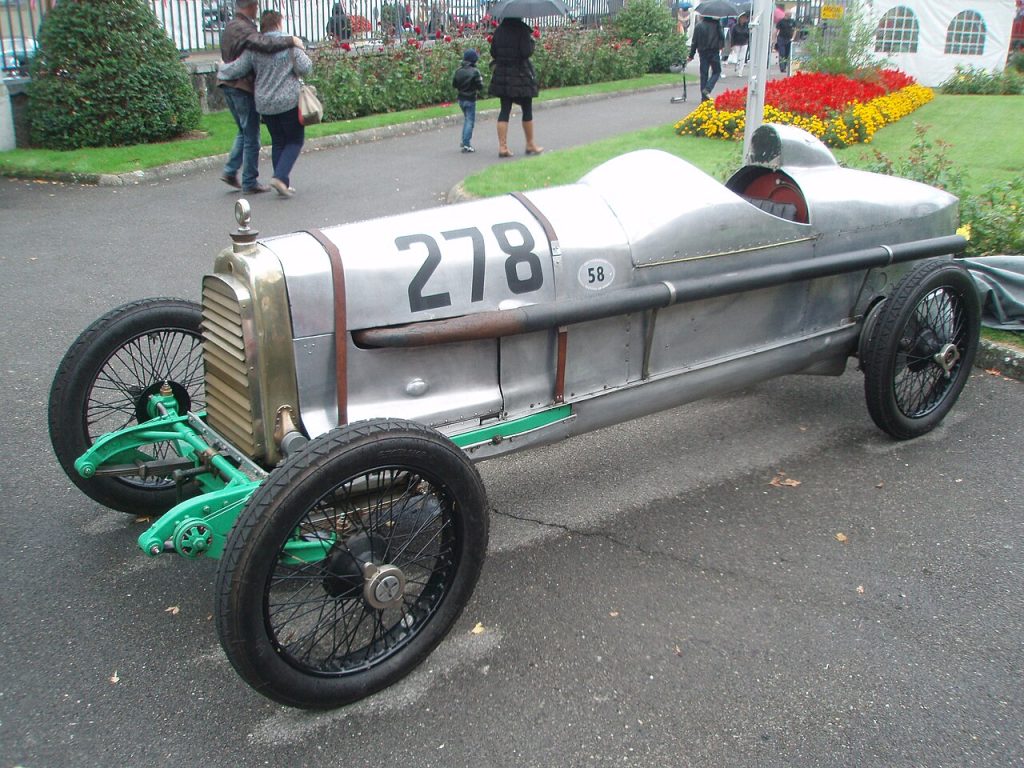
Razor Blade’s shape makes its purpose immediately legible: the car was intended to pursue speed through a small frontal profile and specialized construction. The 2024 Ecurie Bertelli announcement identifies it as a unique 1923 racing object and attributes its bodywork to de Havilland. The guide retains that source and date instead of turning an auction-style superlative into an independently measured world record. The useful history concerns the particular car, its engineering objective and its documented activities. The dramatic silhouette should draw attention to those questions rather than replacing the evidence behind them.
Chassis 1915 is not a 1915 model year
The specialist account identifies chassis 1915 and registration XO9958. Those numbers are part of the object’s identity, while 1923 is the build-year reference for this guide. A database that treats every four-digit identifier as a year can create a false chronology and confuse the car with Coal Scuttle. Keep identification fields labelled. Later registration or event photographs should corroborate the object file, not supply a new build year by inference. Clear data matters especially for a famous nickname because informal descriptions often omit the underlying chassis identification.
The engine’s connection to the Grand Prix programme
The specialist announcement describes a four-cylinder twin-cam, sixteen-valve engine associated with the earlier Grand Prix development, with a stated 55 horsepower reference. Treat that as the dated historical technical account. It does not establish the condition or exact installed specification at every subsequent appearance. A component file should identify replacements, repairs and settings separately. The important connection is the adaptation of early competition engineering to another purpose. Do not transfer TT1’s later source captions or unverified engine descriptions into Razor Blade because the cars share part of their programme background.
Rarity: a unique specialist object, not a retail edition
The specialist presentation describes Razor Blade as one unique racing car. This guide records that object scope rather than a numbered customer allocation. Spare parts and replacement material require their own history, and one surviving identity should not become a claim that every fitted component is original. The car’s significance is attached to its specialized design and documented continuity. Keeping object scope separate from condition gives the archive a useful rarity explanation without suggesting that a one-off label answers questions about restoration, mechanical completeness or the provenance of individual assemblies.
The hour attempt and the later records
The specialist’s historical account separates an abandoned one-hour attempt from later standing-start mile and kilometre records. That distinction matters: maintaining promising speed does not mean an official hour record was completed. The account attributes the abandoned effort to recurring tyre trouble. Preserve those scopes and avoid collapse every activity into a single triumph. Any expanded event history should add contemporary timing and governing records. A technically ambitious car can be historically important because of its experiments and limitations as well as its successes, and a clear chronology gives readers both.
Interpreting the 18.5-inch width claim
The announcement gives a maximum body width of 18.5 inches and describes an exceptionally slender design. This is a body measurement in a particular source, not overall track width or the complete space occupied by the wheels. Label the distinction if using dimensions in a comparison. Claims about the narrowest car ever made remain attributed rather than accepted as a fully audited global comparison. Readers can still appreciate the design objective without an exaggerated dimensional badge. Good specification handling prevents an arresting number from becoming a misleading statement about the whole vehicle.
Bodywork as part of the technical history
For conservation, document panel shape, fixing methods, cockpit openings and the present body’s relationship to earlier photographs. A specialized narrow body can carry important evidence of the original design approach and later intervention. Retain removed material and workshop explanations where practical. If a panel has been replaced, describe the work rather than let a smooth finish imply untouched history. This allows the car’s visual importance to be understood at a material level. The collecting file becomes more useful when it explains the body that survives and the documentary basis for its current form.
Museum history should be dated
Earlier display at Brooklands belongs to the car’s historical account. The December 2024 specialist announcement offered it for sale, so this guide does not repeat an old permanent-display claim as a verified current location. Display, ownership and sale availability are different facts with different dates. A reader planning an inspection would need a current custody confirmation. Keep museum photographs as evidence of their own appearances. This prevents the profile from turning a significant past association into a misleading promise that the vehicle can still be found in the same place.
The supplied Morges photograph
The licensed photograph shows Razor Blade at Morges in 2013 and provides a useful view of the distinctive narrow body. It is a later presentation of the subject, not documentation of the original record attempt. Photographer Akela NDE, the Commons source, the specific French CC BY-SA 2.0 licence and the resizing note are visibly linked. Retain the exact licence version rather than replacing it with a generic Creative Commons badge. The image grounds the technical discussion while its event date and rights record let readers understand both the visual and reuse context.
Condition and intended use
A suitable specialist should establish structural integrity, steering, wheel and tyre condition, braking, lubrication, fuel and ignition systems before any proposed running. Historical speed claims do not constitute a current operating assessment. A display role and a competitive role can require different preservation decisions. Document preparation, maintenance and replaced equipment in the object file. This keeps the collecting discussion practical without offer a guarantee based on the car’s famous past. For such a specialized machine, support and a clear purpose are central to understanding what can be preserved or demonstrated responsibly.
Razor Blade compared with the TT cars
The TT pair pursued Grand Prix participation with their own competition context, while Razor Blade used a different body and record-oriented brief. Compare programme purpose and dated configuration before comparing output or speed. The shared early marque history should not flatten those design differences. Related links let readers trace the connection without creating a fictional common edition. An individual acquisition or preservation assessment would still need the car’s own documents, surviving material and condition findings. The comparison is strongest when it explains different engineering decisions rather than simply group all three under an early-racing label.
Preserving the evidence of an experiment
Keep period records, later photographs, custody documentation and specialist workshop material together. Record changes with their dates and reasons so that future readers can distinguish engineering development from later conservation. The lasting account should explain why Razor Blade was built, what it demonstrably achieved and what survives of the object. Its narrow shape offers an accessible route into early motorsport engineering. A well-sourced archive lets that visual appeal coexist with a careful technical and material history, rather than require every gap to be filled by an exciting but unsupported claim.
Frequently asked questions
Was Razor Blade built in 1915?
No. Chassis 1915 is an identifier; the car is dated 1923.
Did it complete the intended hour record?
The specialist account describes that attempt as abandoned; later standing-start records are separate.
Is the width claim overall vehicle width?
The reported 18.5 inches refers to the narrow body, not the whole wheel track.
Is Brooklands its verified current location?
This guide retains a dated museum association and later sale announcement, without claiming a present location.
Explore related Aston Martin profiles
Sources
- Ecurie Bertelli announcement reproduced by Racecar, December 2024
- Tim Cottingham: Razor Blade chassis and record history
Historical claims follow the linked manufacturer, archive, specialist and catalogue records, with disputed findings retained. Inspection and collecting guidance is editorial analysis. Catalogue condition and custody statements remain dated to their sources.
Photography and credit
Razor Blade at Morges in 2013; a later subject photograph, not the original record attempt. Photo: Akela NDE / Wikimedia Commons · CC BY-SA 2.0 fr. Wikimedia thumbnail resized from original; no cropping or colour changes.
Why this machine matters
Razor Blade is the specialized narrow-bodied Aston Martin built in 1923 for racing and record attempts. Its documented identity is chassis 1915, a number that must not be mistaken for the build year. The car connects early racing-engine development with an unusually focused experiment in frontal area and lightweight body design.
Built in limited numbers
The specialist presentation describes Razor Blade as one unique racing car. This guide records that object scope rather than a numbered customer allocation. Spare parts and replacement material require their own history, and one surviving identity should not become a claim that every fitted component is original. The car’s significance is attached to its specialized design and documented continuity. Keeping object scope separate from condition gives the archive a useful rarity explanation without suggesting that a one-off label answers questions about restoration, mechanical completeness or the provenance of individual assemblies.
Gallery
Specifications
Factory specifications may vary by model year, market and configuration.
Identity & production
- Official model
- Aston Martin Razor Blade
- Base model
- Works racers
Powertrain & performance
- Engine
- Early Grand Prix-derived four-cylinder twin-cam, sixteen-valve reference