BMW Turbo E25 — Paul Bracq’s Running Concept
Explore the two BMW Turbo E25 concepts: Paul Bracq’s design, turbocharged mid-engine layout, pioneering safety features and credited factory photos.
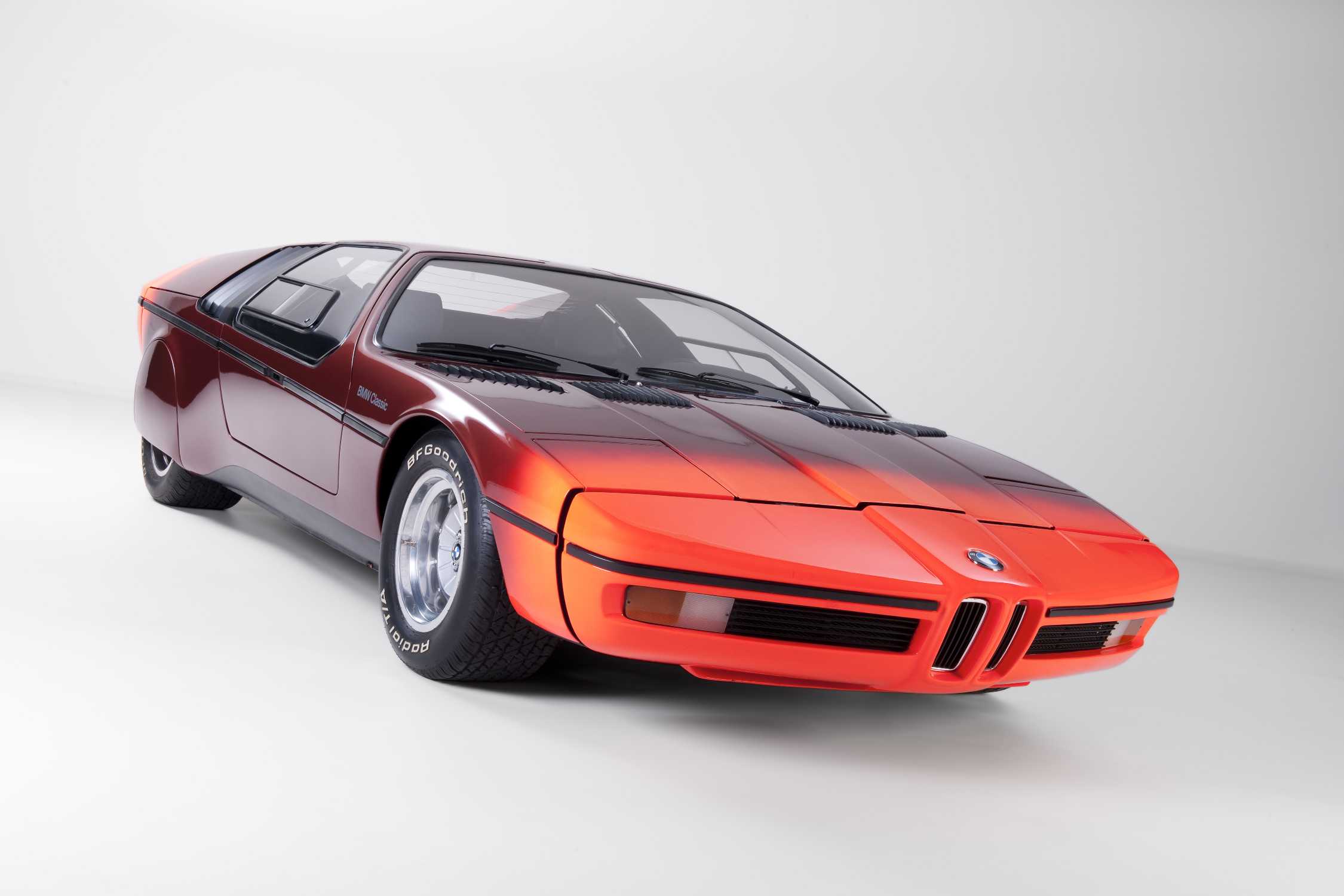
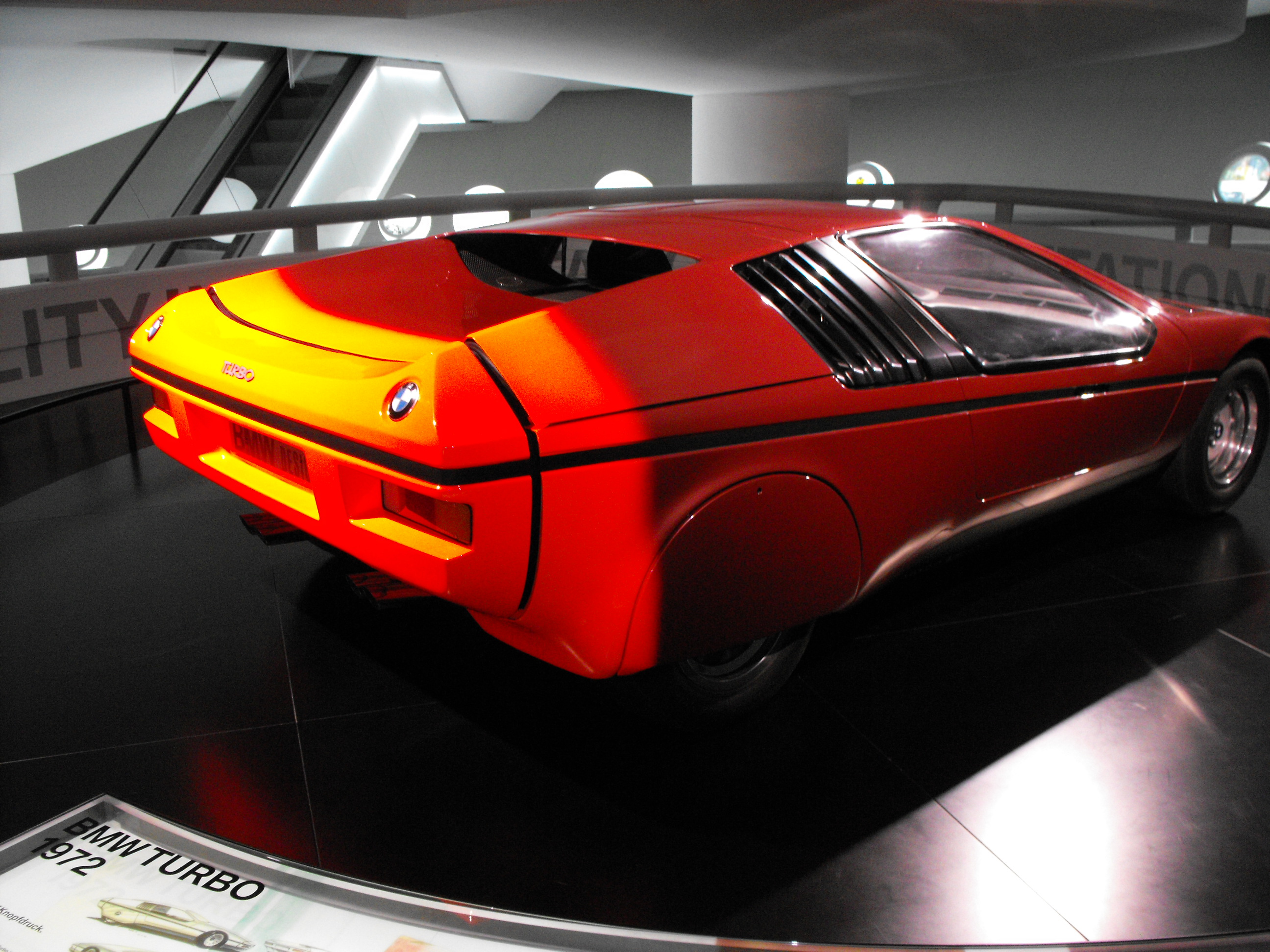
The BMW Turbo E25 is the bright, low-slung 1972 concept designed under Paul Bracq. Its gullwing doors and covered rear wheels make it memorable, but the car’s purpose extended well beyond visual theatre. BMW used it to explore occupant protection, driver access to controls and the behavior of a compact mid-engined sports car.
Record: BMW-006 · Running concept pair · Germany · 1972.
BMW Turbo E25 specifications and rarity
| Item | Documented reference and scope |
|---|---|
| Designer | Paul Bracq |
| Debut | Paris motor show, 1972 |
| Engine | Two-litre turbocharged inline-four, transversely mounted behind the cockpit |
| Factory output reference | Between 200 and 280 hp according to boost setting; source terminology |
| Transmission | Four-speed manual |
| Published performance | 0–100 km/h: 6.6 seconds; top speed: 250 km/h |
| Count scope | Two concept vehicles; second built for exhibition demand |
A concept that combined spectacle with safety research
It is best described as a running concept programme comprising two vehicles. Calling it a limited-production supercar would imply a customer model that did not exist. Calling it only a styling sculpture would lose the mechanical and safety work that made it such an influential experiment.
Recognizing Paul Bracq’s BMW Turbo design
The nose slopes back, the headlights retract, and the rear wheel openings are covered. Those features work together to create a smooth, unusually low profile. The rising line around the body gives the shape a sense of movement even when the car is stationary. The gullwing doors turn access to the cockpit into a conspicuous part of the design.
For visual comparison, concentrate on those doors, the wheel covers and the body’s compact proportions. The production M1 later explored a different design and packaging solution. The Turbo can be described as an important precursor without treating its body panels or engine installation as an early production M1 specification.
Mid-engine packaging and turbo power
BMW’s account identifies a turbocharged two-litre four-cylinder placed transversely behind the passengers. Output varied with boost pressure, with the article giving a range of 200 to 280 hp. It reports 6.6 seconds from rest to 100 km/h and a maximum speed of 250 km/h. These are factory historical reference figures for the concept.
The compact engine installation is a useful contrast with the later M1’s longitudinal six-cylinder. Both place the engine behind the cockpit, yet their dimensions, layouts and programme goals differ. A profile should therefore explain the installation before comparing headline power numbers. Mid-engined is a configuration, not a guarantee that two vehicles share the same architecture.
Safety systems before they became familiar
BMW describes anti-lock braking, radar distance alerts, a lateral accelerometer and a seat-belt-related starting interlock. The concept also explored a collapsible steering column and hydraulic impact-absorbing structures. These features belong to its research identity; they should not be recast as a claim of modern autonomous driving capability.
The driver-oriented console is especially interesting because it connects ergonomics with restraint systems. Controls were arranged so a belted driver could reach them conveniently. That gives the angled cockpit a practical rationale as well as a stylistic one. The concept’s safety ambition and its sporting appearance were parts of the same design exercise.
Why BMW built a second Turbo
Following the 1972 Paris presentation and further exhibition interest, BMW built a second example with minor changes. The two-car count therefore describes a concept pair. It does not indicate a numbered customer series, a planned production allocation or the total number of subsequent BMW turbocharged vehicles.
The Turbo’s heritage value comes from the combination of ideas it made tangible. Visitors can see aerodynamic bodywork, unconventional access, experimental safety features and a mid-engine package in one object. Its influence is most convincingly explained through those ideas rather than by claiming it predicted every detail of later BMW sports cars.
BMW Turbo E25 frequently asked questions
How many BMW Turbo E25 concepts were built?
BMW states that two were built, with a second vehicle added in response to exhibition demand.
Who designed the BMW Turbo?
Paul Bracq, then BMW’s head designer, was responsible for the concept’s design.
Did it have a six-cylinder engine?
No. BMW describes a transversely mounted turbocharged two-litre inline-four.
Was it the first production M1?
No. It was an earlier concept and research vehicle, not a production M1.
What were its most notable safety features?
BMW lists ABS, radar distance alerts, a belt-related starting interlock and experimental impact structures among its features.
Was it offered as a customer limited edition?
No. The two examples formed a concept programme rather than a retail production series.
Explore related verified BMW profiles
Factory sources and photo credits
Technical references and historical claims are tied to the source scope shown above. The inventory’s Verified label establishes eligibility for this batch; unresolved counts remain labelled.
Photo credits and usage terms appear beside each image. BMW PressClub and Wikimedia Commons photographs retain their individual source credits and licenses.
Why this machine matters
The Turbo’s heritage value comes from the combination of ideas it made tangible. Visitors can see aerodynamic bodywork, unconventional access, experimental safety features and a mid-engine package in one object. Its influence is most convincingly explained through those ideas rather than by claiming it predicted every detail of later BMW sports cars.
Built in limited numbers
Paris motor show, 1972; Two concept vehicles; second built for exhibition demand
Gallery
Specifications
Factory specifications may vary by model year, market and configuration.
Identity & production
- Official model
- BMW Turbo E25 — Paul Bracq’s Running Concept
- Base model
- Turbo E25
- Worldwide production
- 2
Powertrain & performance
- Engine
- Two-litre turbocharged inline-four, transversely mounted behind the cockpit
- Transmission
- Four-speed manual