BMW 328 Mille Miglia Touring Coupé
Discover the BMW 328 Touring Coupé, its 1939 Le Mans debut and 1940 Mille Miglia victory, with heritage details and credited factory photographs.
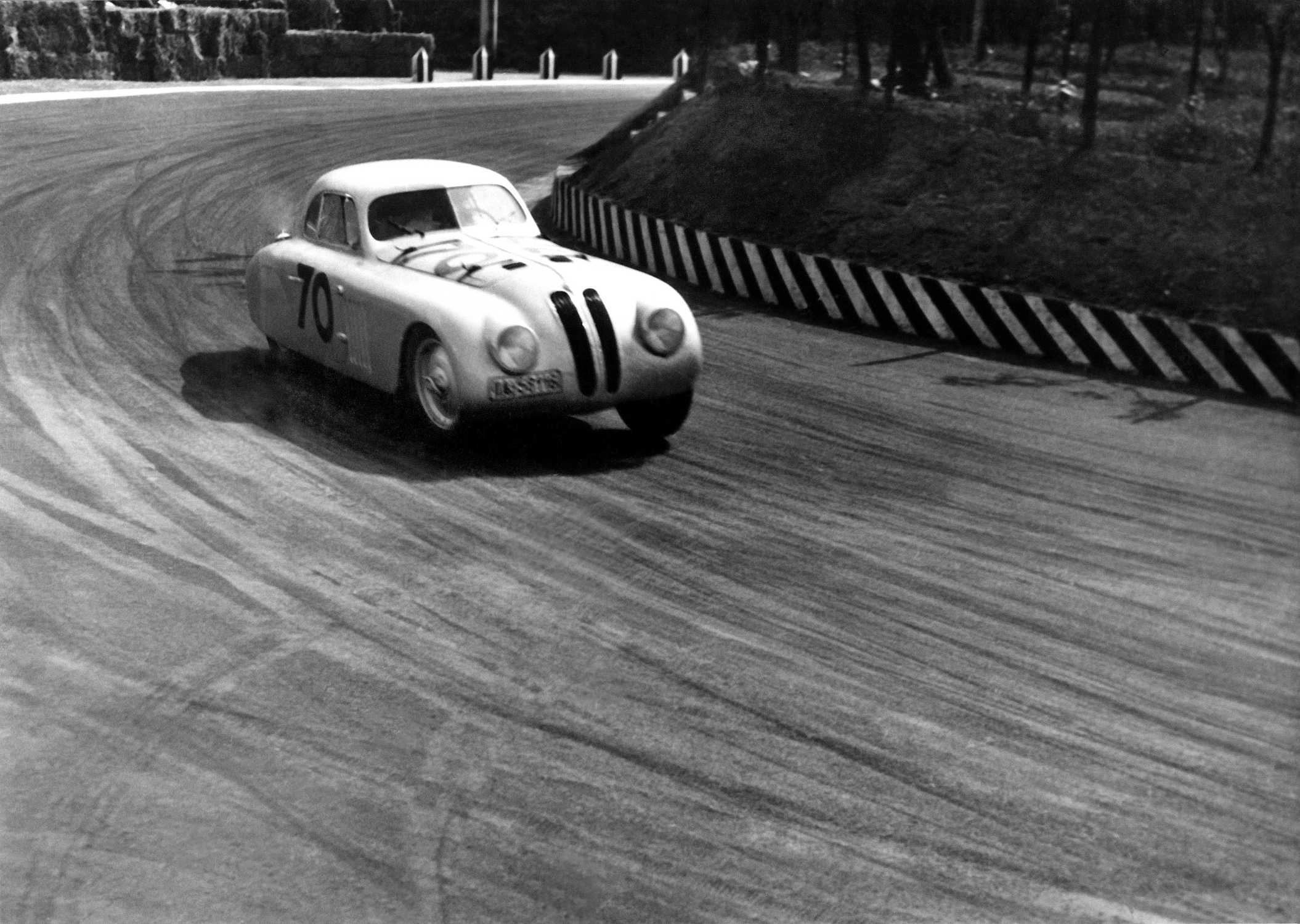
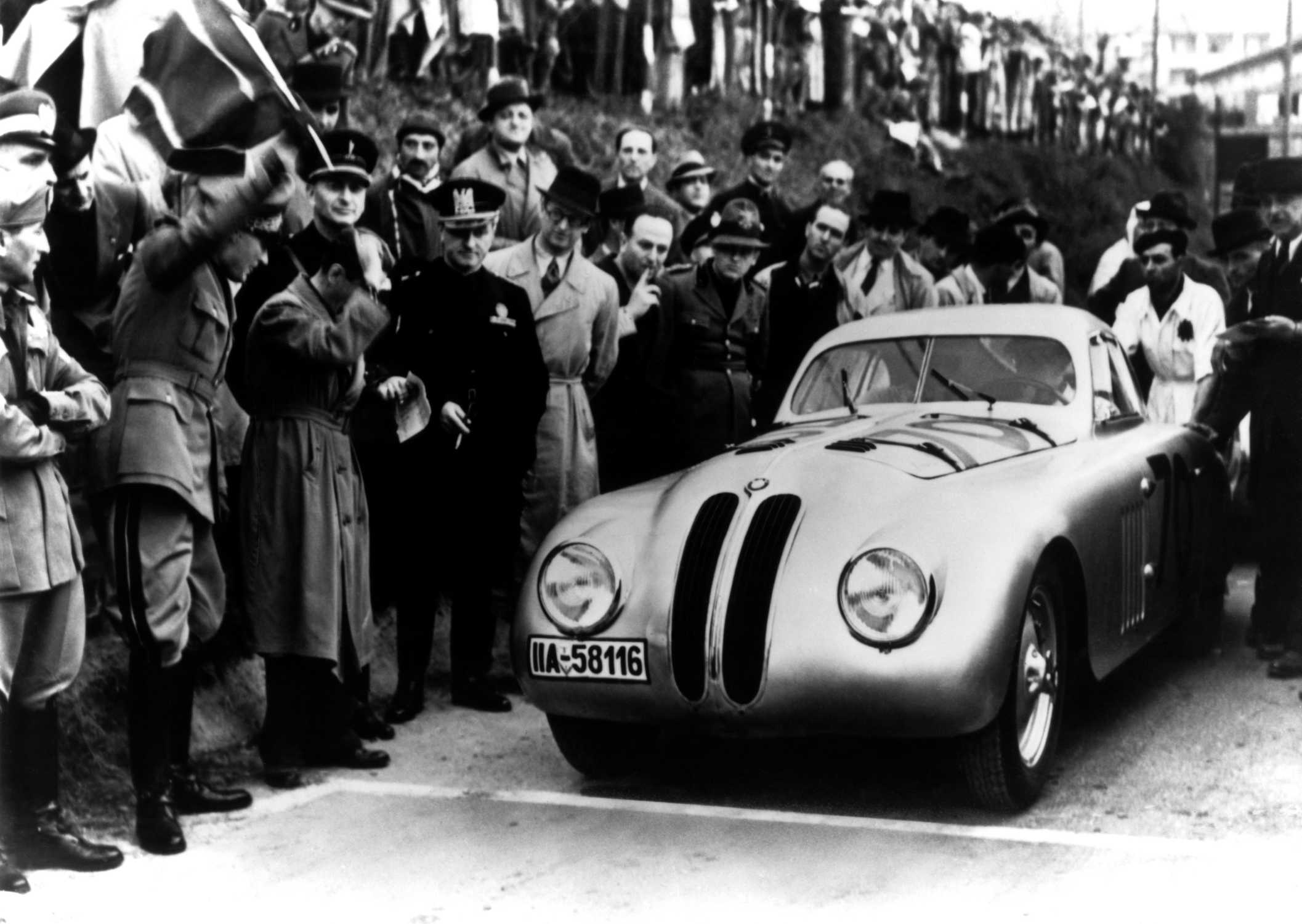
The BMW 328 Mille Miglia Touring Coupé is a coachbuilt competition car whose reputation rests on results as well as shape. It connects the 328’s small-engined racing platform with Carrozzeria Touring’s lightweight enclosed bodywork. Most importantly, it is the Touring-bodied coupé associated with BMW’s overall victory in the 1940 Mille Miglia.
Record: BMW-002 · Coachbuilt competition special · Germany · 1940.
BMW 328 Mille Miglia Touring Coupé specifications and rarity
| Item | Documented reference and scope |
|---|---|
| Debut | 1939 Le Mans; 1940 is the Mille Miglia victory year |
| Coachbuilder | Carrozzeria Touring, Milan |
| Construction | Lightweight Superleggera coupé body |
| 1939 result | Two-litre class winner and fifth overall at Le Mans |
| 1940 crew | Huschke von Hanstein and Walter Bäumer |
| Count scope | Specific historically significant Touring competition coupé; not the entire 328 production run |
The BMW 328 coupé that won the 1940 Mille Miglia
The year in the inventory marks that famous victory, not the car’s first appearance. BMW’s historical account places its debut at Le Mans in 1939. Keeping those dates separate helps explain why this was an established competition tool by the time of the Italian race, rather than a car built solely for one event.
Touring bodywork and the lightweight racing argument
BMW turned to the Milanese coachbuilder while working to improve the 328’s high-speed performance. Touring’s Superleggera approach offered a way to combine an enclosed aerodynamic form with limited weight. The factory history gives the coupé a weight of 780 kilograms in its account of the 1939 Le Mans appearance.
The engineering lesson is broader than any one specification. A racing car’s effectiveness depends on how much mass it must accelerate and how much aerodynamic resistance it must overcome. A coachbuilt body can therefore change the car’s competitive possibilities without changing its basic engine family. In this profile, the body deserves equal billing with the powertrain.
From Le Mans in 1939 to Italy in 1940
At Le Mans in 1939, the Touring Coupé won its two-litre class and finished fifth overall. The following year, Huschke von Hanstein and Walter Bäumer took the overall Mille Miglia victory. BMW records an average of 166.723 km/h for the winning run. That figure belongs to the event result; it is not a top-speed specification.
Race names can conceal changes in format and circumstances across different years. The useful claim here is the documented 1940 result of this particular Touring car. It does not imply that every 328, every BMW aerodynamic coupé, or every later recreation shares the same competition provenance.
Touring Coupé versus Kamm Coupé
The most common identity shortcut is to treat BMW’s silver pre-war racing coupés as interchangeable. The Touring car and the Kamm car belonged to the same broader programme, but their coachwork and individual histories differ. One won the 1940 race; the other became a lost vehicle later reconstructed by BMW Classic.
Look at the complete silhouette, especially the roof’s transition to the rear body, before interpreting badges or paint. For historical images, the archive caption and race context are particularly useful. A tightly cropped nose can remove the body features that distinguish the cars. This is why the supplied photographs retain their factory composition.
Provenance, names and photographs
The workbook’s small-series wording is not used as an exact production count. This profile concerns the significant Touring competition coupé and its documented racing history. The broader total for the ordinary 328 is a different question. A chassis-specific article should also avoid assigning an unverified serial number merely to make the record appear more complete.
The historical photographs accompanying the profile come from BMW’s archive and show the 1940 competition context. Their captions describe what the archive identifies, without inventing a photographer. For readers following the car’s story, the combination of builder, debut, crew and result is more useful than an unsupported claim about current ownership or market value.
BMW 328 Mille Miglia Touring Coupé frequently asked questions
Was this BMW 328 built in 1940?
BMW’s history places the Touring Coupé’s competition debut at Le Mans in 1939. The inventory year 1940 highlights its Mille Miglia victory.
Who built the body?
Carrozzeria Touring of Milan produced the streamlined Superleggera coupé body.
Who won the 1940 Mille Miglia in it?
BMW identifies Huschke von Hanstein and Walter Bäumer as the winning crew.
What did it achieve at Le Mans?
In 1939 it won the two-litre class and finished fifth overall.
Is 166.723 km/h its maximum speed?
No. That is the factory-reported average for the 1940 winning race, not a road-test maximum.
Is it the Kamm Coupé?
No. They are separate BMW 328 competition designs with different coachwork and histories.
Explore related verified BMW profiles
Factory sources and photo credits
Technical references and historical claims are tied to the source scope shown above. The inventory’s Verified label establishes eligibility for this batch; unresolved counts remain labelled.
Images: © BMW AG / BMW Group PressClub. Supplied for press and editorial use under BMW PressClub terms.
Why this machine matters
The historical photographs accompanying the profile come from BMW’s archive and show the 1940 competition context. Their captions describe what the archive identifies, without inventing a photographer. For readers following the car’s story, the combination of builder, debut, crew and result is more useful than an unsupported claim about current ownership or market value.
Built in limited numbers
1939 Le Mans; 1940 is the Mille Miglia victory year; Specific historically significant Touring competition coupé; not the entire 328 production run
Gallery
Specifications
Factory specifications may vary by model year, market and configuration.
Identity & production
- Official model
- BMW 328 Mille Miglia Touring Coupé
- Base model
- 328