Aston Martin Vanquish Zagato Volante
The Vanquish Zagato Volante gave the modern Zagato collaboration a folding-roof open body, with a 99-car series documented by the atelier. Announced at Pebble Beach in 2016, it entered the customer-delivery story in late 2017. The Volante combines distinctive rear forms and bladed lamps with the grand-touring foundation of the Vanquish family, and remains a separate subject from the roofless Speedster.
The Vanquish Zagato Volante gave the modern Zagato collaboration a folding-roof open body, with a 99-car series documented by the atelier. Announced at Pebble Beach in 2016, it entered the customer-delivery story in late 2017. The Volante combines distinctive rear forms and bladed lamps with the grand-touring foundation of the Vanquish family, and remains a separate subject from the roofless Speedster.
Aston Martin Vanquish Zagato Volante at a glance
| Manufacturer | Aston Martin |
|---|---|
| Model / family | Vanquish Zagato |
| Profile scope | Historic road-model archive |
| Historical reference year | 2016 |
| Inventory reference | AST-139 |
| Original series total | 99 — Original Vanquish Zagato Volante body series documented by Zagato atelier |
| Combined parent allocation limit | 325; count scope discussed below |
| Documented customer delivery year | 2017; not an inferred production-start year |
| Historical engine reference | Naturally aspirated V12; original market-specific output requires labeled source |
The open partner announced before the quartet was complete
The Volante followed the coupe as an open interpretation of the Vanquish Zagato collaboration. The manufacturer’s August 2016 announcement, preserved as credited factory text, introduced it at Pebble Beach. That gives the body its own starting point rather than dating every member of the family to the later quartet announcement. Its appeal can be explored through the way the upper body changes while the broader design language remains recognizable. This is a separate body programme with its own count and delivery history, not simply a coupe photographed with an unseen roof removed.
Rarity: the 99-unit Volante series
Zagato’s atelier history describes a 99-unit Volante series produced at Gaydon. That partner account supports the scoped original body-series count in this profile. It should not be read as a current survivor register or added to the four-body parent allowance. The relevant number is 99 Volantes, while the wider 325 programme includes the other bodies. An individual numbered detail can help document a car within the series, but does not establish its current condition or retained equipment. The production claim and the chassis-level ownership record serve different purposes and should remain clearly separated.
Reconciling the 2016 and 2017 references
The supplied inventory uses 2017, and Zagato’s present atelier page describes a Pebble Beach debut that year. However, the credited manufacturer announcement is dated August 19, 2016, and Zagato’s own press index also lists the Volante on that date. This profile therefore uses 2016 for the public announcement and retains the later delivery chronology separately. The conflicting atelier date is documented rather than silently erased. An individual car’s build or registration in 2017 or 2018 remains compatible with an earlier announcement. The distinction keeps the timeline clear without inventing a second model or additional production run.
Customer deliveries and the corporate retrospective
The factory’s 2018 Registration Document records Volante customer deliveries beginning in the fourth quarter of 2017. That is stronger evidence for an actual delivery milestone than the earlier announcement’s expectation alone. It explains why later source labels and inventory dates can appear in the same historical account. Do not turn the delivery-start statement into an unsupported claim about the exact completion date of all 99 cars. A chassis-specific entry should add its own documented build and handover dates. That separation gives both the programme chronology and the individual history room to be accurate.
A folding roof distinguishes it from the Speedster
The atelier describes a custom folding roof derived from the production Vanquish Volante mechanism. That is the practical and visual distinction to keep in view when comparing the body with the Speedster. Both can appear open in a photograph, but their upper-body briefs are different. A vehicle profile should not switch their names because the roof is lowered or because both carry similar lamps and badges. An owner assessing a Volante should establish the actual roof operation and retained specification, rather than treating the open appearance as proof of every detail hidden beneath the rear deck.
Rear cowls and the luggage-compartment edge
The credited period announcement describes twin rear forms blending into the luggage area around the concealed roof mechanism. Their effect can be read as a way of connecting the open cabin to a sculpted tail rather than leaving the rear deck visually flat. That is editorial interpretation of the design, not a structural measurement. A useful photographic archive should include the roof both raised and lowered, with views of the rear details. Those images help explain the original form while the individual build record establishes what was supplied and any later repairs explain what has changed.
The bladed round rear lamps
Zagato’s own account connects the rear lamp treatment with the bladed LED technology used on the Vulcan. The relationship supplies a design reference, not evidence that the Volante shares the track car’s structure or performance. Such details show how a coachbuilt programme can draw from the manufacturer’s wider vocabulary while retaining its own identity. For preservation, document the actual lamps, surrounding panels and any replacement work. A close view may be useful for recording the design, but an exterior photograph cannot certify electrical operation or whether a component has remained with the car since its original delivery.
Technical lineage without mixed power units
The original manufacturer text gives a V12 performance reference, while the later quartet release describes the Vanquish S-based family with Touchtronic III. The entries use different power units and dates, so this profile avoids treating similar-looking headline numbers as interchangeable bhp or PS. A precise market-specific technical record should follow the original car’s documents and clearly labeled source figures. That approach is more useful than combining the most dramatic numbers from several family pages. The shared V12 grand-touring foundation provides context, while the individual specification remains a documentary question.
Bespoke cabin choices and later changes
The credited launch account describes the scope for Q personalization within the Volante programme. That makes the original order valuable when assessing upholstery, quilting, trim and other details. A difference from a familiar launch photograph may represent a documented factory choice rather than a later modification. Conversely, matching the publicity appearance does not establish untouched original material. Retain early images and invoices to explain what survived and what was renewed. The aim is an honest account of the particular vehicle, allowing collectors to appreciate its bespoke identity without assuming every car in the series was finished alike.
Comparison with earlier and contemporary Zagato open cars
The earlier V8 Zagato Volante offers an archive connection across generations, while the modern Speedster provides the closest open-body comparison within this family. Those relationships should explain different design briefs rather than merge counts or mechanical specifications. A collector may be drawn to the Volante’s folding roof, the later coachwork or a particular individual order. Another may prioritize the Speedster’s roofless form. Separate profiles allow both enquiries to remain useful. The shared Zagato name invites comparison, but it does not make every open Aston Martin Zagato the same body, series or ownership proposition.
Authentication and condition assessment
Begin with original factory identity, chassis, build specification and delivery paperwork establishing the Volante body. Then assess the roof mechanism, seals, cabin, carbon coachwork, lamps and mechanical condition with a suitable specialist. These are inspection priorities, not universal fault claims. Trace repairs and storage history through invoices and dated photographs, and keep any replacement components clearly documented. Edition rarity cannot establish condition on its own. A dependable record should help the next owner see how the car relates to its original commission and what work has been carried out during its life.
A credited Volante photograph rather than a substitute body
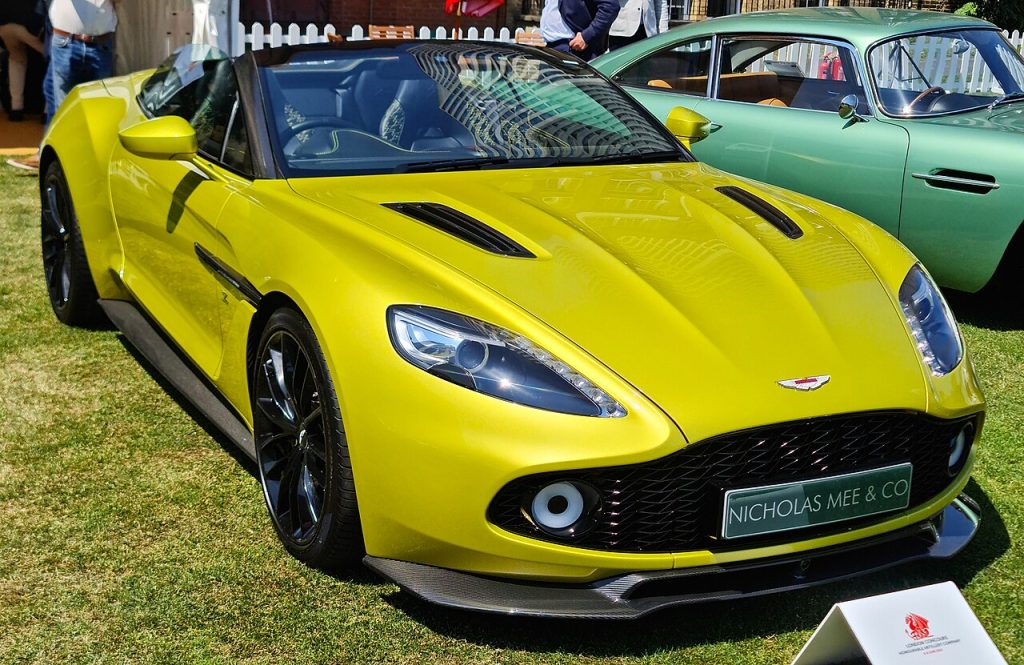
The supplied Commons photograph identifies a Vanquish Zagato Volante at London Concours in June 2023. It illustrates the correct open body and is visibly credited with the photographer, original file page and license. The source’s 2018 example label does not replace the programme’s earlier announcement date. The image is also kept separate from a Speedster illustration or a claim of original build numbering. It provides visual grounding for the profile, while exact chassis identity, equipment and current condition remain matters for documentary evidence and a dated assessment of the actual car.
Frequently asked questions
How many Vanquish Zagato Volantes were produced?
Zagato’s atelier account describes the original 99-unit Volante series. This is a body-series total, not a present-day survivor census.
Was it announced in 2016 or 2017?
The credited factory announcement and Zagato press index support August 19, 2016. The atelier page’s 2017 wording is retained as a documented date discrepancy.
When did deliveries start?
The factory’s 2018 corporate document records first Volante customer deliveries in Q4 2017.
Is the Volante a roofless Speedster?
No. The Volante has a custom folding roof, while the Speedster is a distinct roofless body with its own 28-car programme.
Explore related Aston Martin profiles
- Aston Martin Vanquish Zagato Speedster
- Aston Martin Vanquish Zagato Coupe
- Aston Martin V8 Zagato Volante
Sources
- Zagato atelier: Vanquish Volante 99-unit series and folding roof; 2017 date distinguished from 2016 announcement
- Aston Martin 19 August 2016 Volante announcement, credited text reproduced by Clásicos al Volante
- Zagato press index: Volante announcement dated 19 August 2016
- Tim Cottingham: Zagato Volante 2016 announcement and 2017–2018 series
- Aston Martin Lagonda 2018 Registration Document, pp. 49–50: GT12/GT8 production periods and continuation/Zagato delivery chronology
- Aston Martin August 2017: Zagato four-body family, scoped limits and scheduled production/deliveries
Historical claims follow the linked manufacturer, archive, specialist and catalogue records, with disputed findings retained. Inspection and collecting guidance is editorial analysis. Catalogue condition and custody statements remain dated to their sources.
Photography and credit
Source-identified Vanquish Zagato Volante at London Concours in June 2023. Open Volante body, distinct from the roofless Speedster; no original build number or current condition inferred. Photo: MrWalkr / Wikimedia Commons · CC BY-SA 4.0. Wikimedia thumbnail resized from original; no cropping or colour changes.
Why this machine matters
The Vanquish Zagato Volante gave the modern Zagato collaboration a folding-roof open body, with a 99-car series documented by the atelier. Announced at Pebble Beach in 2016, it entered the customer-delivery story in late 2017. The Volante combines distinctive rear forms and bladed lamps with the grand-touring foundation of the Vanquish family, and remains a separate subject from the roofless Speedster.
Built in limited numbers
Zagato’s atelier history describes a 99-unit Volante series produced at Gaydon. That partner account supports the scoped original body-series count in this profile. It should not be read as a current survivor register or added to the four-body parent allowance. The relevant number is 99 Volantes, while the wider 325 programme includes the other bodies. An individual numbered detail can help document a car within the series, but does not establish its current condition or retained equipment. The production claim and the chassis-level ownership record serve different purposes and should remain clearly separated.
Gallery
Specifications
Factory specifications may vary by model year, market and configuration.
Identity & production
- Official model
- Aston Martin Vanquish Zagato Volante
- Base model
- Vanquish Zagato
- Worldwide production
- 99
Powertrain & performance
- Engine
- Naturally aspirated V12; original market-specific output requires labeled source
Sources and verification
- www.zagato.it
- www.clasicosalvolante.com
- www.zagato.it
- astonmartins.com
- www.astonmartin.com
- www.astonmartin.com