Aston Martin Vanquish Zagato Speedster
The Vanquish Zagato Speedster is the most tightly limited body in the four-car Vanquish Zagato family. Its 28-car programme reinterpreted the atelier’s double-bubble theme through sculpted cowls behind an open cockpit. Announced in 2017, with customer deliveries documented from early 2018, it remains distinct from the folding-roof Volante despite their shared Vanquish S foundation.
The Vanquish Zagato Speedster is the most tightly limited body in the four-car Vanquish Zagato family. Its 28-car programme reinterpreted the atelier’s double-bubble theme through sculpted cowls behind an open cockpit. Announced in 2017, with customer deliveries documented from early 2018, it remains distinct from the folding-roof Volante despite their shared Vanquish S foundation.
Aston Martin Vanquish Zagato Speedster at a glance
| Manufacturer | Aston Martin |
|---|---|
| Model / family | Vanquish Zagato |
| Profile scope | Historic road-model archive |
| Historical reference year | 2017 |
| Inventory reference | AST-138 |
| Specialist-reported scoped count | 28; scope explained below, not factory certification |
| Factory allocation limit | 28; completed census not independently certified |
| Combined parent allocation limit | 325; count scope discussed below |
| Documented customer delivery year | 2018; not an inferred production-start year |
| Historical engine reference | Naturally aspirated V12; Vanquish S / Zagato programme reference |
An open design with a separate purpose
The Speedster takes the family’s form toward an emphatically open experience. Its upper-body treatment is the key distinction, not simply the presence of Zagato badges or a shared engine. The shape can be read as a different response to the same collaboration that produced the coupe and Shooting Brake. That design reading is editorial interpretation. An enthusiast comparing bodies should first understand what each one actually is. A roofless Speedster and a folding-roof Volante are different collecting subjects, so their images, equipment and production numbers should never be substituted for one another.
Rarity: the 28-car Speedster programme
Aston Martin announced a 28-car Speedster run within the parent Zagato family. The contemporary statement that the cars were sold describes allocation at that time, while later auction material describes constructed examples. This profile retains the factory limit and separately attributed completion reporting, without claiming access to a reconciled factory chassis census. The count is body-specific: 99 belongs to other bodies in the programme, not this Speedster. A useful vehicle record should keep the number, subject and evidential status together rather than reducing all four bodies to the parent total.
Announcement in 2017, deliveries from early 2018
The family announcement belongs to August 2017. The manufacturer’s 2018 corporate document records Speedster deliveries beginning in the first quarter of 2018. Those dates give the car a clearer chronology than simply choosing one year from a listing title. The inventory’s 2017 reference describes the announcement period, while an individual example may carry a 2018 model-year or registration label. Record each car’s own completion and delivery documents when available. A later event photograph confirms an appearance at that event, but cannot by itself establish an original build date or the completion of the entire programme.
The double-bubble idea becomes rear cowls
The manufacturer describes the Speedster’s rear humps as a reinterpretation of Zagato’s signature roof theme. Without a closed roof, the reference moves into the sculpted forms behind the seats. That gives the body a recognizable relationship with the coupe while changing its visual balance. The significance is visible in the overall shape, not a claim that the cowls establish measured aerodynamic superiority. A useful photo archive would include the rear deck and side profile as well as the front. Those views help readers understand why the Speedster deserves its own body identity.
Shared foundation, body-specific description
The factory places the Speedster within the Vanquish S-based quartet. Its naturally aspirated V12 and Touchtronic III context connect it mechanically with the other Zagatos, but precise weight, performance and market specification should remain tied to a Speedster source. Do not copy a coupe’s technical table simply to make the entry look complete. The actual car’s calibration and retained equipment also need documentation. A clear account of the shared foundation is enough to support a meaningful comparison while leaving unsupported exact figures unset. That keeps the technical story informative without hiding gaps behind familiar family numbers.
A dated auction example illustrates individuality
RM Sotheby’s Miami 2026 catalogue identifies a Speedster numbered 11/28 with its chassis reference and a bespoke specification. That is useful evidence of an individual car’s recorded identity at a particular sale. It should not be treated as the specification or present custody of every Speedster, and its chassis is not assigned to the bundled Commons photograph. The catalogue provides a way to see how a small series could still contain strongly individual orders. Readers can use the linked record as a research example while keeping its dated condition and ownership statements attached to that particular lot.
Materials and personalization need their own record
The cited catalogue describes bespoke colors, quilting and detailed trim for its individual example. Those details show why a Speedster inspection benefits from the original order rather than only a generic family description. A different car may have a different factory combination or later changes. Preserve early photographs and invoices so renewal or replacement can be understood accurately. An unusual trim is not automatically a later modification, just as a matching publicity color does not establish untouched original material. The documentary trail gives a collector a more useful account of the car than a broad claim that all Speedsters share the same finish.
Speedster versus Volante
The Volante gives the family a folding-roof open alternative, while the Speedster emphasizes the roofless form. That difference shapes an owner’s practical planning as much as the silhouette. Ask how the actual vehicle will be stored, transported and used, and examine the equipment and protection supplied with it. The profile should not infer an unseen roof mechanism from the word convertible or substitute a Volante image because both cabins are open in a photograph. Related records help the reader compare the two body briefs while retaining the correct count and specification for each.
How the coupe and Shooting Brake complete the comparison
The coupe and Shooting Brake offer enclosed designs within the same collaboration. Comparing the group reveals how the treatment above the waistline changes the overall impression and intended use. An interest in the Speedster may concern the open form, the rear cowls, the small allocation or the individual bespoke order. Those are different reasons for collecting, and none is answered solely by the family’s shared mechanics. A connected archive should make it possible to move between the bodies without implying that they are variations of one interchangeable technical or provenance record.
Authentication needs more than a small-number claim
Establish the chassis and original factory Speedster identity, then reconcile the build and delivery record with numbered details and retained equipment. A sale description calling a car one of 28 is a claim to investigate, not a substitute for the documents. Record any later body, paint or trim work and explain discrepancies with suitable specialist help. This is particularly important where an individual catalogue example is used as a reference. Its serial and specification remain its own, so they cannot be carried into another photographed car simply because the body and color appear similar.
Inspection priorities for the open coachbuilt body
Give the rear cowls, cabin surfaces, windscreen area, seals, trim and coachwork a detailed condition record alongside the mechanical assessment. Consider evidence of exposure, storage and transportation as part of that history, without assuming a defect affects every Speedster. A low odometer figure may tell little about how a car was kept or what work it received. The inspection brief should follow the actual documentary and physical evidence. Retain photographs and invoices so future custodians can distinguish the original build, careful maintenance and any changes made after delivery.
The photograph is separate from the auction example
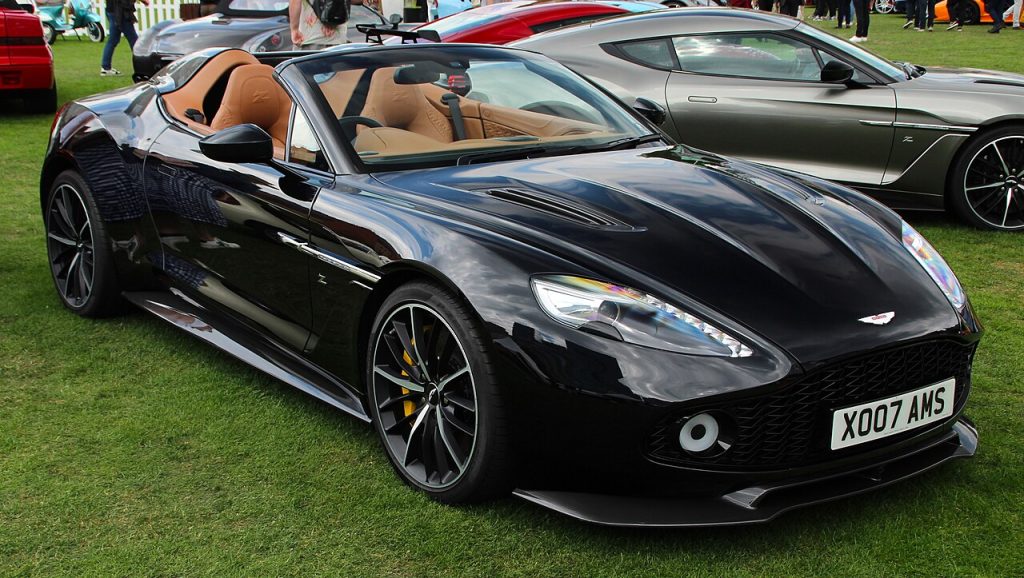
The bundled Commons image identifies a Vanquish Zagato Speedster at London Concours in June 2024. Its open body illustrates the subject and is credited with linked photographer, original file page and license information. It is not identified as the chassis or serial in the separately cited Miami auction catalogue. That separation is deliberate: a model image and a documentary case study serve different purposes. Together they can help readers recognize the design and understand how an individual car is recorded, without creating an unsupported identity match or a claim about present condition.
Frequently asked questions
How many Zagato Speedsters were announced?
The factory Speedster programme was limited to 28. Later auction reporting describes constructed examples, while this profile does not claim a reconciled factory chassis census.
Is the Speedster the same body as the Volante?
No. The Speedster is the roofless design with distinctive rear cowls; the Volante has a folding-roof body.
When did customer deliveries begin?
The factory’s 2018 corporate document records Speedster deliveries beginning in the first quarter of 2018, after the 2017 announcement.
Is the pictured car the cited auction example 11/28?
No identity match is assigned. The Commons photograph and the numbered auction example remain separate sources.
Explore related Aston Martin profiles
- Aston Martin Vanquish Zagato Volante
- Aston Martin Vanquish Zagato Coupe
- Aston Martin Vanquish Zagato Shooting Brake
Sources
- Aston Martin August 2017: Zagato four-body family, scoped limits and scheduled production/deliveries
- Aston Martin Lagonda 2018 Registration Document, pp. 49–50: GT12/GT8 production periods and continuation/Zagato delivery chronology
- RM Sotheby’s Miami 2026: Speedster example 11/28, bespoke specification and dated catalogue evidence
Historical claims follow the linked manufacturer, archive, specialist and catalogue records, with disputed findings retained. Inspection and collecting guidance is editorial analysis. Catalogue condition and custody statements remain dated to their sources.
Photography and credit
Source-identified Vanquish Zagato Speedster at London Concours in June 2024. This image is not assigned the chassis or serial of the separately cited auction example. Photo: MrWalkr / Wikimedia Commons · CC BY-SA 4.0. Wikimedia thumbnail resized from original; no cropping or colour changes.
Why this machine matters
The Vanquish Zagato Speedster is the most tightly limited body in the four-car Vanquish Zagato family. Its 28-car programme reinterpreted the atelier’s double-bubble theme through sculpted cowls behind an open cockpit. Announced in 2017, with customer deliveries documented from early 2018, it remains distinct from the folding-roof Volante despite their shared Vanquish S foundation.
Built in limited numbers
Aston Martin announced a 28-car Speedster run within the parent Zagato family. The contemporary statement that the cars were sold describes allocation at that time, while later auction material describes constructed examples. This profile retains the factory limit and separately attributed completion reporting, without claiming access to a reconciled factory chassis census. The count is body-specific: 99 belongs to other bodies in the programme, not this Speedster. A useful vehicle record should keep the number, subject and evidential status together rather than reducing all four bodies to the parent total.
Gallery
Specifications
Factory specifications may vary by model year, market and configuration.
Identity & production
- Official model
- Aston Martin Vanquish Zagato Speedster
- Base model
- Vanquish Zagato
Powertrain & performance
- Engine
- Naturally aspirated V12; Vanquish S / Zagato programme reference