Aston Martin LM6 works car
LM6 is one of Aston Martin’s three 1931 works team chassis, with an individual identity that must be separated from LM5 and LM7. Its archival interest includes changing race preparation and a published disagreement over which chassis achieved the team’s 1931 Le Mans placing. This guide preserves that uncertainty rather than assigning a disputed result as fact.
LM6 is one of Aston Martin’s three 1931 works team chassis, with an individual identity that must be separated from LM5 and LM7. Its archival interest includes changing race preparation and a published disagreement over which chassis achieved the team’s 1931 Le Mans placing. This guide preserves that uncertainty rather than assigning a disputed result as fact.
Aston Martin LM6 works car at a glance
| Manufacturer | Aston Martin |
|---|---|
| Model / family | Le Mans |
| Profile scope | Individual works-chassis archive |
| Historical reference year | 1931 |
| Inventory reference | AST-009 |
| Object / count scope | One named 1931 works competition chassis |
| Historical chassis identifier | LM6 |
| Historical registration reference | HX 4322 |
An individual chassis in the 1931 works effort
LM6 belongs to the three-car 1931 works group alongside LM5 and LM7. The specialist history treats these cars as developed competition objects within the International context, not a customer limited edition. Keep the LM identity attached to the physical chassis. A broad Le Mans-model label is insufficient for an individual works claim. The research task is to establish which vehicle a document or photograph actually concerns. That distinction allows the profile to explain the small team’s historical role while still demand separate evidence for LM6’s appearances, components and later custody.
Why the Le Mans result stays unresolved here
A 1980 Motor Sport account documents an attribution dispute involving LM6 and LM7, including conflicting recollections and a case built from identification tags and photographs. Other marque summaries have repeated different assignments. This guide therefore does not give LM6 a verified fifth-overall or class-winning Le Mans badge. The dispute is itself useful historical information. Readers should consult original event and chassis evidence rather than choose a result because it appears often online. A careful archive can establish that LM6 was part of the programme while retaining uncertainty about a specific physical-car assignment.
A registration link with a dated source
The firsthand magazine account associates LM6 with HX 4322, with neighbouring registrations assigned to LM5 and LM7. Treat that as a sourced historical identification reference. Registration plates, chassis marks and competition numbers have different roles and should not be interchangeable fields. A present object file must correlate the actual material and records. The source’s inspection occurred decades ago, so its custody and condition descriptions are historical findings rather than current facts. This keeps the identification useful without expand an old article into an unsupported present-day ownership or survival report.
Rarity: an object profile rather than a global model count
The one-object scope here describes the named LM6 chassis. It does not establish a one-car production total for International models, team cars or Le Mans derivatives. Numerical edition fields remain unset. Any surviving replacement structure or major assembly should have its own documentary treatment. This keeps the rare-vehicle catalogue accurate when individual racers sit beside small customer series. LM6’s significance rests on its supported works identity and the material history that can be traced, not on a count badge that compresses several different populations into a misleading single number.
The works preparation evolved between events
The specialist history describes changes to inlet arrangements, wing mountings and access to the spare wheel across the 1931 team. These details show why a race-car configuration needs an event date. A body feature can reflect a particular stage without identify every session in the car’s life. Keep modifications tied to documents or comparative photographs. A useful collector description should identify the present arrangement and its supported historical relationship. It should not treat one surviving view as proof that the works cars maintained a fixed specification throughout the whole season.
Surviving bodywork needs material evidence
The specialist account discusses LM6’s body in a particular historical form. That gives researchers a question to investigate, not a substitute for a current survey of originality. Correlate panel construction, repair history, mounting details and period imagery with a qualified inspection. State which parts are believed to survive and why. Patina can be informative, but it does not prove the age of every surface or fastener. A conservation record should show original material and subsequent intervention separately. This makes the car’s historical configuration intelligible while keeping present condition claims grounded in actual evidence.
Reading tags, photographs and recollections together
The published attribution discussion illustrates why no single type of evidence should carry an entire race history. An axle tag may identify a component at a particular point, while a photograph connects visible features to a scene and a recollection offers another account. Components or labels can move. Preserve the original material and explain how the evidence is being correlated. If a conflict remains, state it. This method is useful beyond LM6 because it helps a rare-vehicle archive distinguish a persuasive interpretation from a fully established chassis-event connection.
Later technical changes belong in the timeline
A working racer can acquire repairs, experiments and replacement parts during and after its original team period. Establish those stages from the object file rather than using a later configuration to rewrite the whole original specification. Engine and drivetrain findings should have dates and identifiers. A specialist may need to distinguish contemporary development from much later conservation. Keep those questions explicit. The collecting account becomes more informative when it explains the material that survives and how it reached its present state, rather than insist that every historically significant vehicle has one idealized unchanging form.
The licensed family reference image
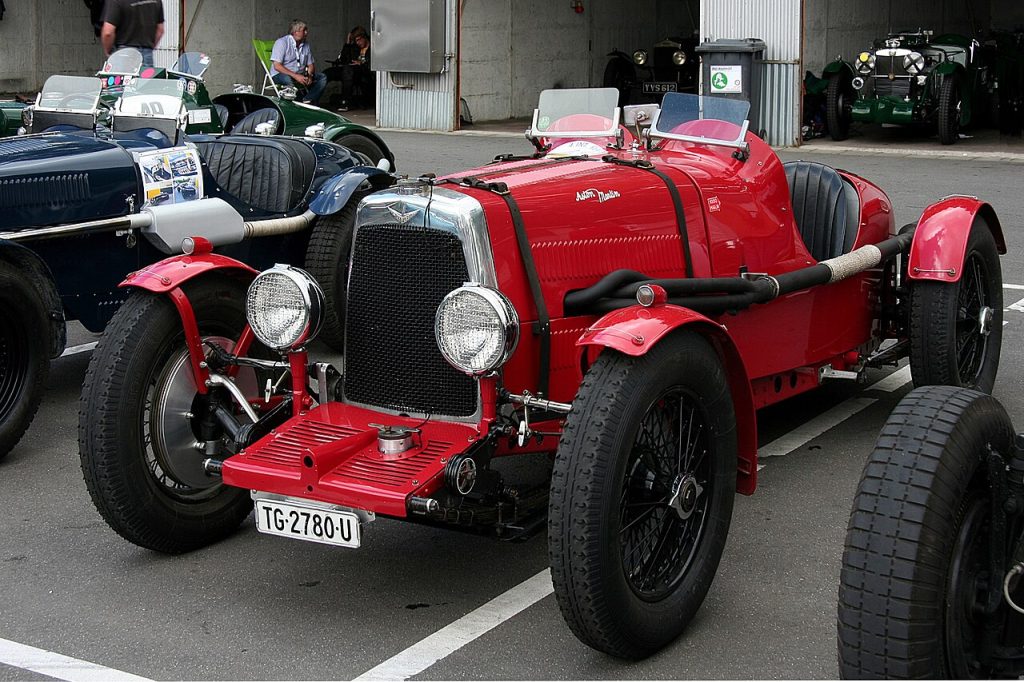
The bundled photo shows a 1930 International and is captioned as family context only. It is not an authenticated image of LM6. An exact-chassis reusable photograph remains a publication hold. Preserve the author, Commons source, licence and resizing note with the reference. It must not be relabelled, recoloured or described as evidence of LM6’s racing appearance. A properly identified subject image should eventually be accompanied by its own dated provenance. This keeps the current review draft visually useful while making the missing object-level photographic evidence unmistakable to an editor.
Condition and support before an operating decision
A suitable specialist should inspect structure, body attachments, lubrication, transmission, axle, brakes, wheels, tyres, steering and fuel systems in their actual present state. A famous works history does not certify current readiness or access to necessary parts. Define whether the intended role is static display, touring or competition and preserve the preparation decisions. A current event-entry question needs the organizer’s requirements as well as the car file. The practical account should complement historical research, giving a custodian a clear basis for preservation without inferring modern operating capability from an old race association.
LM6 and LM5 make different collecting questions
LM5’s later 2/4-seat body and LM6’s attribution discussion show why the group deserves connected but individual profiles. A shared 1931 origin does not guarantee matching subsequent material, event history or condition. Compare what each file establishes, the reference period chosen for restoration and the unresolved claims. Related links should make those differences easy to explore. This turns a list of works chassis into a useful historical collection, while prevent the name of one car or the result of another from being silently transferred across similar-looking machines.
A transparent archive can accommodate better evidence
Keep the disputed finding in the review notes and store any new factory, event or physical evidence with its source and date. A later reconciliation could establish a particular race assignment without alter every other claim about the car. The important principle is to update the finding at its actual scope. LM6 remains a meaningful works-chassis subject even while one notable attribution is unsettled. The best profile gives readers a clear route through the programme, the object identity and the research problem, with no requirement to invent certainty for a more impressive headline.
Frequently asked questions
Is LM6 a separate numbered retail edition?
No. It is an individual 1931 works competition chassis.
Is the 1931 Le Mans fifth place assigned as verified here?
No. Published LM6/LM7 attribution disagreements remain unresolved in this guide.
What historical registration is reported?
The firsthand magazine account associates LM6 with HX 4322.
Does the supplied photograph show LM6?
No. It is an explicitly labelled International-family reference; an authenticated reusable LM6 photo remains needed.
Explore related Aston Martin profiles
Sources
- Ecurie Bertelli: first-series team cars and changing specifications
- Motor Sport: firsthand LM6/LM7 inspection and disputed race attribution, May 1980 archive
Historical claims follow the linked manufacturer, archive, specialist and catalogue records, with disputed findings retained. Inspection and collecting guidance is editorial analysis. Catalogue condition and custody statements remain dated to their sources.
Photography and credit
1930 International family reference at the Nürburgring in 2008, not the LM6 works chassis. An authenticated reusable LM6 photograph remains a publication hold. Photo: Lothar Spurzem / Wikimedia Commons · CC BY-SA 2.0 de. Wikimedia thumbnail resized from original; no cropping or colour changes.
Why this machine matters
LM6 is one of Aston Martin’s three 1931 works team chassis, with an individual identity that must be separated from LM5 and LM7. Its archival interest includes changing race preparation and a published disagreement over which chassis achieved the team’s 1931 Le Mans placing. This guide preserves that uncertainty rather than assigning a disputed result as fact.
Built in limited numbers
The one-object scope here describes the named LM6 chassis. It does not establish a one-car production total for International models, team cars or Le Mans derivatives. Numerical edition fields remain unset. Any surviving replacement structure or major assembly should have its own documentary treatment. This keeps the rare-vehicle catalogue accurate when individual racers sit beside small customer series. LM6’s significance rests on its supported works identity and the material history that can be traced, not on a count badge that compresses several different populations into a misleading single number.
Gallery
Specifications
Factory specifications may vary by model year, market and configuration.
Identity & production
- Official model
- Aston Martin LM6 works car
- Base model
- Le Mans