
Alfa Romeo 8C Spider
The production 8C Spider unveiled in 2008: a separate 500-car open-top series beside the coupe.
The production 8C Spider
The 8C Spider is the production open-top counterpart to the 8C Competizione coupe. Alfa Romeo unveiled it at the 2008 Geneva show and announced a 500-car series. Later Heritage material confirms that production scope. This entry follows the customer model rather than the earlier Spider concept. Its open body and independent series count justify a separate vehicle profile while preserving the relationship to the coupe. Read the cited reference for its documented context.
A documented road powertrain
The 2008 factory launch identifies a 4.7-litre eight-cylinder engine producing 450 HP, matched to a six-speed robotic gearbox. Those details are recorded as the manufacturer’s presentation specification. Exact capacity, weight and dimensions are not supplied by inference from the coupe. Shared model ancestry is useful context, but it does not make every numerical field or structural detail identical between the closed and open versions.
A separate run of 500
The 500 Spider figure concerns this open-top series. It is separate from the 500 production coupes and from the concept studies. A collector database should preserve those categories when readers compare rarity. Adding the coupe and Spider counts may describe the combined road-family scale, but it is not the production count of either individual variant. The profile keeps the precise body identity attached to its own total.
Chronology and later appearances
The 2008 unveiling establishes the public introduction reference used here. A photograph taken at a later show records a subsequent appearance, not the first presentation or the date of manufacture of that particular car. For an individual collector record, delivery documents and chassis evidence should supply the production chronology. This distinction is useful where a scarce model continued to appear publicly after its initial launch period.
Documenting an open car
A Spider ownership file benefits from clear photographs of the hood mechanism, glazing, seals and cabin, alongside service and repair records. Those observations describe the condition and completeness of a particular example. They should not become broad claims that every car has the same faults or has received the same repairs. A model article can identify the body type while a specialist inspection establishes the individual car’s state.
The Amsterdam illustration
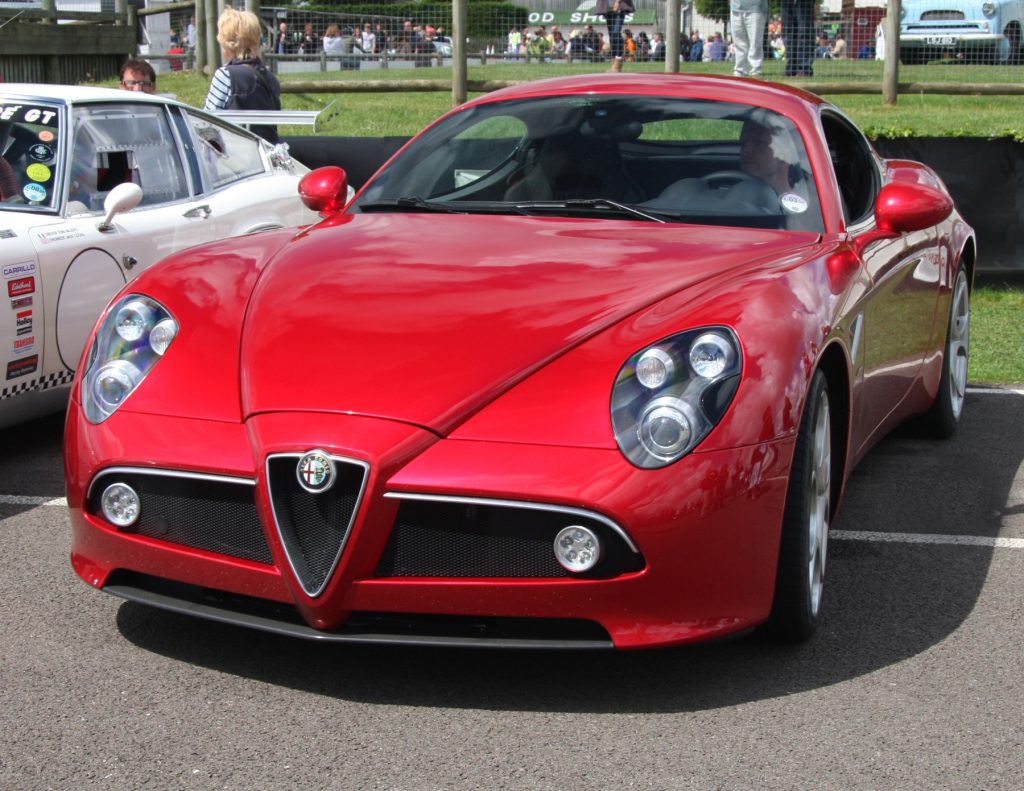
Overlaet photographed the 8C Spider at AutoRAI Amsterdam inApril 2011. The source identifies the production open-top model, providing an appropriate illustration for this profile. Its ShareAlike licence and resizing notice are included with the credit. The image does not assign a production number or ownership chain, and its later exhibition setting is stated explicitly so the reader can distinguish the historical introduction from the photograph’s own date.
Building a useful collector record
A collector record should begin with the chassis stamping, factory delivery evidence and the body identity. Record the engine number separately from its installed specification: an original block can contain later components, while a replacement engine may still represent the correct period configuration. Compare the present interior, wheels and glazing with dated photographs and documents. Write down alterations as part of the car’s history instead of quietly treating a restored appearance as proof that every detail is original.
Condition, restoration and historical use
For an individual car, ask for a dated sequence of ownership, registration and restoration. Inspection photographs taken before paint and trim were fitted can explain repairs that a finished surface conceals. Separate period competition entries from recent historic-event participation; both matter, but they answer different questions. When a specification changed during the model’s life, identify the version represented today and the evidence supporting it. A clear account makes the car’s appeal understandable without depending on an impressive badge or an unsupported production claim.
Frequently asked questions
When was the production Spider unveiled?
At the 2008 Geneva motor show.
What is its documented series count?
500 production Spiders.
Does that include the 500 coupes?
No. They are separate body-specific production series.
Is the featured photo from the original launch?
No. It records AutoRAI Amsterdam inApril 2011.
Related vehicle profiles
Sources and further reading
- Alfa Romeo:2008 Geneva launch,500-car limit and road mechanical description
- FCA Heritage: retrospective confirms 500 production Spiders
Photo and credit
Alfa Romeo 8C Spider at AutoRAI Amsterdam, April 2011; production open-top model, not the earlier Spider concept. Photo: Overlaet / Wikimedia Commons · CC BY-SA 3.0. Resized and JPEG-compressed for web display; no content retouching. Website layouts may crop the image.
Why this machine matters
The 8C Spider is the production open-top counterpart to the 8C Competizione coupe. Alfa Romeo unveiled it at the 2008 Geneva show and announced a 500-car series. Later Heritage material confirms that production scope. This entry follows the customer model rather than the earlier Spider concept. Its open body and independent series count justify a separate vehicle profile while preserving the relationship to the coupe.
Built in limited numbers
500; production 8C Spiders
Gallery
Specifications
Factory specifications may vary by model year, market and configuration.
Identity & production
- Official model
- Alfa Romeo 8C Spider
- Country of manufacture
- Italy
Powertrain & performance
- Engine
- 4.7-litre V8; productionSpider factory launch reference
- Drivetrain
- Rear-wheel drive
.jpg)