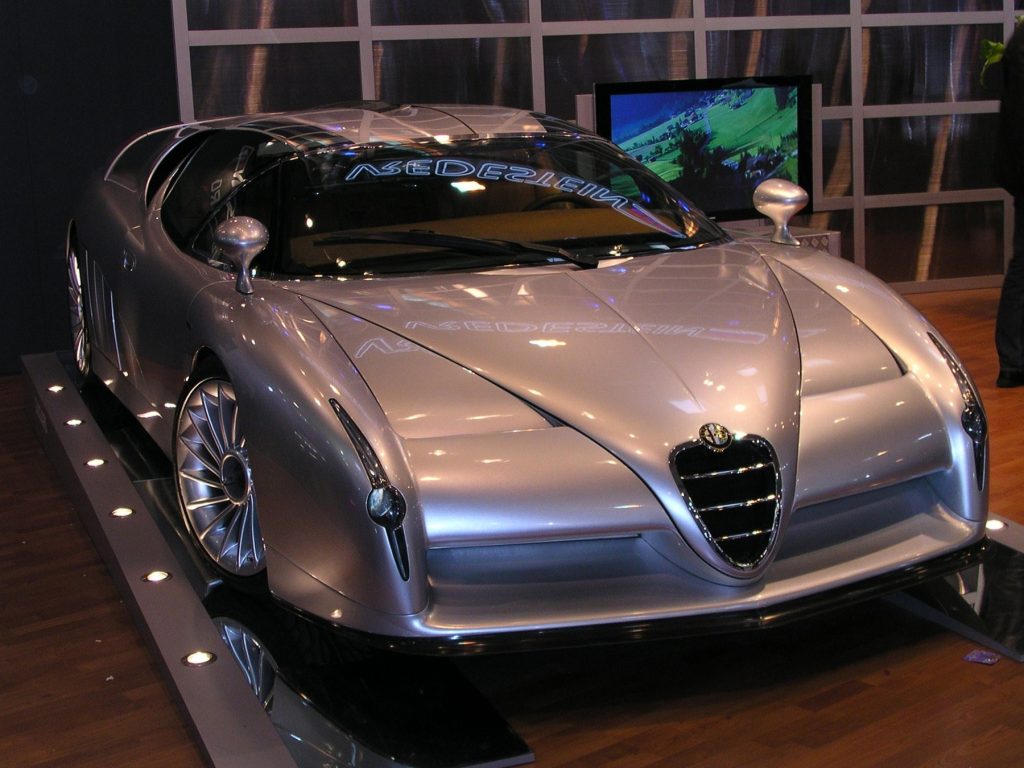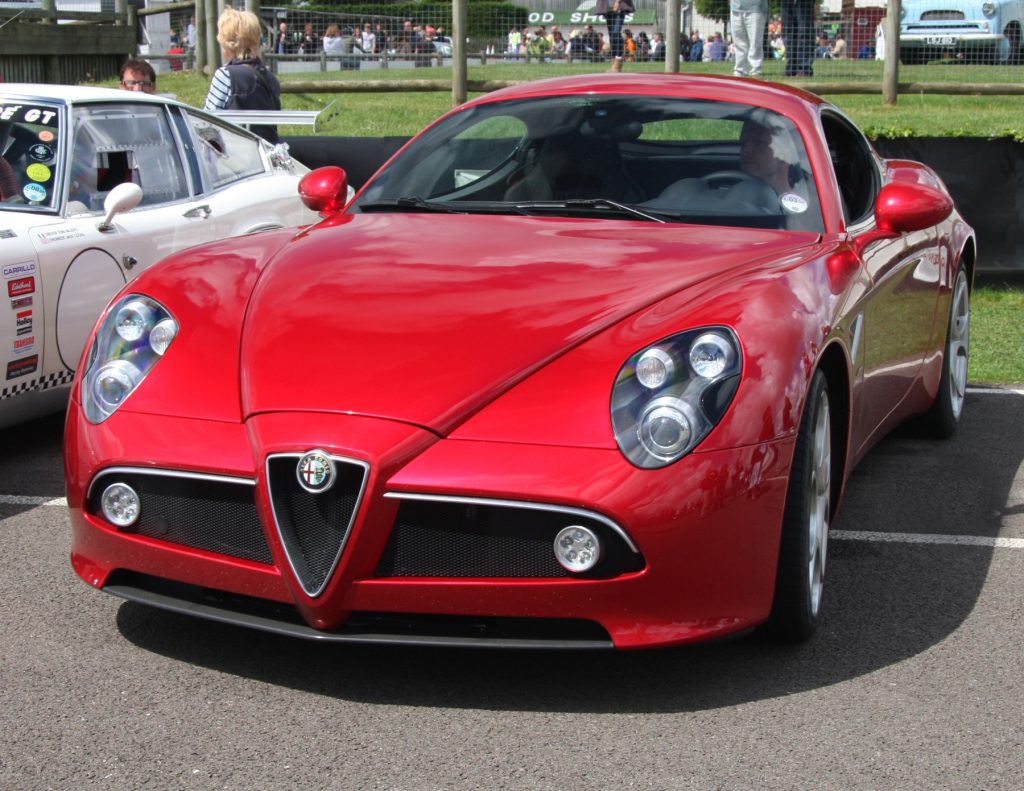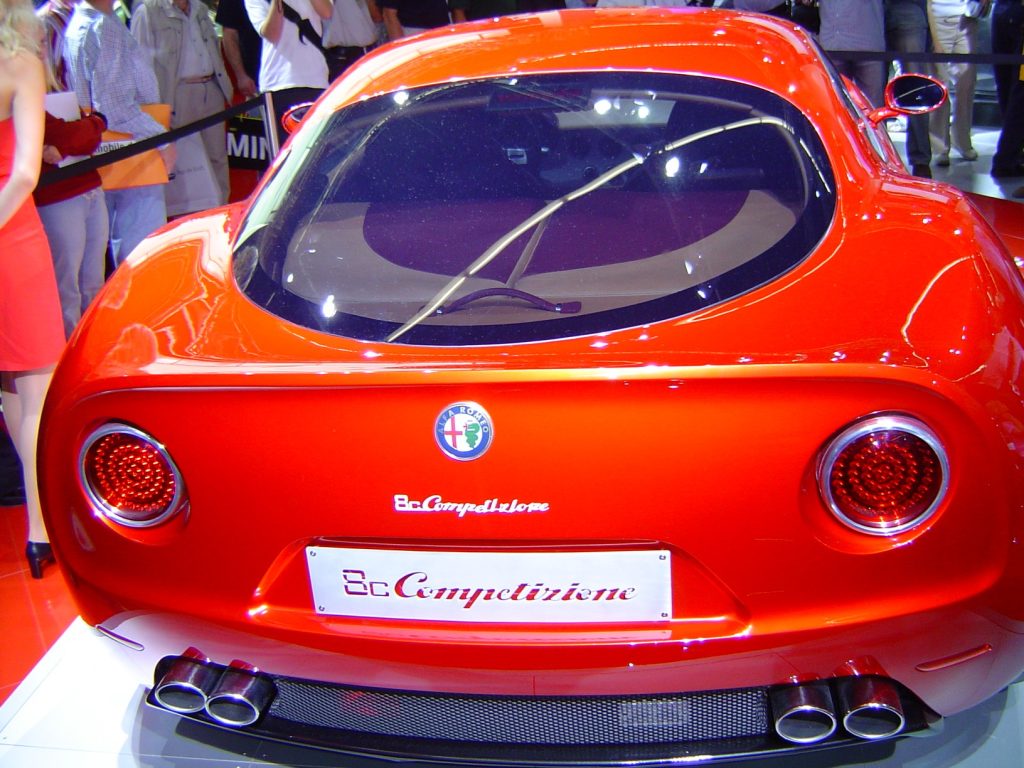
Alfa Romeo 155 GTA Stradale prototype
The sole Abarth-built 155 GTA Stradale prototype, catalogued as 1993 with its own chassis identity.
A single Stradale prototype
Bonhams’ 2018 Padua catalogue identifies lot 23 as the sole prototype for a planned limited series of 155 GTA Stradale cars. It records construction by Abarth for Alfa Romeo and dates the car to 1993. That documentary identity separates the subject from racing GTAs and later recreations. The inventory’s 1992 reference is retained in the audit record, while the profile uses the catalogued year. Read the cited reference for its documented context.
The engineering relationship
The catalogue describes the prototype as mechanically based on the 155 Q 4, with a relationship to the Lancia Delta Integrale drivetrain. It also identifies Sergio Limone’s supervision of the project. This is enough to establish the engineering context without importing every numerical specification of a normal Q 4 or a racing GTA. The prototype deserves a record of its own configuration, supported by documents specific to it.
A proposal that stayed a proposal
The catalogue describes the car as intended for a limited series and records its display at the 1994 Bologna Motor Show. The single prototype count should remain separate from the proposed production programme. A planned series is an industrial intention, whereas a constructed prototype is a physical object with a history. Preserving that distinction makes the car’s rarity understandable without counting vehicles that were never completed.
A chassis-led collector record
The Bonhams lot identifies chassis ZAR 16700000005892. This is the documentary reference for the one-off subject; it is not inferred from the photograph. A future detailed provenance file should bring original correspondence, registration evidence and period images together around that identity. Restoration and ownership claims can then be evaluated as records of a particular car, rather than as general stories attached to an evocative model name.
Reading its place beside the racers
The Stradale proposal belongs beside the 155’s competition story, but its role is different. A road prototype should not inherit a racing model’s individual results, engine output or homologation specification merely because its shape recalls touring-car bodywork. The useful comparison concerns the attempt to translate a sporting image into a road-car project. That is an editorial relationship, rather than proof of mechanical equivalence.
The source-identified photograph
Rinovich’s own 2018 photograph is identified on Commons as the 155 GTA Stradale and carries a Creative Commons ShareAlike licence. Its caption remains a model illustration, with no claim that the photographed chassis stamping was inspected. The archive retains the image’s attribution and resizing notice alongside the primary catalogue reference. This makes the visible object and the documentary identification independently traceable for a reviewer.
Preserving a prototype’s identity
A prototype record needs more than a model name and an attractive photograph. Establish the chassis, the coachbuilder’s records and the dated sequence of show appearances. Record changes to paint, glazing, interior and mechanical equipment when evidence permits. A later alteration can be an important part of a show car’s working life. Keeping those stages separate allows the archive to explain the object as it developed rather than inventing a single specification that supposedly remained unchanged from its first presentation.
Restoration evidence and interpretation
For a unique design study, conservation and reconstruction are central to its historical account. Keep photographs of the earliest known form alongside records of later repairs and the reasoning behind restored details. Identify what was retained, repaired or recreated wherever the evidence is available. Museum display and concours presentation can provide useful context, but neither alone documents every component. A photograph illustrates one moment in the car’s life; its caption should identify that moment, leaving detailed material authenticity to the accompanying chassis and restoration record.
Frequently asked questions
Was a limited production series completed?
The Bonhams catalogue identifies one sole prototype for a planned series.
Who built the car?
Abarth for Alfa Romeo, according to Bonhams.
Why is 1993 used?
That is the year in the primary auction catalogue; inventory 1992 is retained for audit.
Does the photograph establish its chassis number?
No. The chassis reference comes from the catalogue, not visual inference.
Related vehicle profiles
Sources and further reading
- Bonhams:2018 Padua lot 23; catalogue documentary identity
- Bonhams: publisher auction catalogue, archived copy; indexed original document consulted
Photo and credit
Source-identified Alfa Romeo 155 GTA Stradale prototype photographed in 2018; original one-off subject, not a racing GTA or a replica attribution. Photo: Rinovich / Wikimedia Commons · CC BY-SA 4.0. Resized and JPEG-compressed for web display; no content retouching. Website layouts may crop the image.
Why this machine matters
Bonhams’ 2018 Padua catalogue identifies lot 23 as the sole prototype for a planned limited series of 155 GTA Stradale cars. It records construction by Abarth for Alfa Romeo and dates the car to 1993. That documentary identity separates the subject from racing GTAs and later recreations. The inventory’s 1992 reference is retained in the audit record, while the profile uses the catalogued year.
Built in limited numbers
1; sole Abarth-built 155 GTA Stradale prototype
Gallery
Specifications
Factory specifications may vary by model year, market and configuration.
Identity & production
- Official model
- Alfa Romeo 155 GTA Stradale prototype
- Country of manufacture
- Italy
Powertrain & performance
- Engine
- 155 Q4 / Delta Integrale-derived prototype powertrain; exact numerical fields unasserted
- Drivetrain
- Four-wheel drive