2019 Hyundai i30 N Project C
2019 Hyundai i30 N Project C: its 600-car edition ceiling, lightweight engineering, factory specifications and credited Frankfurt photography.
The 2019 Hyundai i30 N Project C pursues performance through lower mass and a more focused physical specification. Its documented 600-car named-edition ceiling qualifies the complete programme, with the announced limit kept separate from a completed manufacturing tally.
Origins and the correct historical identity
Hyundai unveiled Project C at Frankfurt in 2019 and announced a complete 600-car edition. The source identifies the 275 PS i30 N Performance base, carbon-fibre body components, forged OZ wheels and Sabelt seats. It records a weight reduction of approximately 50 kg and a lower ride height. These are edition-specific programme claims; the exact number ultimately manufactured is not established here.
Design: what makes i30 N Project C distinctive
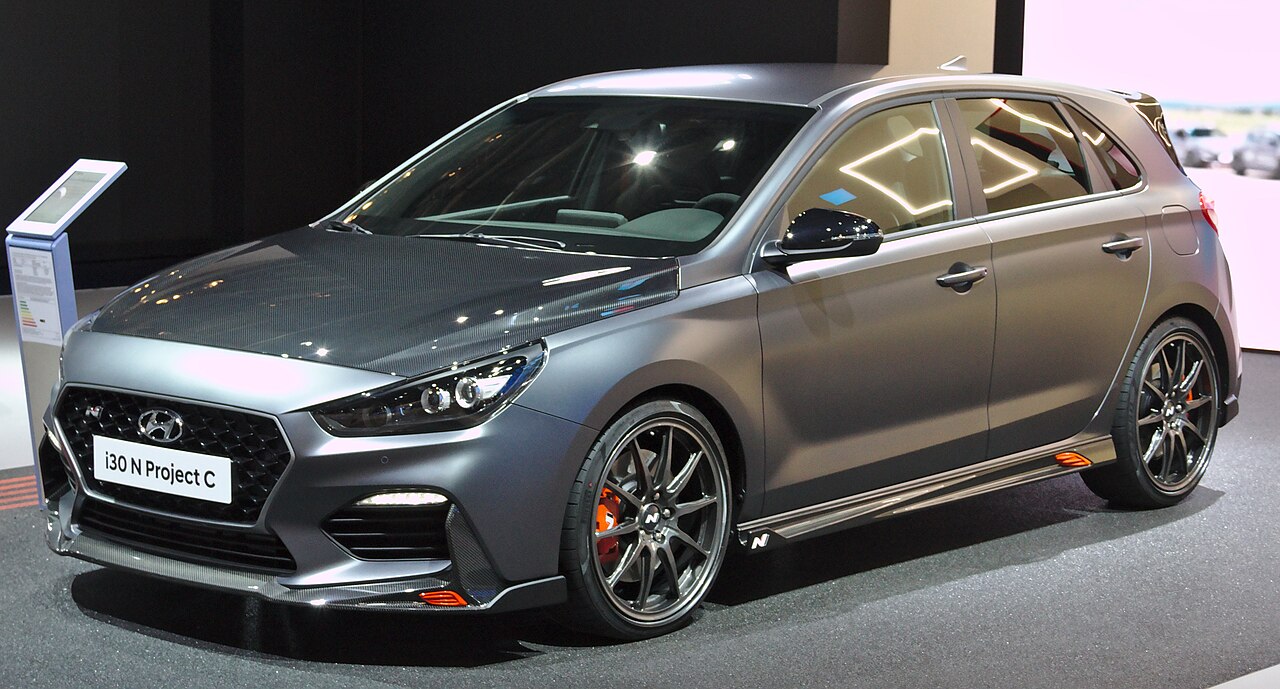
The supplied photograph shows the grey car with bronze-toned wheels and clear Project C identification. Its appearance is restrained compared with an overt racing livery, allowing details to carry the distinction. The wheel colour and low stance draw attention without overwhelming the hatchback shape. That combination makes the edition interesting as a complete design: the visible changes communicate a more focused character while preserving a recognisable road-car silhouette.
Engineering and the concept brief
A lower-mass specification can influence performance without a higher quoted engine output. Wheels, seats and body panels occupy different places in the vehicle, so their contribution is more informative when considered separately. The factory release provides the programme’s reported changes; this article does not invent an independent road test from them. Individual-car checks should establish whether the special components remain present and whether replacements have altered the original configuration.
Why this Hyundai belongs in the design archive
Project C offers a collector a clearly named factory programme with a documented whole-edition ceiling. Its appeal lies in the coherence of the changes as well as the finite scope. A complete dossier would connect the factory announcement with the individual car’s original documentation and condition. Rarity alone does not establish value, and a limit does not measure the number of cars still complete or publicly available.
Recognising and documenting the physical subject
Alexander Migl photographed the actual Project C exhibition car at Frankfurt in September 2019. The visible programme label and distinctive configuration support the subject match. The image illustrates the named edition without asserting a chassis number or the originality of an unseen component. Keep the photograph’s creator, source and licence with the profile. A future individual-car gallery should add its own dated component and identification photographs.
Understanding a factory edition specification
A named factory edition should be documented as a complete package. Paint, wheels, material changes, cabin details and identification features can each help distinguish it, but their significance comes from the original programme description. Similar components fitted later to another car do not supply the same provenance. For a technical catalogue, record the original model year and factory market alongside the edition name, then connect those fields with the individual vehicle documentation. That approach keeps a coherent original specification separate from changes made during subsequent ownership.
A component claim should describe what the source actually establishes. Carbon-fibre material is different from a carbon-look surface, a wheel diameter is different from its mass, and an appearance package does not automatically mean a higher engine output. These distinctions make a profile useful for collectors who want to understand the particular edition. They also identify what a future inspection needs to check: the parts currently fitted, their condition, and the documentation that connects them with the car as originally supplied.
Collecting a documented factory edition
A limited-edition record becomes useful when the factory programme and the individual vehicle can be connected through original documentation. Keep the original announcement alongside delivery records, dated exterior and cabin photographs, and any repair history. Those sources answer different questions: the announcement defines the edition, while the individual records establish how a particular car was supplied and how it changed. A familiar paint colour or wheel shape can support identification, but a complete dossier should explain the combination of features and the provenance of the car itself.
The announced ceiling is a whole-programme limit, with the exact number ultimately completed still unresolved. It is separate from the number currently registered, advertised or known to a collectors club. A future completed tally should identify the named edition and the factory or institutional record supporting it. Condition, originality and maintenance remain individual questions even within a rare programme. That distinction lets this profile provide dependable programme history while an owner develops the much more detailed record of a specific surviving vehicle.
Reading the evidence for this profile
The original source links below identify the programme and the historical statements used in this article. The photograph has its own creator and licence record, separate from the manufacturer’s vehicle history. Keep both when transferring this profile into a collection catalogue. A manufacturing tally describes how many cars belong to a defined original programme; it does not measure how many survive, how many are publicly visible, or how many retain all their original components. Those individual questions require dated chassis and restoration evidence. The reference year likewise describes the programme’s introduction or named historic configuration, while the supplied caption states the photographed setting and any established individual identity. This lets future research expand the car’s history without blurring the scope of the record already assembled here.
Specifications and verified rarity
| Reference year | 2019 |
|---|---|
| Model / programme | i30 N Project C |
| Body / role | Factory-limited performance hatchback |
| Complete named-edition ceiling | 600 cars |
| Published output | 275 PS |
| Reported mass reduction | Approximately 50 kg |
| Edition features | Carbon-fibre components; forged OZ wheels; Sabelt seats |
| Exact manufacturing tally | Not established |
| Rarity evidence | 600 for the documented complete programme |
| Rarity scope | Manufacturer-announced complete i30 N Project C edition ceiling of 600. Exact completed manufacturing tally unconfirmed; no regional allocation is presented as the whole programme. |
| Inventory reference | HYU-151 — Verified |
Frequently asked questions
What is the complete named-edition limit?
Hyundai announced 600 Project C cars.
Is 600 a verified completed tally?
It is the announced ceiling; completed manufacture remains unconfirmed.
What is the engineering emphasis?
Reduced mass and a focused chassis/body specification.
Does the photo identify an individual numbered car?
It records the edition show car without asserting an unseen serial number.
What rarity or archive scope is verified?
Manufacturer-announced complete i30 N Project C edition ceiling of 600. Exact completed manufacturing tally unconfirmed; no regional allocation is presented as the whole programme.
Who took the supplied photograph?
Alexander Migl via Wikimedia Commons, under CC BY-SA 4.0. The original file and licence links accompany the image. Retain that credit when the photograph is uploaded, exported or reused.
Related Hyundai vehicle profiles
Sources and photo credits
Photograph: Alexander Migl via Wikimedia Commons original file, CC BY-SA 4.0. Source-provided photograph supplied without local cropping, retouching or text removal. A source thumbnail is used where available. Hyundai i30 N Project C at Frankfurt in September 2019, photographed by Alexander Migl; the programme identification is visible.
Built in limited numbers
Manufacturer-announced complete i30 N Project C edition ceiling of 600. Exact completed manufacturing tally unconfirmed; no regional allocation is presented as the whole programme.
Gallery
Specifications
Factory specifications may vary by model year, market and configuration.
Identity & production
- Official model
- i30 N Project C