2020 Hyundai RM20e
Hyundai RM20e: 2020 electric prototype history, time-qualified peak output, original technical record and a credited physical-subject photograph.
The 2020 Hyundai RM20e makes electrification part of the Racing Midship development story. The physical prototype is an archive subject for high-performance electric research, with its original specification kept separate from later retail N vehicles.
Origins and the correct historical identity
Hyundai presented RM20e in 2020 as an electric performance development car. Its original technical release lists a midship-motor, rear-drive layout, 60 kWh battery energy and 596 kW peak power for a 20-second interval. The interval is part of the rating and remains explicit here. The source does not establish a complete fabrication tally.
Design: what makes RM20e distinctive
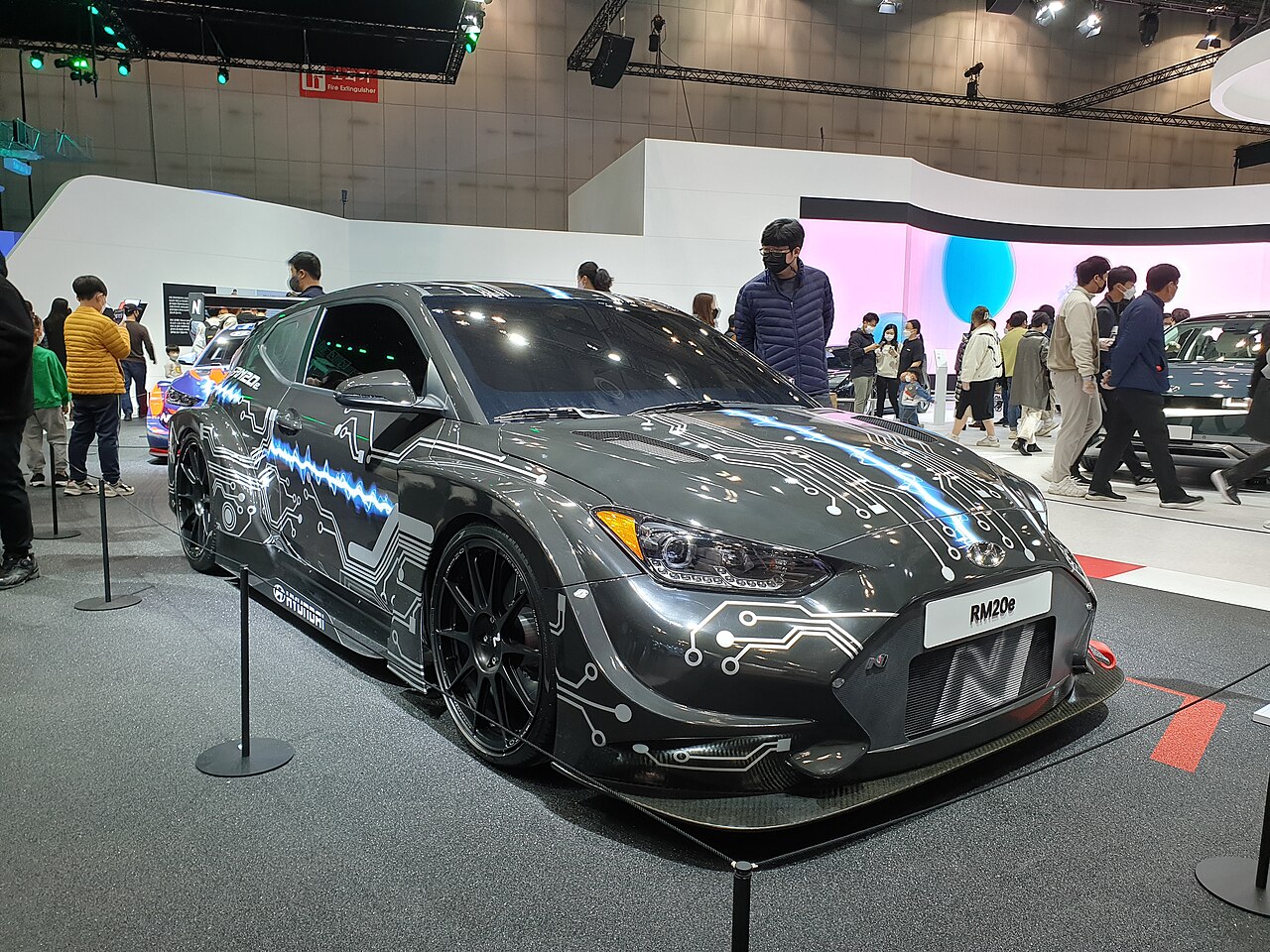
The supplied photograph shows the prototype’s dark body carrying circuit-like graphics and a prominent rear wing. That graphic treatment gives the electric programme a recognisable visual theme without changing the importance of its physical proportions. The broad stance and open front areas make it read as a specialised development tool. This visible identity helps distinguish RM20e from a combustion RM stage and from a customer electric hatchback.
Engineering and the concept brief
Peak power and stored energy describe different parts of an electric vehicle. A time-limited peak rating is not a continuous output, while battery energy is not a charging-power figure. The original RM20e technical record is useful because it supplies context for those values. This profile retains that context rather than presenting a single headline number as a complete explanation of the prototype’s capability.
Why this Hyundai belongs in the design archive
RM20e offers an archive a concrete point at which a familiar research programme adopts an electric performance brief. Its significance includes the chance to compare energy-system needs, packaging and body communication across different propulsion categories. That comparison works best when each development car has its own source record. A shared RM prefix does not establish that every stage used the same chassis, output or testing objectives.
Recognising and documenting the physical subject
Damian B Oh photographed the physical RM20e at Seoul in November 2021. The circuit-pattern graphics, body and source identification support the exact-subject match. The photograph records a later appearance, while the profile keeps 2020 as the programme reference. Additional component photographs would need dated programme identification, particularly where the hardware changed during research. The image alone cannot establish an individual component’s original installation date.
Reading an electric concept powertrain
An electric concept can answer a design question without publishing the engineering dossier of a customer vehicle. Motor power, usable battery capacity, charging limits and cooling strategy describe different parts of that dossier. A photograph of the completed body establishes its physical design, while the manufacturer’s programme description establishes the intended propulsion. Neither supplies the missing numerical fields. For this car, the profile keeps those two forms of evidence together while reserving precise performance figures for an original, correctly scoped technical record. That makes the history useful even when a later electric model carries a similar visual signature.
For an archive vehicle, electrification also changes how the cabin can be interpreted. Removing the need to celebrate an engine does not remove the need for a focal point: lighting, instruments, seating and the approach to controls become part of the attraction. The relevant question is how this particular design expresses its electric identity. A collector can record those choices through dated exterior and cabin photographs, then compare them with the manufacturer’s original presentation. That is a richer account than attaching the range or battery specification of an unrelated modern EV.
Collector significance and future research
The value of a concept archive lies in preserving the relationship between an idea, the people who developed it and the object that made it visible. A strong collection record keeps the original name, reference year, credited photographs and source links attached to that relationship. If new photographs or factory documents emerge, they can add a show appearance, a construction detail or a later change without replacing the original identity. This is particularly useful for a car whose published pictures may span several exhibitions and whose name may have acquired different spellings.
The complete fabrication tally remains unknown here. Exhibition appearances do not provide a count: the same object can travel, and a programme may also produce models or development articles that are not visible publicly. The concept belongs in this archive because its physical identity is supported, rather than because a single surviving photograph implies that only one was made. A future tally should identify which objects it covers and the document establishing that scope. Until then, this profile provides the historical and photographic foundation for further documentation.
Reading the evidence for this profile
The original source links below identify the programme and the historical statements used in this article. The photograph has its own creator and licence record, separate from the manufacturer’s vehicle history. Keep both when transferring this profile into a collection catalogue. A manufacturing tally describes how many cars belong to a defined original programme; it does not measure how many survive, how many are publicly visible, or how many retain all their original components. Those individual questions require dated chassis and restoration evidence. The reference year likewise describes the programme’s introduction or named historic configuration, while the supplied caption states the photographed setting and any established individual identity. This lets future research expand the car’s history without blurring the scope of the record already assembled here.
Specifications and verified rarity
| Reference year | 2020 |
|---|---|
| Model / programme | RM20e |
| Body / role | Electric performance development prototype |
| Published layout | Midship motor; rear-drive electric axle |
| Battery energy | 60 kWh |
| Manufacturer peak rating | 596 kW, 20-second interval |
| Completed fabrication tally | Unconfirmed |
| Exact manufacturing tally | Not established |
| Rarity evidence | Physical concept archive scope; tally unknown |
| Rarity scope | Verified physical Hyundai concept programme; complete fabrication tally unconfirmed. Included as Concept / Archive, without an invented one-car count or retail-production ceiling. |
| Inventory reference | HYU-162 — Verified |
Frequently asked questions
What type of RM programme is this?
An electric performance development prototype.
How is the peak rating qualified?
596 kW for a 20-second interval in the manufacturer’s technical record.
What battery energy is listed?
60 kWh in that original technical record.
Does the photo date change the programme year?
The 2021 image records a later display of the 2020 programme.
What rarity or archive scope is verified?
Verified physical Hyundai concept programme; complete fabrication tally unconfirmed. Included as Concept / Archive, without an invented one-car count or retail-production ceiling.
Who took the supplied photograph?
Damian B Oh via Wikimedia Commons, under CC BY-SA 4.0. The original file and licence links accompany the image. Retain that credit when the photograph is uploaded, exported or reused.
Related Hyundai vehicle profiles
Sources and photo credits
Photograph: Damian B Oh via Wikimedia Commons original file, CC BY-SA 4.0. Source-provided photograph supplied without local cropping, retouching or text removal. A source thumbnail is used where available. Hyundai RM20e at Seoul in November 2021, photographed by Damian B Oh; the electric development programme dates to 2020.
Built in limited numbers
Verified physical Hyundai concept programme; complete fabrication tally unconfirmed. Included as Concept / Archive, without an invented one-car count or retail-production ceiling.
Gallery
Specifications
Factory specifications may vary by model year, market and configuration.
Identity & production
- Official model
- RM20e