2021 Hyundai IONIQ 5 Project 45
2021 Hyundai IONIQ 5 Project 45: its complete 3,000-car edition ceiling, factory equipment, rarity scope and a credited exact-edition photograph.
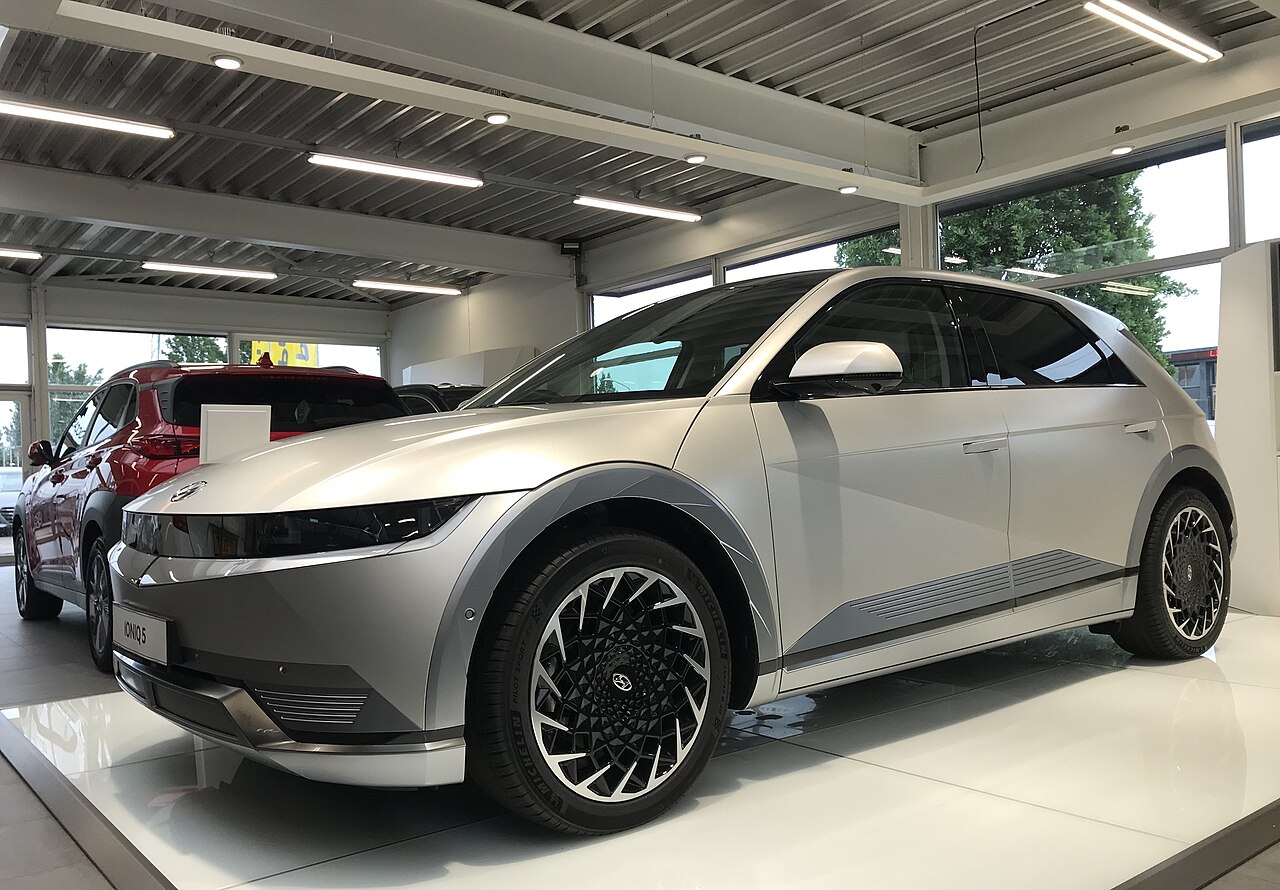
The 2021 Hyundai IONIQ 5 Project 45 gives an electric launch a precisely named edition identity. The complete 3,000-car programme for the UK and Europe is the rarity scope here, supported separately from the photograph of an actual Project 45 car.
Origins and the correct historical identity
Hyundai’s IONIQ 5 launch announcement identifies Project 45 as a named edition limited to 3,000 customers across the UK and Europe. Its package includes a solar roof, 20-inch wheels and an augmented-reality head-up display. The documented ceiling covers the named programme rather than the entire IONIQ 5 model. The exact number ultimately manufactured remains unconfirmed.
Design: what makes IONIQ 5 Project 45 distinctive
The supplied front-quarter image shows the angular body, pixel-like lamps and large wheels in a real indoor setting. The body’s broad surfaces allow the lighting and wheel patterns to carry much of its character. The programme’s design interest lies in the balance between a deliberately simple silhouette and carefully repeated detail. The photograph is useful for that reading and for its explicit Project 45 source identity, without proving unseen option functionality.
Engineering and the concept brief
A solar-roof feature, a head-up display and a wheel package play different roles in an electric car. Their inclusion can make an edition distinctive, but it does not justify treating a charging-station rating as the vehicle’s actual peak charging power. Exact individual-car hardware should be checked against original documentation. The profile concentrates on the features unambiguously connected to the named edition and avoids importing a later battery update.
Why this Hyundai belongs in the design archive
Project 45 is useful to a collector because its factory name and complete scope can be traced through the original announcement. Its rarity is a defined programme property, while condition and originality remain individual-car questions. A good dossier would keep the order record, original specification and photographs together. Those records would clarify whether a particular vehicle still carries its original edition equipment and whether any replacements changed its configuration.
Recognising and documenting the physical subject
Rutger van der Maar photographed this Project 45 in July 2021. The source explicitly identifies the edition, and the visible exterior is consistent with the launch configuration. The caption does not claim an unseen numbered plaque or certify every electronic feature from a single frame. A future gallery could add the solar roof and edition documentation as separate detail records. Preserve the creator and CC BY 2.0 licence alongside those additions.
Reading an electric concept powertrain
An electric edition needs a technical record scoped to its actual model year and factory specification. Motor power, usable battery capacity, charging limits and cooling strategy describe different parts of that dossier. A photograph of the completed body establishes its physical design, while the manufacturer’s programme description establishes the intended propulsion. Neither supplies the missing numerical fields. This profile keeps the named-edition identity and documented equipment together, while reserving precise performance figures for an original, correctly scoped technical record. That makes the history useful even when a later electric model carries a similar visual signature.
For an electric vehicle, electrification also changes how the cabin can be interpreted. Removing the need to celebrate an engine does not remove the need for a focal point: lighting, instruments, seating and the approach to controls become part of the attraction. The relevant question is how this particular design expresses its electric identity. A collector can record those choices through dated exterior and cabin photographs, then compare them with the manufacturer’s original presentation. That is a richer account than attaching the range or battery specification of an unrelated modern EV.
Collecting a documented factory edition
A limited-edition record becomes useful when the factory programme and the individual vehicle can be connected through original documentation. Keep the original announcement alongside delivery records, dated exterior and cabin photographs, and any repair history. Those sources answer different questions: the announcement defines the edition, while the individual records establish how a particular car was supplied and how it changed. A familiar paint colour or wheel shape can support identification, but a complete dossier should explain the combination of features and the provenance of the car itself.
The announced ceiling is a whole-programme limit, with the exact number ultimately completed still unresolved. It is separate from the number currently registered, advertised or known to a collectors club. A future completed tally should identify the named edition and the factory or institutional record supporting it. Condition, originality and maintenance remain individual questions even within a rare programme. That distinction lets this profile provide dependable programme history while an owner develops the much more detailed record of a specific surviving vehicle.
Reading the evidence for this profile
The original source links below identify the programme and the historical statements used in this article. The photograph has its own creator and licence record, separate from the manufacturer’s vehicle history. Keep both when transferring this profile into a collection catalogue. A manufacturing tally describes how many cars belong to a defined original programme; it does not measure how many survive, how many are publicly visible, or how many retain all their original components. Those individual questions require dated chassis and restoration evidence. The reference year likewise describes the programme’s introduction or named historic configuration, while the supplied caption states the photographed setting and any established individual identity. This lets future research expand the car’s history without blurring the scope of the record already assembled here.
Specifications and verified rarity
| Reference year | 2021 |
|---|---|
| Model / programme | IONIQ 5 Project 45 |
| Body / role | Factory-limited electric launch edition |
| Named-edition ceiling | 3,000, UK and Europe complete programme |
| Edition features | Solar roof; 20-inch wheels; AR head-up display |
| Propulsion category | Battery electric |
| Completed manufacturing tally | Unconfirmed |
| Exact manufacturing tally | Not established |
| Rarity evidence | 3000 for the documented complete programme |
| Rarity scope | Manufacturer-announced complete Project 45 edition ceiling of 3,000 across the UK and Europe. This is the entire named programme scope, not an allocation cut from an uncapped global edition. Completed manufacture remains unconfirmed. |
| Inventory reference | HYU-168 — Verified |
Frequently asked questions
What is the complete named-edition ceiling?
3,000 Project 45 cars across the UK and Europe.
Is that the limit for every IONIQ 5?
It applies to the named Project 45 programme.
Is completed manufacture verified as 3,000?
The original ceiling is verified; the completed tally remains unconfirmed.
What equipment does the launch source identify?
A solar roof, 20-inch wheels and augmented-reality head-up display.
What rarity or archive scope is verified?
Manufacturer-announced complete Project 45 edition ceiling of 3,000 across the UK and Europe. This is the entire named programme scope, not an allocation cut from an uncapped global edition. Completed manufacture remains unconfirmed.
Who took the supplied photograph?
Rutger van der Maar via Wikimedia Commons, under CC BY 2.0. The original file and licence links accompany the image. Retain that credit when the photograph is uploaded, exported or reused.
Related Hyundai vehicle profiles
Sources and photo credits
Photograph: Rutger van der Maar via Wikimedia Commons original file, CC BY 2.0. Source-provided photograph supplied without local cropping, retouching or text removal. A source thumbnail is used where available. Hyundai IONIQ 5 Project 45 photographed by Rutger van der Maar in July 2021; the original file explicitly identifies the named edition.
Built in limited numbers
Manufacturer-announced complete Project 45 edition ceiling of 3,000 across the UK and Europe. This is the entire named programme scope, not an allocation cut from an uncapped global edition. Completed manufacture remains unconfirmed.
Gallery
Specifications
Factory specifications may vary by model year, market and configuration.
Identity & production
- Official model
- IONIQ 5 Project 45